


Joe Louis Barrow Jr. believes context is always important.
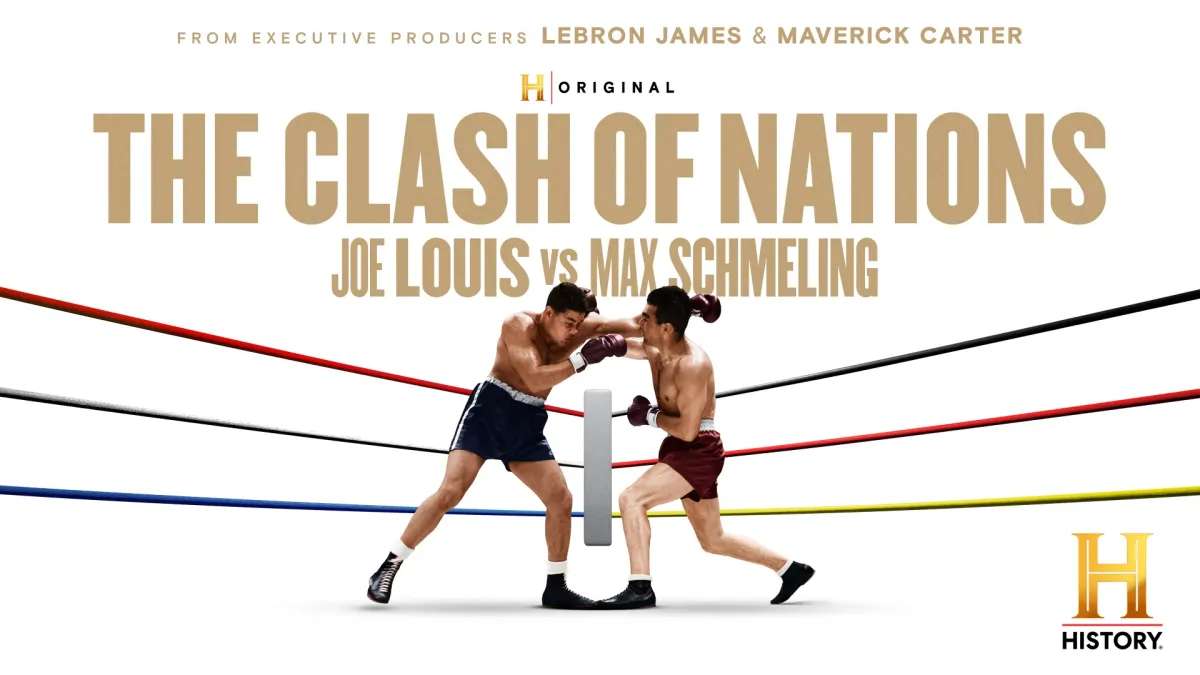
In that sense, he appreciated how The History Channel depicted his father Joe Louis in the documentary “The Clash of Nations: Joe Louis vs. Max Schmeling,” which airs Friday at 8 p.m. ET on History. The collision between Louis and Schmeling in two fights in the 1930s and their surroundings is the context behind the story-telling that requires that appreciation.
“The understanding of Joe Louis growing up the way that he did, in the environment that he did, and then juxtaposed with Max Schmeling growing up the way that he did, and the environment in Germany at the time,” Louis Barrow Jr. told The Sporting News. “I enjoyed that context. People don’t realize that Joe Louis grew up in a very segregated community, and he was one of the few African-American people who was revered by all of America over time.”
“The Clash of Nations: Joe Louis vs. Max Schmeling” explores those themes in both the United States and pre-World War II Germany. Louis dealt with racism during his rise as a heavyweight champion boxer – which coincided with the Harlem Renaissance in New York. Schmeling became a propaganda figure for Adolf Hitler during the rise of Nazi Germany. Legendary boxing analysts Jim Lampley and Larry Merchant are among the experts who offer insight.
It’s a comprehensive look at a path to those bouts.
A+E Global Media
Who is Joe Louis?
The documentary explores the origins of Joe Louis, who was born in Lafayette, Ala., in 1914 and raised in the Jim Crow South before moving to Detroit. There, Louis took up boxing and would rise through the amateur rankings at a time when boxing’s popularity was at an all-time high.
By the time Louis arrived in New York City – which was the epicenter of boxing – he was ready. Louis defeated James Braddock on June 22, 1937, to become the first Black heavyweight champion since Jack Johnson. The documentary goes into great detail about the differences between Johnson and Louis and how America viewed their personas.
“I know (Louis) is considered one of the best – if not the best – with his fighting style and the way he approached his opponents,” Louis Barrow Jr. said. “He was aggressive, but he was steady and determined. The perseverance that he demonstrated against his opponents was evident. That was the style that Joe Louis depicted in the documentary, and that was shown over and over.”
Legendary sports writer Jim Murray described Louis’ style in a Sporting News column on May 29, 1971.
“He hit Jim Braddock so hard the sweat and water from his hair sprayed out as far as Row 6. He knocked Paoline Uzcudun’s gold teeth in so many directions, the ring looked as if somebody had stepped on a railroad watch. ‘A guy who can break gold with a punch shouldn’t be licensed,’ Joe Jacobs said. When he got through with Max Schmeling, Max was glad enough to jump out of airplanes and take his chances with small arms fire over Crete.”
Louis encountered racism, but he also became a celebrity between Jesse Owens – who won four gold medals in the 1936 Olympics – and Jackie Robinson – who broke the Major League Baseball color barrier in 1947. Louis also had a profound impact during the Harlem Renaissance and was frequently mentioned in works by Maya Angelou and Langston Hughes. An excerpt from an Oct. 18, 2004 article by Dave Kindred in The Sporting News describes the aftermath of the first fight with Schmeling:
“Poet Langston Hughes expressed the gloom that immediately settled on black Americans: ‘I walked down Seventh Avenue and saw grown men weeping like children, and women sitting on the curbs with their heads in their hands. All across the country that night when the news came that Joe was knocked out, people cried.'”
Louis Barrow Jr. explores that legacy with his granddaughter Julia throughout the documentary.
“They also don’t understand; necessarily the impact and what was going on in America at the time, and that pains me as well,” Louis Barrow Jr. said. “Joe Louis broke that barrier very early on because white America needed a hero, and as it turns out, Joe Louis was that hero. He emerged as a person the have-nots and the haves really revered because he defeated the German who happened to be Max Schmeling.”
Who won the Joe Louis vs. Max Schmeling fights?
The documentary focuses heavily on the pair of fights between Louis and Schmeling, who won the heavyweight championship in 1930. Schmeling was initially popular in the United States, but he fell off after he lost the championship belt in 1933 and returned to Germany.
Schmeling’s comeback coincided with the rise of Adolf Hitler to power, and that led to the fights against Louis in the United States – which were politically-charged in the buildup toward World War II. Schmeling won the first fight on June 19, 1936 in 12 rounds – but Louis won the rematch on June 22, 1938 in a first-round knockout.
SN140 MOMENT NO. 56: Joe Louis KOs Max Schmeling in first round
In the aftermath, both boxers served in the military during World War II. They would later form a friendship that stood out as much as those fights. That relationship between the boxers is the most endearing piece of the documentary.
“They were opponents, but people loved Joe Louis, and Max Schmeling loved Joe Louis because he was a friendly sort of guy,” Louis Barrow Jr. said. “My father was a likable individual, and he only wanted to defeat his opponent inside the ring, outside the ring, they were friends. That is very important to understand with Joe Louis and Max Schmeling, it’s really about the friendships.”
That is why Louis Barrow Jr. believes the context is important to understand. Louis and Schmeling are best-known for those boxing matches, but they also are products of what were troubled environment in both countries at the time. There is a lesson to be learned.
“It’s a beautiful thing to see that you can have two societies, two cultures, pitted against each other, two opponents pitted against each other, and yet in the end those two opponents became friends,” Louis Barrow Jr. “I think this is what this country needs and the world needs.”
How to watch ‘The Clash of Nations: Joe Louis vs. Max Schmeling’
“The Clash of Nations: Joe Louis vs. Max Schmeling” airs on History. For more viewing times, visit The History Channel website. The documentary was produced by LeBron James and Maverick Carter through their platform “Uninterrupted.”
MORE: The Sporting News’ 140 Greatest Sports Moments of All Time
SN COVERS: Check out all the classics from Ty Cobb to Kobe Bryant
SN ARCHIVE: Relive sports history through the pages of The Sporting News
Read the full article here