





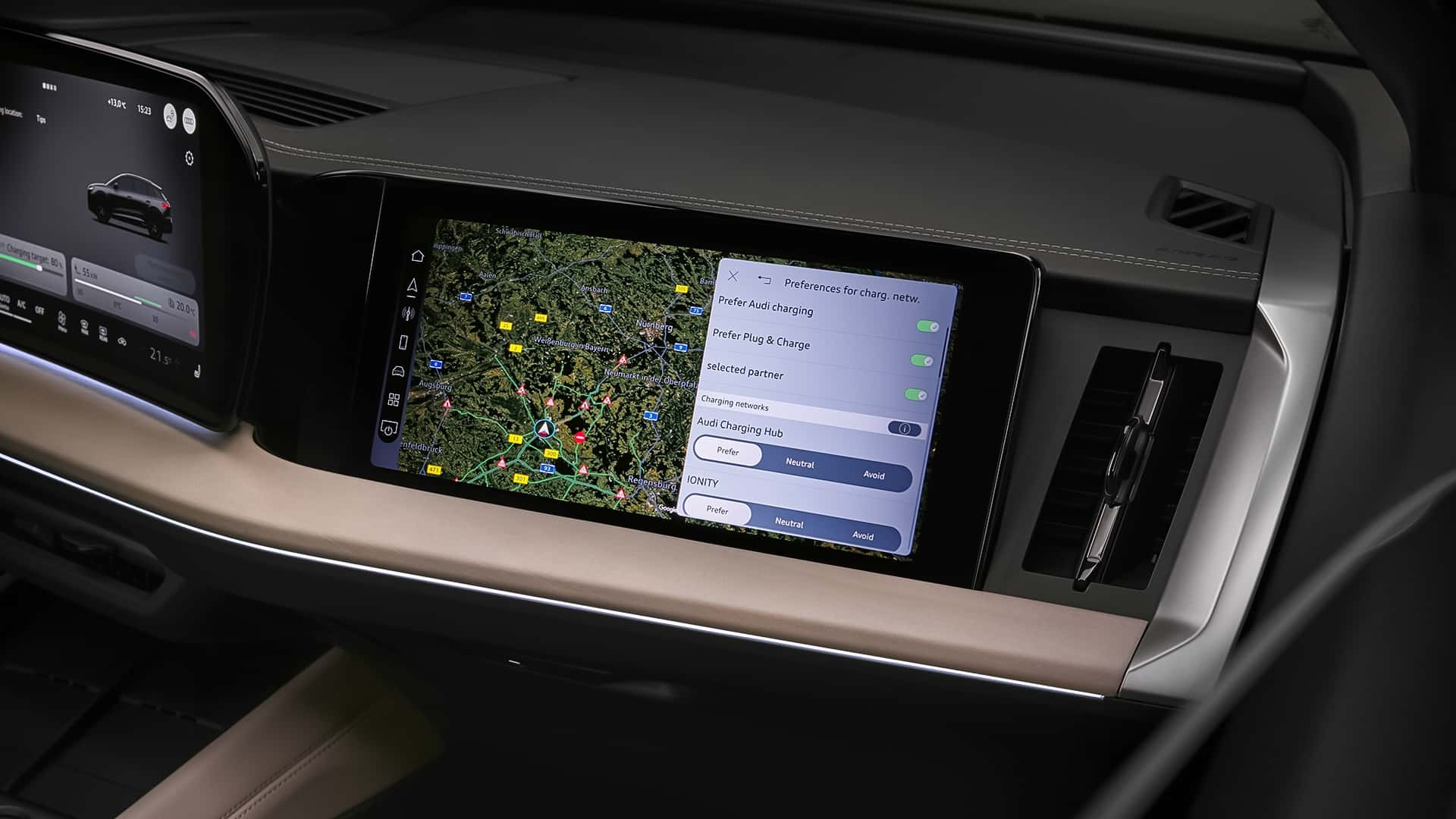
- J.D. Power study reveals that 35% of owners with a passenger screen say they’ve never used it.
- Only 6% use the passenger display every time they drive.
- Described as among the “most problematic technologies,” passenger screens recorded 21.3 problems per 100 vehicles.
For better or worse, passenger displays have become increasingly common. They used to be primarily reserved for luxury automakers, but even mainstream cars are beginning to get one these days. While automakers keep adding screens to new cars, a new J.D. Power study suggests that an extra touchscreen might be a technology that customers don’t necessarily want.
They’re often presented as a way to give the front passenger something to do while the driver focuses on the road, as if the smartphone in everyone’s pocket hasn’t been invented. Features range from streaming video and web browsing to controlling navigation and other vehicle functions. There’s just one problem: Many owners apparently don’t care.
According to the 2026 J.D. Power U.S. Tech Experience Index (TXI) Study, 35 percent of owners whose vehicles have a passenger screen say they have never even tried to use it. A mere six percent say they use the screen every time they drive. When they do use it, some people often run into issues, as the same study revealed 21.3 problems tied to passenger screens for every 100 vehicles.
2027 BMW 7 Series with standard passenger display
Photo by: BMW
Passenger Displays Are Optional In Most Cars
Thankfully, the extra screen is optional on most vehicles, though there is an exception. You’re stuck with it on the recently facelifted 7 Series, as BMW doesn’t sell its flagship sedan without the 14.6-inch display. Thankfully, it is an option rather than standard equipment on the new X5.

2027 Mercedes C-Class EV with different types of screens
Photo by: Mercedes-Benz
Speaking of the German luxury establishment, Mercedes does things differently, and weirdly, I might add. Some of its newer models come with a standard passenger display, but it’s not a touchscreen. Instead, the 10.3-inch “digitally animated trim panel” is more like a digital photo frame than a functional display.
Circling back to the study, J.D. Power says some vehicles equipped with passenger screens also recorded higher rates of infotainment-system problems in its companion 2026 U.S. Initial Quality Study. That doesn’t prove the passenger display itself caused those problems, but it does reinforce the broader concern that adding more technology can also create more opportunities for things to go wrong. Simply put, more things could break, or software gremlins could leave a sour taste in the owner’s mouth.
These findings come from a J.D. Power survey of 68,084 owners of 2026MY vehicles after three months of ownership. The study was conducted between June 2025 and May 2026 and covered vehicles registered from March 2025 through February 2026.
2024 Porsche Macan with optional passenger screen
Photo by: Porsche
Motor1’s Take: The J.D. Power study’s results don’t necessarily mean passenger screens are universally unpopular. Some owners clearly use them, and the technology can perhaps make sense for some people on long journeys when a passenger wants to watch something, manage navigation, or access other content without interfering with the driver’s display.
But the numbers indicate that they’re far from a must-have feature. For automakers, that’s worth remembering before adding yet another screen to the dashboard. Sometimes, the best technology is the feature customers actually use, like physical controls, which are gradually making way for a wall of screens. But that’s a story for another day.
Read the full article here