
-
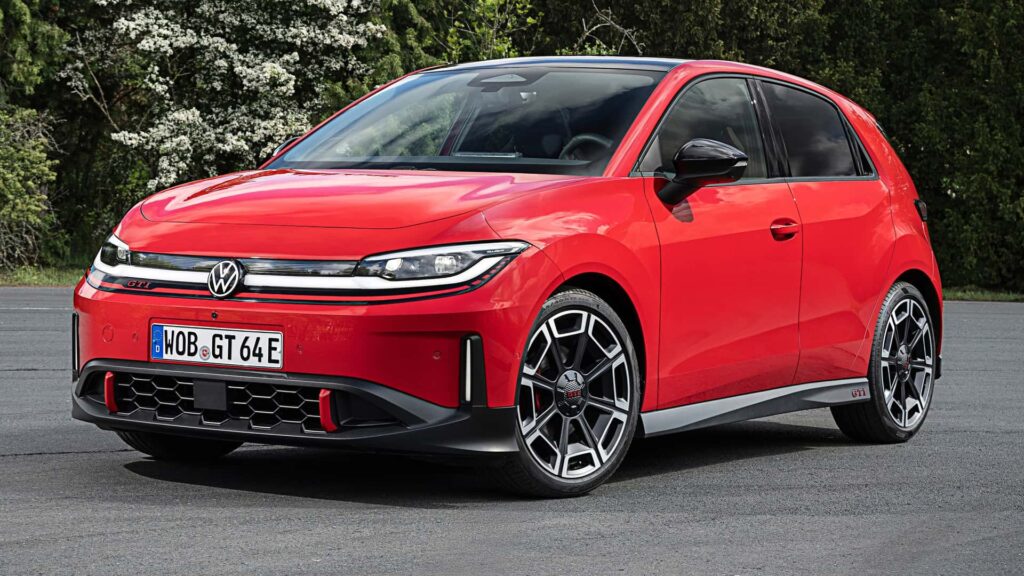
Volkswagen Group design chief Andreas Mindt thinks the industry’s obsession with aggressive-looking cars has gone too far.
-
He wants VW to create cars that look approachable, not intimidating.
-
The new ID. Polo and ID.3 Neo show how the brand is moving toward a friendlier design language.
Cars have gotten angrier over the years. From oversized grilles and narrow headlights to increasingly aggressive front ends, automakers seem determined to make their latest models look like they’re ready to pick a fight. VW Group design chief Andreas Mindt isn’t a fan.
In an interview with Autoweek, Mindt dismissed the trend of overly aggressive-looking cars as “nonsense,” arguing that there’s no good reason for cars to look as if they’re designed to intimidate everyone else on the road. According to Mindt, some automakers deliberately give their cars threatening faces because drivers will move out of the way when they see an aggressive-looking vehicle approaching in the rearview mirror.
‘Car brands do this because they want to be cool. VW doesn’t want that. You can think you’re the strongest, but if you’re not, then that’s nonsense. Why not give cars a friendly look? I want to live in a friendly world. I don’t want to live in a world with cars that look like they were designed to kill zombies. I really don’t want to live in a stupid world like that.’
Photo by: Volkswagen
It’s Not Us Versus Them
His argument goes beyond simply making cars look nicer. He believes design can influence how people perceive one another, especially as the transition to electric vehicles is in full swing in Europe.
‘When it comes to car design, you shouldn’t take one side or the other. Like, ‘Look, I’m doing the right thing—I drive an electric car. My car looks like an electric car, so I’m better than you. And you’re the bad guy because you’re spewing soot. You’re ruining the environment.’
Honestly, I think it’s really bad to divide society like that. To all those people who don’t want to drive electric yet, it’s better to say: ‘Look, gas prices are really high right now, aren’t they? Why don’t you give it a try?’
Futuristic Styling Went Too Far
Earlier ID models were deliberately futuristic to signal a break with the past. Mindt now believes that approach went too far. As BMW has been saying all along with its unified design language across ICE and EV models, VW argues an electric car shouldn’t necessarily look radically different to advertise the fact that it’s electric.
How far did VW go? Well, the man in charge of design told Autoweek that the pre-facelift ID.3 “doesn’t look like a real VW. You don’t see VW’s DNA in it. It might just as well be from another brand.” The recently launched ID.3 Neo aims to address that with a design that doesn’t scream “EV.” Like the smaller ID. Polo, the compact electric hatchback also has more physical controls and ditches the touch slider as a response to customer feedback.

Photo by: Volkswagen
Angry Designs Won’t Be Entirely Eliminated
Mindt also acknowledges that VW Group isn’t going to eliminate aggressive styling altogether. Different brands are supposed to have different personalities, and he specifically points to Lamborghini and SEAT’s Cupra as examples of companies where dramatic, aggressive design makes sense.
As a refresher, Mindt is now responsible for design across the entire VW Group. He took over as Head of Group Design on March 1, adding the role to his existing position leading design at the core VW brand. The next model to embrace his styling approach will be the ID.4’s replacement, which should debut soon as the ID. Tiguan.

51
Source: Volkswagen
Motor1’s Take: The automotive industry has spent years making cars look increasingly hostile, and the results haven’t always been pretty. There was a time when designers could make a car look sporty or powerful without covering its front end in fake vents and giving it headlights that look like they’re glaring at you.
There’s also a certain irony in the fact that automakers keep talking about making mobility more sustainable and people-friendly while designing cars that look increasingly antisocial. A friendlier design won’t solve the industry’s biggest problems, of course, but it’s a welcome change of direction.
Read the full article here