




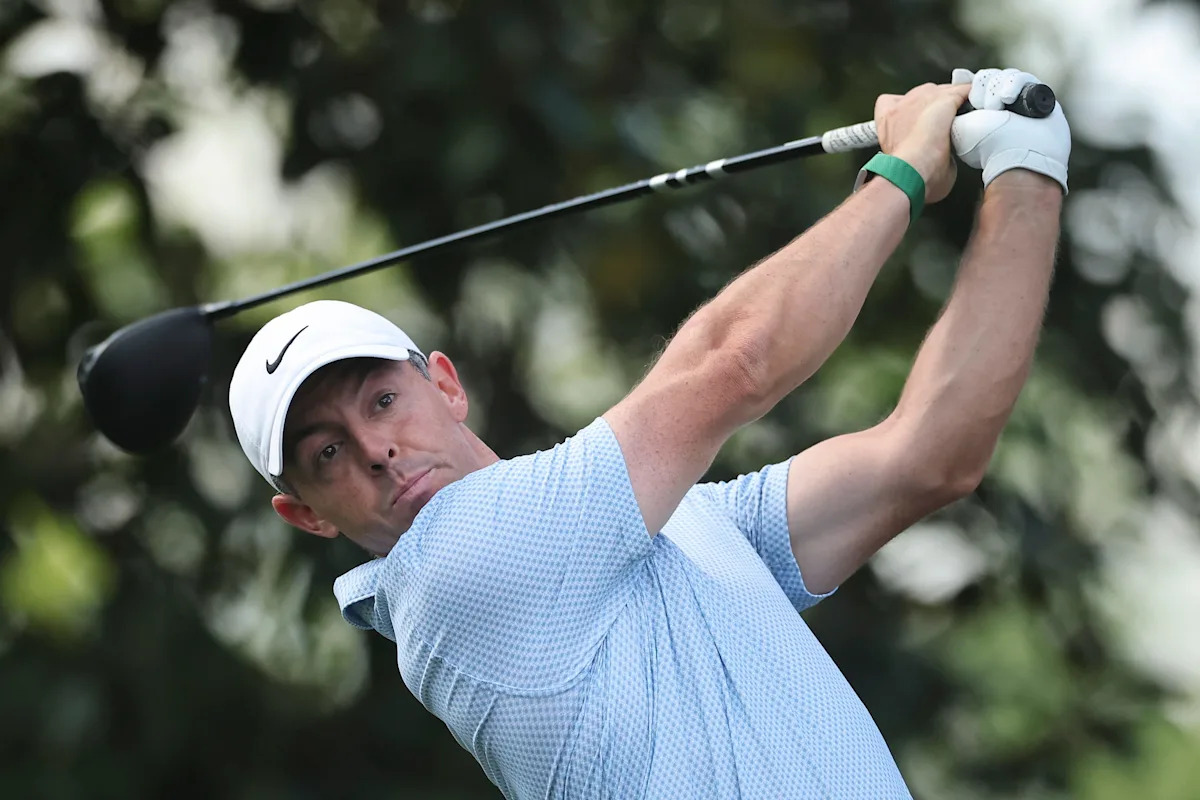
There are moments in golf when your swing doesn’t tell the real story, but your body gives it away.
Standing on the 18th tee at Augusta National Golf Club Sunday evening with a two-shot lead, Rory McIlroy looked like a player in control. He had just made an all-world up-and-down on both 16 and 17, and now he was one hole away from winning his second Masters. His swing, however, told only part of the story.
Advertisement
Think back to the last time you stood on a tee with a $5 Nassau on the line. Now magnify that by a million. Your grip pressure goes from “neutral” to “holding onto a live wire” in about two seconds, and your heart is somewhere between a snare drum and the alarm system at Chernobyl.
Rory McIlroy hits from the pine straw on the 18th hole Sunday at the 2026 Masters wearing a green Whoop strap on his right wrist.
According to Whoop, the maker of the fitness and health wearable McIlroy wears on his right wrist, his heart rate jumped to 135 beats per minute as his tee shot sailed into the trees on the right side of the 18th fairway. That’s the moment when most golfers start doing mental math about doubles, triples, and how to explain what went wrong.
But then something different happened.
Advertisement
Instead of climbing higher, his heart rate dropped to 121 beats per minute as he assessed the situation and played his recovery shot. In other words, at one of the most stressful moments of the round, McIlroy got calmer.
His heart rate spiked again to 136 beats per minute as he played his bunker shot, but then dropped to 117 before his first putt. As the moment shifted from survival to realization, it fell to 105 on the tap-in that secured the green jacket.

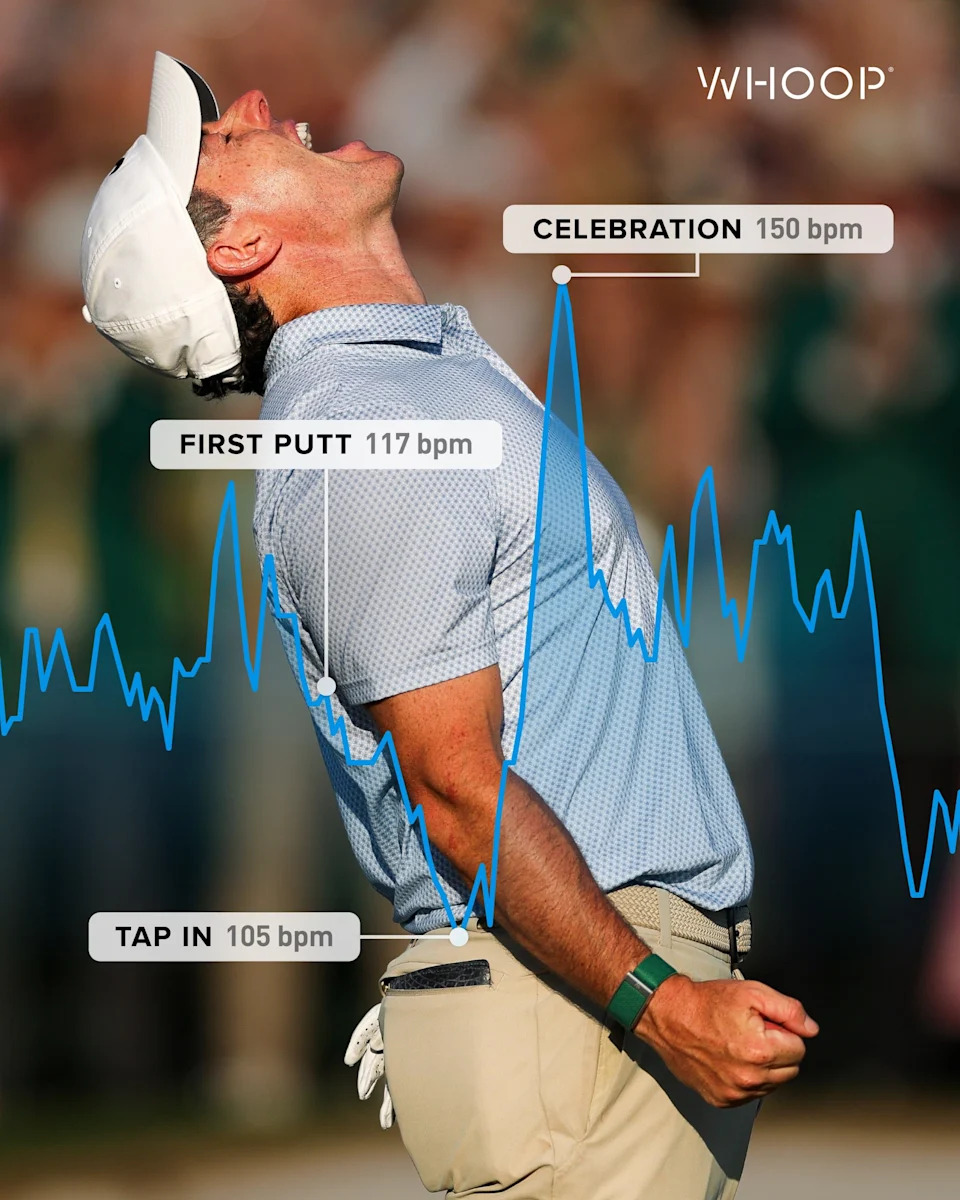
Rory McIlroy’s heart rate, as measured by Whoop, as he played the 18th hole Sunday at the 2026 Masters.
McIlroy appeared to handle his nerves overnight as well as he handled them on the course. His Whoop data showed he slept more than nine hours the night before the final round and averaged about eight and a half hours over the weekend. While the rest of us would be lying awake replaying every possible disaster scenario, McIlroy slept like a guy with an early tee time and nothing else on his calendar.
Advertisement
That’s where the technology becomes interesting. Devices like Whoop don’t just track steps or calories. They offer a window into how your body responds to stress, how quickly you recover, and whether you’re actually ready to perform.
McIlroy’s numbers point to something simple, even if it’s difficult to replicate. He didn’t just manage his swing under pressure. He managed himself.
This article originally appeared on Golfweek: Rory McIlroy Whoop data 2026 Masters Augusta National golf wearables
Read the full article here


