






Frank Hannigan, the legendary former USGA executive director who brought the U.S. Open to the far end of Long Island against all odds forty years ago, once said of this year’s iconic site, “Shinnecock looks like what most of the British Open courses wished they looked like.”
The endorsement hasn’t changed across the five U.S. Opens at Shinnecock over those four decades. But on the heels of playing conditions that imploded at both the 2004 and 2018 U.S. Opens, the question is whether this perennial top-five ranked course can fairly challenge the world’s best players without reverting to the chaos that clouded its last two attempts.
Advertisement
The USGA’s annual U.S. Open dance between “tough” and “fair” seems stretched to its breaking point at Shinnecock. With a setup dangerously balanced somewhere between the region’s mercurial meteorology and a fast and firm philosophy, Shinnecock stands on a precipice more uncertain than almost anywhere else in golf. You can’t just slow down the greens or soften the turf or find innocuous pin positions. That’s simply not demanding enough for the toughest major and those hole locations don’t exist here. But the more you push it, the more a frequent weather shift can lean the setup toward collapse. And at Shinnecock, Mother Nature always has a seat at the table.
The USGA wants to dictate tough but fair at the U.S. Open, but unlike nearly every other venue, Shinnecock, not the blue blazers, always has one more card to play.
And a U.S. Open that is all edge eventually reaches a cliff it cannot so easily step back from. As we’ve seen.
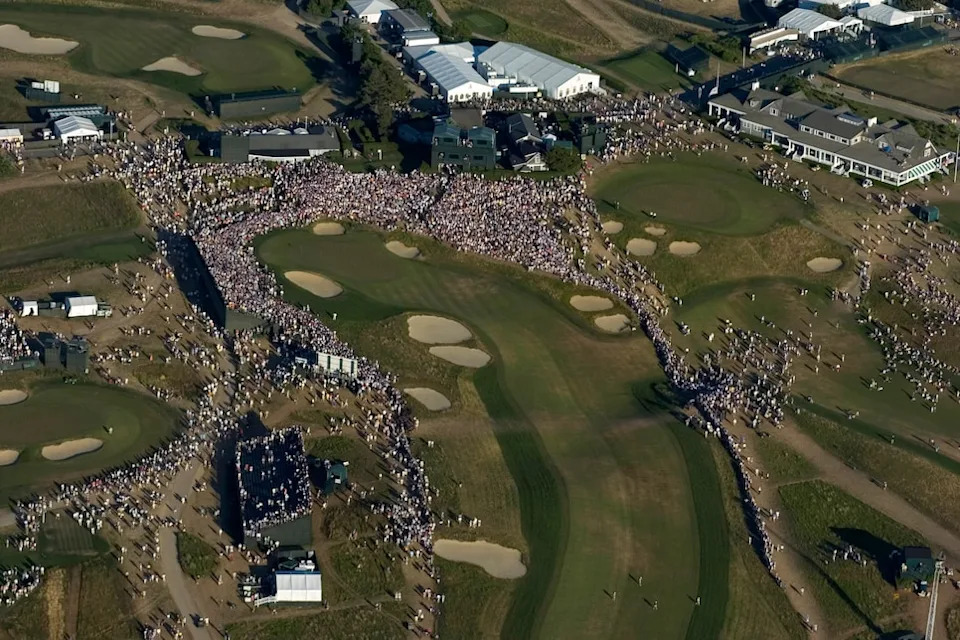
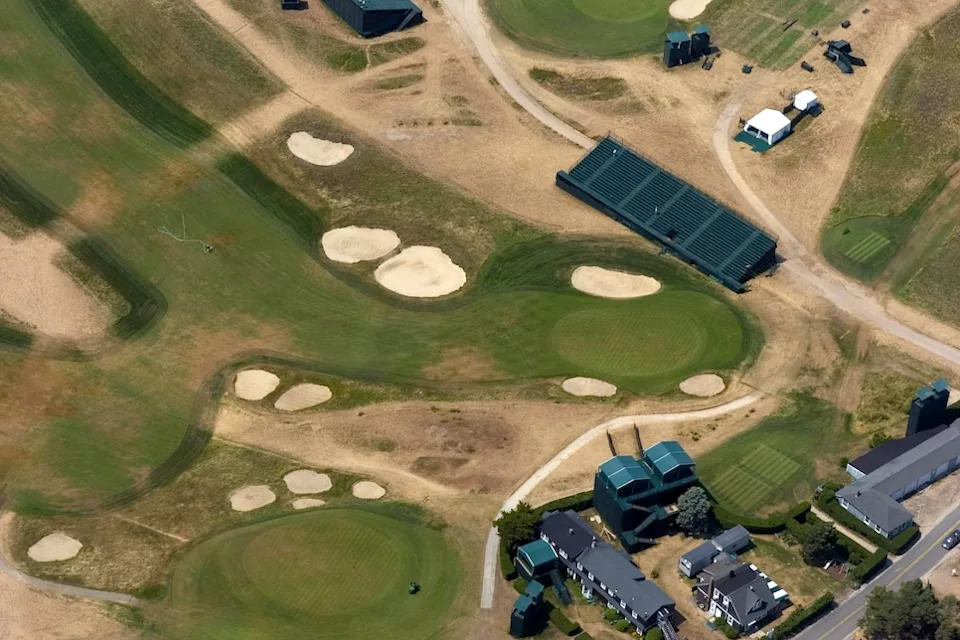
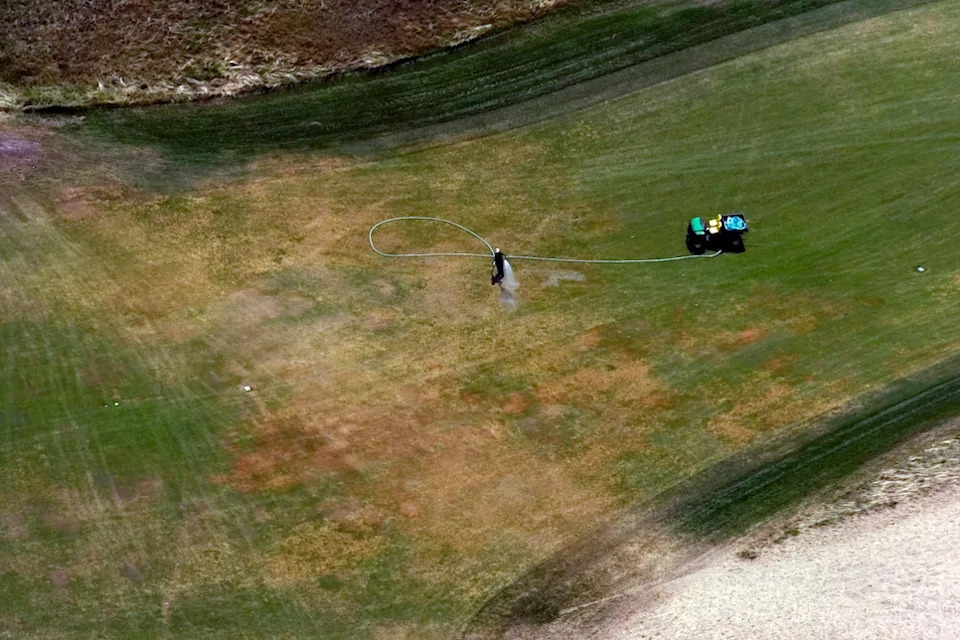
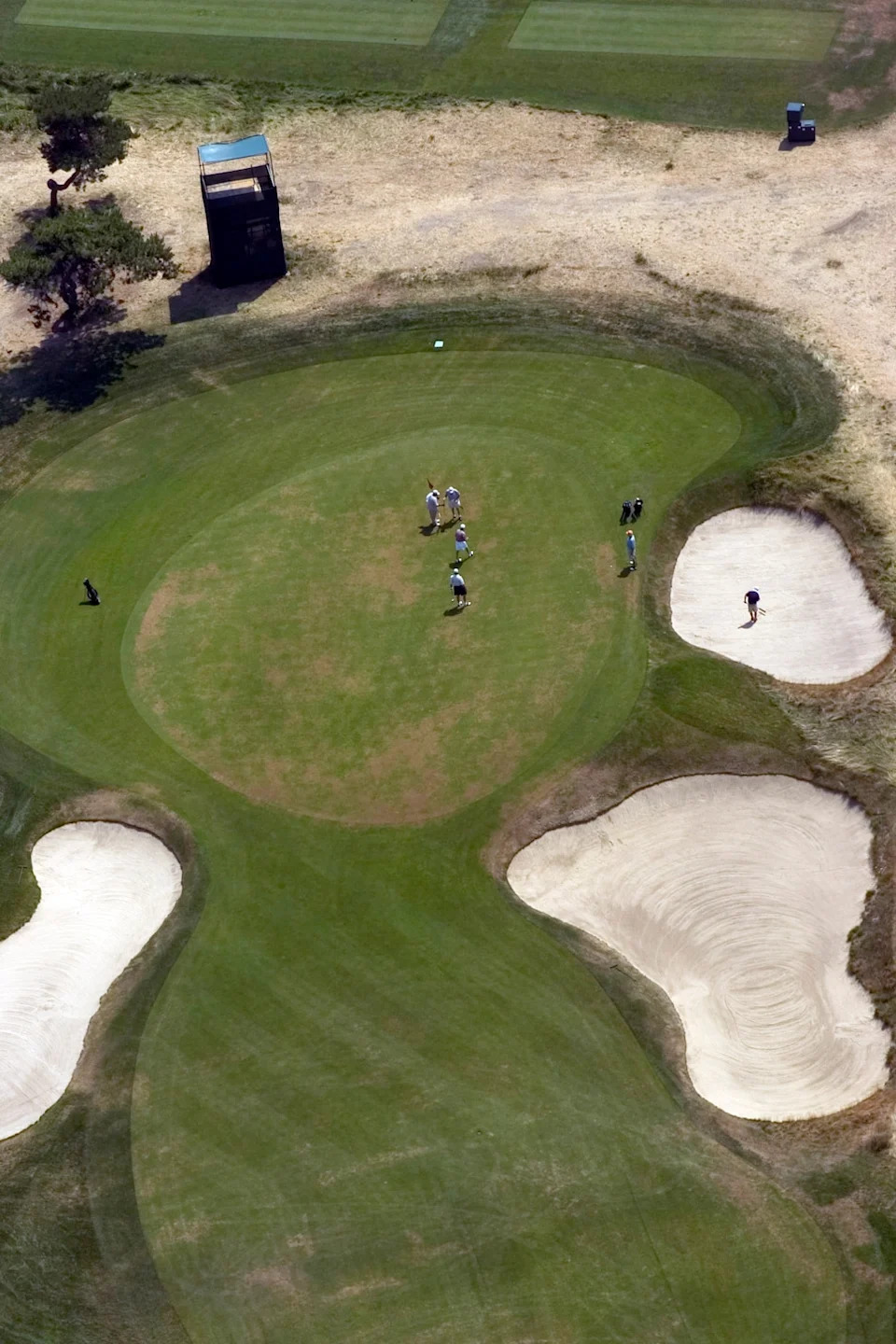
While the modern U.S. Opens at Shinnecock in 1986 and 1995 produced terrific contests and legendary champions, heroic shots and few complaints about course setup or conditions, 2004 almost ruined the course’s sterling reputation. Questionable setup and maintenance decisions, especially on the par-3 7th hole, pushed conditions to the brink. The 7th played at a ridiculous 3.65 for the final round, early twosomes were carding the hole in matching 6s and eventually the green had to be watered selectively between groups just to keep bunker shots and two-foot putts from rolling off the green. Sunday’s scoring average was 78.7 and 28 players didn’t break 80.
Advertisement
More on Shinnecock Hills
News U.S. Open 2026: The man charged with setting up Shinnecock outlines the delicate balance he’s seeking
Despite assurances it wouldn’t happen again, in 2018’s third round, early afternoon gale-force winds left the entire field foundering like so many distressed Downeasters. The normally genial Zach Johnson suggested “they’ve lost the golf course,” and most infamously, Phil Mickelson hit a moving ball after his bogey putt was accelerating off the green on the 13th hole. Only one hole played under par for the day.
Why will things will be different this time at Shinnecock? Or, more pointedly, can they be?
Advertisement
“If you put truth serum in anybody at the USGA, in ’04 and ’18, they would say that neither of those Opens lived up to our standards, and so that’s why this year is so very important,” said the USGA’s John Bodenhamer, chief championships officer who has been on site for three U.S. Opens at Shinnecock Hills and was on the setup team eight years ago. “After ’18, we said, ‘OK, let’s take a look back. Let’s see what happened and dig deeply and get better.’ I was asked to put that together, and so I understand what did happen.”
As was said at the time, had some hole locations been shifted by six inches, it could have avoided a large part of the discontent, and had greens been maintained more conservatively, maybe no one would have swatted a moving ball in frustration. Darin Bevard, the USGA’s senior director of championship agronomy and on staff since 1995, has seen it all first-hand. He, along with course superintendent Jon Jennings, who’s hosting his second U.S. Open at Shinnecock, has been instrumental in getting the course and the setup ready again this time.
Like those playing the championship, he also knows Shinnecock only lets you think you’re in control.
Shinnecock Hills, 7th Green — Where Can the Pin Go? Shinnecock’s par-3 7th, where the difference between a hole location and trouble is a single yard.
Advertisement
U.S. Open · Shinnecock Hills
Where can they put the pin on the 7th?
This is the surface of Shinnecock’s par-3 7th green, colored by slope. The USGA looks for hole locations on ground at 2% or less — the reasonable areas, shown in green. Hover or tap anywhere to read the actual slope, then notice how little of it qualifies, and how fast it turns severe.
Show the slopes Highlight the drop-offs Green speed (Stimpmeter)10.0 As mapped — membersu2019 pace Surface firmnessReceptive Watered, holding back front Hover or tap the green for its slope Reasonable hole locations —% of surface Reasonable — ≤2% (holdable) Marginal — 2–3% Severe — 3–6% Unfair — >6% How to read this. The surface is shaded by slope, painted from a one-yard grid transcribed from the StrackaLine survey of Shinnecock’s 7th (each point takes the value of the nearest survey reading); hover or tap to read the value at any point. The USGA looks for hole locations only where slope is roughly 2% or less. As green speed and firmness rise toward U.S. Open conditions, the slope a ball will tolerate falls below 2%, so areas that are reasonable at members’ pace become marginal or worse under tournament setup. “Highlight the drop-offs” rings the reasonable-or-marginal pockets that sit directly against ground two or more points steeper — where a putt that drifts a yard is gone. The record. The 7th was declared “unplayable” and hand-watered mid-round in 2004; the course got away from the USGA again on Saturday in 2018, when the opening-round scoring average of 76.5 was the highest in 25 years. Sources: Golf Digest, NBC/Golf Channel, BBC Sport. Slope grid transcribed from survey imagery; the speed-to-tolerance relationship is modeled. Illustrative — not an official pin sheet.
Advertisement
“The wind plays with Shinnecock from every direction, there’s just not a lot to slow it down,” he said. “Trying to keep the putting greens hydrated while balancing playability, it’s a very fine line, and you don’t have to miss it by much to get in trouble.”
The golf course itself is majestic and demanding, but even in its daily maintenance, it can be relentless. Jennings has been the superintendent since 2012 with nearly half a century of experience growing grass at the elite level, and he mentioned in a recent USGA Green Section podcast that the unique setting means ocean breezes in the summer can turn a humid morning into a dry and fiery afternoon. In a lot of ways, pretty much what happened in 2004 and 2018.
“Water management is probably the most critical thing at Shinnecock,” he said, noting that it’s common to have as many as 15 staff members watering the greens (known as “syringing”) from late morning to sometimes as late as 7 o’clock in the evening. “It’s a delicate balance. You want it firm for golf, but you don’t want to lose turf.”
/content/dam/images/golfdigest/fullset/2024/DSC_8153.jpg
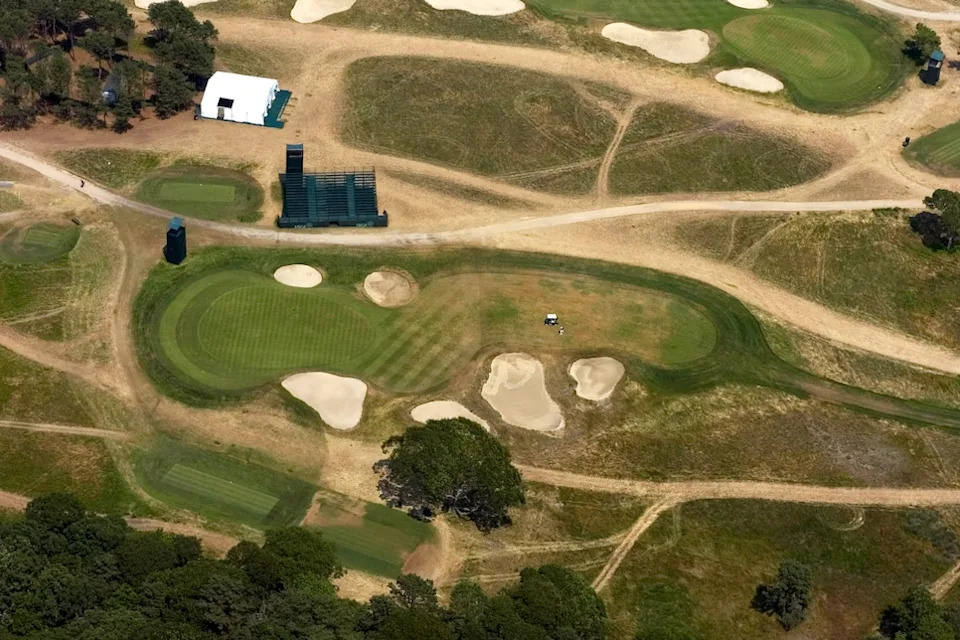
Aerial views of Shinnecock Hills from the final round in 2004, and the day after, show the extent of the dry, firm conditions.
/content/dam/images/golfdigest/fullset/2024/DSC_8936.jpg
/content/dam/images/golfdigest/fullset/2024/DSC_8962.jpg
/content/dam/images/golfdigest/fullset/2024/DSC_8940.jpg
/content/dam/images/golfdigest/fullset/2024/DSC_8959.jpg
As Jennings explained it, the moisture percentage in the greens at Shinnecock might typically range in a sweet spot of 16 percent at mid-morning but over the course of the day can drop to half that, what’s generally known as the wilting point. “It happens fast, and then you’re just chasing it,” he said.
Advertisement
But water has been used sparingly at past Shinnecock U.S. Opens. Shinnecock’s fine-bladed poa annua cannot thrive when moisture is sparse and the wind is up. As the anonymous host of The Daily Greenskeeper YouTube channel pointed out about green speeds of 11 at a drying out Shinnecock Hills in 20-mile-per-hour winds, “The same Stimpmeter reading that is achievable at 10 in the morning can become indefensible by 2 in the afternoon. Not because the mowing height was changed, not because the green was rolled again, but because the ambient conditions drove surface moisture below the threshold that makes gravity predictable on a sloped putting surface.”
And that’s not just putts. Firm up the greens through dry, windy conditions and all of a sudden a 7-iron could release at least 20 feet farther. Throw in the slope of the green and a missed target means the smallest of mistakes easily finds its way over the green. At Shinnecock, that change seemingly can happen on the walk between green and the next tee.

976543282
David Cannon
Advertisement
“I’ve never seen a golf course change that quickly,” Justin Rose famously said of Shinnecock about 2018’s third round. “We came off pretty much shell-shocked.”
Shinnecock’s predicament is fueled by location and weather, and neither of those are controllable, especially in June when the drastic differences in water temperature and land temperature in mid-afternoon can create a vacuum for the wind to appear almost out of nowhere. It is a meteorological lottery, said Rich Hoffman of Long Island’s News12, who’s been watching the weather in the region for a quarter-century. In June, he said it is common for the sea breeze to rush in and intensify from almost nothing in the morning to 25-mile-per-hour gusts by mid-afternoon. That means you can go from a softer course to a firmer course in minutes, or a firmer course to borderline unplayable an hour into your round. “It can really be a perfect storm of conditions, but you never know,” he said. “We joke about boating in the area, that if you can’t get your boat docked by 4, you could have serious problems.” The microclimate of Shinnecock’s location is fragile and weirdly variable such that as little as 10 miles to the west, you can experience temperatures and wind conditions that are completely different and entirely changeable by the hour. “You think it’s hard on golfers? Try being a weatherman.”
Of course, the technology of understanding course conditions is fundamentally different than it was two decades ago. Back then, there was a simple Stimpmeter to know how fast the greens were, and if a superintendent wanted to understand soil moisture to gauge turf firmness, he might stick a knife in the green to see how wet the blade got. Today, moisture sensors are as common as divot tools, and the TruFirm turf tester instantly assesses how much bounce there is in a putting surface. Also, the new golf-ball sized GS3 device reports all sorts of performance metrics (green speed, firmness, smoothness and trueness) to an iPhone in an instant. And there’s a rotating team of meteorologists on site to predict weather no matter how unpredictable.
What all of that means, and what the USGA has been developing is a new flexibility about course setup and conditions under Bodenhamer’s watch. There seems less of an overriding edict about even-par winning the U.S. Open at any cost. That belief led to bad decisions about hole locations and course maintenance. “We want it to be tough, but we don’t want to go over the edge,” he said. “If players shoot 21-under-par, we haven’t done our job. But if they shoot 10-over, we haven’t done our job either.
Advertisement
“Why should we force it to a score and make it about us? It should be about these great players and these great venues.”
Largely, though, setup has been the fundamental problem the last two Shinnecock U.S. Opens. Andy North, the two-time U.S. Open champion and ESPN analyst, suggested in 2018 “the golf course basically died this afternoon.” And then he dropped a bomb: “The way that they need to handle this is that you don’t come back here and play anymore until they change some of the greens.”
That was then. Now, North sits on the USGA Executive Committee, including the committee on championships. He thinks Shinnecock is the right venue, but only if they can get it right, and he knows despite all the preparations so much of getting it right is things that cannot be regulated. “It dries out to a point that it gets crazy,” he said. “It’s like you’ve lit a fire, and, obviously, you can’t put a dome on the place.”
Not only is there no dome for 2026, Shinnecock Hills really hasn’t been changed from 2018. The most notable difference will be widened fairways (some nearly 50 yards wide) to keep it more aligned with original designer William Flynn’s philosophies. The greens will still be relatively small, and still will play with significantly limited hole locations at championship speed. Generally, the USGA recommends holes at a U.S. Open not be set near slopes of more than 3 percent. At a green like the seventh at Shinnecock, according to an analysis by the green-mapping service Strackaline, that might mean five percent or less of the surface is pinnable. For all 18 greens, roughly nine out of every 10 potential pin positions sit on surfaces where putts are inherently defensive.
Advertisement
Those are just numbers, of course. In practical terms, the slopes of the greens transition from acceptable to dangerous pretty rapidly, especially if conditions go south in terms of high wind, firm turf and clear skies. Bodenhamer knows this, knows the edge upon which he will try to balance Shinnecock. No one knows for sure what the outer limits of that edge might be on a game day, or more explicitly, game-day afternoon vs. game-day morning. Shinnecock will do what Shinnecock does. Superintendent Jennings has seen that afternoon scenario play out more than anyone, and he expects it will play out again at the U.S. Open.
“It’s a delicate balance,” he said. “But the championship’s going to be played on the golf course that we play every day. There’s nothing contrived. If the wind picks up, it’s always a really challenging place, no matter how good you play. We’re allowing the golf course to really be itself. It’s letting Shinnecock be Shinnecock.”
Still, Shinnecock Hills of 2026 will be distinctly different than that of the last two tainted U.S. Opens in a couple of very vital ways. Bevard said the green speeds will be slowed from what they were eight years ago, and he also shared that there will be no equivocation on moisture management with syringing between morning and afternoon waves as conditions dictate. Bodenhamer even indicated he could see green speeds this year being nearly a foot slower than they were eight years ago.
“You know a U.S. Open putt when you see it,” he said. “It’s really not equated to a number.”
Advertisement
No one who has seen Shinnecock Hills dismisses its splendor, and yet no one who has seen the last two U.S. Opens there feels particularly certain that the weekend will end without calamity. But North is now happy to see the national championship back at the place he wasn’t sure it belonged again. “It’s such an amazing place,” he said. “You’d be crazy not to try to go back there.”
That’s the thing. Bodenhamer says player surveys routinely yield this assessment: “Oakmont and Winged Foot are the two toughest, Pebble Beach is your grandest, but Shinnecock may be your greatest.” That’s a lot of pressure for the man trying essentially to control a golf course that might be the least controllable in the U.S. Open lineup.
“When a player says I won at Shinnecock, we know it matters,” he said. “That’s why we want it to be tough, but we don’t want to go over the edge. That’s always our challenge. But there just are no guarantees. It’s just that type of place. It’s Shinnecock.”
Read the full article here