




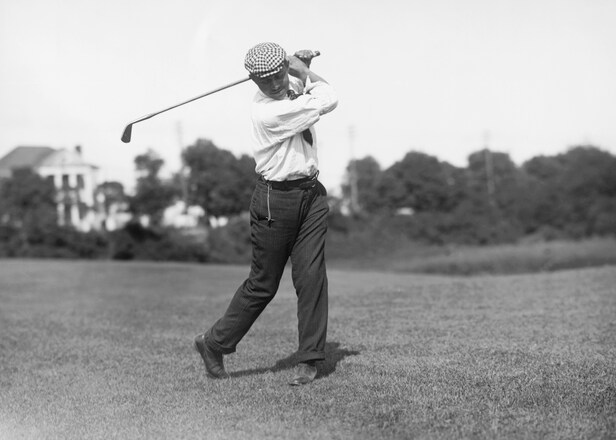
This year marks the 126th playing of the U.S. Open and the sixth time Shinnecock Hills has served as host. The championship has outlasted empires, survived two world wars and produced the most consequential leaderboards in American golf. But its history was nearly erased before it began. Here, at Shinnecock, in the summer of 1896, when a group of competitors threatened to walk out unless a Black teenager was removed from the field.
What happened set in motion what the U.S. Open would become.
Advertisement
The summer of 1896 was not a summer of easy things for John Shippen. He was 16 years old, maybe 17; the historical record is imprecise on the year of his birth, a fitting ambiguity for a man whose life the broader world would spend decades trying to make inexact. He had grown up near the grounds of Shinnecock Hills, the son of a Presbyterian minister who had come to the South Fork of Long Island to serve the Shinnecock Indian Nation. His mother was Shinnecock herself. Shippen had helped build Shinnecock Hills as a boy, part of the clearing crew that shaped the original course. Willie Dunn, the Scottish designer behind the finishing holes, taught some of the young workers to play. Shippen was a natural; by 16, he was Dunn’s full-time assistant, giving lessons, repairing clubs, keeping scores. He was, by then, the first American-born golf professional when the U.S. Open came to Shinnecock that July.
More U.S. Open preview stories
Golf Digest Logo Why can’t the USGA get Shinnecock right?


U.S. Open preview How does 2026 Scottie Scheffler compare to 2025, and what does that really mean for Shinnecock?

U.S. OPEN FAQs U.S. Open 101—Everything you need to know about this year’s major at Shinnecock Hills
Advertisement
The United States Golf Association was organizing only its second national open championship. The field was small, just 35 players, composed primarily of Scottish and English professionals who had immigrated to serve America’s burgeoning appetite for the game. They were proud artisans of the sport, protective of what they considered their domain.
When they learned that Shippen and Oscar Bunn, a player of Shinnecock Indian descent, had entered the field, a coalition of the immigrant professionals threatened a protest. They wrote a letter objecting to “colored boys meeting them on equal terms” and held a meeting before the tournament, threatening to collectively withdraw. A championship, they argued, was not a place for people like Shippen.

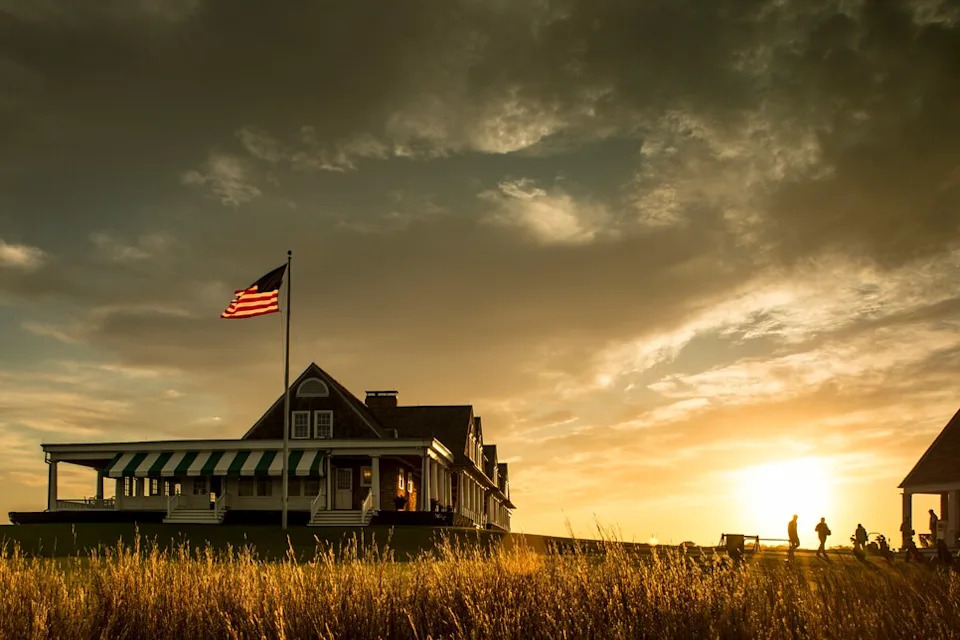
Shinnecock Hills Golf Club
Dom Furore
Advertisement
Theodore Havemeyer, a man whose fortune came from sugar refining, was the first president of the USGA, and he did not deliberate long. He told the protesting professionals, in terms that left no ambiguity, the USGA’s stance:
“Gentlemen, you can leave or stay as you please. We are going to play this tournament tomorrow, with them—and with or without you.”
The European professionals fell in line. The tournament began, and Shippen played. And for one round, John Shippen was the best golfer in America.
He had not merely survived the protest or tolerated his inclusion. He played knowing that men in the same field had tried to have him removed from it, that his right to compete had been debated and bargained over like a commodity, that his presence was considered, by some, an affront. He responded not with bitterness but with the only answer that mattered: for 18 holes, he played better than all of them, a 78 tied for the lead.

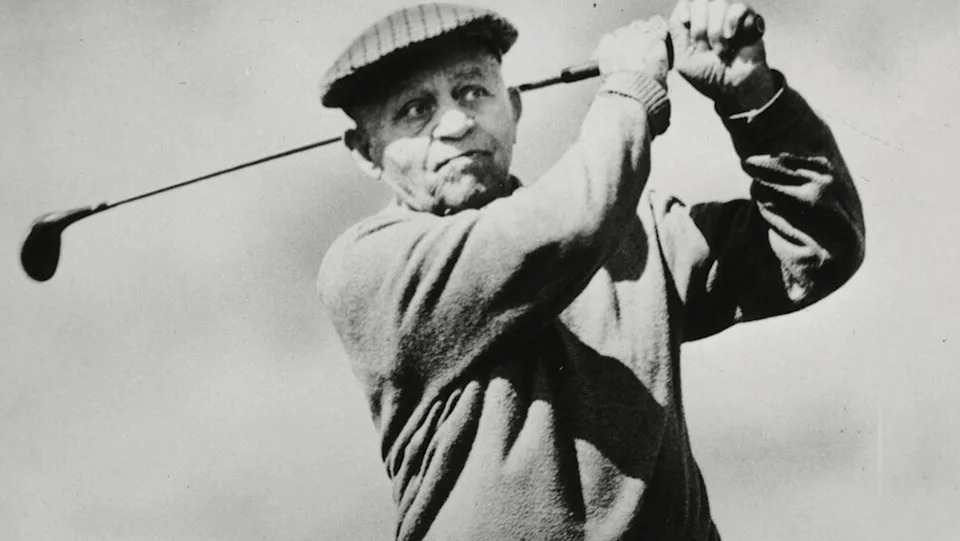
/content/dam/images/golfdigest/fullset/2026/6/john shippen.jpg
John Shippen was the first American-born pro in the country. (Photo courtesy of USGA Archives)
Advertisement
His position did not survive the second 18, Shippen’s score ultimately undone when making an 11 on the 13th hole. By the time the damage he reached the next tee, the championship was out of reach. He finished with a total of 159, good enough for fifth place. For his efforts, he won $10.
Shippen would return to the U.S. Open five more times. It took another 35 years before another Black man would compete at the U.S. Open. Shippen spent his professional life teaching golf at various courses, including Shady Rest Golf Club in New Jersey, one of the first golf clubs in the country to welcome Black members. He died in 1968, the same year that Bill Spiller, Charlie Sifford and Lee Elder were fighting battles Shippen recognized. History, for the most part, forgot him.
Much is made about the U.S. Open’s meritocracy, how it doesn’t care about your name, your résumé, your tour affiliation or your agent’s rolodex. It stems from Havemeyer’s defense of Shippen and the championship itself. He defended the premise that the Open was open. Not a closed thing, not a credentialed thing, nd that performance, not origin, determined who belonged.
And it stems from Shippen, a Black teenager, a child of Shinnecock. The psychological weight of what preceded that round would have undone most people. Instead, for a brief moment, he led the U.S. Open. If that 11 didn’t happen, he is remembered in a different light. Yet there’s a portrait of him at Shinnecock Hills today. His face is composed and steady, and does not look like a man who was nearly turned away. John Shippen looks like a man who belonged.
Read the full article here


