





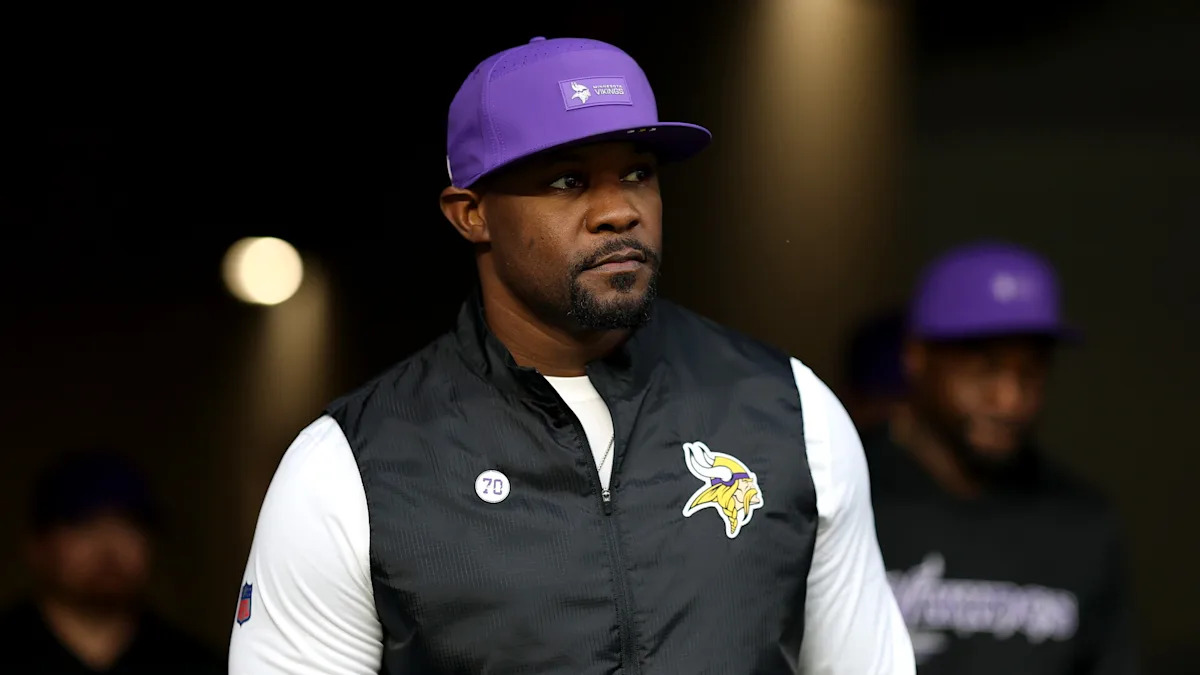
On one hand, the NFL has tried to keep the Brian Flores lawsuit from getting to the merits of the claims because it’s the first page from the standard big-company-that-has-been-sued playbook. On the other hand, delaying the Flores case delays the best available path to a long-overdue reckoning.
ESPN, which is now partially owned by the NFL, has posted an article regarding the Rooney Rule. The headline declares that coaches believe the process is “rigged” against them. (It’s refreshing that ESPN has pursued an issue that the league would prefer be ignored; we’ll see whether and to what extent ESPN promotes the article through its endless car wash of shows.)
Advertisement
The starting point, and centerpiece, of the ESPN story is the runaround former Raiders defensive coordinator Patrick Graham experienced after he had served as the league-mandated second minority interview for the Jaguars head-coaching job that went to Liam Coen in early 2025.
It was perceived to be yet another box-checking sham interview, aimed at allowing a team to comply with the Rooney Rule before hiring their preferred candidate.
Here’s the key paragraph from the ESPN article: “More than a dozen minority coaches declined to comment for this story, citing concerns that speaking candidly would jeopardize future opportunities. Among the 13 Black coaches who did speak — some on the record but most anonymously — the issue is clear: Even with hiring rules in place, they feel they cannot overcome ownership bias or the long-established relationships that shape hiring.”
Even Graham, who talked about his Jacksonville experience on the record to ESPN last year, declined to comment this time around.
Advertisement
Meanwhile, the NFL faces political pressure to abandon “DEI” efforts, now that the acronym has been morphed into a slur in sheep’s clothing. In Florida, attorney general James Uthmeier has been attacking the NFL over inclusion efforts. Nationally, the political winds continue to blow against the notion of placing diversity above merit. (As Jon Stewart observed earlier this week, “Meritocracy. It is a beautiful word. Where the fuck is it?“)
Back to Flores. Along with Ray Horton and Steve Wilks, Flores has fended off the NFL’s multi-year effort to vacuum their claims into the NFL’s secret, rigged, kangaroo court of arbitration. Now, after more than four years, it’s time to get down to talking to witnesses, gathering documents, and proving by a preponderance of the evidence that the NFL and many if not most of its teams make key hiring decisions with race being, consciously or not, a motivating factor.
It could get messy, but civil litigation is often uncivil. Owners and Commissioner Roger Goodell will be grilled under oath during pre-trial depositions. Some or all of the 25 minority coaches who won’t speak to ESPN reporters will receive a subpoena to testify under oath, which will not only protect them from retaliation but compel them to tell the truth, the whole truth, and nothing but the truth.
The Flores case becomes the only way to allow the facts to be developed, presented, and evaluated. A jury will determine, based on all of the evidence, whether Flores and his colleagues have shown that the NFL’s teams have a longstanding racial bias when it comes to hiring head coaches, offensive coordinators, and General Managers.
Advertisement
Many will say (because they always do) that businesses can hire whomever they choose. That opinion is grossly misinformed; federal law and the laws of many states prevent certain factors from being considered when hiring (and firing) decisions are made.
Real change can be effected in American society in one of three ways: the passage of legislation, the implementation of regulations, or the verdicts rendered through litigation.
That’s why large companies hate lawsuits. They can’t control a process that could force them to change their ways by attaching a massive financial consequence for their past failures to do so.
At some point, the NFL may realize that, win or lose, a public trial in open court will have significant negative consequences. The league and its teams could be tempted to make Flores and company a settlement offer they can’t refuse.
Advertisement
That’s the key. Will the league make an offer so large that the individuals won’t be able to reject it? Will they reject it anyway, realizing that taking their claims all the way to a verdict may be the only way to get the NFL and its teams to finally change their ways?
Read the full article here