






With the Avalanche’s front office reshuffling bringing Joe Sakic back into full control, Colorado suddenly finds itself steady at the top—but staring down a series of decisions that will quietly define whether its championship window stays wide open or starts to narrow.
Chris MacFarland’s departure has shifted day-to-day authority back to Sakic, even if his fingerprints were already all over the organization’s recent direction. The core remains elite, but maintaining that status in a rising Western Conference will require precision work across contracts, roster balance, and internal stability.
Advertisement
Cale Makar is arguably the Avalanche’s most impactful player, but Colorado isn’t built around any single name—it’s built around a group that all feeds into what they’re trying to accomplish as a team.
Still, it’s impossible to ignore how central he is to everything they do.
Eligible for an extension beginning July 1, Makar is in position to reset the market entirely for defensemen, with projections climbing into the $20 million range annually. He will be 27 at the start of the 2026-27 season, still squarely in his prime years, with the kind of runway that makes long-term investment less a question of “if” than “how much.”
Advertisement
Colorado’s cap outlook suggests they can make it work, with roughly $37.7 million projected for 2027-28 when a new deal would likely kick in. But the challenge isn’t just fitting Makar in—it’s building everything around him while also planning for future extensions for key pieces like Artturi Lehkonen and Nicolas Roy.
This isn’t just a contract negotiation. It’s the framework for the next era of Avalanche hockey.
If Makar is the centerpiece, then the real question for Colorado is what the blue line looks like around him—and right now, that’s where they still have some work to do.
Advertisement
One of the most obvious needs is a dependable left-handed defenseman. Not a flashy swing-for-the-fences pickup, but someone who can settle things down in the second and third pairings, take some pressure off the top guys, and survive the long grind of an 82-game season before things get even heavier in April.
Around the league, that kind of addition usually isn’t about headlines—it’s about trust. It’s the type of defenseman who can handle tough minutes, move the puck cleanly, and not get exposed when the game tightens up in the playoffs. In a win-now window, those quieter pieces often matter more than people realize.
If I were Colorado, Ryan Shea is exactly the kind of player I’d be looking at.
He’s simple in the best way. The 6-foot-1, 200-pounder, stays in the right spots, closes quickly, and uses an active stick to take away plays before they really develop. A lot of what he does doesn’t jump off the screen, but you notice it in the flow of the game—broken-up passes, plays killed early, pressure diffused before it turns into chaos.
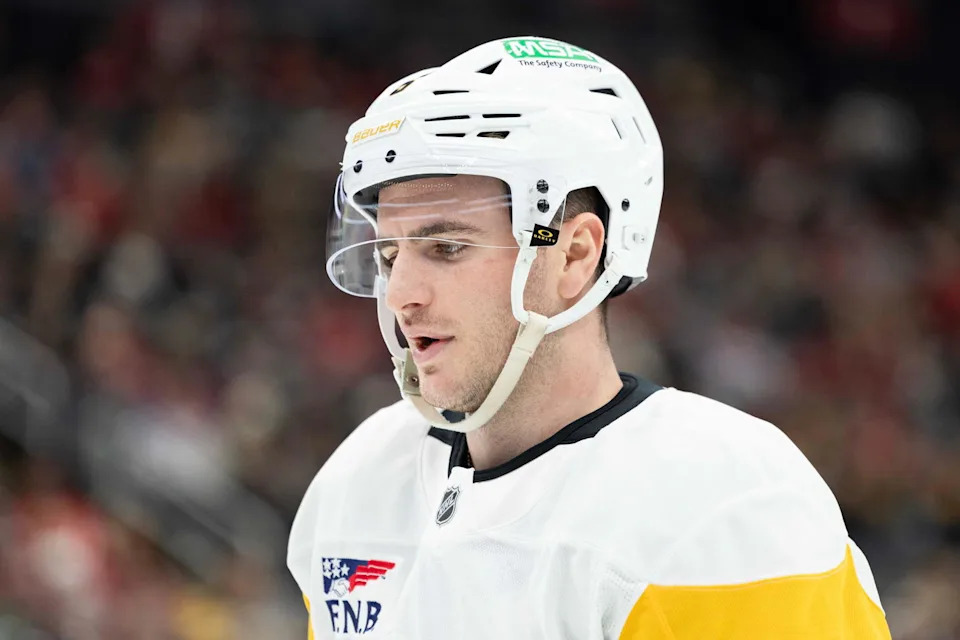
He’s also got enough size and strength to hold his own in a bottom-four role over an NHL schedule. Add in penalty-kill ability, and you’re already checking off an important box for a contender. And when he’s moving the puck well, he’s not just throwing it away—he can make a clean first pass and help Colorado get out of their zone with control, which is something they’ve had lapses with at times.
Advertisement
It’s not a glamorous move, but it’s the kind of one that helps good teams stay stable when everything tightens up.
No matter how strong the top of the lineup looks, depth down the middle remains the Avalanche’s most persistent concern.
Nathan MacKinnon continues to drive everything offensively, but the group behind him has yet to fully settle into reliable, consistent roles. Brock Nelson, Nazem Kadri, Nic Roy, and Jack Drury have all flashed usefulness in different situations, but the overall structure still leans heavily on MacKinnon carrying the hardest matchups and most demanding minutes.
Advertisement
That imbalance becomes more pronounced in the playoffs, where depth centers aren’t asked to be stars—but are expected to avoid being liabilities. Even modest improvements in that area would give Jared Bednar more flexibility in managing matchups, distributing minutes, and protecting his top players over long stretches.
For a team built to contend, it’s less about finding another headline scorer and more about closing the gaps that opponents inevitably try to expose.
Beyond roster decisions, there’s another piece of stability Colorado can’t really afford to overlook—what’s happening behind the bench.
Advertisement
Jared Bednar has been a constant through everything the Avalanche have built, and his system is a big reason they’ve stayed in the contender conversation year after year. That’s why an extension feels less like a formality and more like something that would settle things down. It’s not about rewriting his resume—it’s about removing a question that can quietly linger as a season moves along.
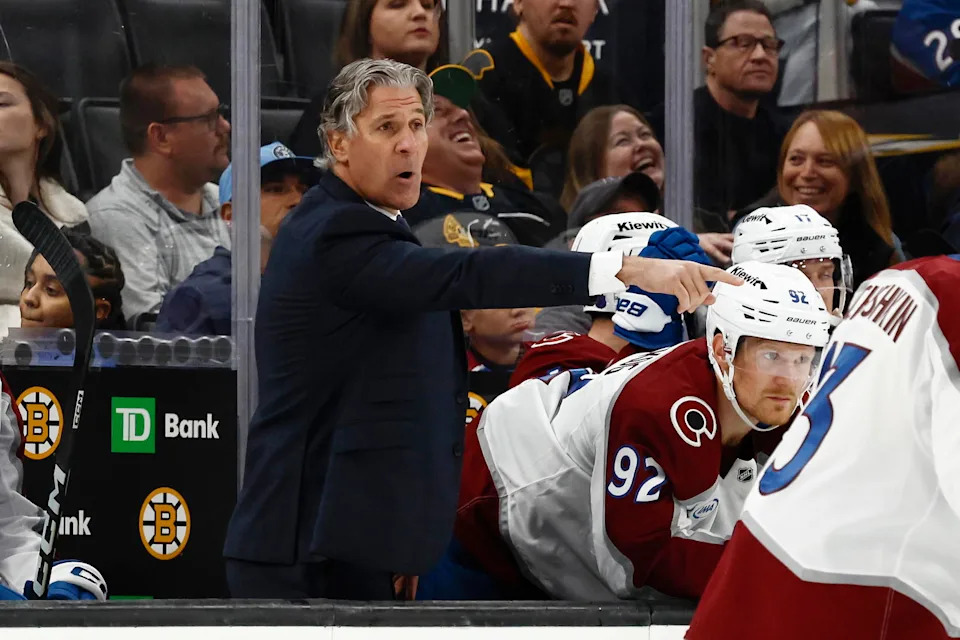
Keeping Jared Bednar should be a priority to eliminate a distraction with the Cup window still open. Credit: Winslow Townson
Because even when everything is going well, you don’t want unnecessary uncertainty creeping in. Once a coach is heading into the final stretch of a contract, it can become a talking point whether the team wants it to or not. Locking Bednar in longer would simply take that off the board and let the focus stay on the ice.
It also helps keep things steady at a time when Colorado is already adjusting parts of the roster around a core that knows exactly what winning hockey looks like. The less distraction around the edges, the easier it is to stay locked in on the bigger goal.
Advertisement
With Sakic back in full control, the real question is whether that stability turns into another real push at a championship—or just another strong season that falls a little short when it matters most.

Image
Read the full article here