





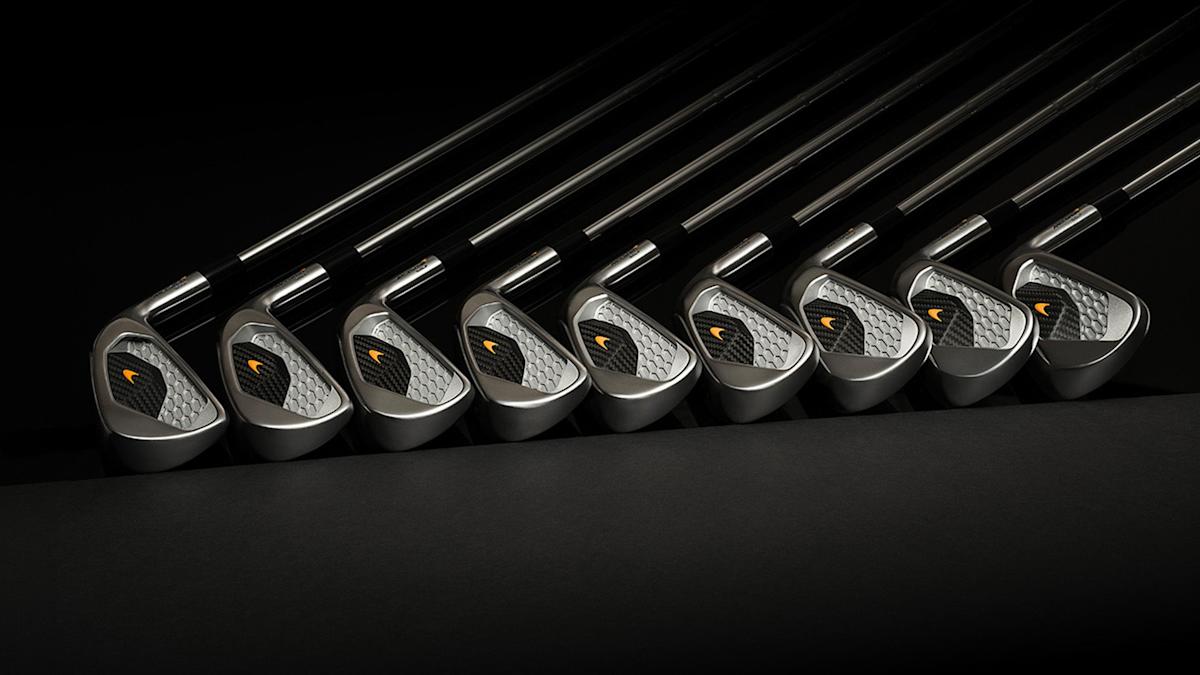
McLaren Golf unveiled the work it had been hinting at for the past couple of weeks: two different iron models, both built with MIM technology that provides performance both for better players (Series-1) and players looking for some help (Series-3). Many observers have been questioning why McLaren started a golf division in the first place, but the more important question to me is how do you build golf clubs from scratch?
The McLaren Golf Team
Let’s make one thing clear: These clubs are not a collaboration or a branded offering with the McLaren badge. They are made from scratch designs by some of the brightest minds in the game, including JP Harrington, founder of JP Wedges and a former Titleist employee, who is McLaren’s senior design manager for irons and wedges, and Ryan Badgero, a 12-year veteran from Cobra Golf, who is McLaren’s director of engineering. They’ve also attached other operational staff to the brand who are all golf industry veterans. McLaren has no interest in building up to success. They want to start there.
McLaren also has some big names in the game putting their own money on the line with the venture. Justin Rose has been working with the team from the start. He’s not only a McLaren Golf athlete but also an investor in the business as well as the primary player tester when developing the shape and performance of the Series-1. Michelle Wie West is also lending her name to the brand as she comes out of retirement this year to play a few tournaments on the LPGA with the new McLaren Golf equipment.
Justin Rose and Michell Wie West have both joined the McLaren Golf team. McLaren Golf
Metal Injection Molding
With a stacked team like this, McLaren has a nice head start. They know what works, what doesn’t and what to test before moving forward. And, yes, they did test. Everything. Forgings, castings and printing were all tested and experimented with until the team landed on Metal Injection Molding, a process that allows them to be highly specific about the designs, including making their own proprietary metal blend for the new irons.

In-hand photos of the new McLaren Golf Series-3 irons. Jack Hirsh / GOLF
When I asked the engineering team why they are so dedicated to MIM technology, something that has been around for a little while, here’s what they said:
“With McLaren looking to get into the golf space, evaluating cutting edge manufacturing techniques in irons was at a top priority. MIM has its foundations in extremely precise aerospace and biomedical uses and hadn’t been explored to its full capabilities in golf, so taking a deeper look into its potential was really exciting. Our exploration process showed us that MIM would allow us to refine and customize proprietary McLaren metal blends to produce the feel and performance of a forging while also allowing us to create complex, near-net parts that limit the amount of post processing and result in an iron more consistent to our design intentions.”
MIM also allowed the McLaren team to achieve shapes and mass properties that they weren’t able to achieve with standard forging or casting. The biggest surprise to me in talking with the team was that they are using a MIM process for everything — even the tungsten weights that get placed inside, which are all specifically designed and positioned per loft, per model. Using a MIM process allows them to make sure that their tolerances are incredibly tight, meaning there is less finishing work that needs to be done. The heads have a “net-near shape” when they come out of the MIM process. Less finishing work means a greater level of consistency from head to head.
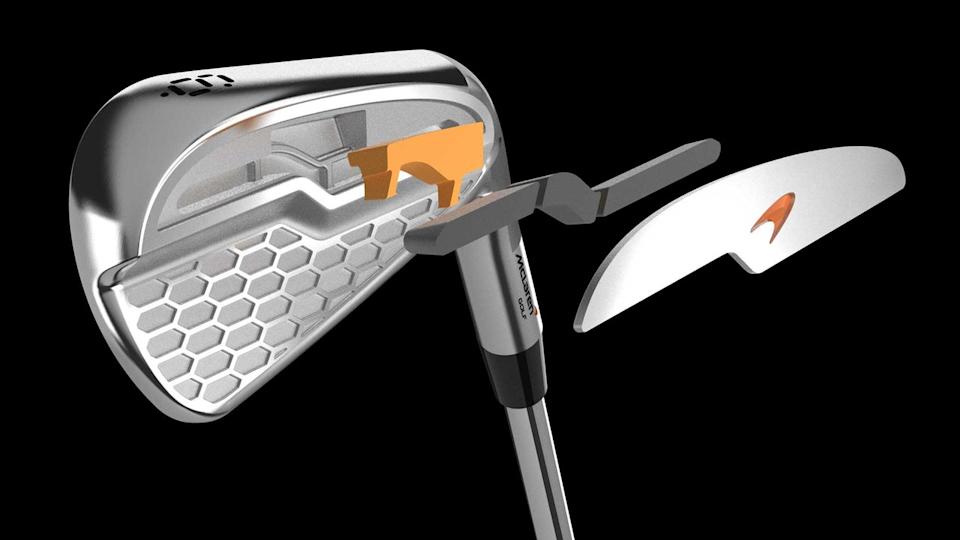
The new McLaren Golf Series-1 irons exploded. Here you can see the CG calibration bar created with MIM technology that gives them more tolerance control. McLaren Golf
MIM is also a clean process. There aren’t giant forging presses, big factory floors and dirty work spaces. Think if an Apple Store was making golf clubs: airy buildings with nice lighting, and clean machines pumping out irons. In the supercar market and on the Formula 1 circuit, McLaren is known for luxury, precision and best-in-class design. McLaren Golf is expected to be no different. They’ll hold themselves to the same high standards as any other McLaren division.
The McLaren team went through over 100 prototypes before settling on what we now know are the Series-1 player’s blade and the Series-3 player’s distance offerings.
Where do you actually start?
Once the McLaren Golf team settled on a process, they got to work creating shapes and involving players like Rose and Wie West in their testing. Rose was a huge part of this development. The Series-1 is essentially Rose’s “perfect” iron, and now we all get to share in that. I haven’t been able to hit them just yet, but from photos and some in-hand time that I have spent with the irons, they sure are cool.
To start the process of designing these new irons from scratch, the team dove into the shape first. How the club sits behind the ball is huge, and for players at the highest levels this look can be the difference between testing a product and handing it right back to a rep or designer. Both the Series-1 and Series-3 have a nice presence behind the ball. The Series-1 is obviously a smaller package with a thinner top line and a shorter blade length, but the Series-3 was surprising. The listed specs sheet for the Series-3 may trigger some folks who are anti-offset, but the way the design hides the offset is really nice. You definitely don’t feel as much offset being there as there is.

McLaren Golf Series-3. McLaren Golf
Once they’ve determined the overall shape and how the club will look behind the ball, they then dive into the sole, which from a performance standpoint can be the next difference in a long list of items that can turn off a player. How the club gets through the ground determines how a player is going to strike the ball. That strike determines performance. Bad turf interaction can halt progress immediately.
McLaren took an interesting approach here with the Series-3, with a wider more forgiving sole design that has a unique sole cut in the heel section. This little cut helps to get the heel of the club through the turf more efficiently. The Series-1 have a slightly narrower sole, but nothing I would consider knife-like with a decent amount of pre-worn leading edge relief that helps the clubs get through the turf quickly without digging too harshly.
With the shape dialed, it’s all about CG location and mass properties. Making sure that the CG of each iron, per loft, is dialed into the proper launch expectation and performance windows is crucial. This was one of the biggest areas where Rose impacted testing. Both the Series-1 and Series-3 have mass property targets that are tight on tolerance.
Another way that MIM has helped with the creation of these parts is in the CG calibration weights that live inside the cavities of both irons. These calibration weights are not uniform across the set. They’re different weights and slightly different shapes in every single head to help create a perfectly uniform feeling set, while making it easier to launch the lower-lofted clubs and control the higher-lofted options. They’re also used as a way to makes sure that headweights for each iron head is consistent. The weights won’t be user-serviceable, meaning they aren’t meant to be a swingweighting tool but rather a final calibration for headweight and CG location that the McLaren factory will install properly before being sent out to custom builders, or to the homes of new McLaren Golf players.
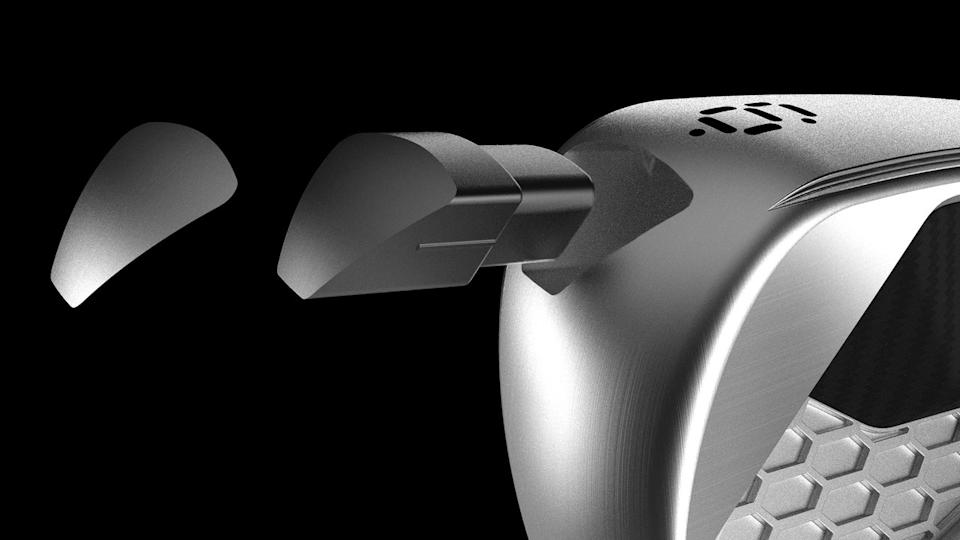
Tungsten in the toe of the McLaren Golf Series-3 along with it’s housing. All create with MIM technology. McLaren Golf
How did they ‘McLaren’ the irons?
To me, this is where some of the coolest back stories make their way out. Both irons feature a mesh pattern on the exterior of the iron that mimics a design feature on the rear of the McLaren W1 supercar. That mesh design is also structural; it’s not there just for decoration. It was designed to help them save weight that could then be moved lower and toward the perimeter to increase the MOI of both different models without losing and integrity in strength, sound or feel off the face.
The Series-3 also has the carbon fiber bonnet in the back, which is probably the more obvious connection back to McLaren Automotive and McLaren Racing. I love that they found a way to include this little bit of carbon fiber in the Series-3 because it again gives a nod to McLaren auto while also serving another function. That bonnet was designed to help improve sound and feel, and by utilizing carbon fiber they were able to find some unique properties. After hitting the Series-3 on course, I have to say the sound and feel is fantastic for this classification of iron.

The structural mesh design on the McLaren Golf irons was inspired by the rear design of the McLaren W1 Supercar. AUTOCAR UK

The Series-3 carbon fiber bonnet and structural mesh. Jack Hirsh / GOLF
The last little nod of course is the numbering on the sole, going with a digital pattern that connects back to McLaren Racing. I love this, too. It’s an easy way to differentiate the irons from others on the market, it connects back to the main McLaren brand that people are familiar with and, honestly, it’s just a cool idea. It’s new, it’s different, it’s fun. No harm in that.
McLaren’s done a good thing here
I’m personally excited about what McLaren is doing. I think it’s a hell of a thing for a giant legacy brand to take this sort of approach in golf. Yes, they’re expensive. No, not everyone will be able to get them. That’s the last thing that should be on any of our minds, though. McLaren isn’t setting out to take down TaylorMade or Callaway. They’re setting out to make sure that they reach their market, their customer. That customer is on the more affluent side of the market, and that customer cares about looks, precision and details that they may not even see but they’re excited to own. (And to brag to their buddies about!)
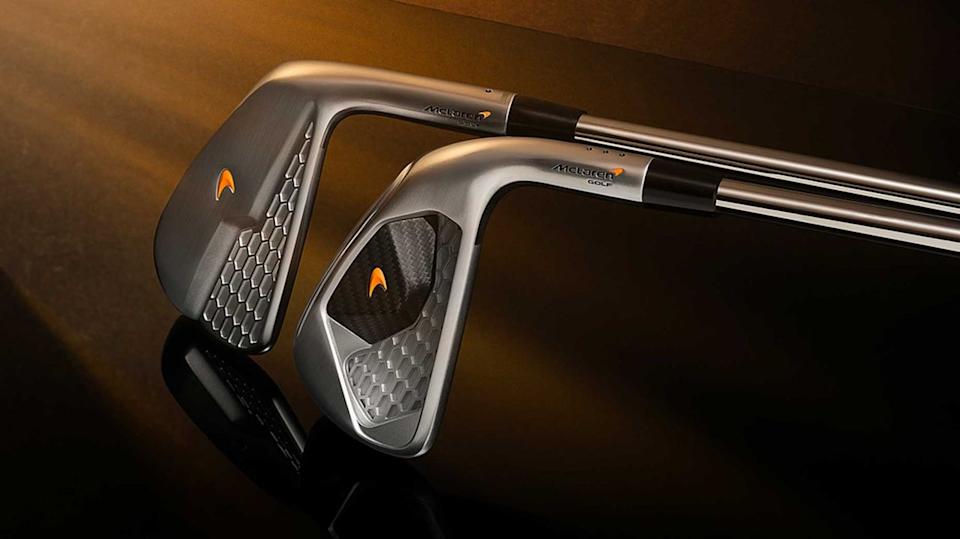
.McLaren Golf’s new Series-1 and Series-3 irons. McLaren Golf
McLaren fans are going to buy the gear either way. McLaren easily could have started its golf division as a badging company by just throwing their logo on something else so they could sell to their fan base, but they have chosen to start from scratch, design their own product and spend time honing in their craft and their offerings so that those who want the bragging symbol in the bag will also have the performance envy to back it up. McLaren isn’t about the logo or the name; it’s about performance. McLaren Golf now follows in those large footsteps. So far, they’re filling them nicely.
For the moment, the Series-3 are all we’ve been able to get in our hands, but the Series-1 official launch will be following soon. For more information on the new brand and iy equipment as well as the chance to grab some McLaren Golf merch, visit mclarengolf.com.
The post Inside McLaren Golf: How the supercar-maker designed golf clubs appeared first on Golf.
Read the full article here