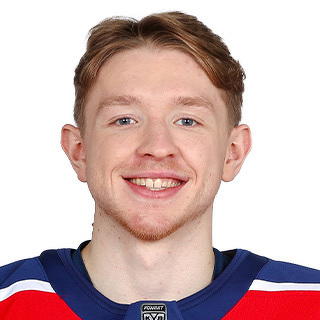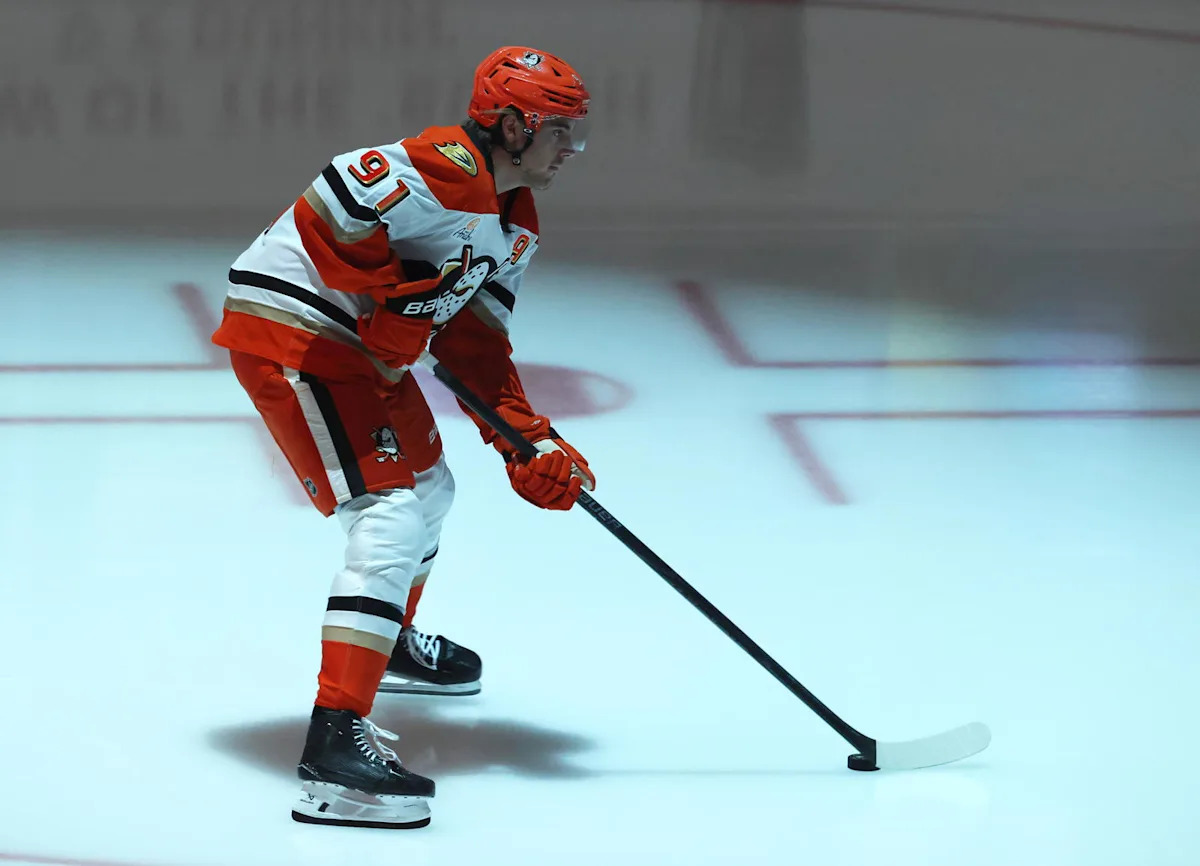
As of writing this, it’s T-minus 48 hours until the Anaheim Ducks need to decide on whether or not to match the offer sheet extended to, and signed by, Leo Carlsson from the Philadelphia Flyers to the tune of five years and $18 million.
As compensation, if the Ducks were not to match, they would receive the Flyers’ next four first-round picks. Like the Ducks, the Flyers took a sizable step in their build toward contention in 2025-26, making the playoffs and advancing to the second round. If the Flyers were to add Leo Carlsson (21) to their roster, it can be assumed that their next four first-round picks, though unprotected, will likely land in the 20th-32nd overall range.
Advertisement
Ducks Sign Tyson Hinds to Two-Year Contract Extension
Report: Ducks Sign Pavel Mintyukov to Five-Year Contract Extension
It’s widely accepted that Carlsson is worth more than four late first-round picks. It’s also widely accepted that he isn’t worth an AAV of $18 million just yet, a price that will have unprecedented ramifications for the Ducks’ cap sheet moving forward (and every team’s cap sheet moving forward).
However, to the Ducks, at this point in their franchise history, Leo Carlsson’s value far exceeds four first-round picks and is much closer to the $18 million AAV number, potentially even exceeding it.
Advertisement
On the ice, Carlsson has blossomed into the straw that stirs the drink of what the Ducks accomplish offensively. He brings a rare combination of size, skill, and speed that most teams can only dream of acquiring.
In his 201 NHL games over the first three years of his career, he’s learned how best to build up speed in open ice and has become one of the top puck transporters in the NHL. He’s a menace when he can find open ice, which is quite often, and is deadly when attacking downhill. He’s one of the few players who can bring an entire building out of their seats.
In 2025-26, he added change-of-pace elements to his offensive repertoire, which, when compounded with additional confidence and understanding of what works at the NHL level, rendered him a true star player.
As far as he’s come and as impactful as he’s become on a game-to-game, shift-to-shift basis, he’s seemingly just scratching the surface of his ultimate potential.
Advertisement
His new contract will make him the highest-paid player in the NHL, which might come as a surprise given his relatively modest production in his breakout year with 67 points (29-38=67) in 70 games.
However, peeking under the hood, he was in the early Hart Trophy conversation through the first couple of months of the season, scoring 41 points (17-24=41) through his first 33 games, but his production fell off as he was attempting to play through a rare thigh injury (Morel-Lavalle’s lesion) until he ultimately required surgery.
As advertised, Carlsson was Anaheim’s best player during their run to the second round of the playoffs, where they lost to the eventual Western Conference champion Vegas Golden Knights in six games. He finished with 11 points ( 4-7=11) in 12 games during his first taste of playoff experience.
If possible, what Carlsson represents to the Ducks organization exceeds his value on the ice or on the depth chart.
Advertisement
He has become the face of the franchise, the face of Swedish hockey, and for rebuilding teams like the Ducks were for so long, he represents the very reason for entering a rebuild in the first place.
True #1 centers in the NHL are rare and can typically be only acquired at the very top of the NHL draft, and only if teams are lucky enough to be drafting there in a year when one is available. If they’re acquired via trade, they’re typically extremely expensive, and if they’re acquired via unrestricted free agency, they’re likely past their true prime years (and also very expensive).
Many rebuilds come and go without acquiring a player of Carlsson’s caliber. The Detroit Red Wings were never able to draft one during their elongated rebuild, nor were the Carolina Hurricanes, Calgary Flames, Montreal Canadiens, and, of course, the Philadelphia Flyers.
Christopher Hanewinckel-Imagn Images
At the mid-point of their painful seven-season playoff drought, the 2022-23 season, where they recorded a franchise-worst 58 points in the standings, the idea of the Ducks hitting rock bottom and earning the right to select either Connor Bedard, Adam Fantilli, or Leo Carlsson in June 2023 was the light at the end of a long, dark tunnel.
Advertisement
The Ducks lost the first lottery in 2023, but won the second, and that pick would become tied for the highest the franchise had ever selected (2005, Bobby Ryan).
The public consensus had Fantilli ranked above Carlsson, after Bedard, but in somewhat surprising fashion, the Ducks selected Carlsson. They identified him as the best available player at that spot in the draft and as the centerpiece of their entire rebuild.
He was their guy, and the Ducks would only go as far as Leo Carlsson could take them. He represented the reason for all of it: the selling of former core pieces, the bottom-of-the-standings seasons, and the growing pains of a new, young core. (To put it even more dramatically) He was tasked with bearing the torch and leading the Ducks out of the darkness.
The decision to postpone negotiations with a player as important to the Ducks as Carlsson has seemingly cost the team millions of dollars in cap space. If they were to lose the player, it could prove far costlier in the grand scheme of the organization.
Advertisement
Speculation: Will Ducks GM Pat Verbeek Retaliate for Leo Carlsson Offer Sheet in the Future?
Speculation: To Match or Not to Match, is There a Hidden Third Option?
What Will the Ducks Look Like if They Match Leo Carlsson’s Offer Sheet?
Anaheim Ducks Outlook Should They Choose Not to Match Leo Carlsson’s Offer Sheet
Read the full article here