







Two huge developments have occurred this season in my golf game. 1. I’ve added swing speed and am hitting the ball farther than ever. And 2. I’ve started wearing spiked golf shoes for the first time since high school.
I’ve been asking myself if these two things are related, and the answer I’ve arrived at is … maybe? When I started picking up swing speed, I started using the ground more in my swing. And when I use the ground more to generate power, I found it’s easier with a better grip of the turf. So, while my new spikes may not be the sole reason for my newfound power, they certainly don’t hurt in that regard.
Advertisement
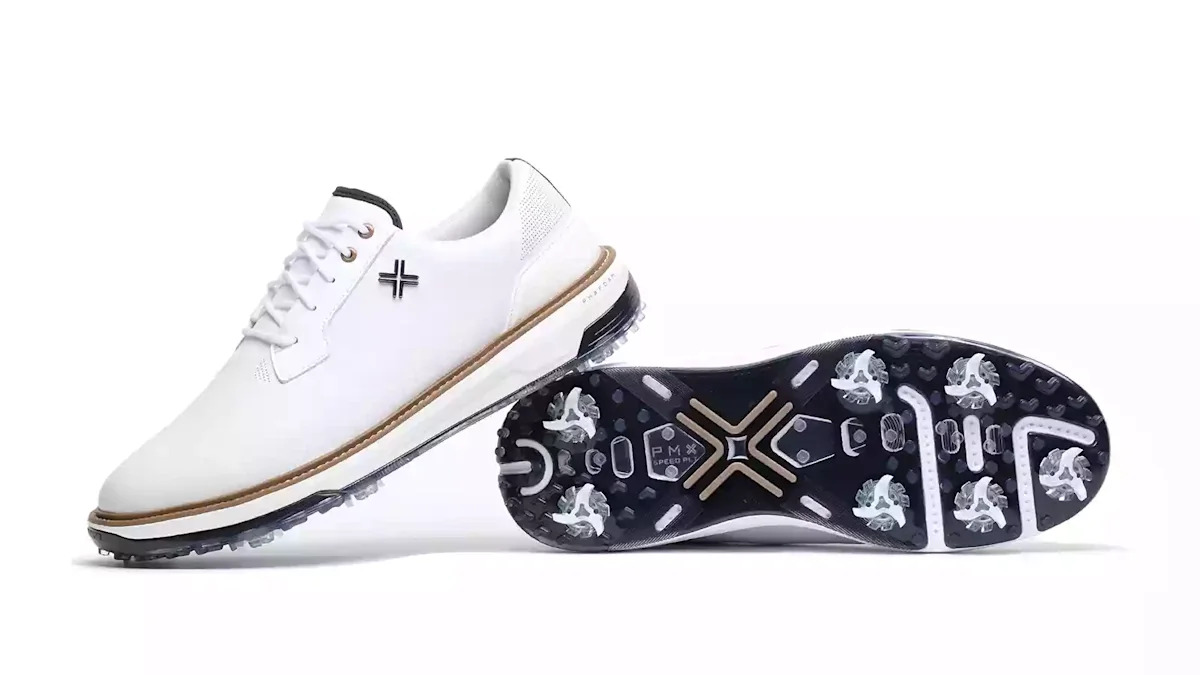
I came to the conclusion I needed to switch to spikes earlier this summer after a particularly soggy round at Bethpage. Although my trusty spikeless shoes were great for comfort, they didn’t afford me the stability I needed in the rain. Shortly after that round, I was the proud new owner of some PAYNTR Reserve Classic Tour RS shoes.
Reserve Classic Tour RS
Reserve Classic Tour RS
CLARINO Trivela™️ microfiber upper delivers lightweight support and flexibility WATERPROOF+ breathable membrane fused to lining and sealed with a waterproof bottom gasket. ARIAPRENE® tongue & bootie offers supreme foot lockdown to provide maximum stability and lightweight, breathable support. TPU Outsole, with Fast Twist insert system, delivers traction in three dimension for the life of the shoe. PMXNITROGEN+ Footbed delivers lightweight responsive cushioning for the life of the shoe. PMXFOAM Midsole with mock leather welt PMXSpeed PLT
Advertisement
$180.00 from Fairway Jockey
Since switching over to my spiked PAYNTR’s, it got me asking a simple question: does your swing speed change based on spiked shoes vs. spikeless? So, I decided to run an informal experiment. Five swings at cruising speed and five swings going all out in each pair of shoes, conducted over two separate days. Here’s what I found.
|
Day 1 |
Day 2 |
|||||
|
Spikeless |
Spikeless |
|||||
|
Cruising |
Clubhead speed (mph) |
Ball speed (mph) |
Cruising |
Clubhead speed (mph) |
Ball speed (mph) |
|
|
99 |
146 |
99 |
146 |
|||
|
100 |
140 |
98 |
141 |
|||
|
99 |
148 |
98 |
145 |
|||
|
102 |
151 |
99 |
144 |
|||
|
102 |
147 |
99 |
146 |
|||
|
Avg. |
100.4 |
146.4 |
Avg |
98.6 |
144.4 |
|
|
Swing speed (mph) |
Ball speed (mph) |
Clubhead speed (mph) |
Ball speed (mph) |
|||
|
All out |
102 |
148 |
All out |
101 |
147 |
|
|
103 |
151 |
102 |
152 |
|||
|
102 |
144 |
101 |
149 |
|||
|
102 |
144 |
102 |
152 |
|||
|
103 |
149 |
103 |
154 |
|||
|
102.4 |
147.2 |
Avg |
101.8 |
150.8 |
||
|
Spiked |
Clubhead speed (mph) |
Ball speed (mph) |
Spiked |
Clubhead speed (mph) |
Ball speed (mph) |
|
|
Cruising |
102 |
145 |
Cruising |
98 |
142 |
|
|
102 |
148 |
99 |
145 |
|||
|
103 |
153 |
101 |
150 |
|||
|
101 |
146 |
101 |
151 |
|||
|
103 |
145 |
102 |
151 |
|||
|
Avg |
102.2 |
147.4 |
Avg |
100.2 |
147.8 |
|
|
Clubhead speed (mph) |
Ball speed (mph) |
Clubhead speed (mph) |
Ball speed (mph) |
|||
|
All out |
104 |
148 |
All out |
102 |
152 |
|
|
103 |
149 |
103 |
154 |
|||
|
104 |
150 |
102 |
153 |
|||
|
103 |
148 |
102 |
152 |
|||
|
104 |
154 |
102 |
152 |
|||
|
Avg |
103.6 |
149.8 |
Avg |
102.2 |
152.6 |
My takeaways
At my “all-out” swing speed, the spiked shoes produced a noticeable and consistent increase in ball speed compared with the spikeless shoes. Across both testing days, the average ball speed with spiked shoes was 151.2 mph, compared with 149.0 mph in spikeless shoes — an increase of 2.2 mph, or roughly 1.5%. Interestingly, this improvement occurred even though average clubhead speed was only 0.8 mph faster with the spiked shoes. That suggests the benefit wasn’t simply that I was able to swing faster. I was also able to translate that speed into ball speed slightly more effectively.
Advertisement
The most interesting part of the results was the consistency of the ball-speed advantage at all-out effort. On Day 1, the spiked shoes produced 149.8 mph of average ball speed versus 147.2 mph in the spikeless shoes. On Day 2, the averages were 152.6 mph versus 150.8 mph. In both cases, the spiked shoes came out ahead. While the differences aren’t huge, the consistency across both days suggests there may be a stability advantage when swinging at higher speeds. My conclusion is that the additional traction and stability provided by the spikes may help me stay more balanced and stable through the swing, allowing me to make more solid contact when I really try to hit the ball hard.
It’s worth emphasizing that these results are far from scientific. This was a small, amateur experiment involving only five swings per condition on each of two days, using relatively rudimentary measurements. There were many variables I didn’t control for, including swing order, fatigue, warm-up, strike location and normal day-to-day variation. So I wouldn’t consider this proof that spiked shoes objectively produce more ball speed. Rather, the results are an interesting indication that, for my swing, the added stability of spiked shoes may provide a small but repeatable benefit when swinging at higher speeds.
It’s safe to say that the spiked shoes are here to stay. For the way I swing, having spikes on my feet seems to give me more stability and a more consistent strike.
If you’re someone who struggles with strike consistency on a shot-to-shot basis, I’d suggest checking out your footwear. There’s a chance that changing it could help you in ways you never imagined.

The post Can new golf shoes help you add swing speed? Here’s what I’ve found appeared first on Golf.
Read the full article here


