




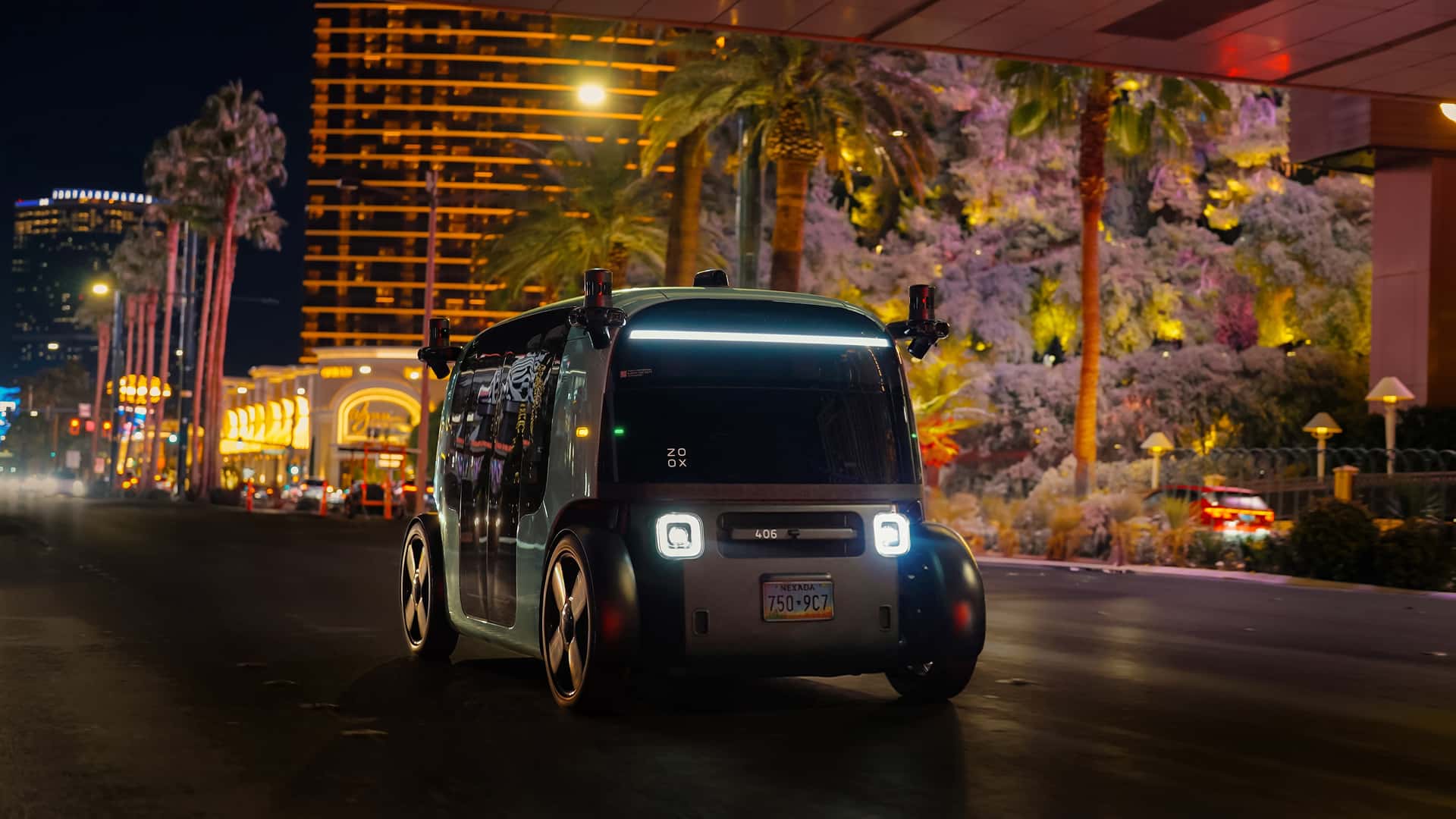
- NHTSA granted Zoox a two-year exemption allowing 2,500 shuttles yearly.
- Zoox can start charging metered fares for robotaxi rides in Las Vegas.
- NHTSA waived steering-wheel-related requirements and imposed enhanced oversight.
Zoox just got the green light to do something no other US robotaxi operator has done: run a purpose-built car with no steering wheel or pedals and charge you for the ride. The National Highway Traffic Safety Administration granted Amazon-owned Zoox a temporary exemption from several key Federal Motor Vehicle Safety Standards so those joystick-free pods can legally operate as commercial vehicles.
The approval opens the door to paid trips in Las Vegas as soon as August 10, 2026, but it is not a blank check for nationwide rollout. The exemption is time-limited, capped in vehicle volume, and wrapped in extra federal oversight. If you care about where US self-driving rules are heading, this is the test case regulators will be watching very closely.
7
Source: Zoox
Zoox’s US Approval And What It Allows
NHTSA approved Zoox’s request under 49 CFR Part 555, the section of federal rules that lets the agency temporarily exempt vehicles from certain standards if they are testing new safety technology. Instead of a permanent certification, Zoox gets a two-year exemption window running from July 31, 2026 through July 31, 2028, with permission to deploy up to 2,500 of its automated shuttles per year.
The covered Zoox robotaxi drops familiar controls entirely, so NHTSA waived requirements tied to features a steering-wheel car would need. That list includes windshield wipers and defrosters, some lighting and mirror rules, rear visibility, manual brake controls, sun visors, specific windshield abrasion and distortion limits, and portions of FMVSS No. 208 on occupant crash protection related to airbag warning label placement. In exchange, the agency is using what it calls enhanced oversight for these exempt vehicles rather than treating them like any other certified car.
Zoox has already been giving free rides to the public in Las Vegas, San Francisco, Austin and Miami, so the big functional change is the ability to charge. The company says it will use a base-fare-plus-distance-and-time structure, more or less like a ride-hailing app.


Photo by: Zoox
The Limits And Reporting Rules
The exemption caps Zoox at a relatively small fleet and a short time frame, and NHTSA is layering on reporting beyond what a normal automaker would face. Zoox has to submit detailed data on crashes, safety-related incidents, and how its automated driving system handles real-world operations, feeding directly into the agency’s review of whether the waiver stays in place, gets extended, or shapes future rules. This is effectively a live federal safety trial for a steering-wheel-free taxi, not a blanket blessing for self-driving tech.
Those constraints mean you will not suddenly see Zoox pods roaming every US city, and they keep this Las Vegas rollout firmly in the pilot bucket. But the decision shows NHTSA is willing to flex its Part 555 authority so non-traditional designs can hit the road commercially while the rulebook catches up. For other players watching from the sidelines, whether that is big tech-backed outfits or companies still in supervised testing like those behind Waymo’s first traffic ticket or Uber’s electric-fleet plans with Rivian, this exemption sketches the path they may need to follow.
If you live in Las Vegas, the practical step is simple: later this summer you may be able to hail a Zoox robotaxi, sit in a cabin with no driver’s seat, and pay a metered fare. For everyone else tracking autonomous mobility, this approval joins earlier experiments from companies like Waymo’s long-running Phoenix operations and even hands-free highway systems such as Nissan’s as another data point in how fast federal regulators are willing to move.
Motor1’s Take: NHTSA’s move treats Zoox’s wheel-free paid robotaxi as a tightly bounded pilot, not a sweeping green light, and the safety data, incident reports, and rider experience from this Las Vegas test will decide whether this pathway becomes a repeatable template or stays a one-off experiment.
Read the full article here


