




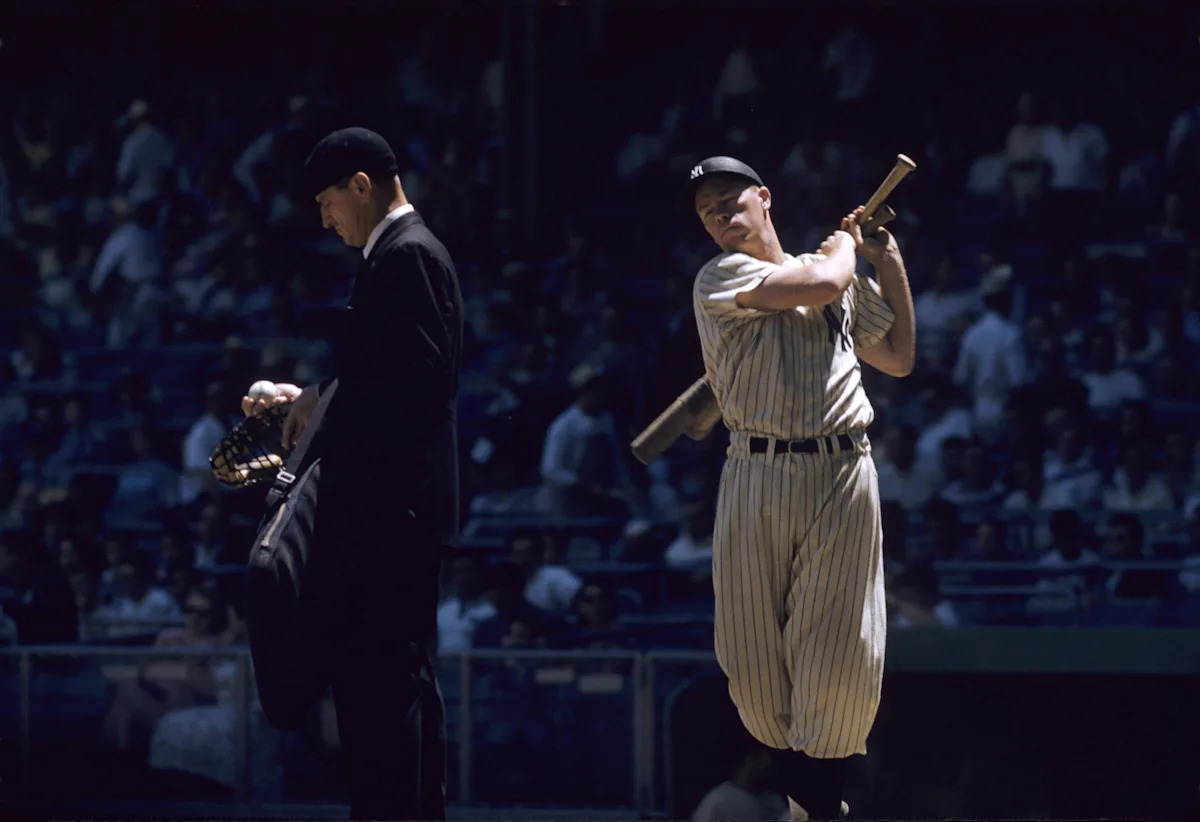
Yankees dynasties are usually remembered through their biggest stars. In the 1950s New York featured the likes of Mickey Mantle, Yogi Berra, Whitey Ford, and Joe DiMaggio. Lost underneath all those legends, however, are the players who quietly held everything together year after year, like Gilbert “Gil” McDougald.
The 1951 Rookie of the Year winner, six-time All-Star, and five-time World Series champion, McDougald spent his entire Major League career in pinstripes. He was versatile, dependable, universally respected, and seemingly always in the middle of winning baseball. In many ways, McDougald feels like the Bernie Williams of his generation. He may not have become the face of the dynasty, but he was an essential part of it.
Advertisement
Gilbert James McDougald
Born: May 19, 1928 (San Francisco, CA)
Died: November 28, 2010 (Monmouth County, NJ)
Yankees Tenure: 1951-1960
McDougald’s path to the Bronx began down by the bay in California. After graduation from Commerce High School, McDougald attended City College of San Francisco and the University of San Francisco. While in school he played semipro baseball with a local Boston Braves feeder team called the Bayside Braves.
Many scouts immediately wrote McDougald off due to his unorthodox batting stance. To better hit breaking pitches, McDougald splayed his legs open to the pitcher and let his bat stay down by his waist. However, Yankee scout Joe Devine was not deterred from the batting stance and took note of McDougald’s instincts and spirit as a player.
Devine signed McDougald to a $200-per-month contract with a $1,000 bonus in the spring of 1948. The move would pay off for both as McDougald would play the 1948 season for the Twin Falls Cowboys of the Class C Pioneer League. After a stellar season he was promoted to the Victoria Athletics of the Class B Western International League. In his first two professional seasons McDougald was selected as an All-Star at second base.
Advertisement
The 1950 season would see McDougald jump to the Double-A level with the Texas League’s Beaumont Roughnecks. Rogers Hornsby, the Hall of Fame second baseman, was the manager of the club and really took a liking to McDougald. Under Hornsby’s guidance McDougald made yet another All-Star team and was even named league MVP for the season.
The Yankees at the time were coming off back-to-back championships and had their infield returning for another season. It would appear that McDougald would not have a spot on the roster. However, as the Korean War started the Yankees decided to bring McDougald to spring training in case the club lost the services of second baseman Jerry Coleman or third baseman Bobby Brown to the military.
Like all his managers before, Casey Stengel took a real liking to McDougald. Stengel played McDougald at both second base and third base that spring. Liking what he saw from the young player at both positions Stengel decided to bring the almost 23-year-old north.
McDougald played little at the start of the season. However, Stengel, now smitten with the young rookie, gave him a shot to play in late April. McDougald would make the most of the opportunity and earn a role on the team platooning at third base with the lefty Brown and filled in for Coleman who would be injured on and off over the season.

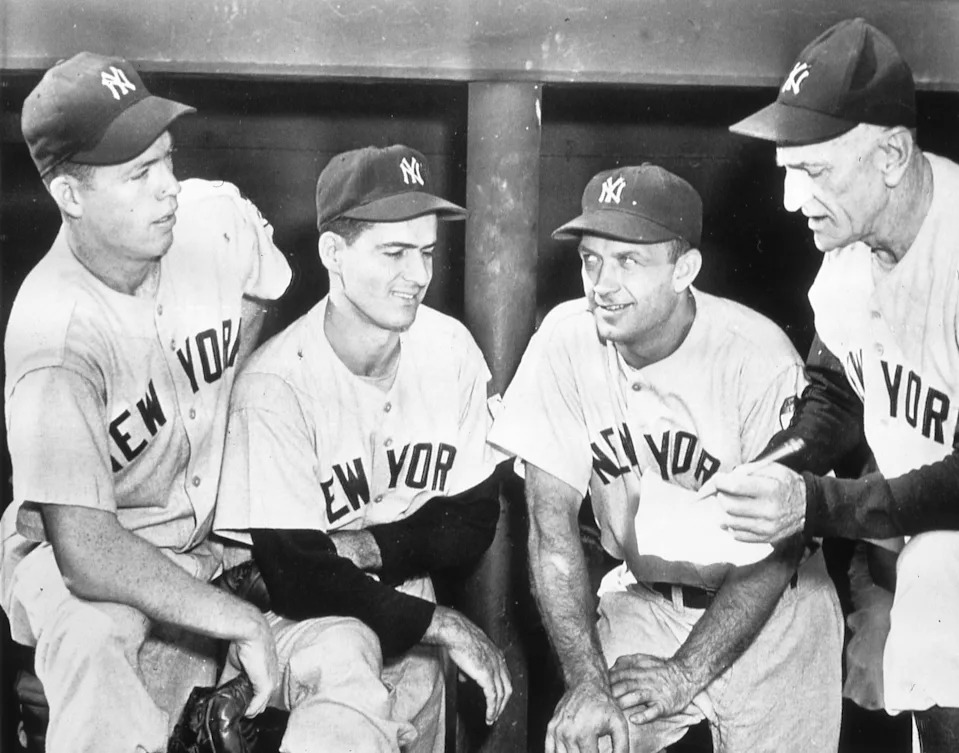
McDougald would play 131 games in his rookie season hitting .306 with 14 home runs and 63 RBI. He placed among the American League top ten in batting, on-base percentage, slugging, OPS, and stolen bases. His strong rookie campaign earned him the American League Rookie of the Year Award and helped the Yankees win the 1951 World Series championship besting the New York Giants in six games.
Advertisement
The 1952 season cemented McDougald as one of the Yankees’ most important players. He earned his first All-Star selection while primarily playing third base and once again helped New York win the World Series this time topping the Brooklyn Dodgers in seven games.
The Yankees and McDougald kept rolling in 1953. McDougald, playing third base would set his career high in RBIs that season and the Yankees would defeat Brooklyn again in six games to win yet another World Series.
Before the 1954 season the Yankees moved McDougald to his original primary position of second base to accommodate Andy Carey. The move led to a 103-win season, but the Yankees would not take the pennant as the Cleveland Indians would post a 111-win season to end the Yankees’ run and mark the first time McDougald would not play in a World Series to finish off a season.
The Yankees would retake the pennant in 1955. However, the Yankees would fall to the Brooklyn Dodgers in the World Series. The 1955 season also saw McDougald suffer a freak injury. During batting practice before a game in August, he was struck in the head by a Bob Cerv line drive. Diagnosed with a mild concussion, McDougald returned to game action within days. Unknown to all though, there was a small skull fracture and damage to the left inner ear. Over time, McDougald would suffer a loss of hearing in that ear, but it would not affect his playing career.
Advertisement
McDougald would again change positions in 1956. This time he would replace an aging Phil Rizzuto as the Yankees shortstop. McDougald’s mindset was simple, “I will play anywhere as long as I get to play.”

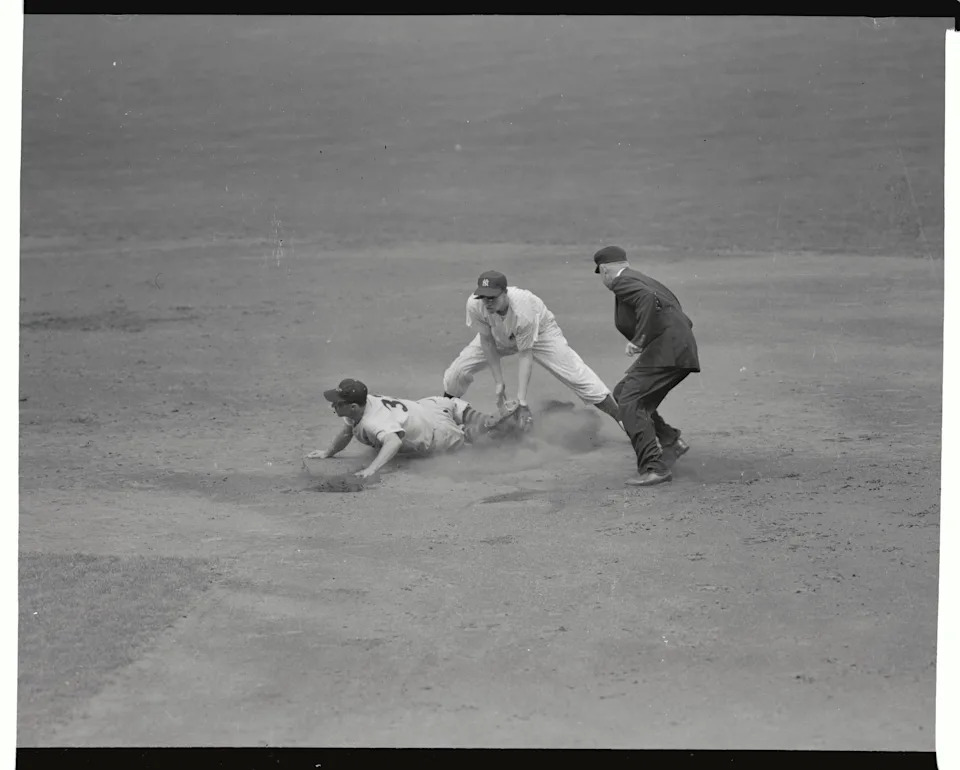
Much like his unorthodox batting stance McDougald was ungraceful to watch as a fielder, but very effective. He was able to use his knowledge of the game and strong all-around ability to fill the position. McDougald would earn another All-Star selection in 1956 this time as a shortstop.
The Yankees breezed to yet another AL pennant and beat Brooklyn in seven games to win another World Series. McDougald provided one of the fielding gems that preserved Don Larsen’s perfect game, snaring a hot shot deflected by Andy Carey deep in the hole and throwing out Jackie Robinson at first. After the season ended the Better Sports Club of Arlington, Virginia, honored McDougald as Baseball Sportsman of the Year for his off-the-field work with civic and charitable organizations.
Advertisement
While McDougald’s career was filled with winning, one moment forever changed the way he viewed baseball. On August 16, 1957, McDougald lined a pitch directly into the face of Cleveland pitcher Herb Score. The terrifying injury damaged Score’s eye and permanently altered the trajectory of one of baseball’s brightest young pitchers.

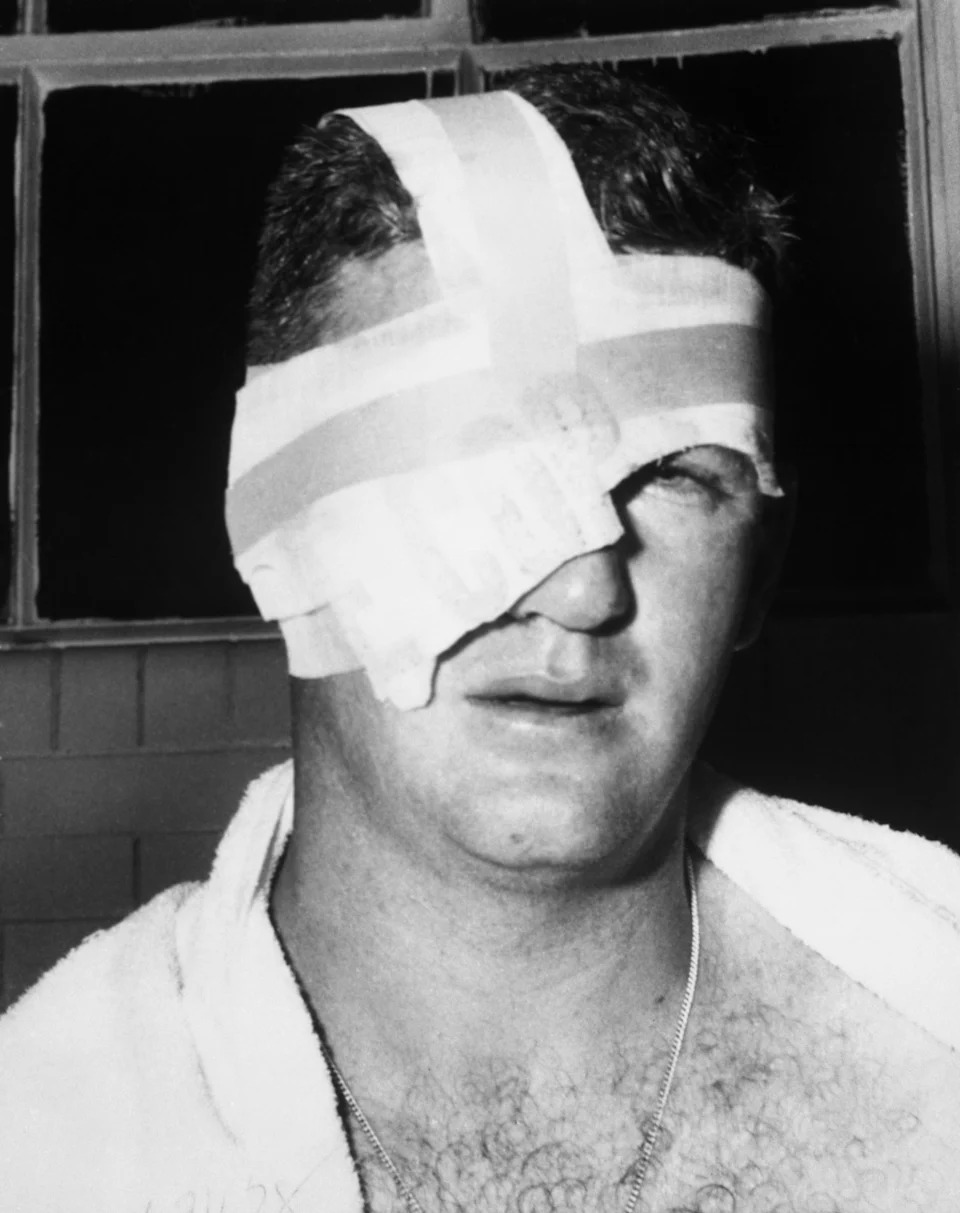
McDougald was devastated by the incident and reportedly blamed himself for years afterward despite understanding it was an accident. The moment deeply affected him personally and emotionally, showing the kind of compassion and humanity teammates and opponents consistently praised throughout his life. Many said McDougald continued playing hard after the incident, but some of the boyhood joy he once carried for the game never fully returned.
That story also feels especially relevant today watching Cam Schlittler deal with the frightening number of comeback shots hit back at him already this season and watching Spencer Jones break Clay Holmes leg. Modern pitchers continue throwing harder than ever while hitters produce increasingly violent contact. Every sharply hit comebacker serves as a reminder of how dangerous a baseball can become in an instant.
Advertisement
The 1957 Yankees claimed yet another pennant, but New York was an upset loser to the Milwaukee Braves in a seven-game World Series. Over the course of the 1957 season Tony Kubek would start to earn some playing time at shortstop. Kubek’s emergence would shift McDougald back to primarily second base for the 1958 season.
Accolades kept coming for McDougald in 1958 as he was voted “most popular Yankee” by the CYO of the Archdiocese of New York. McDougald was starting to see his stats decline but was still good enough to earn another All-Star nod and was also the recipient of the Lou Gehrig Award, the first Yankees player ever to receive the honor. The Yankees would go on to avenge the 1957 World Series loss and take down the Brewers in seven games, McDougald going yard in the 10th inning of Game 6 to force a seventh game.
View Link
When the 1959 season rolled around the Yankees decided to roll with Kubek at shortstop and Bobby Richardson at second base. This move pushed McDougald back to third base as his primary spot in the lineup. McDougald made yet another All-Star team that season, but the Yankees had yet another newcomer threatening to take playing time in Clete Boyer.
Advertisement
Seeing the writing on the wall McDougald informed the Yankees that the 1960 season might be his last. The famous 1960 season of Mantle and Roger Maris would be the last season for McDougald. The Yankees fell in the World Series at the end of that season in seven games to the Pittsburgh Pirates.
Following the season and with Major League Baseball set to host an expansion draft McDougald informed the Yankees and the public that he would be retiring. New York general manager Roy Hamey was unhappy and stated that McDougald would not be replaced on the list of Yankee expendables, for fear of setting “a bad precedent, giving other veteran players the idea that they could threaten to quit rather than be sent to one of the fledgling franchises.” However, pretty much everyone else saw the move for what it was, a man of high character informing everyone he had no intention of uprooting his family.
In his ten years in pinstripes McDougald played in 1,336 games, got 1,291 hits, and had a final slash line of .276/.356/.410 good for an OPS of .766. Additionally, he was a six-time All-Star at three different positions and won five World Series. McDougald appeared in 596 games at second base, 512 at third base, and 284 at shortstop. McDougald was one of baseball’s ultimate utility infielders before the term was really invented.
Even after his playing days ended, McDougald remained beloved throughout the baseball world. He later worked as a coach for Fordham University and continued impacting younger generations of players through local youth sports. That was until the 1980s when McDougald almost completely withdrew from normal life due to hearing loss.
Advertisement
In 1994 McDougald was featured in a report by the New York Times covering the struggle of his hearing loss. His Yankees connection would come in handy as Dr. Noel Cohen, chief of otolaryngology at New York University Medical Center, would perform a cochlear implant. The surgery restored McDougald’s hearing and he went on to champion the treatment for children and others suffering from hearing loss.

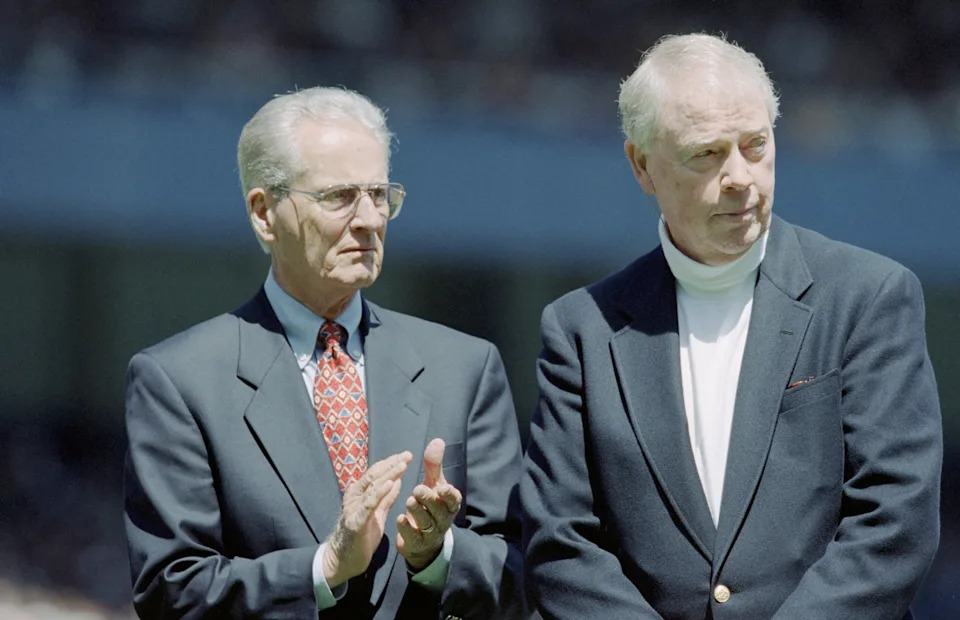
Former teammates consistently described him as humble, intelligent, and selfless, traits that helped make him one of the most respected players of his era. McDougald will never be the first Yankee fans remember from that era, but he remains one of the most important. Dynasties are held together not just by superstars, but by the dependable players every superstar needs beside them. The glue guys who simply want to play ball.
Happy birthday Gil!
See more of the “Yankees Birthday of the Day” series here.
Read the full article here


