




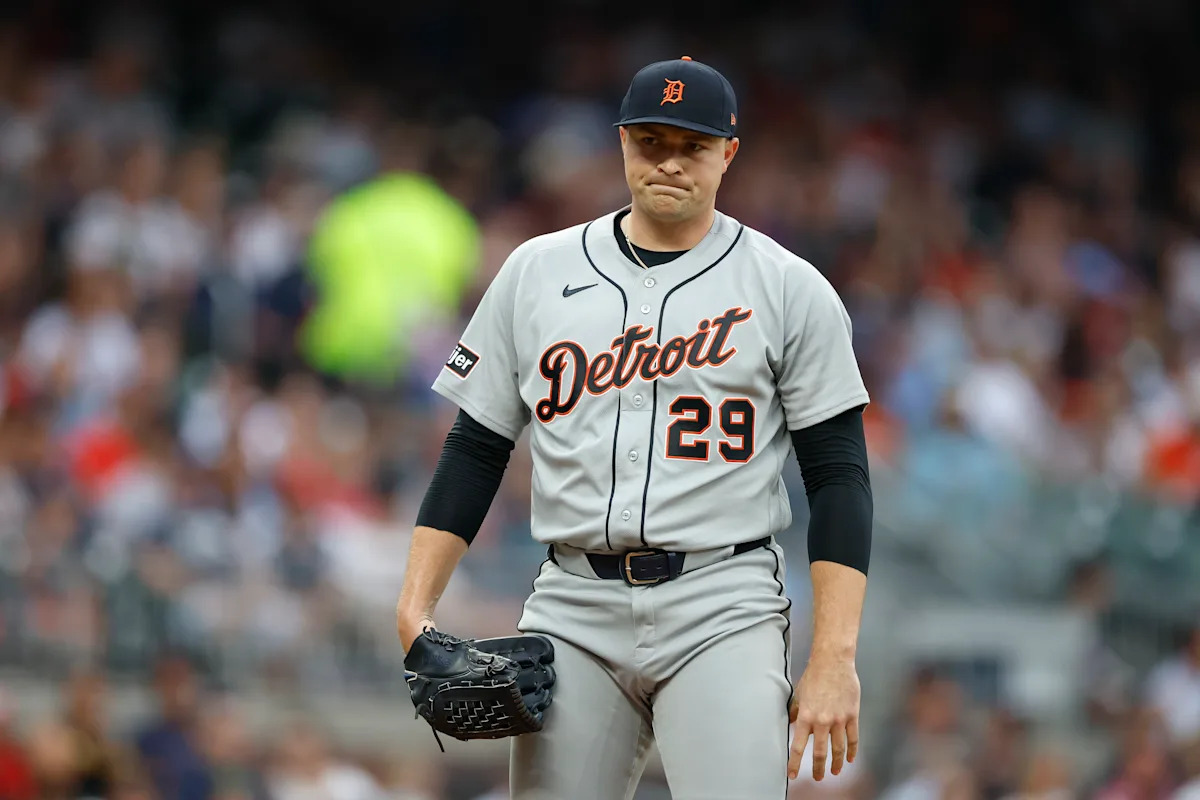
The initial months of the MLB season are often filled with injuries, and this year is no different. Currently, there are 11 hitters and 18 pitchers who are sitting on the IL and have roster rates over 60%.
The good news is that the default Yahoo settings offer relief for those who have a bad run of injuries. Teams are allotted four IL slots, which should allow managers to stash all injured players who have the skills to make a notable impact when they return. But having space to stash an injured player only solves a small part of the problem. There is also the task of replacing injured players while remaining on track for a successful season.
Advertisement
Here are some concepts to consider.
How to rank injured players
A manager who is dealing with a rash of injuries needs to consider these three factors when deciding which players are the most important to them.
1. How soon the player will return.
This is the most obvious criterion, as players who will return soon are much more appealing than those who are set to miss several months. Also, players who are in the midst of a short-term absence are dealing with a minor injury that is less likely than a major injury to impact their skill set.
2. How good the player is expected to be when they return.
An easy way to organize the potential of various injured players is to refer to their ADP during draft season. But March value can’t be everything, as the value of many players has changed in the past seven weeks. Additionally, some injuries are more likely than others to have a lingering effect on a player. For example, Cole Ragans got off to a poor start and is now dealing with an elbow injury. We may not see him at his best when he returns. The same could be said for Francisco Lindor, at least for a few weeks after he returns. After all, Lindor generates plenty of value with his base-stealing ability and is currently dealing with a calf injury.
Advertisement
3. In category leagues, how much depth the manager has in the categories that the player most frequently impacts.
A manager with Edwin Díaz who has three other save sources may decide that the Dodgers’ closer is not that important to their roster. Conversely, someone who has struggled to secure other closers may view the eventual return of Díaz as a potential turning point in their season.
Finding replacements
Deciding what to do with your injured players is only part of the battle, as finding a useful replacement is vital. Here are some questions to ask yourself:
Does the replacement need to have a similar skill set? This question pertains only to those in category leagues. For example, a manager who loses a speedster may look at their roster and decide to grab the speediest replacement in order to remain competitive in the steals category. But in other situations, a manager may look down their roster and see plenty of potential steals, which gives them the opportunity to shift the balance of their roster by adding a slugger.
Advertisement
Should you take the best available player? If there’s a silver lining to the injury cloud, it’s that an injury opens an opportunity for a manager to grab another player from the waiver wire. In some cases, that player could be a significant contributor who remains on the roster long after the injured player returns. For this reason, managers may want to grab the player whom they believe is the best one available, regardless of position or skill set.
Should you stream the spot? In the absence of an exciting waiver wire option, managers could choose to replace quality with quantity by streaming players through the vacated roster spot. This is an especially good plan for managers in head-to-head leagues who are off to a slow start and need to win their current matchups. Managers can look for hitters who are about to play a series at a hitter-friendly park or face a weak pitching staff. On the pitching side, they can stream hurlers with favorable upcoming matchups. We are here to help at Yahoo, as our Monday and Friday articles always offer short-term solutions.
Play 2026 Soccer Pick ‘Em with FOX One and make your picks for the world’s biggest soccer tournament
Should you solve your problem via the trade market? Managers who are dealing with a rash of injuries could choose to improve their missing depth by making a 2-for-1 or 3-for-1 deal in which they give up a top player for multiple good players. Although I’m not fully against this type of deal, I usually side against it. By losing one of their stars, the manager is reducing the overall ceiling of their roster.
Advertisement
My advice is to only make this type of trade if the package of players is much better than the combination of the departing star and options on the waiver wire.
I repeat — much better.
If the trade is only fair, the manager is better off keeping their star player and working the waiver wire aggressively. In an article that will be released on Wednesday, we will analyze some recent trades involving injured players.
Taking zeros
Managers who are having an especially bad run of injury luck could be faced with a difficult decision to either cut important injured players or leave them in their lineup and settle for zeros. My personal preference in a roto league is to never take zeros. The cumulative aspect of those leagues makes it essential to continue grinding with full lineups. But in head-to-head leagues, whether they are categories or points leagues, taking zeros in a lineup spot is a viable option.
Advertisement
This is especially true for managers who are off to an excellent start and can afford to lose a given week in order to hang onto their best talent for future weeks. In a head-to-head category league, I would be more willing to work without a pitcher than to leave a hitting spot open. After all, with two of the five standard pitching categories involving ratios, adding a questionable pitcher has the potential to do more harm than good.
Injured player rankings
Here are tiers of players who are currently on the IL, which will help managers make tough decisions.
— Absolutely must be kept: Tarik Skubal, Garrett Crochet, Cal Raleigh, Francisco Lindor, Tyler Glasnow, Max Fried, Hunter Brown, Logan Webb, Josh Hader, Gerrit Cole
Advertisement
— Likely worth keeping: Roman Anthony, Wyatt Langford, Corey Seager, Eugenio Suárez, Cole Ragans, Ryan Helsley, Brandon Woodruff, Edwin Díaz, Hunter Greene, Ryan O’Hearn, Kris Bubic
— High upside and under-rostered: Jared Jones, Shane Bieber, Addison Barger
— Sure, if you don’t have any better stashes: José Altuve, Trevor Story, Heliot Ramos, Luis Robert Jr., Gleyber Torres, Yainer Díaz, Kerry Carpenter, Nick Pivetta, Taj Bradley, Emilio Pagán, Matthew Boyd, Mick Abel, José Caballero, Brendan Donovan, Blake Snell, Corbin Burnes
— Drop ‘em: Jacob Wilson, Giancarlo Stanton, Alejandro Kirk, Jorge Polanco, Carlos Correa, Francisco Alvarez, Jordan Westburg, Carlos Estévez, Ryan Pepiot, Spencer Schwellenbach, Cade Horton, Joe Musgrove
Read the full article here


