





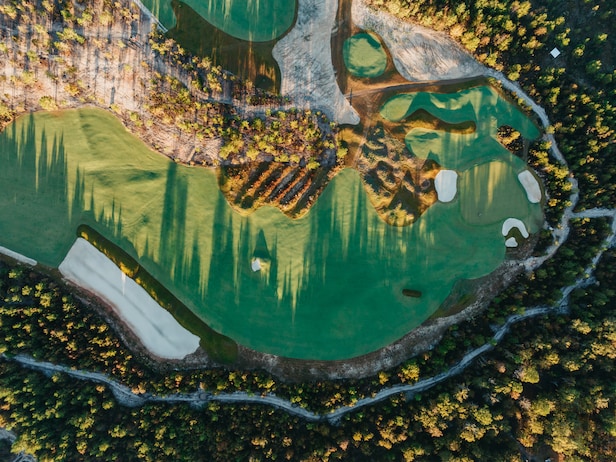
It’s no secret that it gets hot in South Carolina. But in terms of golf, the state has never been hotter than it is now.
When it comes to the quality and relevance of new course construction, South Carolina is burning.
Advertisement
In the last four years the state has become the epicenter of creative new golf architecture, rivaled only by Texas and Florida where there’s also been a splurge of notable new courses.
RELATED: Our reviews of South Carolina’s 2 newest course openings: Old Sawmill and Anson Point
In Texas and Florida, however, a big push has been a revival of the golf/real estate model, with courses developed as an amenity to upscale homesites—no surprise given the southward-shifting demographics of the country. Most of the real estate projects undertaken have been tasteful and low-density, catering to a luxury clientele in a way that the mass market housing and golf products of the 1990s and early 2000s didn’t. But the model is returning, nonetheless.
PURE GOLF
In South Carolina the focus has been on golf-only, standalone clubs where designers and owners have based their investments on intriguing properties that can showcase their architecture. These new clubs are turning up throughout the state where the land is good for golf, not just in popular—and populous—destinations like the lowcountry and Atlantic Coast. The majority are private but at least two will offer avenues for public play.
Advertisement
Three new or significantly remodeled courses have opened so far this year, and six others are in various stages of construction and planning. The surge of new construction begs the question, why has South Carolina become ground zero for new American golf design?
/content/dam/images/golfdigest/fullset/2021/4/congaree holes 15_16_17 Sunset Aerial.jpg
South Carolina’s Congaree opened in 2018 and is now ranked 40th on Golf Digest’s ranking of America’s 100 Greatest Courses.
Edward C Robinson III
WHY SOUTH CAROLINA?
There’s nothing about South Carolina that would outwardly explain why so many owners and developers have landed here. Few of the new clubs are particularly near the ocean or any other location that would be a natural draw for golf. The courses are not filling an obvious vacuum of great golf demand, nor are they the result of new industries coming to the state, or a realignment of demographics or financial concentration as is the case in South Florida and parts of Texas.
Advertisement
RELATED: The best golf courses in South Carolina, ranked
What the state does have is a 12-month golf season and a relative availability, at least so far, of large, affordable parcels of land to build on. To date it hasn’t been an obstacle to locate 200 or more contiguous acres of undeveloped land. Several of the courses have been located on acreage formerly used for timber. Others were once privately held tracts that family owners used for hunting or pasture. Their rural locations make them attractive to savvy golf owners, but there’s been little outside competition from other buyers.
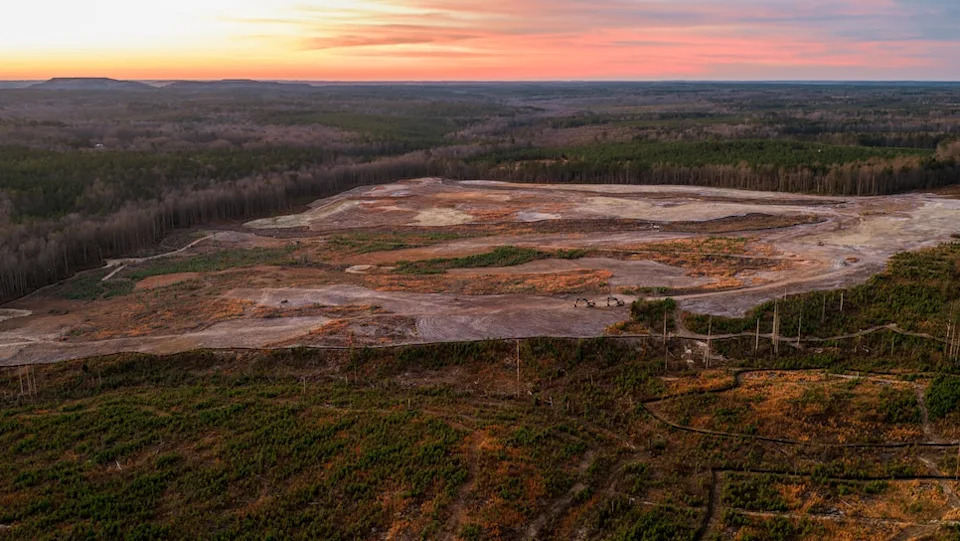
/content/dam/images/golfdigest/fullset/course-photos-for-places-to-play/candyroot-lodge-aerial.jpg
An aerial view of Candyroot Lodge’s first course under construction.
Advertisement
Billy Richards for Candyroot Lodge
These properties also reside within a large sand belt that cuts through the middle section of the state stretching from Pinehurst, N.C. through central Georgia. Sand is the ideal soil for golf courses because it is malleable and drains well, keeping construction costs low and lessening the long-term agronomic burden. And, the new clubs can draw on local markets like Aiken, Columbia, Greenville and Charleston for their membership base, yet are still within 90 to 120 minutes from hubs like Charlotte and Atlanta making them appealing to national members.
Considering the supply of affordable, sand-based plots of land of varying sizes, and convenience to both local cities and major airports, the question isn’t why South Carolina’s golf scene is booming, it’s what took so long?
More from Golf Digest

Golf Digest Logo America’s 100 Greatest Public Courses
Advertisement
THE FOUNDATION
/content/dam/images/golfdigest/fullset/course-photos-for-places-to-play/Quixote-Golf-Club-Aerial.jpg
Patrick Koenig
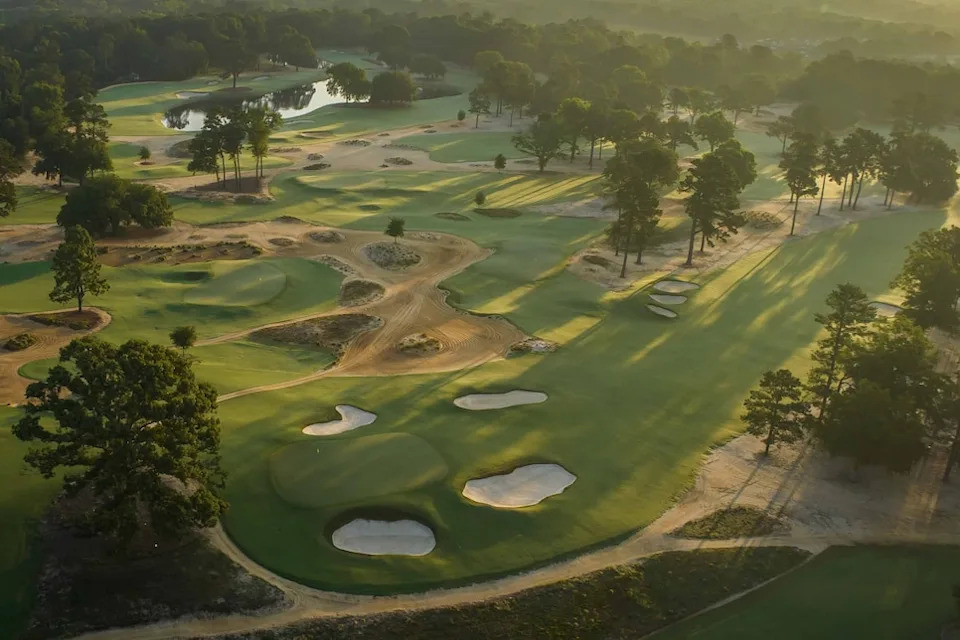
The tinder in South Carolina began to smoke with the opening of Congaree Golf Club in 2018, a riveting Tom Fazio design north of Savannah. The tight turf and sweeping Australian-style bunkers were an early showcase for the potential of sand-based properties in the state. Three years later, architect Kris Spence led a major transformation, along with Jack Nicklaus, Jr., of the old Sunset Country Club in Sumpter, located in the middle of the state. Rebranded as Quixote Club (above), it’s a smart, tight walkable design weaving through exposed sand buffers that places a premium on approach precision and short game touch.
Advertisement
THE RENAISSANCE
Two courses 30 minutes from each other outside of Aiken kicked off South Carolina’s new course boom in earnest. Old Barnwell and The Tree Farm were built almost simultaneously between 2022 and 2023 with overlapping architectural pedigrees. Tree Farm, founded by PGA Tour player Zac Blair, was routed by Tom Doak through lovely, tranquil sections of upland pine. The concepts of the numerous half-par holes and tantalizing driving strategies were then developed by Blair and Kye Goalby, a designer who has worked closely with Doak on numerous projects.
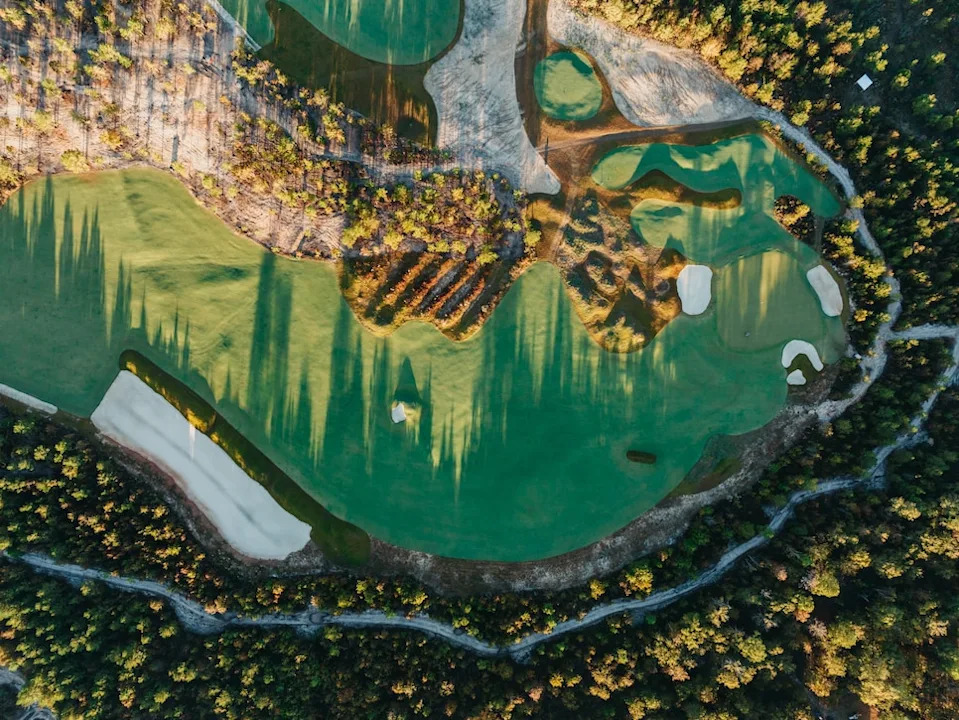
Old Barnwell 15 drone
Old Barnwell
Jeff Marsh
Old Barnwell was designed by Brian Schneider, a former associate of Doak, and Blake Conant, a designer and shaper who came up working in the Doak orbit. Their design is one of the most exciting in the last decade. Despite not having an intrinsically lovely property (it does possess sandy soils and several compelling ridgelines), they reworked familiar Golden Age and pre-Golden Age design concepts in ways that feel fresh and new. Both courses debuted on the America’s Second 100 Greatest Courses ranking in 2025, coming in at No. 130 and 131, respectively, and we expect them to climb higher in the coming years.
Advertisement
NEXT OUT
/content/dam/images/golfdigest/fullset/2023/1/Broomsedge_April26’_CarolinaPinesCreative-03.jpg
Broomsedge
Carolina Pines Creative
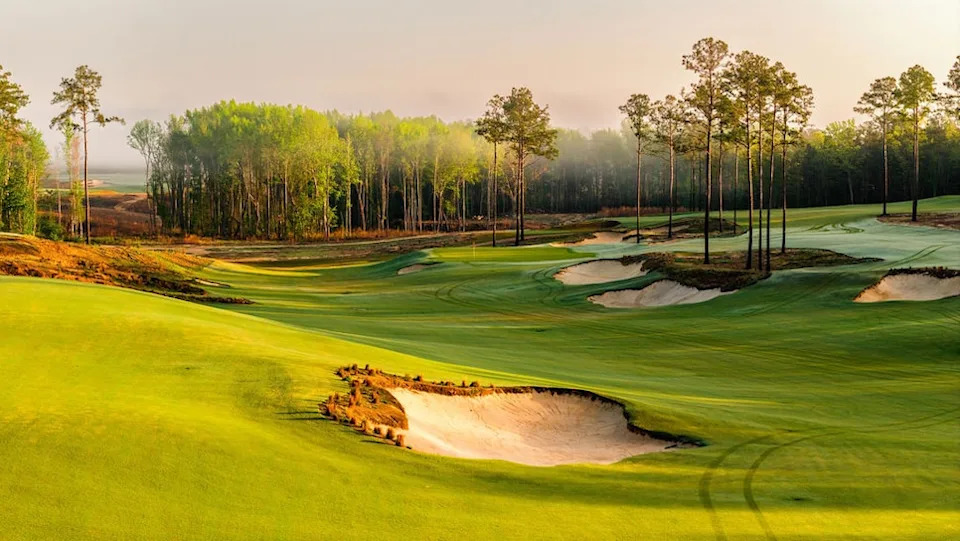
Broomsedge Golf Club, 45 minutes east of Columbia, was the third new course out of the box in the South Carolina renaissance when it opened in early 2025. It’s the vision of designer Mike Koprowski, who began his golf career shaping features for Kyle Franz at Southern Pines, near where he lives. He scouted sites throughout the Carolina’s before locating a unique property near Rembert that possessed a sandy base and long slopes playing on either side of a central basin.
The design, a collaboration between Koprowski, Franz and veteran shaper Joe Hancock, balances sharp, aggressively bunkered holes and those with sweeping grace that that emphasize angles of approach and dynamic hole locations. Recently added to the Michael Keiser Jr.’s portfolio with limited public availability, Broomsedge finished second in the 2025 Best New Course award and will be eligible for the 2027-2028 national rankings.
Advertisement
NOW PLAYING
Old Sawmill 16 rear
Old Sawmill
Derek Duncan
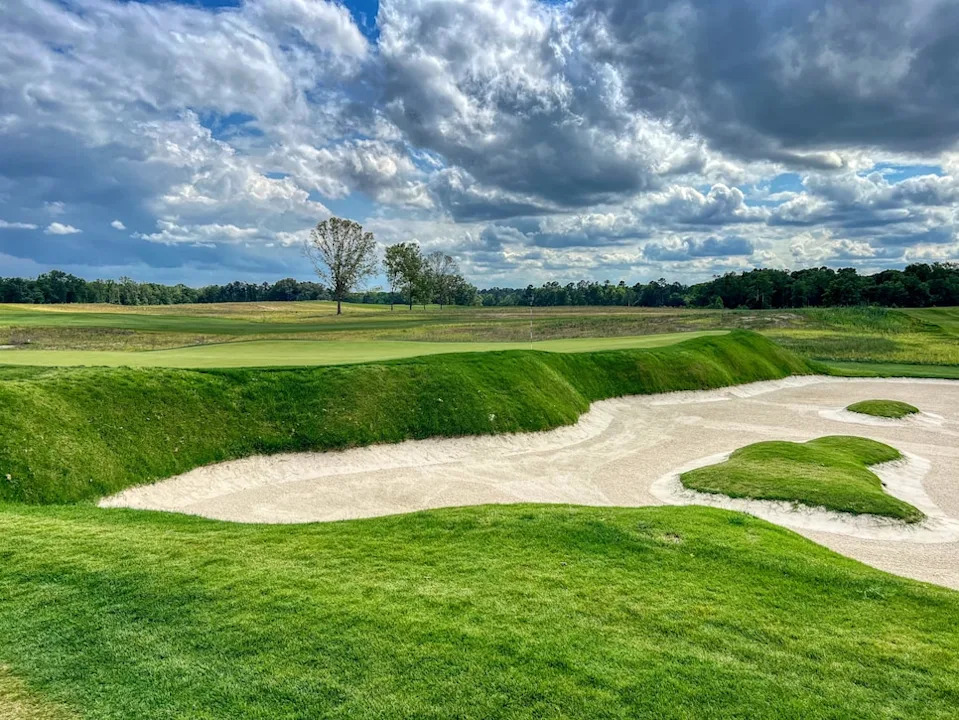
Two new courses that opened in early 2026 display the range of architectural ideas brewing in South Carolina. Old Sawmill is Tyler Rae’s first solo design, and he’s moved his chips onto the table with confidence. Known for specializing in the renovation of old courses by Donald Ross, Seth Raynor and other 1920s architects, his creation at Old Sawmill is a blend of classical-era strategic ideas with an amplified presentation of steep greens and bunkers that comes across as a postmodern interpretation of Oakmont. The impression is especially strong given that the site, an hour northwest of Charleston, was essentially a deep, level field cut by a series of creeks and canals that he smartly incorporated into the hole designs.
Advertisement
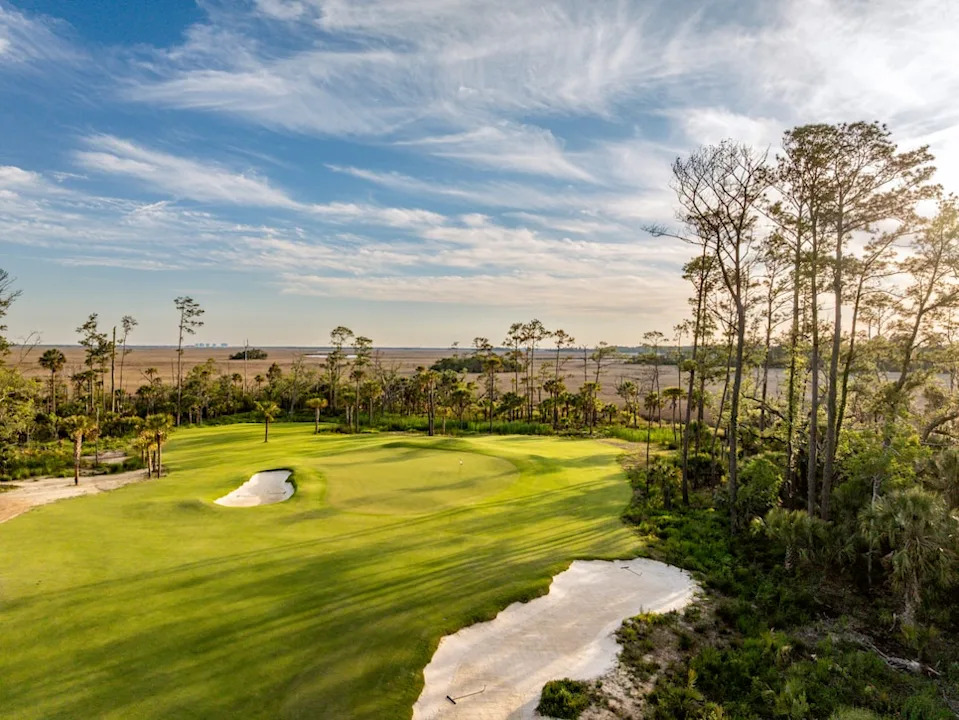
The new Bill Coore and Ben Crenshaw design at Palmetto Bluff near Bluffton, called Anson Point, resides on the other end of the spectrum. It is a visually rich yet architecturally sublime design cut through forests of oak and pine, with a handful of holes that play along the edge of the vast river marshes on the south end of the development.
The trees are a major element of the design, and Coore and Crenshaw have put on their conservationist hats and embraced them, dialing down the fairway widths and incorporating the obstacles strategically. On holes like six, eight, 11 and 13, drives must risk the far outside edges of the fairway in order to avoid large, preserved specimen oaks that will block out second shots. It’s not narrow like Harbour Town on nearby Hilton Head Island, but hitting driver aimlessly will not work at Anson Point, and the deep, pushup greens, a design touch necessary in the Lowcountry but executed with creativity here, demand a tight tactical approach.
/content/dam/images/golfdigest/fullset/2023/1/Anson_Point_Hero_Hole_17_7.jpg
Anson Point
Advertisement
Palmetto Bluff/Patrick O’ Brien
Click here for a more in-depth review of Old Sawmill and Anson Point.
Palmetto Bluff also opened Crossroads in 2024, a nine-hole reversable design from Rob Collins and Tad King. The courses is a bit of Ireland in the Lowcountry as the team constructed tall, grassy dune complexes with bouncy fairways playing down between them and large double greens that can accept shots from two directions. It’s an innovative take on the short course format that plays differently on alternate days, and it belongs in the conversation of outstanding new South Carolina courses.
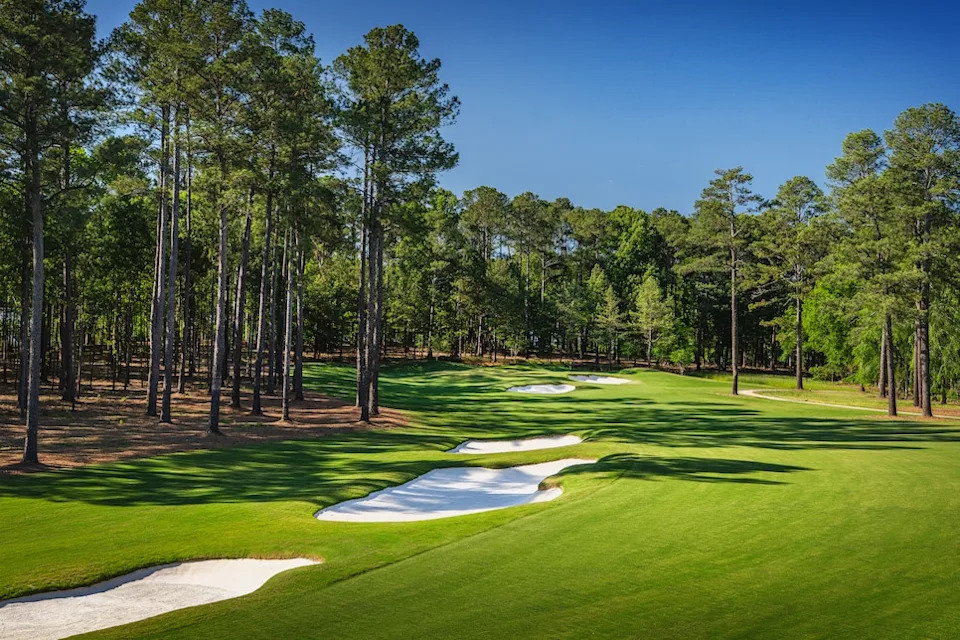
Another course that opened this year and belongs in that conversation is Olde Eight, located between Columbia and Greenville. The course isn’t new in the sense of Anson Point or Old Sawmill since it was built on top of an existing layout that opened in 1989. But new owners hired architect Drew Rogers to make in new and re-envision the entire property with an original design. Rogers used the existing hole corridors but fashioned within them much more strategic, breathable golf. The design provides more width and playability overall, but fairway bunkers force players to make hard strategic choices if they want optimal approach angles into the enlarged greens.
/content/dam/images/golfdigest/fullset/2023/1/Olde Eight O8_11_FWW_DR_526 copy.jpg
Olde Eight
Advertisement
Gary Kellner
ON DECK
The next batch of courses look to be just as intriguing as what’s come online so far.
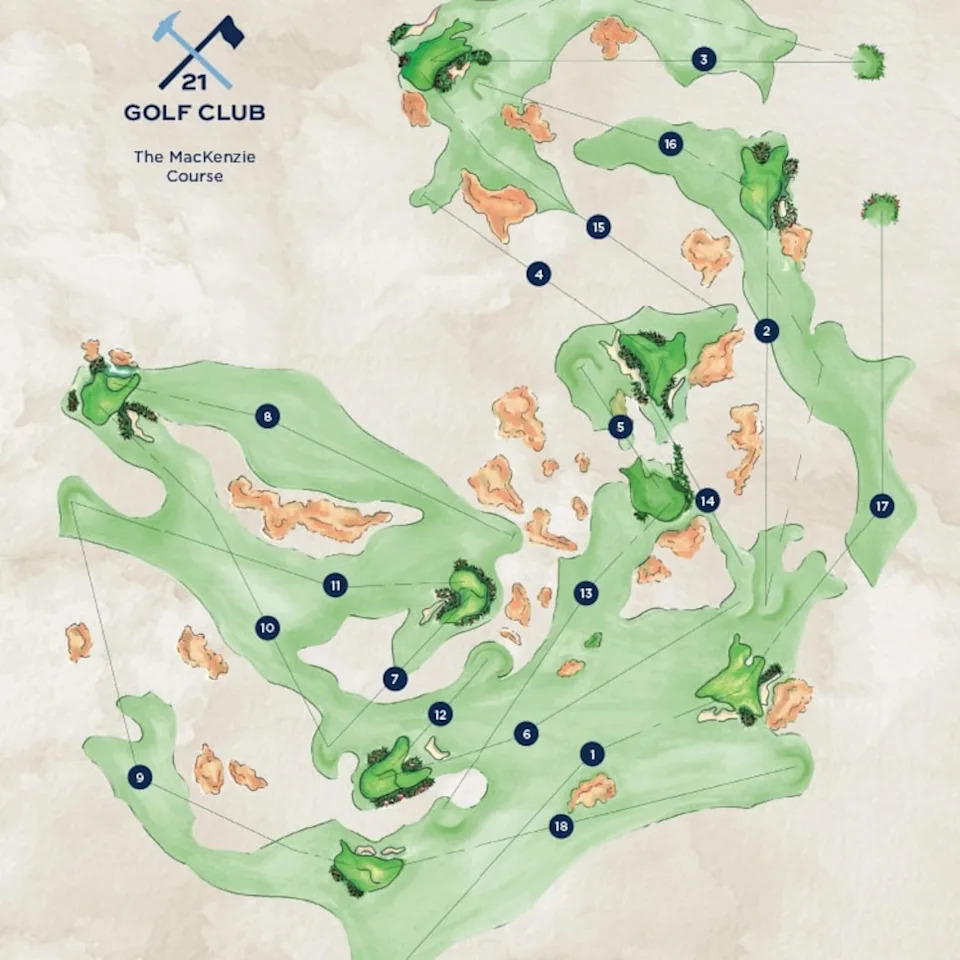
First out of the box will be 21 Club, located 15 miles south of Aiken. The MacKenzie Course there (a second course from King Collins Dormer is expected to come next) is based on Alister MacKenzie’s plans for the El Boquerón course he designed for a client in Argentina in the late 1920s that was never built. The plans have been admired for decades but are artistic in nature and offer no clear direction for how to build the course. Brian Zager, who created the digital GPS topographical instructions used to construct the Lido course at Sand Valley, has done something similar for the MacKenzie course, with shaping overseen by Eric Iverson, another former associate of Tom Doak. Eleven holes opened earlier this year and the remaining holes are expected to be complete in the fall.
/content/dam/images/golfdigest/fullset/2023/1/21 Club El Boqueron.jpg
Nick Schreiber, owner and developer of Old Barnwell, hasn’t slowed pursuit of his grand vision for Old Barnwell. A 15-hole Kid’s Course opened last year, and construction of the second 18-hole course, The Gilroy, is in progress. Also designed by Schneider and Conant, The Gilroy is routed a more pine-heavy section of the 500+ acre property and will be a different golf presentation than the original course. The hope is to have a limited number of holes completed for play in the fall and a more robust opening sometime in 2027.
Advertisement
Hopefully Brian Schneider bought property somewhere around Aiken. In addition to working at the Kid’s Course and The Gilroy, he is also the architect of New Holland Golf Club, about 20 miles northeast of Aiken on the way toward Columbia. New Holland is being developed by area native Jeff Warne, who is the longtime Director of Golf at The Bridge in New York. Warne is an architecture enthusiast’s enthusiast who has played golf around the world, and he’s taken as his model for New Holland the clubs of the U.K. that have private memberships and societies but also allow non-members access to the course on certain days. It’s a concept almost completely foreign in the U.S., but we hope New Holland inspires other private clubs to occasionally lift up the security gate. The course is currently under construction with completion possible sometime in 2027.
/content/dam/images/golfdigest/fullset/course-photos-for-places-to-play/candyroot-lodge-first-course-rendering-second-hole.jpg
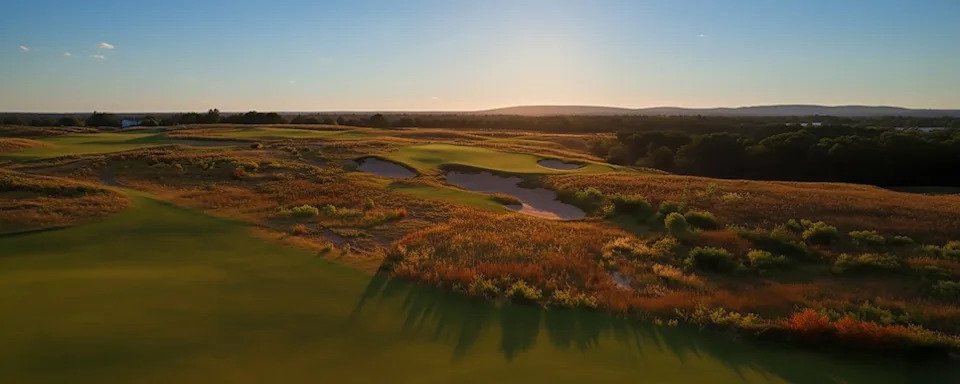
A rendering of Candyroot’s second hole
Courtesy of Candyroot Lodge
Advertisement
Another new development that will be open to the public is Candyroot Lodge, an hour’s drive north of Columbia and an hour south of Charlotte. Mike Koprowski, the founder and co-designer of Broomsedge, is developing Candyroot along with Aaron and Ethan Oberman on a 1,200-acre sand prairie that will showcase the first of several planned 18-hole courses along with other resort amenities that cater to wellness and après-golf treatments. Koprowski is designing the course with the help of Joe Hancock, who also worked on Broomsedge, and expects to have a soft opening in late fall followed by a full opening in spring of 2027.
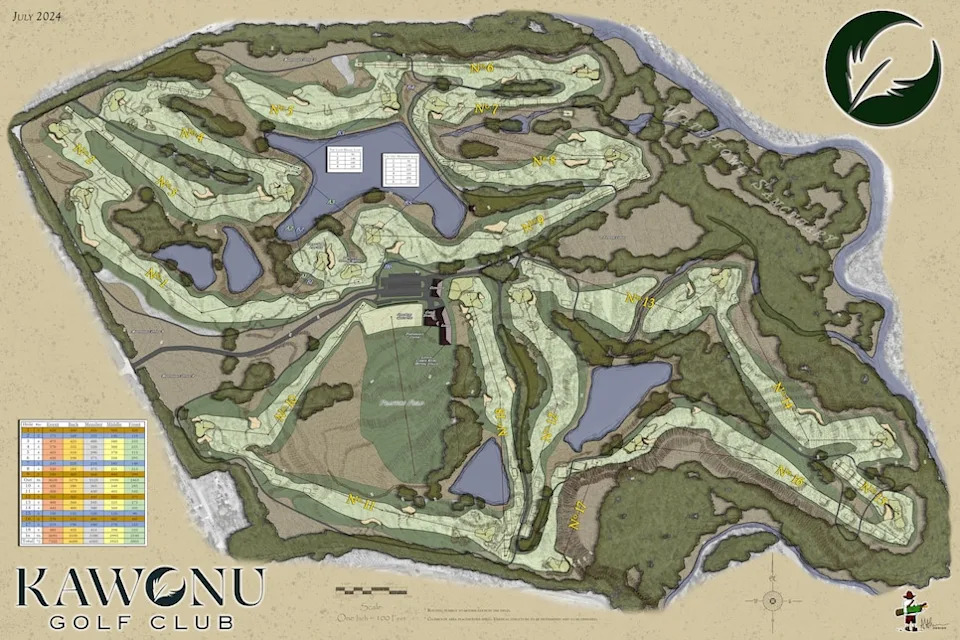
Like Tyler Rae, Andrew Green is a designer who until now has been one of the profession’s most sought-after renovation specialists for his work at clubs like Inverness, Congressional’s Blue Course, Oak Hill’s East Course, Scioto and East Lake among others. He’s now venturing into original designs, including Kowanu Golf Club near Greenville. The course occupies nearly 300 acres with holes playing alternately through grasslands and sections of hardwoods and pine, some which border natural bodies of water and others on the second nine that run along the rims of deep ravines. Kowanu is currently under construction and will open to members in 2027.
/content/dam/images/golfdigest/fullset/2023/1/Kowanu Course Routing.jpg
Lastly, the Orange Hill development at Kiawah Island Club, the development composed of The River Course and Cassique Course, has been in planning for over 20 years. It’s finally close to getting over the final hurdle, and if approved architect Beau Welling, who lives in Greenville, anticipates construction beginning summer 2026. Located on Johns Island just to the north of Kiawah, the course will sit within a 933-acre property, but the routing is core, meaning the golf is not strung out between homesites, a rarity in the Lowcountry. The design will be extremely walkable, highlighted by exposed sand and ancient live oaks as first nine rotates clockwise around the perimeter of the site with the second nine folded neatly counter-clockwise inside of it.
More from Golf Digest
Golf Digest Logo The best golf courses in South Carolina
Read the full article here