




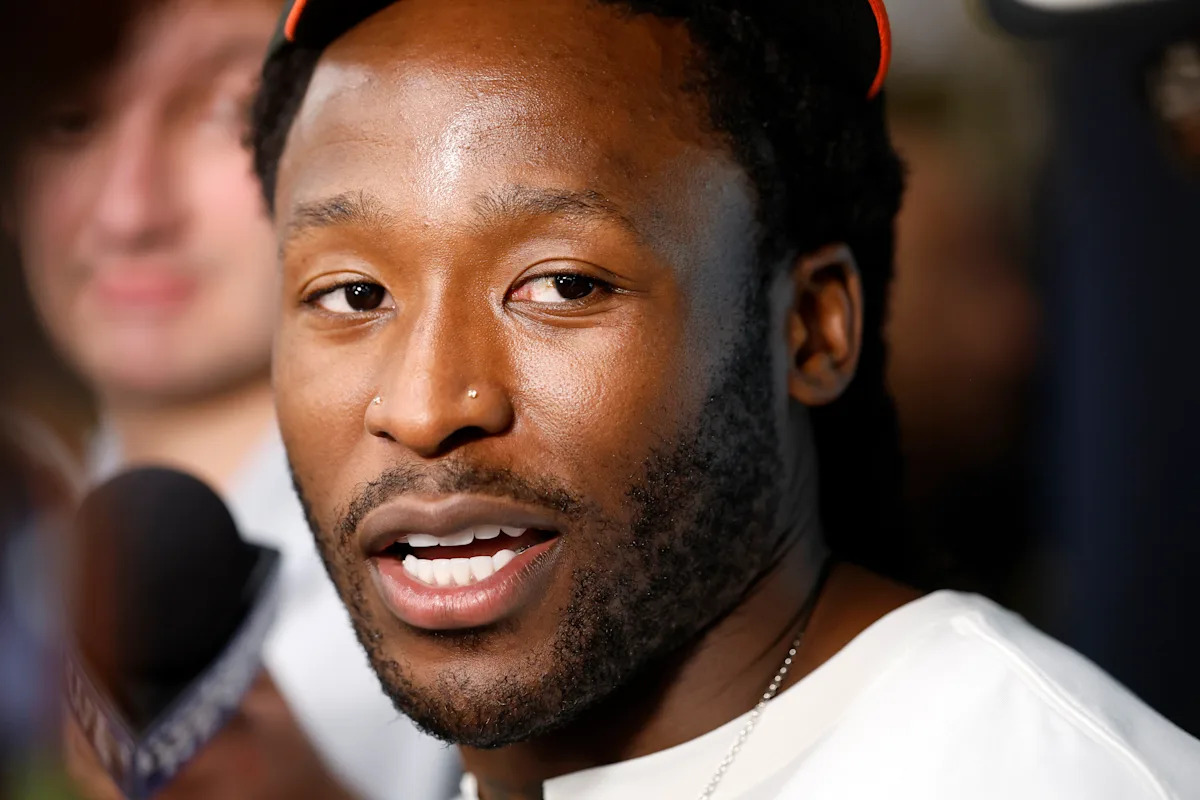
Alvin Kamara will return for a 10th season with the New Orleans Saints after the two sides agreed on a reworked contract. Kamara’s new deal will pay him a base salary of $6 million for 2026, with an opportunity to earn up to $8.5 million via incentives, according to the NFL Network.
The five-time Pro Bowler, who turns 32 years old next week, has seen his production dip in recent seasons. The Saints also signed Travis Etienne Jr. at the position in March, which led to speculation that Kamara might be on his way out of New Orleans.
Advertisement
But the Saints saw value in pairing the two backs together, making his return possible.
Here’s why it makes sense for the Saints:
He’s not the same back, but Alvin Kamara can still help
First things first: Kamara is not the same player he was earlier in his career. In his first 60 NFL games, he averaged 5 yards per carry and 8.7 yards per reception. Over his past 66 games, those averages each have dropped by more than a yard — to 3.9 and 7.6, respectively. In addition, Kamara hasn’t been as effective a pass protector in more recent seasons.
Kamara was asked about the possibility of him being moved at the trade deadline after reports surfaced that he had interest from other teams. It even got to the point that Saints general manager Mickey Loomis asked Kamara if there was anywhere else he wanted to play. But Kamara said he wanted to remain a Saint.
Play Yahoo’s new College Fantasy Football game: Create or join a league now!
Advertisement
In his final five games last season, he struggled to generate yards in all but the upset over the Panthers, and the Saints all but abandoned the run game while transitioning quarterbacks, from Spencer Rattler to Tyler Shough.
By the end of November, Kamara landed on injured reserve with knee and ankle injuries and was shut down for the season.
The Saints finished the season on a mini-hot streak, winning four of their final five without Kamara as Shough emerged and the defense stepped up. That finish put a positive finish on Kellen Moore’s first season as head coach, with hopes running higher entering 2026.
Advertisement
The addition of Etienne filled a need for a younger, more explosive back, even if it came at a steep cost: $12 million per year, which was just below what Kamara’s pre-adjustment contract was set to pay him.
Even with Kamara’s reduced deal, the Saints still have one of the more expensive RB rooms in the league. But the beauty of Kamara at this stage of his career is that he can be more of an amoeba back, capable of complementing Etienne — and therefore reducing his workload — but also able to step up into a lead role if needed.
Had the Saints moved on from Kamara, it would have been left with some thin ranks. Etienne has been reliable from a health standpoint in his career, but he also has had only one 300-touch season and topped the 60% mark for offensive snaps in four years.
Kamara is probably the more sure-handed receiver (especially on Moore’s quality screen package), better in pass pro (even with the drop in effectiveness) and is a more reliable short-yardage runner than Etienne, even now. The Saints could hope that one of their other young backs (Devin Neal, Kendre Miller, Ty Chandler or Audric Estime) stepped up into that role, but bringing back their long-time back felt like the easiest path.
Advertisement
No one is expecting Kamara to be Derrick Henry. But if he can mimic the role and success of 30-and-older backs from recent seasons, such as Raheem Mostert, Aaron Jones and Latavius Murray, it should provide the Saints enough value to make $6 million or more worth it.
Setting up Saints for success under Tyler Shough
One of the things that teams with a quarterback on a rookie contract can do is pay above scale for players they want — or want to keep. That’s why Shough emerging late last season was so important. The Saints are going headlong with him as their starter and appear to have big plans for him and the offense. So why not adorn the offense with as many key pieces as possible?
Advertisement
The NFC South feels up for grabs entering this season, one year after the Panthers and Buccaneers did their best to fumble it away. The Falcons are candidates to bounce back as well, but there’s real optimism in New Orleans, too, given the way last season ended and considering what the Saints did in the offseason.
Etienne should give the league’s 28th-best run game a boost. Bringing back Chris Olave, and drafting WR Jordyn Tyson and TE Oscar Delp add weaponry to the pass game. OG David Edwards was a quietly smart addition to the line. There were additions on defense, too, but the offensive bent this offseason is exactly what you’d expect of a team grooming a young QB for potential greatness.
Although longtime Saints Taysom Hill and Demario Davis are gone, bringing back two key veterans — Kamara and Cameron Jordan — were likely done with thought and intention. Entering last season, the Saints were on the older end in terms of average roster age. This year they figure to slant more toward the younger side following a bit of a youth movement, even with vets such as Kamara, Jordan and a handful of other thirtysomethings on the roster.
Advertisement
The Saints appear to be trying to strike the balance between assembling enough talent to compete while also preventing the rapid aging that has hurt their rosters in recent seasons. And with a stronger offensive crew, Moore’s scheme could take a leap this season, even if Kamara is no longer the lead dog in the backfield.
Read the full article here


