





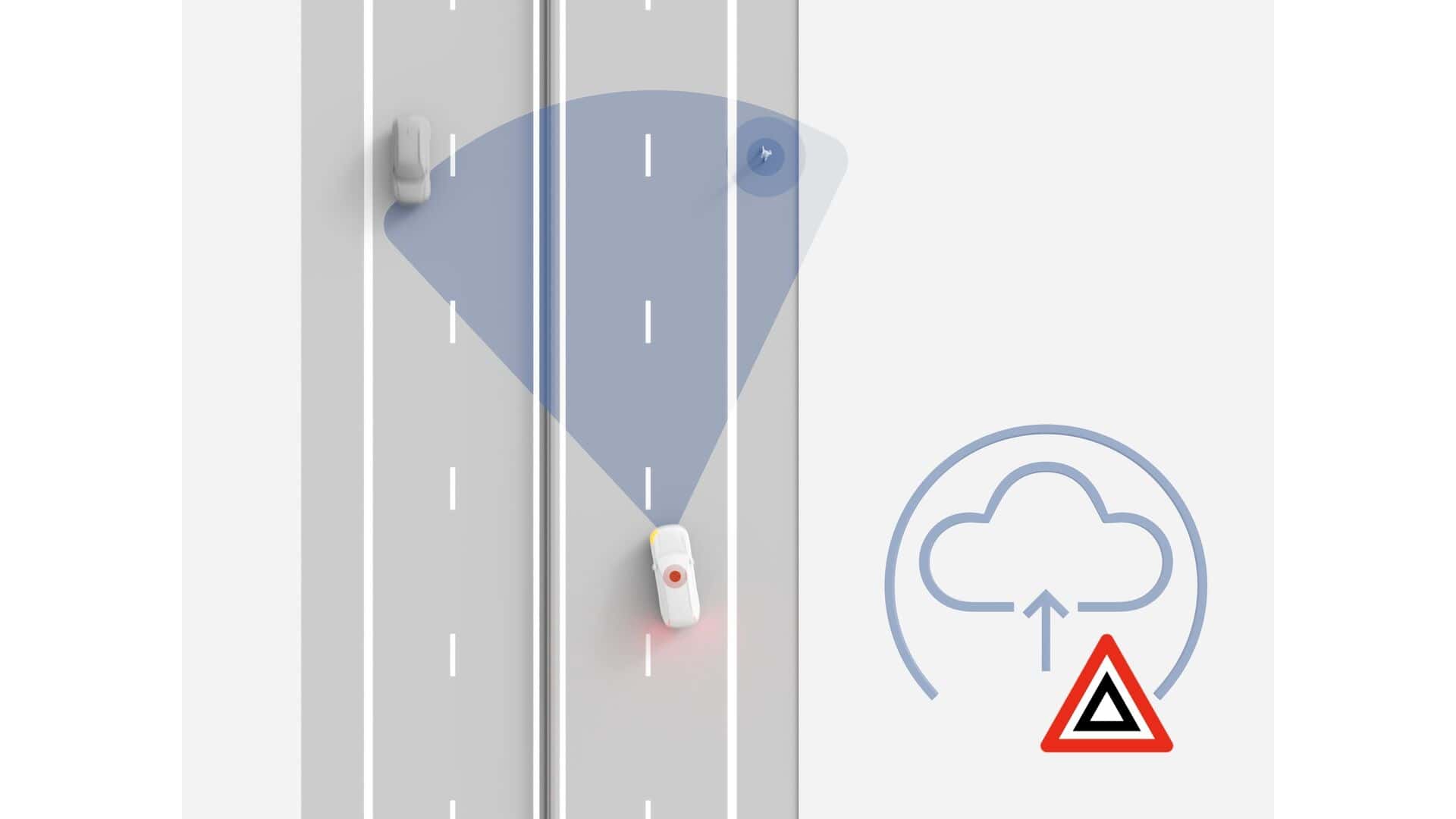
- Volvo updated the EX60, EX90 and ES90 to share cloud-linked Large Animal, Vulnerable Road User, Roadwork and Accident Ahead alerts.
- A spotting car uploads the hazard position to Volvo servers and alerts nearby Volvos.
- Volvo emphasizes minimizing false positives to keep driver trust.
Three of Volvo’s newest electric models can now warn each other about danger that one car spots first. A recent software update lets the EX60, EX90 and ES90 share cloud-linked alerts for animals, cyclists, roadworks and crashes, instead of relying only on the driver who sees the hazard.
The feature extends Volvo’s Connected Safety system, which already uses the cloud to send Slippery Road Alert and Hazard Light Alert between most current Volvos in Europe, the US and Canada, with the EX30 the main exception. Those earlier functions trigger when another Volvo detects low grip or switches on its hazard lights. The new software adds more hazard types to the latest EX models so connected EX60s, EX90s and ES90s on the same road can warn each other.
7
Source: Volvo
How Volvo’s Cameras Feed Hazard Data To The Cloud
The system leans on the sensors and cameras already built into the Volvo EX90 and its siblings, tuned to spot larger animals such as deer or sheep near the roadside. When those sensors identify a risk, the car records its position and sends that information to Volvo’s servers instead of keeping it local.
Connected Safety has been available for several years on other 60 and 90 series models and on Volvo Trucks, where it first shared warnings about slippery roads and vehicles with their hazard lights on. The update extends that same cloud pipeline to the EX-series electric models and teaches it to recognize a wider set of hazards, including vulnerable road users, roadworks and animals beside the road. The alerts still depend on the car being online and the road existing in the map database, but newer EX cars have the computing power to handle the real-time processing.
Trust Matters More Than Speed To Market
Vulnerable road users such as pedestrians and cyclists now get a dedicated warning, alongside alerts for animals, roadworks and accidents ahead. Speaking with Autocar, Volvo safety chief Åsa Haglund summed up the priority as simple: the system must only warn when the message makes sense, because frequent or pointless alerts quickly train drivers to ignore them.
Haglund also explained why Volvo took time to roll this out. Rushing every new idea into production would move faster but would not necessarily improve safety, since false positives chip away at driver confidence in assistance features. She stressed that the technology is meant to support the person behind the wheel rather than replace human judgment, even if the machine can stay vigilant, avoid fatigue and watch in all directions at once. Volvo expects these cloud warnings to reach more models over time.
Motor1’s Take: Cloud-fed, fleetwide warnings turn each Volvo into one more sensor for the rest of the network, which can buy drivers extra seconds where they matter most. The hard part will be scale and signal quality. Too many false alarms will erode trust fast, and the value of the system depends on careful tuning and how Volvo handles data sharing and privacy as more cars join in.
Source:
Volvo via Autocar
Read the full article here