





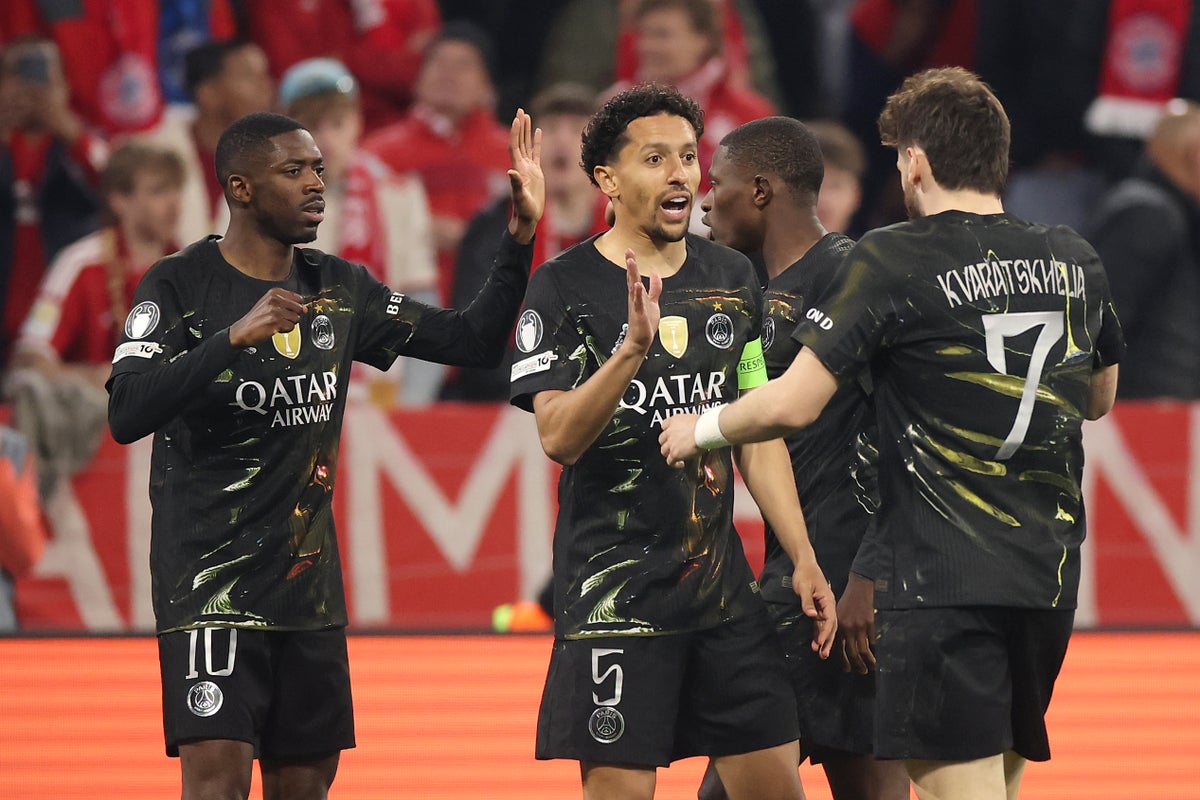
It is a Paris Saint-Germain 11 but not, it is safe to say, the 11 Luis Enrique will name to face Arsenal. Lucas Chevalier is the goalkeeper. The defenders are Willian Pacho, Ilia Zabarnyi, Beraldo and Lucas Hernandez. In midfield, Vitinha is joined by Warren Zaire-Emery and Senny Mayulu. In the forward line, the incomparable Khvicha Kvaratskhelia is accompanied by Bradley Barcola and Lee Kang-in.
It is a fair bet Mikel Arteta would be pleasantly surprised to encounter a team without the Ballon d’Or winner Ousmane Dembele, the two-goal star of last year’s Champions League final, Desire Doue, the classy passer Joao Neves, the flying full-backs Nuno Mendes and Achraf Hakimi or the captain Marquinhos. He won’t, though, unless injury rules Hakimi out.
Luis Enrique has been able to rest and rotate more readily than Mikel Arteta (Getty)
But an 11 that can have a makeshift look is a trophy-winning team; or least it is the core of a team who won a trophy. They are, in terms of both minutes and starts, the most-used 11 as PSG retained the Ligue 1 title; go on total number of appearances and Goncalo Ramos and Ibrahim Mbaye would be in the first 11. They won’t start in Budapest, either.
Advertisement
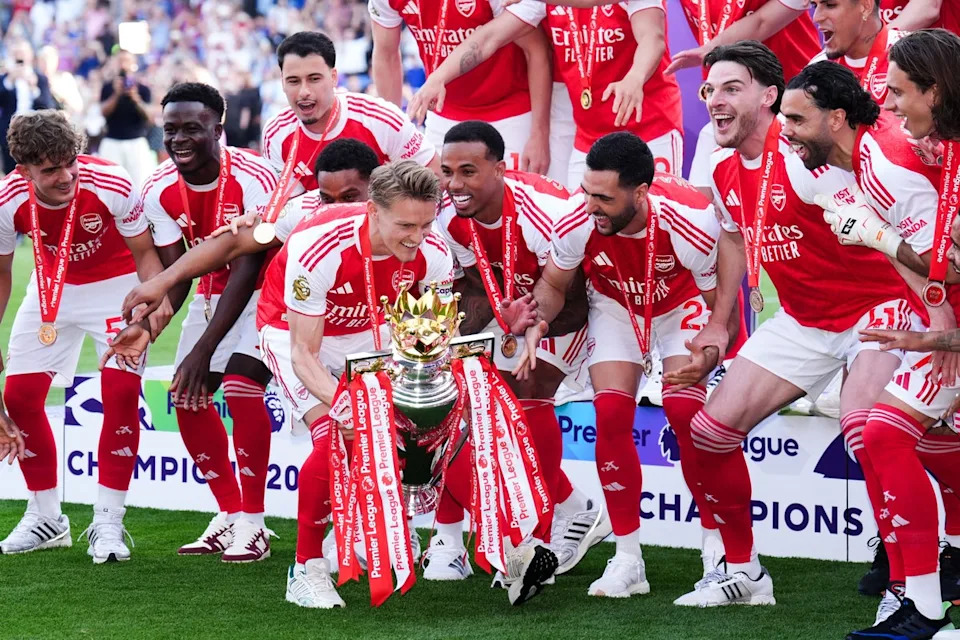
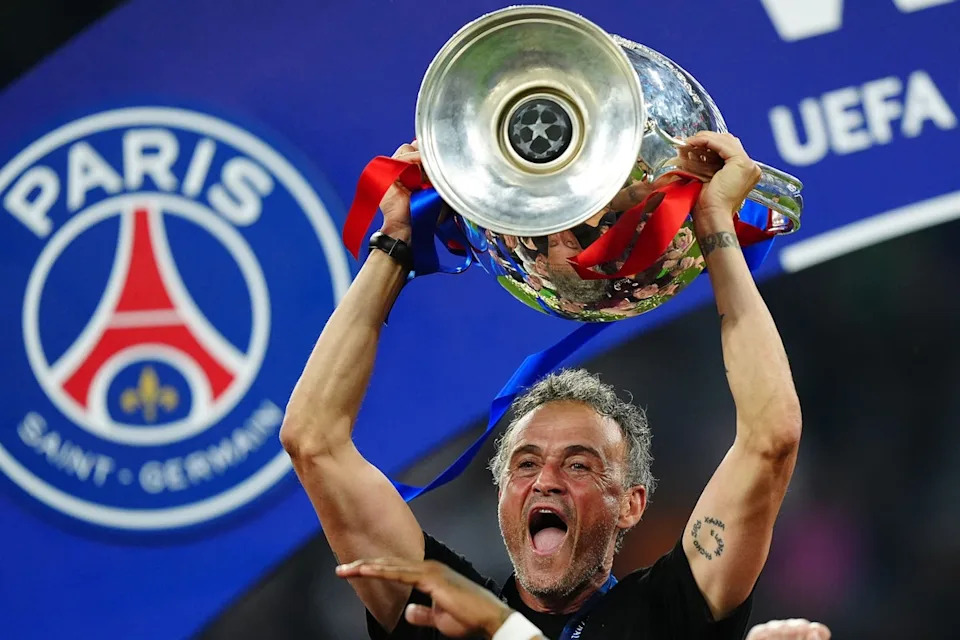
The Champions League final can be framed as opposites: the best attack against the best defence, the side that only came 11th in the league phase against the one that topped the table with a 100 percent record, the club that always wins their domestic title against the one that has just become champions for the first time in 22 years.
PSG won Ligue 1 without undue fuss or frustration (Getty)
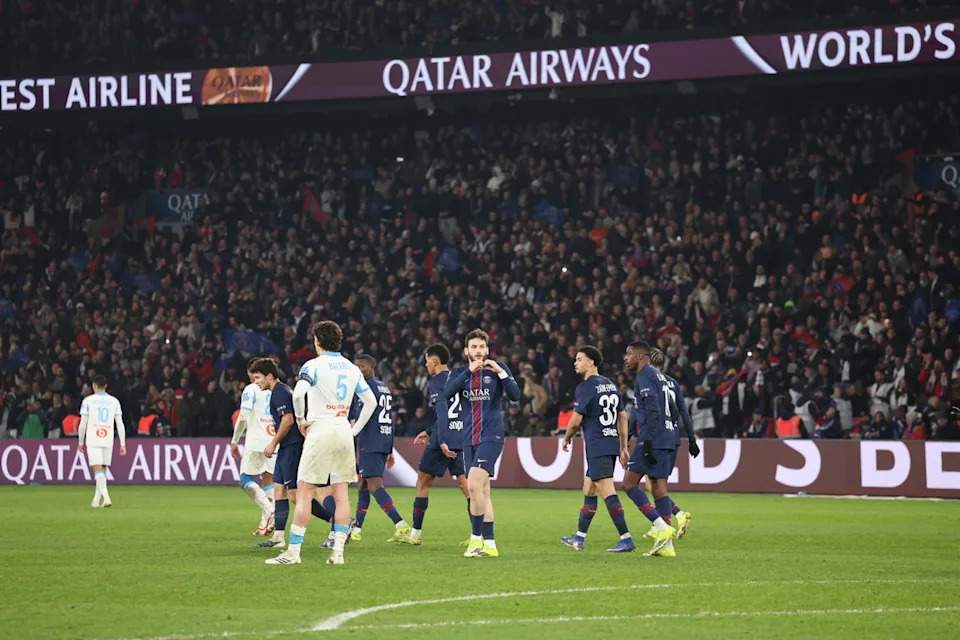
But there is also a difference in how they did it. PSG won Ligue 1 while teamsheets showed a focus on the Champions League. They benefited from the gulf in resources between them and the rest in French football, knowing they could do enough with their squad players. If they can look faster, fitter and fresher than opponents in the Champions League, it is part because they are. If Arsenal have adopted a more attritional style as they competed on all fronts, it may have been enforced by the competitiveness of the Premier League.
Arteta’s 11 most-used players, in terms of Premier League minutes, would be a plausible starting 11: David Raya; Jurrien Timber, William Saliba, Gabriel Magalhaes, Piero Hincapie; Martin Zubimendi, Declan Rice; Bukayo Saka, Eberechi Eze, Leandro Trossard; and Viktor Gyokeres. But whereas Rice had the second biggest workload in Arteta’s squad, in Premier League minutes his, PSG counterpart is Zabarnyi, who has not started in Europe since October.
Advertisement
Which shows that Marquinhos has become a part-time footballer, saved for the big occasions. The Brazilian holds the record for appearances for PSG; but only 14 have come in Ligue 1 this season, three of them off the bench. He has only begun three domestic games since early February.
Arsenal had to battle virtually to the last to secure the Premier League title (PA Wire)
Dembele started the last two, one after the title was already won, but a mere 11 in all. He has only completed 90 minutes once in the French top flight this season. Kvaratskhelia has only done so three times, the last in January. It can explain why the Georgian has more goals and assists in the Champions League than Ligue 1. This is his main stage. Dembele’s bit-part role can be explained in part by hamstring and calf problems.
PSG have the broader context that they are in effect playing a two-year season with no break, their participation in the Club World Cup and then the European Super Cup meaning one campaign rolled into the next. Luis Enrique has had to manage his resources and protect his players. He has done so, preserving them for the stiffer tasks.
Advertisement
It could be argued he added to the workload by failing to get a top-eight finish in the Champions League, thus requiring an appearance in the play-off round Arsenal skipped. That apart, player welfare has seemed a factor in selection.
PSG are bidding to defend their Champions League crown (PA Wire)
Taken in isolation, this could seem PSG’s least impressive Ligue 1 title. Apart from the curtailed, Covid-halted campaign of 2019-20, they have the joint lowest points total of any French champions since 2003. In the relatively recent past, their teams have scored a century of league goals. This team got just 74.
But they scored five each in a game against Bayern Munich, Chelsea and Tottenham and seven against Bayer Leverkusen, often playing seductively speedy football. They are a different side in Europe.
Advertisement
They have had institutional support. Arsenal may note that Ligue 1 permitted PSG to call off games to plan for Champions League ties. The trip to title rivals Lens was postponed, giving them a free weekend between the two legs of the quarter-final against Liverpool, just as, in the previous round, they had a gap between their return fixture against Chelsea as their match against Nantes was put back.
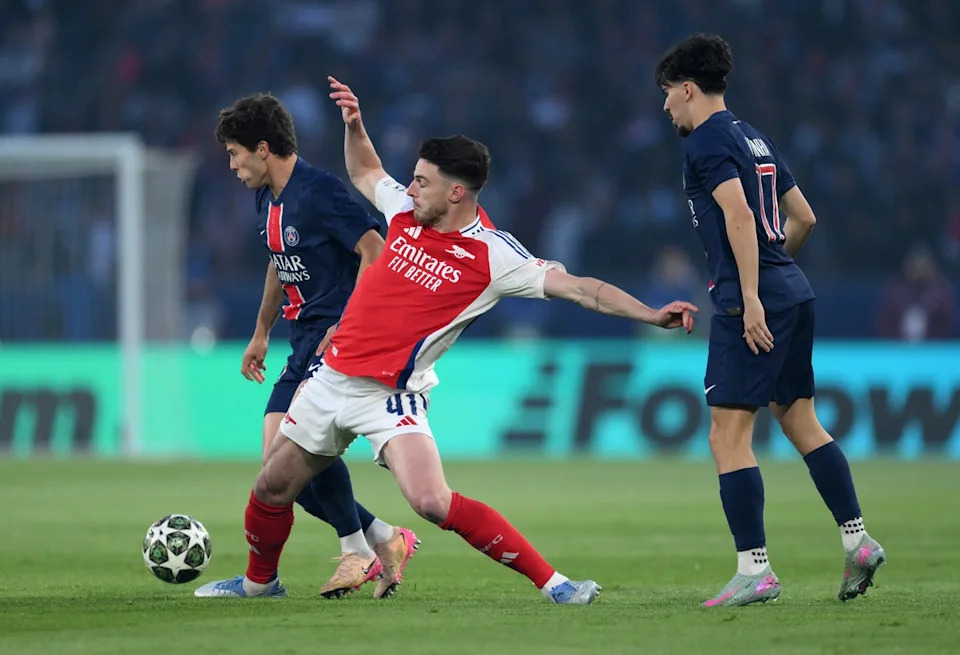
Arsenal face a tall task against PSG in Budapest (Getty)
But it is only one way in which being a French club has now seemed to become an advantage for PSG in their continental campaigns. For years, it seemed the weakness of French league seemed to leave PSG unprepared for Champions League knockout ties. They were forever being knocked out by Real Madrid, Barcelona, Bayern, Chelsea or Manchester City. Yet they have spent the last two years disposing of English clubs as Luis Enrique has altered the dynamic. Now the shortcomings of the rest of Ligue 1 can give PSG a better chance of winning the Champions League.
Read the full article here