




When the draw for the Champions League last 16 was made, there were at least a few Uefa figures who winced. That was because they were anticipating reactions like that of Pep Guardiola, who rightly said it was “a little bit weird” that Manchester City and Real Madrid were facing each other for the fifth consecutive season and sixth occasion in seven years. Some in Uefa counter that comes from the clear logic of the new seeding system, that the clubs voted for.
But what else is likely to happen when it’s mostly the same teams all the time? And now, increasingly, when it’s teams from the same country all the time?
Advertisement
England has six clubs in the Champions League last 16, which is obviously unprecedented. High-level Uefa sources would privately admit such a situation – from any country – is also undesirable. The greater issue is that the very structuring of European football makes it more likely to happen, not less.
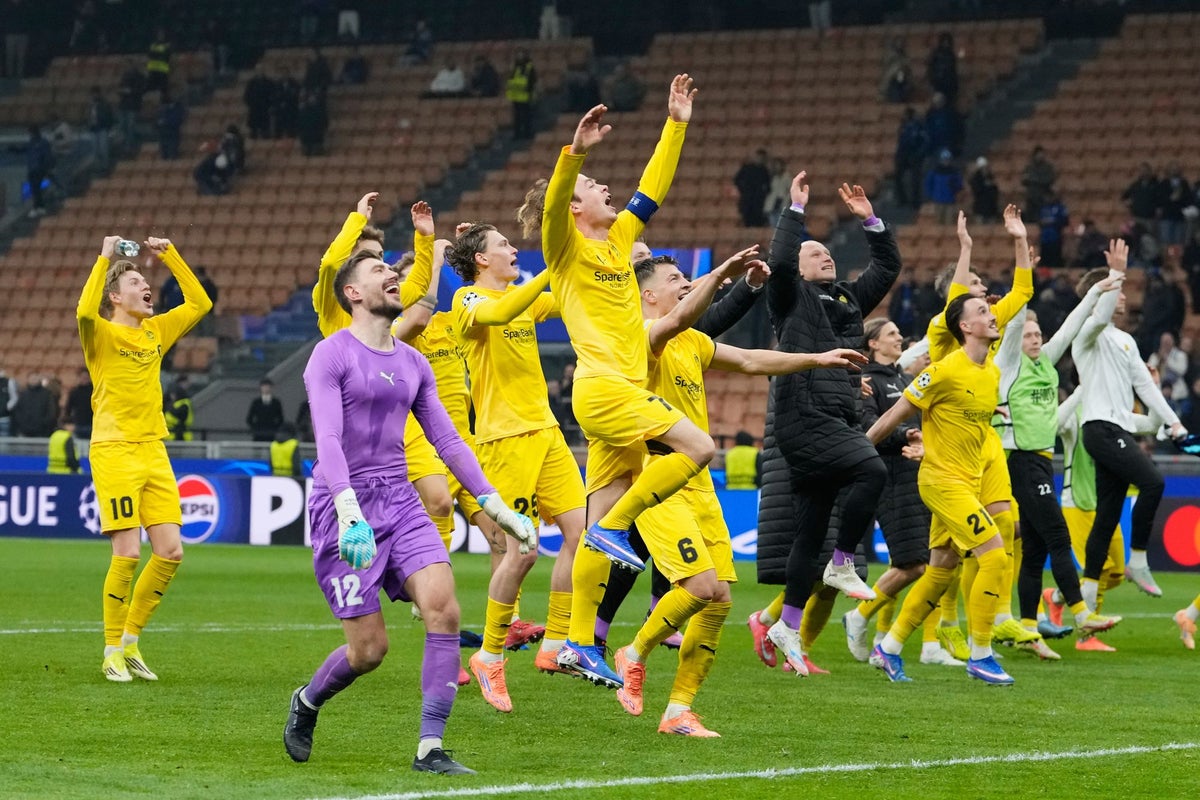
Bodo/Glimt stunned Inter Milan, beating the Italian giants home and away (AP)
Now, as the same old debates rise over whether England can translate such numbers into actual triumph, the fact is that sheer financial power means the Premier League is virtually certain to win enough games to perpetually get five places. The same dynamic gives its clubs an immense advantage in the Europa League.
You could argue over whether this is what European football is supposed to look like, but it’s of course part of the blueprint.
Advertisement
The idea of extra places to two different domestic leagues came out of the Champions League’s 2024 expansion from 32 to 36 and the lobbying of the super clubs. Those negotiations, which crucially happened at the same time as Super League plans escalated, were ultimately about giving extra safety nets.
And while some voices stridently argue that giving such places to “lesser” leagues dilutes the competition, such a point chafes against a perpetual tension of the modern Champions League.
That is how mere participation money strengthens those clubs at the expense of the wider game. That’s how European football now works, with money mostly flowing upwards.
Along those lines, a lot of the discussion around Uefa of late has been about financial “growth”. It was a constant theme of the Financial Times Business of Football summit on the eve of the draw, as well as Uefa’s own landscape report. Both the latter’s foreword, by president Aleksander Ceferin, and the introduction, by finance director Andrea Traverso, breathlessly led on how “revenues have grown”. You have to get much further into the report before the first mention of “inequality”.
Advertisement
On that, revenues have indeed grown so much that you need an income of £450m to even think about winning the Champions League, and there are only 11 clubs in that sphere. It’s just a punchline that one is Tottenham Hotspur. Otherwise, no one outside that group has won the competition since 2007, which was Silvio Berlusconi’s Milan.

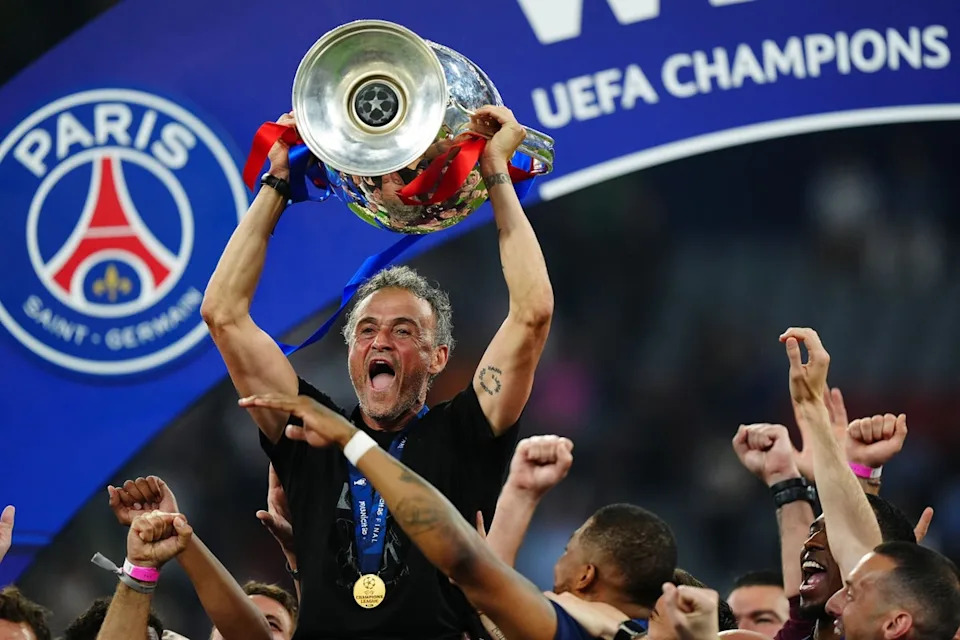
The same clubs dominate the latter stages of the Champions League each year (PA Archive)
You can instantly see how reinforcing that Champions League prize money is, which raises some core questions about how it should work.
A lot of people around Uefa are obviously thinking about “growth” because this reflects the major influences on the game. You only had to walk around that summit. These are football’s decision-makers.
Advertisement
But how many people of influence are actually thinking about what the competition should look like, rather than just the financials? How many are thinking about how you get more winners from outside those kinds of revenues; how you get a greater spread of countries involved; how you get more Bodo/Glimts?
The very history of football shows that highly commercial audiences aren’t going to dwindle. But when was the last time that Uefa introduced any regulation that had any tangible effect on any of this? Because, right now – as great as the football is going to be until May – this doesn’t really look like what European football is supposed to be about. A continent-wide event certainly isn’t supposed to be extremely concentrated in one country, or even have the same clubs constantly there.
This instead looks like Berlusconi’s grand ideal for European football from the late 1980s, finally realised.It was around then the mogul told World Soccer that the old knock-out system was “a historical anachronism”, an “economic nonsense” and “not modern thinking”, as he bemoaned the presence of less glamorous clubs. The Super League was actually conceived in such comments, and this Champions League gives it form.
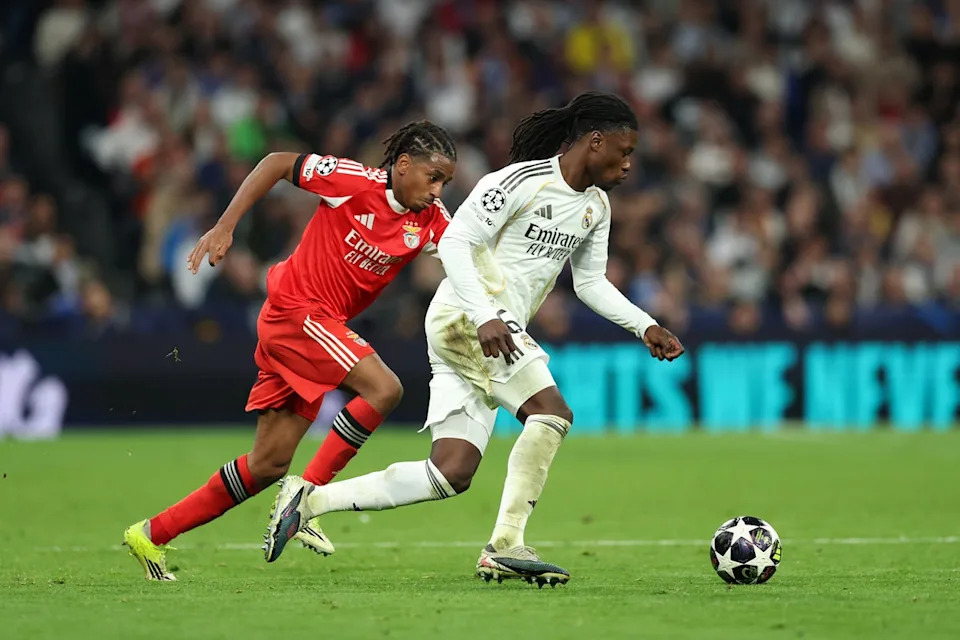
Fewer unexpected teams have disrupted the hegemony of the usual suspects in recent years (Getty)
Except, after a long season when the “modern thinking” and economic logic of the expanded group stage offered a lot of flavourless football, it is of course the knock-out stages that electrify emotions again. There’s really nothing like it. The stakes, the electrical charge, the stage elevated by being so close to the peak. Except, that anachronism has now evolved so much that Milan aren’t even in it.
Advertisement
That’s not all that’s missing. There’s so little that’s new. How often do we see properly exciting teams come out of non-traditional powers, in the manner that used to be every year? Not just an upstart but a side that unexpectedly comes together to invigorate Europe: Dynamo Kyiv 1997-99, Dinamo Tbilisi 1979-83, Valencia 1999-2001, Deportivo La Coruna 2001-04, even Lyon 2002-08… decent-sized clubs who offered a necessary counter balance to the giants, including in transfers.
Despite presumptions about “economic nonsense”, no one was begrudging their participation. These were instead sophisticated sides who spoke to the glorious variety of European football. It wasn’t just that you didn’t get to see these teams as often in a pre-internet world, it was that they would have been doing something different in any world. It was fresh.
By contrast, in the last 15 years, there’s arguably just been Napoli 2022-23, Ajax 2018-19 and Borussia Dortmund 2012-13. One was an eventual Italian champion and the other two former European champions. Everyone will of course point to Bodo/Glimt but, as argued in these pages two weeks ago, they are the exceptional team that prove the rule. The very reason they’re so special – which is how improbable this is – is also the reason why the Champions League has a problem. It shouldn’t be this hard.
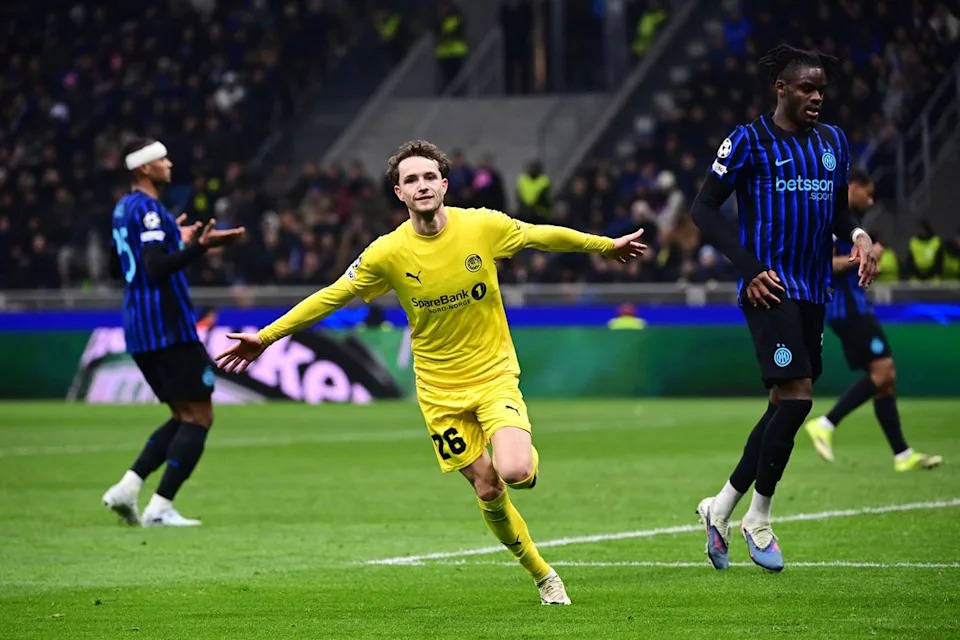
Bodo/Glimt are the feelgood story of this campaign and demonstrate the magic of the Champions League (AFP/Getty)
And what’s going to happen next? The disproportionate prize money Bodo/Glimt will receive may well create another one-team league in Norwegian football.
Advertisement
The next step should really be about how you create more Bodo/Glimts, but are enough people in European football actually thinking about this? Uefa would point to their Intelligence Committee and sources in European Football Clubs (formerly the European Club Association) would say this is being wrestled with all the time. But against such backroom discussion is the feet-on-the-table lobbying of the super clubs.
It is similarly striking just how many senior figures now talk about how former Uefa president Michel Platini just had a feel for this – regardless of his eventual ban – that he actually recognised the need to keep a European spirit. That spirit is now almost entirely absent in Uefa’s decision making.
It is just about there in the Champions League last 16, in Bodo, Sporting and Atalanta, but drowned out by the English. Really, there’s a fundamental truth, that so few at the top of football seem to get. Berlusconi’s “economic nonsense” actually has a lot of sporting logic. That’s for the obvious reason that unpredictability and high stakes absolutely make sport.
The irony is that, after a long build-up, the Champions League is going to prove this over the next few weeks. The show will be great. It could be so much better.
Read the full article here


