




Every year the PGA Championship rolls around, a lot of fans and media (me included) yearn for the days of the “match play major.”
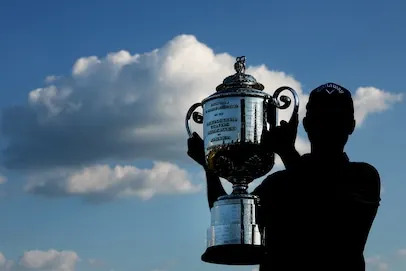
From its inception in 1916 until 1957, the PGA Championship was that. Originally, there were 36 holes of stroke-play qualifying for 32 spots in a knockout bracket. The tournament then became a grueling, nine-round, survival-of-the-fittest gauntlet to capture the Wanamaker Trophy. It wasn’t uncommon for the winner to play more than 200 holes en route to victory.
Advertisement
However, money spoke. The 1957 tournament actually lost the PGA of America money, and potential broadcasters weren’t happy with what would be a lack of golf and golfers over the weekend to show live on TV—an argument that has lingered as a concern ever since. Thus, in 1958, with the first broadcast produced by CBS, and ever since, the PGA fell in line with the other majors and changed its format to the traditional 72 holes of stroke play.
But what if the PGA Championship returned to match play? How would it look? Who would get in? How many rounds would they play? Armed with a spreadsheet and love for head-to-head showdowns created by match-play golf, I went to work.
The schedule
A good place to start is the schedule and plan for the week. While I’d love to see Rory McIlroy and Scottie Scheffler go head-to-head after eight long, intense rounds of match-play golf, I’m wise enough to appreciate that is not feasible in 2026. However, I am going to ask them to play an extra day.
2215486470
Rory McIlroy and Scottie Scheffler would make for a dream final in a match-play PGA.
Advertisement
Alex Slitz
Starting with the first round on Wednesday, my 64-man field would compete in a traditional bracket-style knockout format: 32 players would make it to Thursday, 16 to Friday, eight would play on Saturday morning, four in the afternoon, and then two players would meet for the title over 18 holes on Sunday.
While some would argue a 36-hole final would be more fitting of a major championship, I’m realistic to the idea of asking players to play 72 holes over the weekend is too much.
The format
I’ve read and debated a lot of format suggestions for a match-play major as well as other hypothetical match-play events. Byes, starting shot advantages, double elimination. However, this is a major. Thus, in my version of a match-play PGA, there will be none of that.
Advertisement
Sixty-four players, six rounds of knock-out golf. While players are seeded, they all start the week as equals, similar to starting any of the other major championships at level par.
More PGA Championship preview stories

Golf Digest Logo PGA Championship 2026: The real story behind the Philadelphia School of Design

Golf Digest Logo PGA Championship 2026: Bryson DeChambeau’s Big Choice

On to Philly PGA Championship 2026: Here’s every player in the field (so far) at Aronimink
The field
This is where it gets interesting. As I’ve laid out above, only 64 players earn a place in this version. That’s fewer than half the number of entrants at Aronimink next week. While the PGA of America’s claim to be “the strongest field in golf” may have to go, I believe the number and format will differentiate the PGA Championship from the other majors and resonate with fans. Fewer golfers, more golf, match play.
Advertisement
At this year’s PGA, there are 15 criteria to get into the field. In my version, there are just seven:
1. The top 50 players in the Official World Golf Ranking. While the top 100 typically get into the field as currently built, we need to make cuts, and this is where we start.
2. One of the biggest perks of becoming a major champion is becoming eligible for future majors. Five years of being able to play in all four majors. I’m not removing that, only tweaking the rules slightly. We will invite anyone who has won a major in the previous four years; however, we are removing the lifetime exemption for the PGA champions. Apologies to Shaun Micheel, Rich Beem and Y.E. Yang.

2150231943
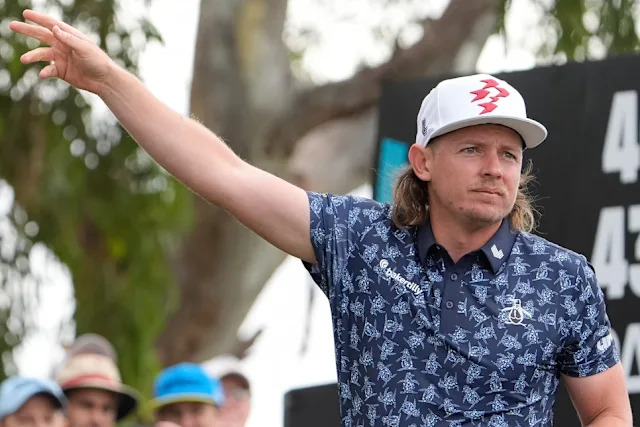
Cam Smith plays for Ripper GC in LIV.
Advertisement
Asanka Ratnayake
With that in mind, there’s only three players who meet this criteria and are not currently in the top 50 in the OWGR. Welcome Brian Harman, Cam Smith and Wyndham Clark
3. The PGA of America is heavily involved in the Ryder Cup, and the event bankrolls a lot of the initiatives the organization is involved in. Continuing the relationship between the two events is important. Therefore, I’m inviting all players that played in the most recent Ryder Cup.
Welcome to the match-play PGA Championship Rasmus Hojgaard—the only player who competed in the Ryder Cup at Bethpage who is not currently ranked in the top 50 in the world.
Advertisement
4. I’m talking a lot about the Official World Golf Ranking, and it is time to do a favor. In return for ranking the best players in the world and establishing criteria to get into major championships, I’m inviting the top three players on the International Federation Ranking List—essentially, an order of merit for international players competing on the Asian Tour, Japan Golf Tour, PGA Tour of Australasia, and the Sunshine Tour.
/content/dam/images/golfdigest/fullset/2026/5/Jarvis.jpg
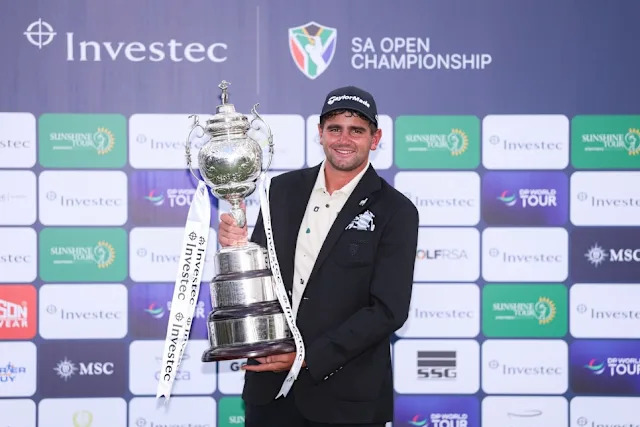
Casey Jarvis celebrates winning the SA Open Championship.
Those players earning a spot in the field here would be Casey Jarvis, Travis Smyth and Kazuki Higa.
5. Only seven places are left in our bracket, and for the next group we welcome all those golfers, not otherwise exempt, who have won on the PGA Tour in 2026. Part of the joy of winning is the invitation to play in the biggest events. In rewarding wins and form, we see Ricky Castillo and Alex Fitzpatrick join here.
Advertisement
6. And here is where it gets interesting. In order to have entry into the PGA Championship for a select number of PGA professionals (see below), we are cutting this stage of the field at 60. We have one place left to fill, and it goes to the highest ranked player in the OWGR not already in the field—Michael Brennan.
/content/dam/images/golfdigest/fullset/2026/5/match-mcilroy-block.jpeg
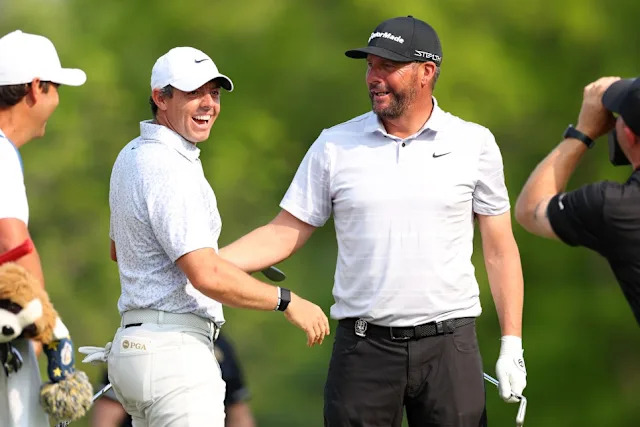
A Rory McIlroy-Michael Block match would get a lot of buzz.
7. The final four. That is the hook for the final places in the new PGA Championship format. Whether it’s a qualifying tournament or order of merit, the last four spots in the field are reserved for PGA professionals.
More PGA Championship preview stories
Features PGA Championship 2026: Scottie Scheffler’s salty side is more visible, but also not new
PGA Championship preview The most ‘PGA’ moments in PGA Championship history

Golf Digest Logo PGA Championship 2026: Restored Reverie at Aronimink
Advertisement
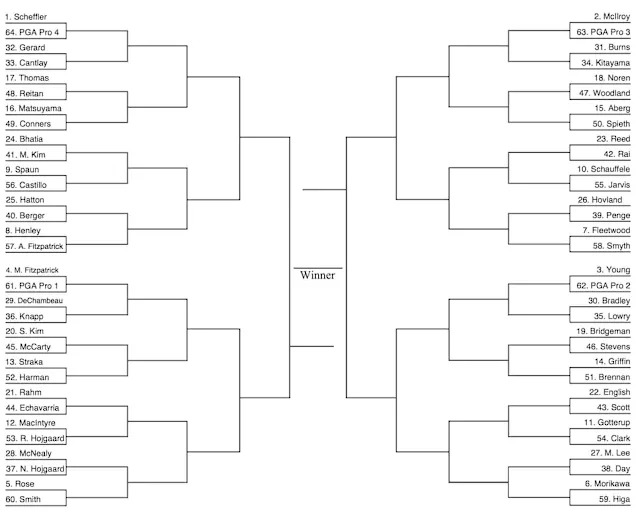
The bracket
With the field set, we can now build out our knockout bracket. The “final four” PGA professionals will be seeded 61st through 64th, based on how they qualified for the tournament. The rest of the field will be seeded by their Official World Golf Ranking.
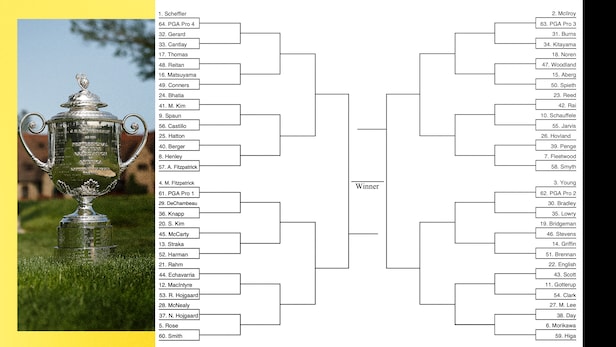
So, with all that in mind, here is the field and bracket for my hypothetical, match-play PGA Championship.

/content/dam/images/golfdigest/fullset/2026/5/Bracket.jpg
There you have it. No gimmicks, no byes, just straight, knockout match play. Sit back and enjoy Jordan Spieth versus Ludvig Aberg in a first-round match, or Bryson DeChambeau against Jake Knapp in a battle of the longest hitters in the game.
Advertisement
It gets better projecting when you look into the possible Round of 16 matchups, which include Scottie Scheffler vs. Justin Thomas; Rory McIlroy vs. Spieth or Aberg; Xander Schauffele vs. Tommy Fleetwood or Viktor Hovland; Cameron Young vs. Keegan Bradley or Shane Lowry; and Adam Scott vs. Collin Morikawa.
And remember, we have the four PGA professionals as potential Cinderella upsets in the first round. Imagine, for example, the possible hype surrounding McIlroy or Scheffler going up against folk hero Michael Block.
If everything went by chalk—and it never does—the final four could be fantastic, Ryder Cup-esque singles showdowns, with McIlroy facing Young and Scheffler taking on Fitzpatrick. Then would you cheer for a mixed final, All-Euro or All-American?
Regardless of that and regardless of the match ups, there is potential here. The PGA Championship seemingly still searches for a defining hook among the major championships. Perhaps, for them, the answer lies in their past.
Advertisement
It’ll never happen. But imagine for a second it did.
More PGA Championship preview stories
PGA Picks PGA Championship picks 2026: Our 13 best bets to win at Aronimink Golf Club
PGA Viewer’s Guide How to watch the 2026 PGA Championship at Aronimink (from the 125 cameras to Jim Nantz!)
PGA Championship 101 PGA Championship 2026: Answering the most frequently asked questions about the year’s second major
Read the full article here


