


I know what you’re thinking. Fridays against the Nationals at Citi Field. Isn’t that a bit of a narrow category for a “best of” list? That’s a tremendously fair point, but for whatever reason, it seems a disproportionate number of the most memorable games in recent Mets history have come on Fridays against the Nats — whether jumpstarting hot streaks, announcing the arrival of new stars, or simply providing a moment of joy in otherwise bleak times.
There are a variety of good options to choose from, as the Mets have won six of their last eight and 14 of their last 22 Friday contests at home against Washington. I’ve selected a quartet that I believe stand above the rest as true classics. With another weekend series with the Nats upon us in 2026, it felt fitting to revisit the unique circumstances that led to these games, the actual on-field events that went down, and the legacy they’ve left behind. So without further ado, here are the top Friday nights at Citi Field vs. the Nats (so far):
Advertisement
4. deGame – April 23, 2021
Setting the scene: After over 18 months of covid-induced absence (not counting cardboard cutouts), fans were finally back in the stands at Citi Field — but things weren’t exactly back to normal. Seating was spaced out, tickets were limited, and the sport was settling into a transitional season before the expanded playoffs and universal DH, after the automatic extra-inning runner, with seven-inning doubleheaders and mounting concern about “sticky stuff.” But the Mets had promise, fresh off the acquisition and long-term extension of Francisco Lindor, out to a respectable 8-7 start, and featuring a two-time Cy Young Award winner who only seemed to get better with age. Thus far in 2021, Jacob deGrom held a 0.45 ERA with 35 strikeouts and three walks over three starts. As he warmed up in the bullpen before this Friday night start against the Nationals (only the seventh home game and third home night game since fans returned to the stadium), he felt so good that it made him “a little nervous.” So we have a small but remarkably hungry crowd of 8,130 fans starved for something good to cheer, and a one-of-one ace nervous about just how good he might be. Sounds like a pretty good recipe.
Play ball: deGrom set the tone with a three-pitch strikeout of leadoff hitter Andrew Stevenson, each offering coming in at over 99 mph. One would think it could only get better for the Nats from that point on, but…not exactly. After five innings, they had struck out nine times and reached base only twice (on a well-placed grounder and a misplayed fly ball). The game was still scoreless, but that changed in the bottom of the frame when deGrom himself came to bat against Erick Fedde, slashing an RBI double to left and later scoring on a single by Brandon Nimmo.
The right-hander kept cruising, striking out the side in the sixth and seventh innings to reach a total of 15 on the night. Unfortunately, his pitch count was also climbing. With 92 pitches thrown by the end of the seventh, it was clear that deGrom’s only shot at a complete game was quick and soft contact, tricky for someone who hadn’t allowed a ball in play for two innings. But in his video-game-like way, deGrom miraculously managed an eight-pitch eighth. When he appeared on deck in the bottom of the inning, the fans scattered throughout the crowd made their voices heard. And, of course, he rewarded them with another single. He needed just nine pitches to cruise through the ninth, stepping on first base to complete the final 3-1 putout and seal the second complete-game shutout of his career. deGrom had retired 19 in a row. He had struck out 15 batters, none of them in the final two innings after he seamlessly shifted to pitching to contact. He had allowed only two baserunners, and he had reached base twice himself.
Advertisement
The legacy: Game Score is a metric developed by Bill James that attempts to quantify a pitcher’s performance with a single number. deGrom’s gem had a Game Score of 98. In Mets history, the only pitching performance of nine innings or fewer to have a higher Game Score is David Cone’s 19-strikeout shutout of the Phillies on October 6, 1991.
deGrom generated 29 whiffs, the third-most in a game by any Met in the pitch-tracking era (since 2008) with the top two spots also occupied by deGrom. He became the first (and only) Met to strike out 15 or more batters in the 21st century. Only 17 pitchers have recorded a game with 15 or more strikeouts and 2 or fewer baserunners allowed, and the only one to do it since deGrom was Jacob Misirowski on June 12. In other words, this game’s legacy is that of one of the greatest pitching performances in baseball history.

3. Harvey’s Better – April 19, 2013
Advertisement
Setting the scene: He had only made 13 major league starts, but Matt Harvey was already becoming something of a phenomenon. After an impressive rookie showing in the second half of 2012, Harvey burst out of the gate with a trio of gems in his sophomore season, allowing two runs over 22 innings of work while striking out 25. Mets fans were dreaming big on the 24-year-old right-hander, but now he faced perhaps his biggest challenge yet: A meeting with fellow 24-year-old sensation Stephen Strasburg. A No. 1 overall draft pick who had made an All-Star team and started Game 1 of a postseason series the year prior, Strasburg in a sense represented what Harvey might hope to become.
Play ball: The Mets got to Strasburg early, scoring a pair of unearned runs with the help of an error and a wild pitch in the bottom of the first, but the Nats’ ace quickly found his groove. Harvey allowed only one hit in the first five frames, and that was a double to Strasburg in the top of the third. The score held at 2-0 Mets until the bottom of the sixth, when Ike Davis led off with a first-pitch moonshot to left-center field. Two batters later, Lucas Duda launched a homer to right-center.
That’s when it started, rising from a faint, unintelligible rumble to an unmistakable, unified chorus: chants of “Harvey’s Better,” echoing throughout the stands and piercing the audio of the SNY broadcast as it displayed a split-screen of Strasburg, trying to regroup on the mound, and Harvey, waiting in the dugout to continue his masterpiece. Harvey would end up allowing a run in the seventh, but hardly anyone seemed to care. A fanbase longing for signs of life after four straight fourth-place finishes had finally found it. Their prospect looked like an ace. Their ace looked like a star. Their star had won the night. Dreaming big on Harvey was no longer a fool’s hope.
The legacy: Matt Harvey’s stardom flashed and faded far sooner than Mets fans would have hoped, but at its peak it burned as bright as any Mets player’s has. The “Harvey’s Better” game seemed to officially announce his arrival and kick off that memorable rollercoaster ride, one which led him to an All-Star Game start three months later and effectively ended with a World Series start thirty months later, all occurring on that same Citi Field mound.
Advertisement
Though their successes took on different forms — and though they certainly had different styles on the mound — Harvey and Strasburg are in some ways forever linked. The two represented a generation of starting pitchers at a threshold between eras, ushering in a new wave of high-velocity hurlers who emerged into an environment less equipped to handle the growing health risks associated with that velocity. Both pitchers underwent Tommy John surgery, but Strasburg adhered to strict innings limits — even amidst a playoff run — while Harvey blew past them in his pursuit of a World Series title. Assessing those choices is something of an impossible exercise. Strasburg played the long game, and Harvey chased greatness when he saw the opportunity. When Strasburg was on his way to a World Series MVP Award in 2019, Harvey was on the Los Angeles Angels, pitching to an ERA above seven. The question of who won the actual pitchers’ duel between Harvey and Strasburg — the one that lasted almost a decade, and not just on that Friday night in April — is one that defines a unique period of pitching in baseball history.
View Link
2. Down (the line) Goes Frazier – August 9, 2019
Setting the scene: Between the magical National League Champions in 2015 and the 101-win powerhouse squad in 2022, there were the 2019 Mets, riding the relatively-intact rotation of the mid-2010s and the youthful energy of a new offensive core. They missed the playoffs, in large part held back by their unreliable bullpen. But for a period of several weeks that summer, the ’19 group was firing on all cylinders. They entered this series-opener against Washington having won 13 of their last 14 games, including six straight, carrying them from nine games below .500 to four games above. In the middle of that stretch, they also made the surprising decision to buy at the deadline, adding All-Star Marcus Stroman, who was set to make his home debut opposite Strasburg. To make the stakes even higher, the Nats were sitting in the top NL Wild Card spot, 3.5 games above the Mets.
Advertisement
Play ball: It seemed a pitchers’ duel was in the making, as Stroman and Strasburg traded zeros for three innings. But the Nats got to Stroman, with Anthony Rendon tripling in a run and 20-year-old Juan Soto clobbering a two-run shot to put the Mets in a 3-0 hole. The resilient lineup instantly responded, with Pete Alonso and J.D. Davis hitting back-to-back homers in the bottom of the frame to even the score. Stroman found himself in a bases-loaded, two-out jam in the top of the sixth, but struck out Strasburg swinging — his ninth strikeout of the night — and walked off the mound to a roar from the raucous crowd. The Mets had all the momentum, but the Nats stole it right back, putting the Mets down 6-3 entering the bottom of the ninth via an Anthony Rendon homer and run-scoring wild pitch.
With their backs against the wall and their winning streak in jeopardy, the Mets mounted yet another rally. Davis pulled a double over the third-base bag and Wilson Ramos lined a base hit. That brought Todd Frazier to the plate as the tying run. The veteran torqued a moonshot down the left-field line, and the only question was whether the blast would stay fair. It tucked itself just inside the foul pole as the Mets leapt out of their dugout, Alonso jumping up and down in foul territory. After singles by Joe Panik (playing in his first game as a Met) and Amed Rosario, Michael Conforto scorched a ball that flew beyond the reach of right fielder Adam Eaton to notch his first career walk-off hit. The streak stayed alive. The same cannot be said for Conforto’s jersey.
The legacy: The 2019 Mets are something of a forgotten group, but their distinct “LFGM” attitude reached its unbridled peak that night in August, when their postseason hopes seemed more tangible than ever before. They won the next night on an unforgettable pinch-hit homer from Luis Guillorme (his first in the big leagues), but they lost the finale on Sunday afternoon. Somewhere deep down, I’ve always believed that if they’d managed to sweep that series from the Nationals, it could have been them instead of Washington still playing in late October. Such sweeps have been known to have that effect for the Mets, which brings us to…
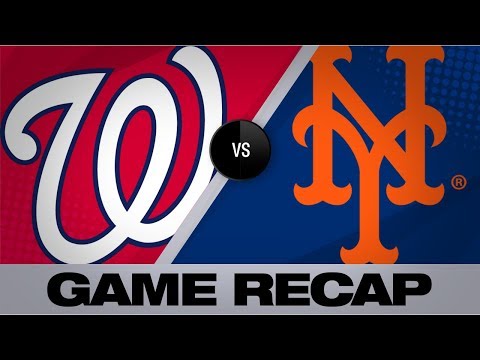
1. Wilmer Flores Night – July 31, 2015
Advertisement
Setting the scene: It would be difficult to script a more action-packed homestand leading up to 7:10 pm on July 31, 2015. Eight days earlier, the Mets’ injury-riddled lineup was nearly no-hit by Clayton Kershaw. Seven days earlier, the team promoted first-round draft pick Michael Conforto and made a mid-game trade to bring Kelly Johnson and Juan Uribe to Queens while their starting pitcher watched his wife give birth on FaceTime from the dugout. Six days earlier, Conforto went 4-for-4 and fellow newcomer Johnson homered in a 15-2 rout. Five days earlier, they broke Zack Greinke’s 45 2/3-inning scoreless streak before winning thanks to a walk-off hit from yet another newcomer in Uribe. Four days earlier, they swung a trade for two-time All-Star Tyler Clippard on an off-day. Three days earlier, Clippard made his debut by closing out a Mets win after Noah Syndergaard took a perfect game into the seventh. Two days earlier, word broke of another mid-game trade which would send Wilmer Flores, who had been a part of the organization since he was 16 years old, in a trade package to Milwaukee. He shed tears on the field as the crowd applauded him in what appeared to be his final game as a Met — except that it wasn’t. The deal was never completed, and Flores, suddenly having earned the sympathy of the larger Mets universe, was still in orange and blue. One day earlier, the team blew a six-run lead in their most devastating loss of the season. And just hours earlier, minutes before the trade deadline, they swung a deal to acquire Yoenis Céspedes.
All of that chaos brings us to the night in question, when the Mets kicked off a three-game set with the Nationals, who sat exactly three games above them in the NL East standings. The big three (Harvey-deGrom-Syndergaard) were lined up. Travis d’Arnaud was returning from the injured list. Céspedes was en route. And Wilmer Flores was batting sixth and playing second base.
Play ball: From the second play of the night, Flores’ burgeoning status as a folk hero became quite evident. He made a diving stop on a Yunel Escobar grounder, getting to his feet and firing to first as the crowd offered support far beyond the typical volume for a 4-3 putout. When Flores stepped to the plate for the first time in the bottom of the second, he received a standing ovation, though Escobar returned the favor by retiring him on a nifty barehanded play. When Flores returned to the plate with two out and two on in the bottom of the fourth, he ripped a liner off Gio Gonzalez that proved too much for Ian Desmond to handle, bouncing into the outfield as Uribe came home with the first run of the game.
Matt Harvey, in a largely-forgotten performance (reasonably overshadowed by the evening’s other memorable events), carried a perfect game into the sixth. He pitched all the way into the eighth, finally yielding a run when Escobar got revenge for his earlier robbery by drilling a two-out, two-strike, 98-mph fastball up the middle. The newly-acquired Clippard entered into a jam, but froze Jayson Werth on a 3-2 fastball thanks to a sweet frame by the returning d’Arnaud. The 1-1 tie held through the ninth. It held through the 10th. It held through the 11th, an inning which included a Bryce Harper ejection after yet another d’Arnaud frame. It held until the bottom of the 12th, when Flores came to bat for the fifth time.
Advertisement
“Well, this game began with the Wilmer Flores standing ovation chorus,” Gary Cohen said on the SNY broadcast as Flores stepped into the batter’s box, the crowd chanting his name as they had all night. “This is beautiful,” Ron Darling said. “All you gotta do, Wilmer, is hit it out of the park.” 42 seconds later, Flores was rounding first base as the baseball sailed majestically over the left-center-field wall. As Howie Rose later put it, “I swear when that ball went over the fence it turned into pixie dust.”
The legacy: One day later, Céspedes joined the Mets for yet another win over the Nats. Two days later, the Mets completed the sweep on national television thanks to a three-homer inning that sent Citi Field into a Shea-like frenzy. A month later, the Mets all but sealed the NL East title with yet another sweep, this time in Washington. Two and a half months later, Flores was playing shortstop and batting eighth in the ballpark’s first World Series game.
That storybook night infused the 2015 team with a sense of heart and purpose that they never really lost — at least not until they actually lost, with Flores taking a called third strike to end the Fall Classic. It infused the fanbase with a special love for a relatively uncelebrated utility infielder, and that love still hasn’t gone away (if you don’t believe me, try starting a “Wilmer Flores” chant anywhere in the stadium today and see what happens). It was three hours and 59 minutes which felt more like a fairytale than a baseball game. Those moments only happen once in a blue moon. And oh, by the way, there was one of those that night, too.

Read the full article here