





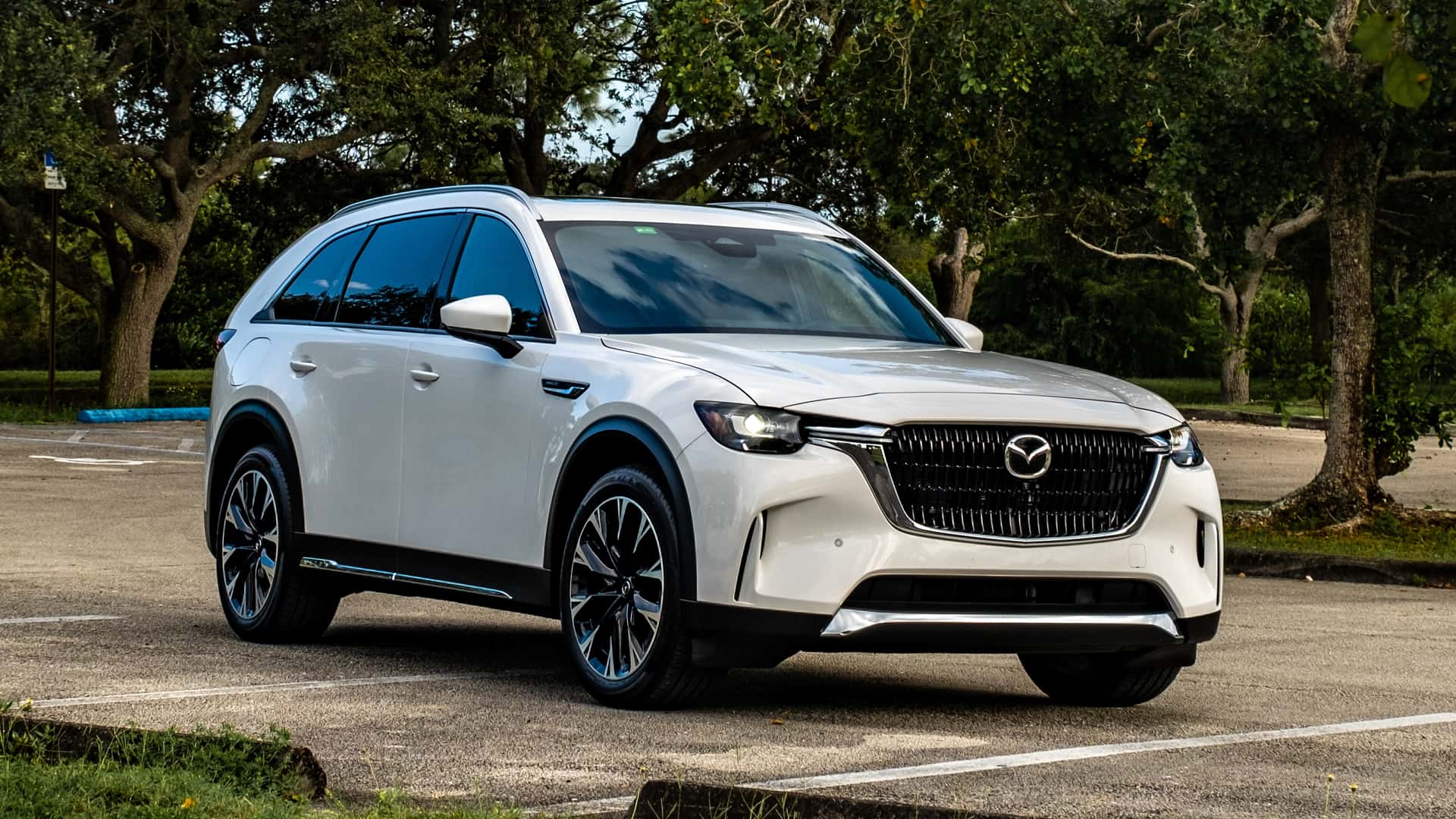
- Mazda North America reports that CX-90 sales are down 25 percent through July.
- CX-70 sales fell 28.1 percent during the first seven months of the year.
- Mazda will tweak its rear-wheel-drive SUVs in an effort to lure customers back into showrooms.
Mazda developed its rear-wheel-drive platform primarily for a pair of large SUVs destined for North America. For better economies of scale, the CX-70 and CX-90 have spawned smaller versions for other markets, where the CX-60 and CX-80 are a better fit for narrower roads. However, the Large Architecture was conceived with the American driver in mind. The United States alone accounts for more than half of the sales of vehicles underpinned by this hardware.
But the CX-70 and CX-90 are struggling. The latest sales report from Mazda North America shows the two-row model fell by 28.1 percent to 7,161 units through July. Its three-row counterpart had a rough seven months as well, with deliveries down by 25 percent to 26,102 vehicles. As Automotive News notes, there are external factors beyond the automaker’s control that may have contributed to the decline.
Since both large SUVs are made in Japan, the CX-70 and CX-90 are subject to import duties. A 27.5-percent tariff initially hit the duo before the Trump administration lowered the rate to 15 percent in September 2025. On the flip side, federal tax credits for plug-in hybrids ended that same month.
Photo by: Jeff Perez / Motor1
Mazda Isn’t Happy
With sales suffering, the company’s chief financial officer doesn’t beat around the bush about how less than rosy the situation is. Speaking during the call following the quarterly financial results, CFO Jeffrey Guyton said:
‘That situation is not acceptable to us, and we need to grow our large platform business.’
To reverse the sales slump, the CX-70 and CX-90 will receive tweaks, but specific details and a timeframe for their launch were not provided. All we know so far is that Mazda is “developing a number of product enhancements” for the pair of large SUVs. Whether these updates will trickle down to the CX-60 and CX-80 is unclear, but it would be logical for all four models to remain aligned.
It’s worth noting that, unlike most other automakers, Mazda doesn’t typically do mid-cycle facelifts, preferring instead to make subtle tweaks throughout a model’s shelf life. Whether more substantial revisions are planned to try to move the needle is unclear, but something has to change to bring people back into dealerships.
Guyton went on to say that Mazda “intends to expand both the awareness and product appeal of large platform vehicles.” In other words, more marketing efforts are planned alongside upgrades for the two large SUVs.

21
Motor1’s Take: The CX-70 and CX-90 play a vital role in helping Mazda get a seat at the big boys’ table and go head-to-head with the Germans. Mazda is still a relatively small company, and developing a new platform from scratch, along with six-cylinder engines, certainly didn’t come cheap. The financial investment must have been significant, yet the company isn’t reaping the benefits of it just yet.
While a few of us had hoped the architecture would also underpin something other than SUVs, a rear-wheel-drive sedan with inline-six engines to take on the BMW 3 Series remains a pipe dream. With the SUVs struggling, there’s an even weaker case for a sedan. As much as the Internet would want a new Mazda6 successor (that’s not a Chinese electric liftback America doesn’t get), it doesn’t appear to be on the agenda.
Read the full article here