




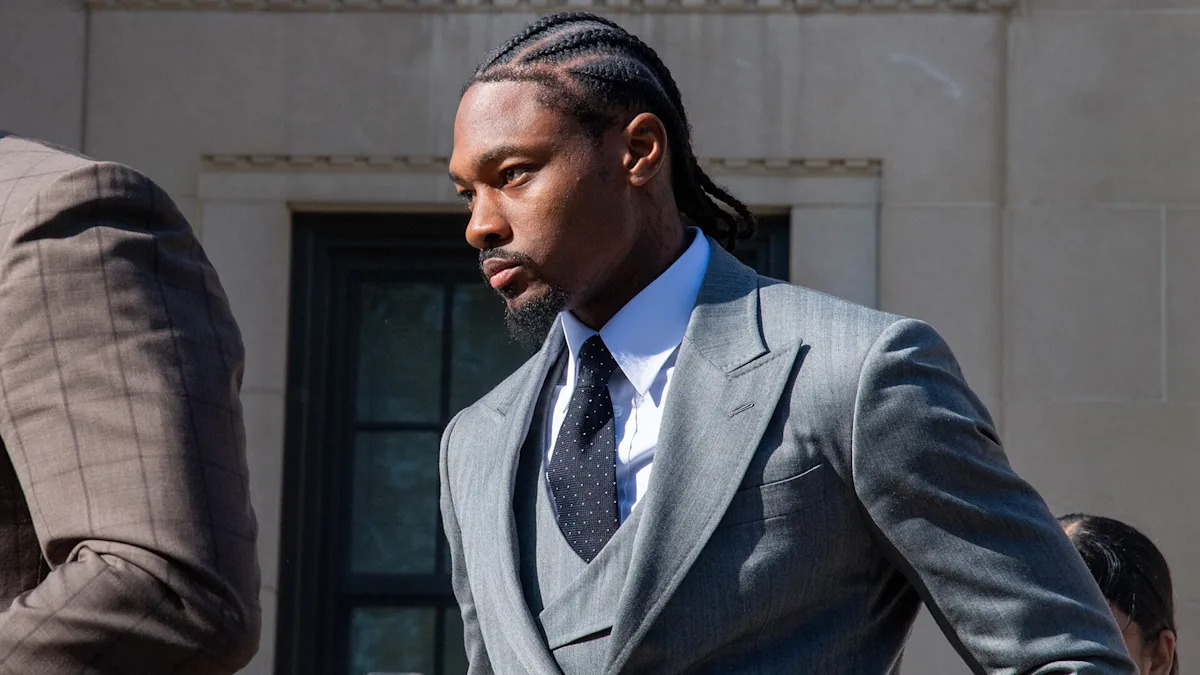
Tuesday’s acquittal of free-agent receiver Stefon Diggs on charges of strangulation and assault ends the criminal case against him. It does not end the NFL’s investigation of the situation.
From an NFL spokesperson: “We have been monitoring all developments in the matter which remains under review of the Personal Conduct Policy.”
Advertisement
The NFL applies a much lower standard of proof, when it comes to the evaluation of allegations of domestic violence or other conduct that falls under the Personal Conduct Policy. Tuesday’s verdict means only that the prosecution failed to prove the allegations beyond a reasonable doubt.
Despite the obvious issues with the testimony of the alleged victim, Mila Adams, as to various topics related to the alleged incident, her testimony regarding the alleged incident was clear and unequivocal, and unrebutted. If she chooses to cooperate, the NFL could interview her and come to its own conclusion as to whether she was telling the truth as to the incident itself — despite the truth-telling capabilities that otherwise emerged while she was being cross-examined.
Also, Diggs exercised his constitutional right to not testify. He will not have that ability, if/when the NFL seeks to interview him.
However it goes from here, the acquittal doesn’t end the inquiry. And it wouldn’t be the first time that a player was disciplined despite not being charged criminally. In 2022, the NFL suspended Browns quarterback Deshaun Watson 10 games even though he was not indicted by a grand jury in Texas.
Advertisement
Despite the flaws inherent to the NFL’s in-house justice system (including the lack of subpoena power), the Fifth Amendment right against self-incrimination does not apply to the NFL’s investigative process. The jury didn’t hear his story. If the NFL wants to hear it, the NFL will.
Read the full article here


