


First things first: this sort of question tends to generate answers based on one of two perspectives: what we as fans would prefer for our own viewing pleasure versus what we as fans think is the best outcome for one of our own. Both are valid perspectives, up to a point.
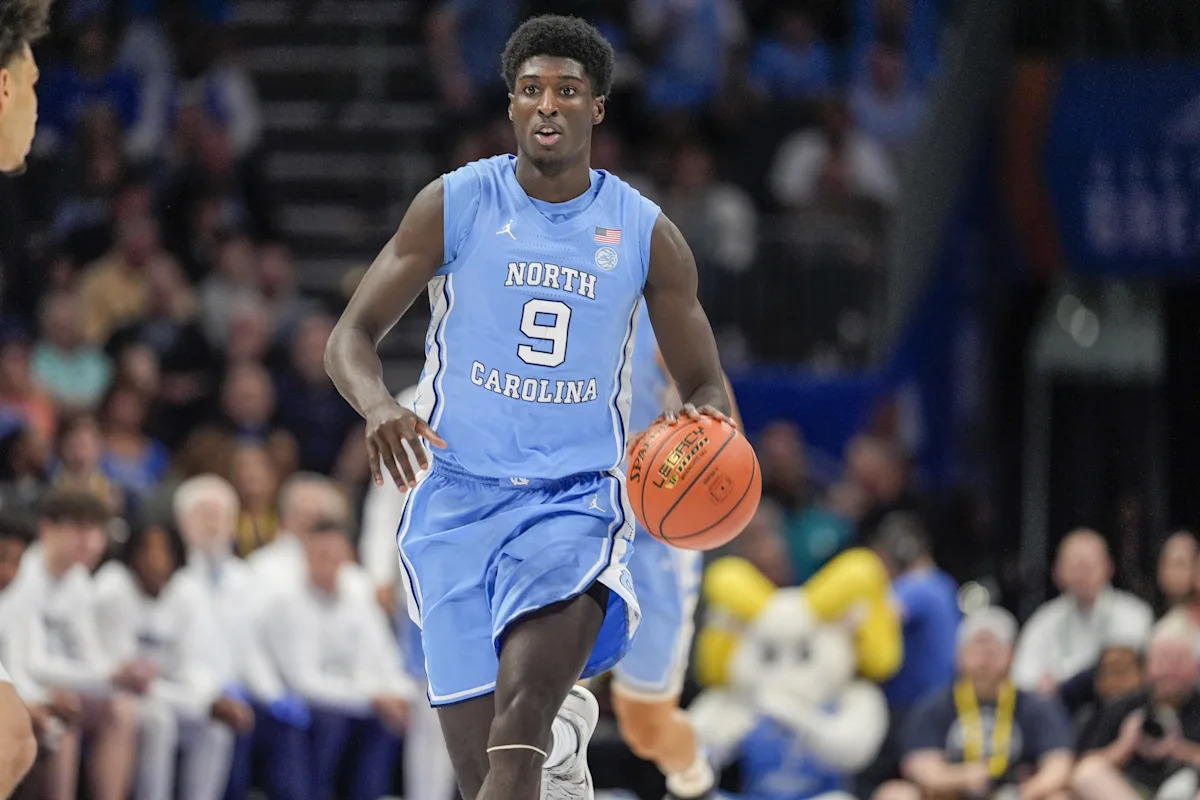
Last season as a rookie, Powell demonstrated the athleticism, skills, and grit to defend at the NBA level, a major reason he landed in the NBA Draft’s first round at pick 22. Everyone knew, and Drake embraced, the need to develop an offensive skill set that would force NBA defenses in turn to respect him on the other end of the floor. As a rookie, he averaged 21 minutes in 63 appearances, contributing 6.5 points with 47.3% eFG%. Drake shot 28% from three last season on 182 attempts, mostly as a spot-up threat.
Advertisement
As a result of that backdrop, Powell entered Summer League play with attention focused on his offensive development. The result in his first four games were disastrous. Drake scored a total of 11 points and missed 27 of 28 shots attempted, including 0-14 from three, in a competition where defense tends to be light. To his credit, he’s attempting to develop a more versatile offensive game, putting the ball on the floor to create for himself or others. Unfortunately, the results draw the kind of attention no professional player wants, the kind of attention that can get into a player’s head.
Last night’s game saw Powell break out of his slump, scoring 18 points on 6-10 (4-7) shooting. Then again, Brooklyn scored 115 points against a Sacramento squad that struggled to hold onto the ball with 28 turnovers and didn’t have much energy left for defense. All of Powell’s field goals were uncontested, either wide open spot ups in transition or dunks. At no point did Powell successfully put the ball on the floor against a defender.
On top of all that, the Nets invested another first-round pick at guard with Louisville’s Mikel Brown, in addition to the four first-round guards acquired last season. They picked up Keon Ellis, a 26 year old three-and-D shooting guard with four years of NBA experience, for $9 million. Powell projects to be the Nets’ third shooting guard, which likely means inactive many nights. It’s hard to see Powell getting the 1,300 minutes he had last season as the third-string PG behind Egor Demin and Keon Ellis.
Powell remains deeply uncomfortable putting the ball on the floor, and that’s something that typically requires a lot of live reps to overcome. The question then becomes whether Drake, clearly an NBA-level athlete, might have benefitted from working on his offensive game at the college level. Henri Veesaar declared for the draft in part because he says he’s a more efficient learner when surrounded by players better than he is, which seems like excellent self-awareness. Not all learners are wired that way, though.
Advertisement
It would have been interesting to see Powell in UNC’s rotation last season at 30+ minutes a game, taking all of Bogavac’s minutes and all of Kyan Evan’s after his demotion. Given the perimeter space created by Wilson’s and Veesaar’s presence, and given how much UNC struggled at guard on both ends, it potentially could have been an excellent developmental platform and showcase for Drake, a win-win for both the player and program.
Powell’s achingly poor offensive showing in the NBA’s Summer League doesn’t mean he won’t — in the end — have a highly successful NBA career. Danny Green only played in 20 games his rookie season for the Cavs and eight the next for the Spurs before his offensive game clicked into place. But, for the moment, it feels like the development curve on offense necessary for Drake to stick in the NBA is overwhelming him.
Do you think Drake should have stayed at UNC another year, despite his first round grade after last season? Let us know in the comments.
Read the full article here