





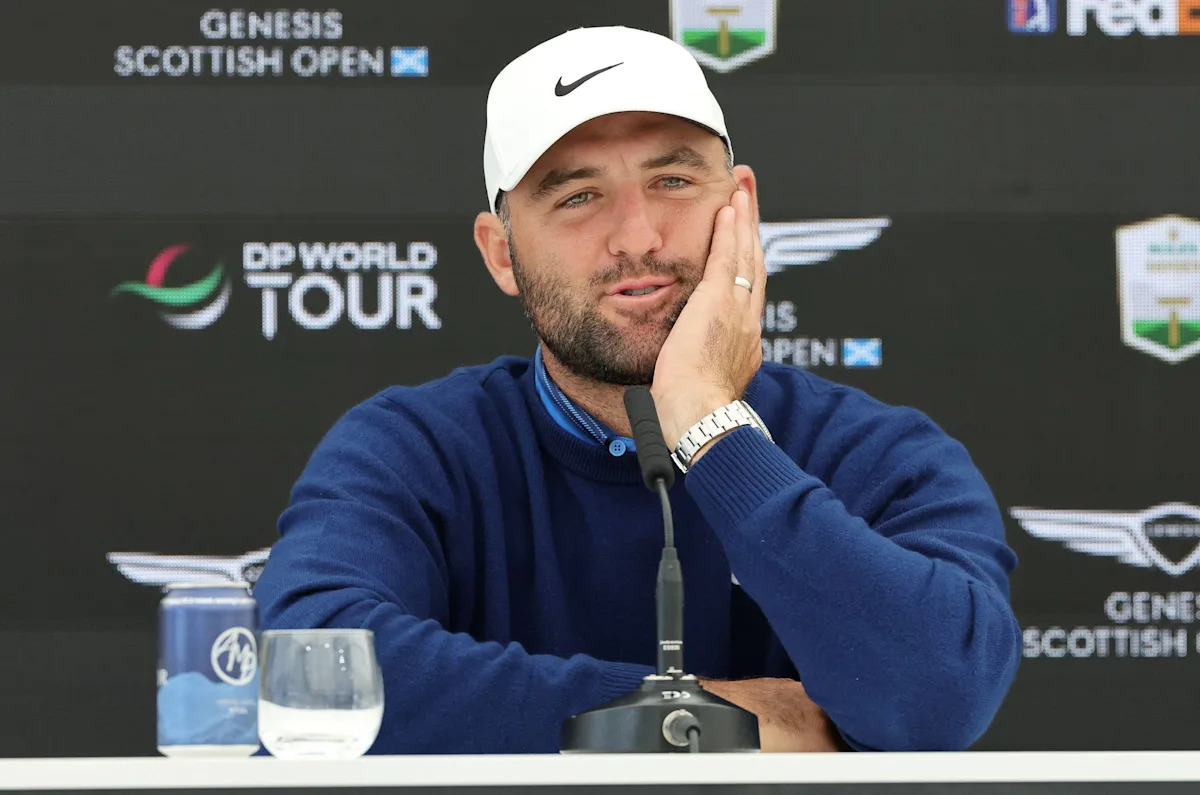
Scottie Scheffler does not always give the answer people are looking for.
That is not a criticism. It might actually be one of the most interesting things about him.
Ask him to assess his season and he tells you he gets that question every week and still does not have a good answer. Ask him to reflect on winning The Open Championship at Royal Portrush last year and he admits he is not much of a reflector. Ask him whether turning 30 caused some grand personal inventory of his life and career, and he basically shrugs, jokes about his receding hairline and blames any lack of eloquence on jet lag.
Advertisement
There is something almost perfect about that.
Scheffler arrived at the Genesis Scottish Open as the best player in the world, the reigning Open champion and a man who will soon have to hand back the Claret Jug before trying to win it again at Royal Birkdale. Yet during his Wednesday press conference at The Renaissance Club, he sounded less like someone interested in legacy talk and more like someone trying to manage the next shot, the next adjustment and the next challenge.
That has become his genius.
Advertisement
Scheffler may not be romantic about the past, but he is incredibly serious about the present. And in Scotland, that present is all about time zones, links turf, slower greens, thicker rough, family balance and the challenge of bringing order to a style of golf that celebrates unpredictability.
3F0G3T5 North Berwick, East Lothian, Scotland, UK. 8th July 2026. Wednesday Pro Am day at Genesis Scottish Open at the Renaissance Club in North Berwick Scotland. Photo; Scottie Scheffler tee shot on 3rd hole. Iain Masterton/Alamy Live News
Athlon Sports Spotlight
Scottie’s Scotland Mindset
Scheffler is not in North Berwick for a ceremonial tune-up. He is chasing competitive reps, links feel and another chance to win before defending the Claret Jug.
Advertisement
Main Theme
Control in a game that refuses to give players full control.
Key Adjustment
Slower, firm greens and judging how the ball reacts on the ground.
Open Watch
He hands back the Claret Jug next week and wants it back by Sunday.
Scottie Is Not Here for a Ceremonial Tune-Up
One of the best lines from Scheffler’s press conference came when he was asked what a win in Scotland would mean.
“I didn’t come over here just for smoke and prep,” he said.
That answer matters because the Genesis Scottish Open can easily get framed as a warm-up event. It sits in that perfect spot the week before The Open Championship, and for many elite players, it serves as a bridge from the American summer to links golf. Players want competitive reps, time-zone adjustment and a chance to reacquaint themselves with firm turf, coastal wind and the different rhythm of golf in this part of the world.
Advertisement
Scheffler wants all of that, too. He admitted the week helps him adjust to the time change and get used to a different style of golf. He also acknowledged feeling a little “fuzzy” from jet lag, which was one of the more human moments from a player who can sometimes make the most difficult game in the world look brutally simple.
But he did not fly to Scotland simply to check a box.
He wants to play well. He wants to contend. He wants to feel what it is like to get near the lead at this tournament, play in that atmosphere and test himself under conditions that are not easy to replicate back home.
Advertisement
That is the competitive edge hiding inside the low-key delivery. Scheffler can sound understated, almost reluctant to dress anything up, but there is nothing casual about his intent.
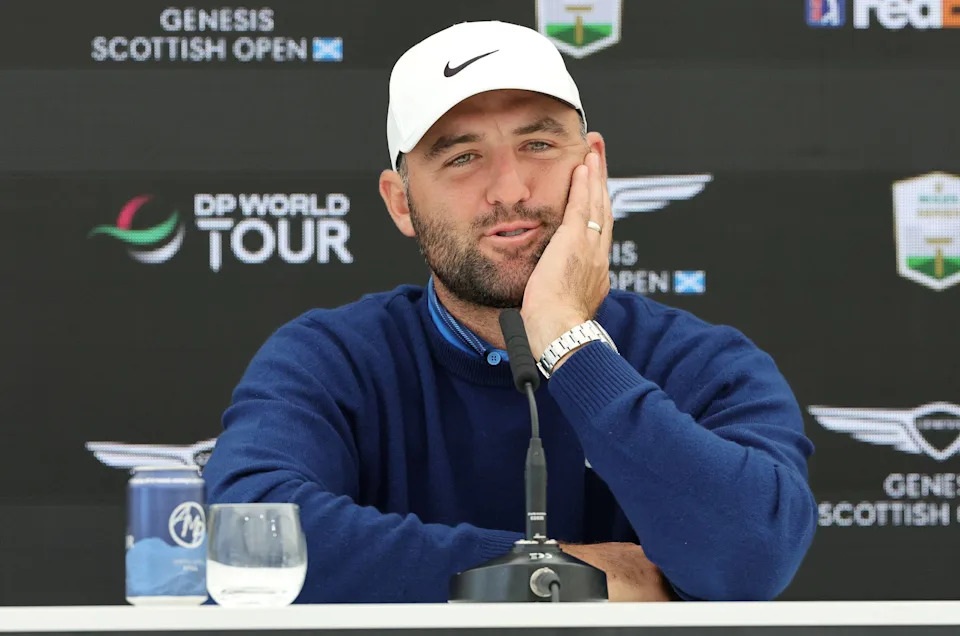
Scottie Scheffler of the United States during a press conference ahead of the Genesis Scottish Open 2026 at The Renaissance Club, North Berwick. Picture date: Wednesday July 8, 2026.Steve Welsh/PA Images
The Claret Jug Means More Than He Expected
Scheffler may not enjoy looking backward, but even he could not completely brush past what the Claret Jug has meant to him.
He said he was surprised by how much he enjoyed it. He understood the history and significance of the trophy before winning it, but having it in his possession changed the feeling. He called it the perfect size, appreciated the names and history attached to it and, in true Scheffler fashion, added that being able to drink out of it is a nice bonus.
Advertisement
That balance is what makes him so relatable.
He can talk about one of golf’s most historic trophies with proper respect, then immediately bring it back to something simple, human and fun. His favorite memory with it was not some carefully staged public tour or grand ceremonial moment. It was a dinner at home with close friends, the Wanamaker Trophy and Claret Jug both there, people drinking out of them and even a child having lemonade from the Claret Jug.
That says a lot about Scheffler. The trophies matter, but the people around the trophies seem to matter more.
Advertisement
He said it will be tough to hand the Claret Jug back next Tuesday, but he will be “fighting like heck” to get it back Sunday. That is about as close as Scheffler gets to a dramatic mission statement, and it still came wrapped in plain-spoken honesty.
Claret Jug Watch
The Trophy Hit Scottie Differently
Scheffler admitted he was surprised by how much he enjoyed the Claret Jug. The history mattered, but so did the simple joy of sharing it at home with close friends and family.
Advertisement
Why It Matters
For a player who says he is not much of a reflector, Scheffler still made it clear that handing the Claret Jug back next week will not be easy.
He Is Still Learning How to Enjoy What He Has Done
There was a revealing moment when Scheffler admitted that maybe he should sit and enjoy things more, but that is not his nature. He said his wife is better at that than he is.
That was not a throwaway comment.
For all of Scheffler’s success, he still sounds like someone who processes achievement quickly and then moves forward. He is in the middle of his career, as he put it, and reflection feels like something for later. Right now, his focus is on what he needs to do.
Advertisement
Some athletes talk that way because it sounds good. Scheffler talks that way because it appears to be how he is wired.
As a golf mind, that is fascinating. Golf is a game that constantly tempts players into emotional extremes. Win and you want to bottle the feeling. Lose and you replay the mistake. Scheffler tries to live somewhere in the middle, even if he admits professional golf is not always a satisfying venture.
That phrase, which he referenced from last year’s Open, might be one of the most honest things any elite player has said about the job. At his level, a fourth and a second can feel frustrating. Being close to winning can feel like failure. Margins are small, and there are always shots a player wants back.
Advertisement
Scheffler knows that better than anyone. His greatness is not rooted in pretending the frustration does not exist. It is rooted in refusing to let that frustration define the next shot.
Links Golf Tests His Need for Control
Scheffler’s most interesting technical comments came when he talked about links golf itself.
He respects it. He enjoys it. He called it a pure and raw way to play the game. He also knows it can produce odd bounces, awkward breaks and outcomes that do not always feel perfectly tied to execution.
Advertisement
That is what makes this stretch so compelling for him. Scheffler is one of the most controlled players in the sport. His ball-striking, decision-making and emotional discipline are all built around repeatability. Links golf, by nature, introduces more variables. The wind shifts. The ball bounces. Pot bunkers punish slight misses. A ball that barely avoids trouble might finish beautifully, while another that lands just offline can require a sideways escape.
Scheffler is not bothered by that as much as some might expect. He pointed out that strange breaks happen in regular golf, too. Links golf may produce more of them, but that does not make it unfair. It just makes it different.
That is the right mindset.
Advertisement
The player who tries to overpower links golf emotionally usually loses patience. The player who accepts its randomness without surrendering his plan gives himself a chance. Scheffler seems to understand that distinction.
Links Golf Decoder
What Scottie Is Really Adjusting To
Scheffler did not point to one magic shot he needs to master. His focus is broader: learning how firm but slower greens, tighter turf, thicker rough and unpredictable links bounces change the way the ball behaves.
Advertisement
Ground gameSlower greensThicker roughWind adjustmentCompetitive reps
The Real Adjustment Is Around the Greens
Scheffler also went deeper on one of the subtler challenges of links golf: speed.
He said the greens are firm but slower than what players are used to in the United States. That creates a different feel on pitch shots, putts from off the green and balls played along the ground. In America, fairways around greens can be longer while the putting surfaces are extremely fast, creating a bigger speed change when the ball transitions onto the green.
Advertisement
In Scotland, the difference can be less dramatic. The ball may slow down quicker on the green, and that is part of why ground-game options become more attractive.
That is a great teaching point for everyday golfers watching this week and next week. Links golf is not just about hitting low shots. It is about understanding how the ball behaves after it lands. It is about seeing the turf as part of the shot, not just the surface the ball happens to hit.
Scheffler and Teddy Scott do not seem locked into mastering one specific shot this week. The larger goal is calibration. How hard does the pitch run? How much does a putt from off the green slow down? Where can the ball land and still finish close? When is the ground route better than flying it?
Advertisement
Those are the questions that turn a good links player into a dangerous one.
The Renaissance Club Has More Bite This Year
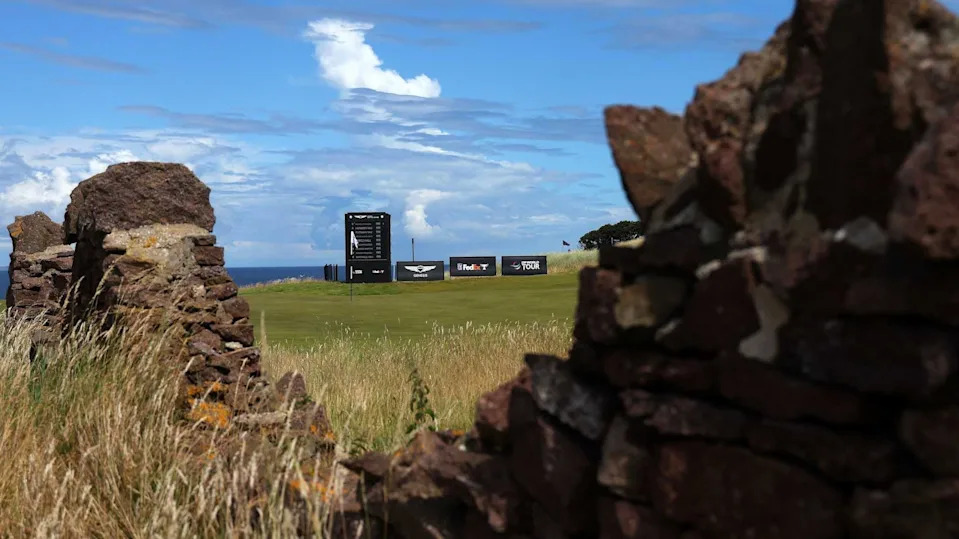
A view through the stone ruins at The Renaissance Club offers a striking look at the coastal setting for the Genesis Scottish Open in North Berwick, Scotland.Credit: Genesis Scottish Open Facebook
Scheffler did not make too much of the rerouting at The Renaissance Club, but he did suggest the final stretch may now play a little more difficult. He also noticed thicker, lusher rough in places where balls may have previously been able to run onto greens or settle in more manageable lies.
That changes the equation.
A firm, running course with light rough allows players to recover more creatively. Add heavier rough in key spots and the penalty for missing becomes more severe. Scheffler referenced a practice-round shot where he expected a ball to run up near the green, only to find a much thicker lie than in past years.
Advertisement
That is the kind of detail elite players store away quickly.
For Scheffler, this week is not only about adapting to links golf in a broad sense. It is also about learning where this version of The Renaissance Club is asking different questions. The routing tweak may be the headline change, but the rough might be the more important competitive change.
Family Time Still Shapes the Schedule
Another major theme was balance.
Scheffler was asked about future elevated international events and said the idea interests him. He mentioned Australia and New Zealand as places he would love to play, with his wife having always wanted to go to New Zealand and the Sandbelt in Australia holding obvious appeal for any serious golfer.
Advertisement
But his answer quickly turned to family. The fall is a special time for them, he said, a time when he can check out, be with his kids and protect moments that feel sacred.
That is the modern Scheffler tension. He loves golf. He loves competition. He is open to playing more internationally. But he is also a young father who does not seem willing to blindly sacrifice every open week on the calendar.
That may frustrate some schedule-makers, but it is part of what keeps Scheffler grounded. He is not chasing everything. He is trying to choose wisely.
Advertisement
The same theme showed up when he was asked about exploring North Berwick or Gullane during Scottish Open week. He likes the idea. He just rarely finds the time. With family in town, the week becomes quieter: cooler weather, time around the house and chasing his older son around.
It is a simple image, but it fits him.
The best player in the world is in Scotland preparing to defend the Claret Jug, and part of his week is still built around being a dad.
Advertisement
The Scottish Open Still Matters in the New PGA Tour Puzzle
Scheffler also addressed the future of the Genesis Scottish Open in the evolving PGA Tour schedule. He did not pretend to have all the answers, but he clearly values this tournament’s place.
He believes it is a great way to prepare for The Open. He likes the golf course, the fans and the way the event is run. He also made a broader point about the importance of having similar groups of top players competing against each other on strong golf courses week after week.
Advertisement
That answer was not as philosophical as Rory McIlroy’s comments on national opens, but it came from a similar place. Scheffler wants competitive clarity. Golf is difficult to rank when players are scattered across different events and tours. Getting the best players together more often, on quality courses, is the cleanest way to identify who is truly playing the best.
In that sense, this week checks a lot of boxes. Strong field. Great timing. Different style of golf. Meaningful preparation. Real competitive value.
Scheffler hopes it continues to fit.
The Most Dangerous Version of Scottie Is the Present One
It is tempting to look at Scheffler and talk about legacy, dominance and where he fits historically. Those conversations are fair, but they are not the way he seems to experience his own career.
He is not living in last year’s Open win. He is not overly sentimental about turning 30. He is not flying to Scotland for a vacation with a scorecard. He is not trying to make links golf more predictable than it can be.
He is doing what he always does.
He is adjusting. He is learning. He is competing. He is trying to accept the bad breaks, use the good ones and keep himself in position until the tournament asks for something special.
That might be why Scheffler is so hard to beat. He does not seem distracted by the story everyone else wants to tell about him. He is too busy working through the one in front of him.
This week, that story begins at The Renaissance Club with jet lag, thick rough, slower greens and links bounces.
Next week, it moves to Royal Birkdale, where he will hand back the Claret Jug and try to take it home again.
For a player who says he is not much of a reflector, Scottie Scheffler sure has a lot worth reflecting on.
PGA of America Golf Professional Brendon Elliott is an award-winning coach and golf writer who serves as Athlon Sports Senior Golf Writer. Read his recent “The Starter” on R.org, where he is their Lead Golf Writer. To stay updated on all of his latest work, sign up for his newsletter or visit his MuckRack Profile.
Related: What’s Really on Rory McIlroy’s Mind Ahead of the Genesis Scottish Open
Related: PGA Tour Splits Into Two Very Different Pressure Tests Before The Open
Related: The Monday Mowdown: Three Very Different Courses Take Center Stage in a Huge Week for Golf
This story was originally published by Athlon Sports on Jul 8, 2026, where it first appeared in the Golf section. Add Athlon Sports as a Preferred Source by clicking here.
Read the full article here