







Late last week, as details of a gambling addiction and NCAA investigation involving Brendan Sorsby began to emerge, a senior level AFC personnel executive was rankled by media speculation that the Texas Tech quarterback could already be earmarked as a first-round pick in a potential NFL supplemental draft.
“Garbage,” the exec said. “Nobody even really knows anything at this point. All of this stuff is flying around and people are already saying ‘first-round pick’ in the supplemental [draft]. If anyone important tells you that confidently [from NFL teams], they are either careless about their job or lying.”
Advertisement
It was a contentious stance from an NFL executive who was one of eight to underscore a multitude of questions about the Sorsby situation, which evolved over the course of the last week. Just over one week ago, Texas Tech announced that Sorsby — who was expected to be the Red Raiders’ starting quarterback this season after transferring from Cincinnati — would be taking an indefinite leave of absence from the program to enter a residential treatment program for gambling addiction. ESPN and other reports soon filled in the alleged details: That Sorsby was under NCAA investigation for having placed thousands of online sports bets dating back to his redshirt freshman season at Indiana, including purported wagers on college football and on the Hoosiers while he was a member of that team.
The moment sent shockwaves through college football, which has already been dotted with gambling scandals — and which saw the Sorsby development come on the heels of the Texas Tech quarterback signing an NIL deal reportedly worth between $5 million and $6 million. But the ripples hardly stopped in college football, with Sorsby having been identified earlier this offseason by some NFL talent evaluators as a potentially fast-rising star in what is expected to be a banner 2027 draft class. This after being arguably the most coveted NIL college football transfer this offseason, which only bolstered his position to improve his NFL stock.
In the developments since Sorsby initially stepped away from the Texas Tech program, there have been questions raised about whether the NCAA’s investigation may ultimately find grounds for permanent forfeiture of his college football eligibility — and accompanying questions about what that might mean for his NFL future. In the wake of all of it, Sorsby hired powerful sports, labor and antitrust attorney Jeffrey Kessler in an effort to retain his NCAA eligibility.
As the process of navigating a path forward with Kessler has just begun, the NFL and its teams — and most especially its front offices — have been left to grapple with a potential turn. Specifically, whether Sorsby could have his college football eligibility terminated and then seek to enter the NFL immediately, applying for the league’s rarely used supplemental draft process. A means to gain entry to the NFL in the face of college football ineligibility (but after the league’s standard draft has already taken place), the supplemental draft has not seen a player selected since 2019. And historically, it has not seen a player of Sorsby’s stature enter the process since wide receiver Josh Gordon in 2012.
Advertisement
Now? The league has watched as sports media has bombarded the last week of coverage with various proclamations about what round Sorsby could be taken to which franchise might be in play. This has been much to the eye-rolling of several NFL executives who lamented how the league hasn’t even begun the process of realistically catching up to what is being sorted out with the Texas Tech quarterback.
“I doubt many teams have really even started serious work on it, beyond the football scouting and very limited character stuff that already exists [in team reports],” the AFC personnel executive said. “Calling [Sorsby’s] agent isn’t purposeful investigation. So this stuff that he’s a possible high pick in the supplemental [draft] is just talking without knowing anything. It’s all 100 miles behind this thing.”
“This season [at Texas Tech] was or is going to be a massive part of his evaluation as a prospect,” the executive continued. “Now we don’t even know if that will happen, and there’s a whole other 10,000-pound elephant that has to be a priority. He might end up playing in college next season despite all of these reports. We don’t know.”
With that in mind, Yahoo Sports asked eight team executives — ranging from team presidents to senior personnel evaluators to general managers — to set aside the football component of Sorsby’s potential NFL eligibility. Instead, they were asked to list their most pressing questions about what the gambling allegations and an ongoing NCAA investigation could mean to Sorsby’s future.
Advertisement
Here are the four that stood out among the pool…
1. What exactly did Sorsby do, and is there additional information not known?
First and foremost, this is the question on the minds of teams. As it stands, the most basic allegations are that Sorsby placed thousands of online sports wagers, including some in 2022 on Indiana’s football team while a member of that team. He has entered into a residential in-patient treatment program for gambling addiction and is currently under NCAA investigation, which could lead to the forfeiture of his remaining college eligibility.
The detail-specific scope of the allegations is still unfolding. If a long-term suspension or forfeiture of his eligibility is warranted — or if Sorsby is exonerated — there will be some manner of report from the NCAA.
Advertisement
But the eight executives Yahoo Sports spoke to were essentially unanimous on a single point: Whenever Sorsby enters the NFL — whether it’s in the supplemental draft or even if he retains his college eligibility and enters a future standard draft — he will face a deep dive from both league and team investigators, as well as the likelihood any pursuit of him will also attempt to obtain all the material (including unpublished) that turned up in the NCAA’s investigation.
The scope of it will be wide and far. It will include questions about the allegations that lean into whether integrity of the game was compromised on the field, if others were involved, what any gambling patterns looked like, what it means about decision-making and understanding rules versus responsibility and consequences, whether there’s adequate accountability, how he’ll be viewed by teammates, etc. Frankly, the more people you ask, the more you’ll have added to that list because everyone views it through a slightly different prism of their own job security, experiences and multiple other factors. But the one common denominator is the risk.
“The amount of risk assessment and getting scrutinized down to every detail of his life and the [allegations] — it’s not even a debate at this point,” an AFC general manager told Yahoo Sports. “It won’t just be in the hands of football [people]. It’s your ownership, security, coaching staff, your team [counsel and] whoever else is a part of sorting it all out.”
Another executive pointed out that it will also not just be about the granular nature of what NFL or individual team probes turn up — it will also be about additional exposure that might not be readily apparent.
Advertisement
“Above the NCAA and the league [office] and whatever teams do, I’d need to know if there’s any other [investigations] that we don’t know about,” the executive said. “You don’t want any chance that there’s some investigation that was kept quiet by law enforcement. The best case would be to be as thorough as ever, turn over everything and find out the first wave of [information] was all of it, or hopefully less of a concern than it first appeared.”
2. Will the supplemental draft even be an open avenue?
Some of the league’s executives who have been around for a long time — and been privy to many high-level discussions about labor and antitrust concerns — raised a singular point when asked about the supplemental draft: Could the league’s Park Avenue executives, including commissioner Roger Goodell, make a determination that whatever Sorsby ultimately engaged in is a violation of some kind of integrity risk or the underlying rules that govern its own players? It’s not a simple answer.
Advertisement
As one longtime ranking executive put it, “Probably the first question to a labor lawyer is whether the league has to grant him permission to join the supplemental draft. I could see the NFL trying to deny the application given the [alleged] circumstances.”
But another executive pointed out the rocky terrain that a denial could open up for the league. Yes, the supplemental draft is a league-created process where players have to apply and be approved. And yes, the league can set the approval standards and has a level of discretion when it comes to imposing certain hurdles. But the NFL has to be mindful of antitrust risks that come along with blocking a player who has not broken a law, but instead allegedly violated the integrity of NCAA standards.
As one league executive put it, the conversation for the league office would be whether the NFL would be in some form of violation with the Sherman Act, which prohibits sweeping agreements between entities that prohibit free trade. Technically, the NFL is not one entity. It is 32 businesses all operating in concert. If the league were to deny Sorsby entry into the supplemental draft, the legal basis to challenge the decision would deem that the NFL was acting as 32 businesses boycotting Sorsby to prohibit his ability to access employment. Furthermore, given that Sorsby hasn’t been accused of breaking a law, it could further be argued that denying him access to the supplemental draft would be restricting his ability to work.
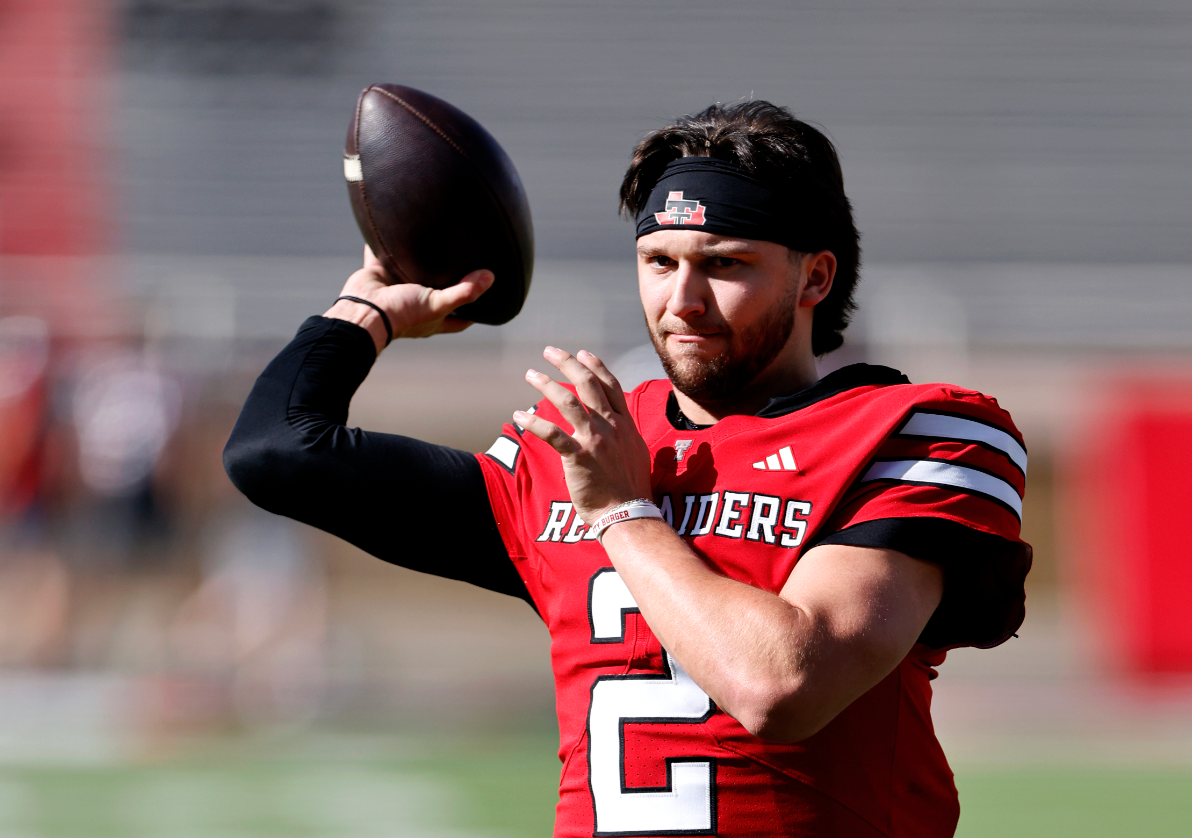
Texas Tech quarterback Brendan Sorsby is alleged to have placed thousands of sports bets, including on college football, across the last four years. (Photo by Ron Jenkins/Getty Images for ONIT)
(Photo by Ron Jenkins/Getty Images for ONIT)
The NFL could counter by arguing (and has in the past) that such standards don’t apply to draft mechanisms set up under its collective bargaining agreement with the NFL Players Association. But Sorsby also isn’t part of the players union yet, so he technically isn’t bound by an agreement between the union and NFL.
Advertisement
This is where Sorsby’s hiring of Kessler, the longtime sports attorney, is key. Kessler has a wealth of experience doing combat with the NFL, and has a career steeped in fighting battles where antitrust is a primary concern. While most are viewing Kessler’s hiring by Sorsby as being a move to claw back his NCAA eligibility, one longtime and prominent NFL agent said it was a “two-pronged hire” — with Kessler having the ability to pivot alongside Sorsby from fighting the NCAA to a fight against the NFL if he’s both denied NFL eligibility and then further denied entry into the supplemental draft.
The bottom line here is that Sorsby being denied his NCAA eligibility would put the NFL into a position where it would have to likely fight a legal battle to also deny him entry into a supplemental draft. And in doing so, the league would open itself up to legal battles over past precedent, antitrust challenges, and also having to define some kind of hardened rules over what constitutes an integrity red line when it comes to NCAA players gambling on sports.
“The easiest path would be to grant him access into a supplemental draft and then to let the teams determine what happens next with his career,” one NFL team president said. “At that point, if he lands on a roster, he’s subject to the rules the league has in place for gambling and he will be treated with the same constant examination as other players [in the league] who have already been suspended for gambling but still continued their careers after suspensions.”
“But that doesn’t mean that’s how it will go,” the team president said. “I’m sure this will be a lot of meetings for [Goodell] and everyone who is dealing with overseeing gambling and the game’s integrity since [vice president and general manager of sports betting] David Highhill left the league office.”
Advertisement
One last path the NFL has — and this is significant — since the league determines the timing of the supplemental draft, it could make a determination that the draft will not be held until Sorsby’s application is approved. And the league could then decide that the application won’t be approved until it completes its own investigation into what led to his NCAA eligibility being forfeited. If the league were to take that step, it could operate on whatever timeline it wished. At least until there was some legal standing to challenge the length of the investigation, which would be unprecedented territory.
3. If Sorsby is granted entry into the supplemental draft, can the NFL suspend him after he’s chosen?
The short answer is yes. The NFL has set a precedent for this with former Ohio State quarterback Terrelle Pryor, who was suspended for five games after entering the league’s supplemental draft in 2011. Like the allegations against Sorsby at this stage, Pryor had run afoul of NCAA guidelines — not broken any laws. His suspension upon entering the supplemental draft is the one that maps most neatly into the options the NFL appears to have with Sorsby.
What the NFL lacks now is any governance over Sorsby as a current player in the league. That changes the moment he becomes drafted and the league has set the precedent to take punitive action if it sees fit and can support the decision. But unlike Pryor’s violation at Ohio State (which involved taking “improper benefits”), the allegations against Sorsby cross into an integrity-of-the-game plateau that the NFL has taken very seriously when it comes to gambling activity. Would that make a post-supplemental draft suspension more likely? That’s one significant question that teams would want to know.
Advertisement
“Once you get past whatever your standard would be for [selecting] him athletically — and that on top of your own investigation — the first thing, or one of the first things you have to know, is whether he’s facing a suspension and how long that will be,” one AFC general manager said. “Because you’re looking to add him to your current roster this season if he’s in the supplemental [draft]. That has [salary] cap impact, roster impact, all sorts of things to consider.”
One executive added that the NFL could actually prefer to make any suspension a pre-condition for Sorsby’s acceptance into a supplemental draft, rather than convening a punitive process after he’s selected. Or there could be an agreement to accept his entry into the supplemental draft on condition that he go onto the commissioner’s exempt list until the league concludes any investigations.
“Legally and dealing with the union and teams, it’s cleaner to have it all laid out at the start,” the executive. “Whatever that is. Just let everyone know where they stand and move forward.”
4. If Sorsby is granted entry into the NFL’s supplemental draft and gets selected, then what?
Keeping the football aspect of it completely separate from this conversation — given the this is more about the non-football questions looming — I’ll leave this lengthy answer to an NFC team president with a deep familiarity regarding both the league office and managing franchises.
Advertisement
“I don’t know enough about addiction to understand how the brain gets addicted to gambling as opposed to substances, and how hard the treatment process is,” the official said. “That’s the first part to learn. Sadly, there is more risk to the club in a [gambling] relapse situation because any bet is public to the NFL, as opposed to substance abuse which they would have to test to find out. So from a ‘football’ standpoint, there is more risk here than with substance abuse.”
“The hard part [of this] is I’m sure there is going to be a learning curve [for the league] on gambling that’s similar to marijuana. Twenty years ago, players were off the [draft] board for marijuana. Now, nobody cares because of how prevalent it became during legalization. This kid might be the first one [of this scope] and wear a scarlet letter, but five years from now, all of the draft picks will have had gambling accounts and bet on sports at some point in their life. Maybe not to addiction levels, but that’s coming.”
There’s some nuance to that response. If all these allegations are true, Sorsby is — at least publicly — the first test case for the league and teams where it concerns grappling with gambling as an addiction and what that means for your future as a potential NFL quarterback. But it also signals a reminder of an overarching reality that just like NIL being part of a college athlete’s DNA, the prevalence of gambling as a form of entertainment (especially at younger ages) is also becoming part of the personality profile of some, or many, future NFL players. What that means remains to be seen.
Advertisement
But in Sorsby’s case allegedly being the first of its kind at this level, it also raises the specter of his microscope, too.
“Fans who gamble on games or prop bets or daily fantasy and that stuff — we already have seen how they treat athletes on social media and sometimes in public,” an AFC executive said. “It’s s***ty, terrible things out there. And the whole ridiculous ‘script’ nonsense and the officiating questions. This microscope is going to be different, I think. So much more harsh. Any common mistake will be blown out of proportion if it impacts [gambling bets]. Not to mention the really bad mistakes, which happen with every quarterback in the league. It’s a lot to think about here.”
For now, the NFL’s league office and those who handle gambling security and integrity — along with teams, franchise owners, personnel departments and coaching staffs — will have weeks or months to ruminate on Sorsby’s future. Or, if they prefer to steer clear of all these mounting questions, to wash their hands of it entirely.
But for those who are drawn to the football side of the ledger in all of this, the path forward is just getting started.
Read the full article here


