





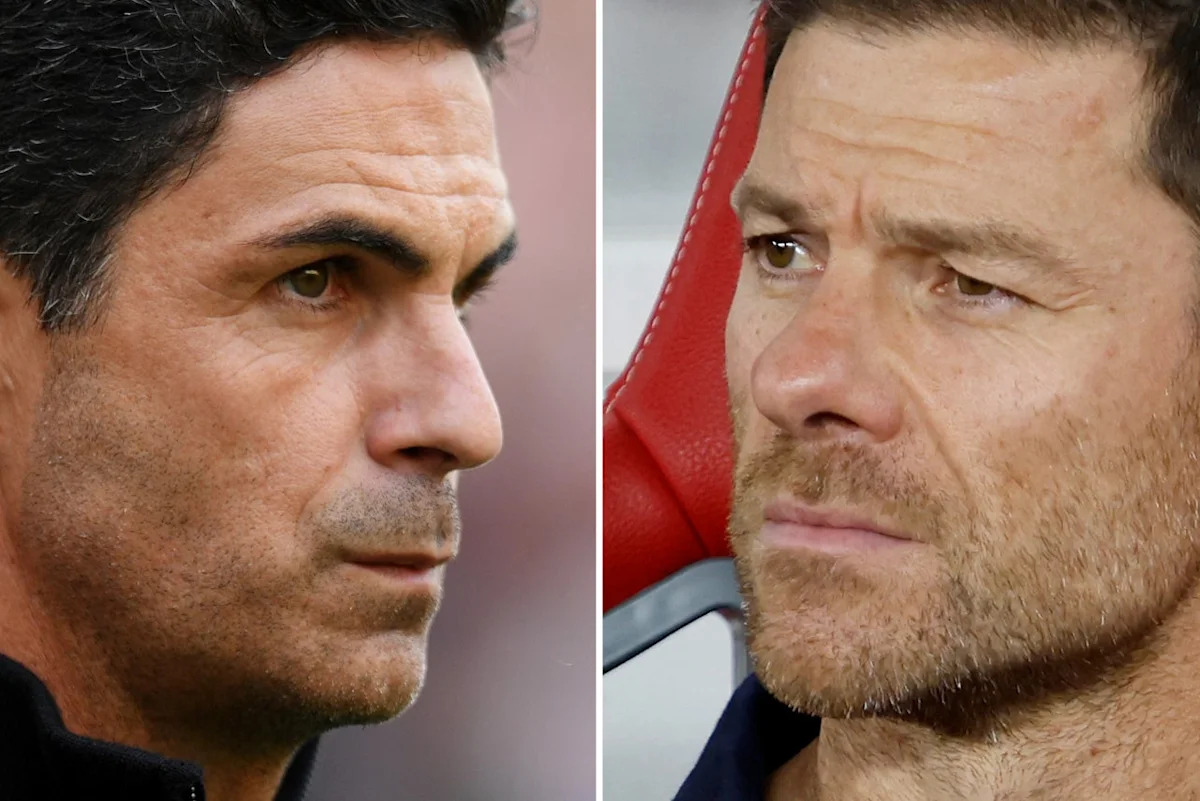
It was a friendship they kept private. Everton and Liverpool players were not supposed to fraternise. But one of the reasons Mikel Arteta decided to join Everton on loan in January 2005 was that one of his childhood friends was playing on the other side of Stanley Park.
Xabi Alonso had joined Liverpool six months earlier, and the pair would spend the next five years together on Merseyside, spending time at each other’s houses, enjoying each other’s company away from the Premier League spotlight.
Advertisement
It is not unusual now to see, say, Brazilians at Tottenham and Arsenal spending Christmas together on social media, or Argentinians going out for dinner from both sides of the Manchester divide. But in the early 2000s, when the globalisation of English football was rapidly accelerating, it was wise to keep relationships with rivals under wraps.
“I had to be sensible,” Arteta recalled. “There is no need to make certain things [public]. The same when Pepe [Reina] and other players were there. We shared some moments together, that is inevitable. But as well, you have to be able to separate what is your profession and what is a human relationship.”
Mikel Arteta and Xabi Alonso go head to head at the Emirates on Sunday (Getty)
Arteta and Alonso, who meet on Sunday as managers of Arsenal and Chelsea, were born four months apart and grew up living minutes away from one another in San Sebastian. They played beach football as young children and joined the same football club, Antiguoko, where they became teammates in an outstanding generation that included another current Premier League manager, Liverpool’s Andoni Iraola. Three coaches of three of the biggest clubs in world football played for the same amateur youth club, on the same gravel pitches.
Advertisement
They received high-quality instruction from their youth coach, Roberto Montiel, who had his team competing against, and often beating, expensively funded academies around Spain. “Mikel Arteta was a leader then, just as he is today,” Montiel told BBC Sport. “Xabi Alonso was very quiet, but on the field he was an excellent playmaker.”
San Sebastian’s atmospheric narrow streets and beautiful coastline belie a turbulent past. Arteta was asked this week whether its history, as a city that has endured war and devastation, perhaps cultivated a fighting spirit in its people.
“We have tough skin,” Arteta said. “We have obviously dealt with a lot, inside the country as well. That has reinforced us, it has made us different. Not better, but different in a sense. We have used that education and those values to be probably more prepared when we have to face difficult moments and challenges, to go for it.”
As the son of a Spanish international and Liga title winner, Alonso was born with football in his blood and was always expected to become a professional player. The young Arteta was even more technically gifted and was signed by Barcelona’s famed academy, La Masia.
Advertisement
As young boys, they dreamed of playing together for Real Sociedad. But by the time Arteta had returned from two years at Rangers to join Sociedad, Alonso had left his boyhood club for Liverpool. Instead, their careers collided in fierce Merseyside derbies.

Mikel Arteta holds off Xabi Alonso during a Merseyside derby at Goodison Park in 2006 (Getty)
Alonso would go on to represent Spain 114 times, winning the World Cup and two European Championships, as well as the Champions League with both Liverpool and Real Madrid. Arteta won the Scottish League title and two FA Cups at Arsenal, but never played for his country.
Now they meet, aged 44, as two of the brightest managers in world football, having both won a major European league title. How did Alonso’s Bundesliga triumph with Bayer Leverkusen inspire his friend? “Courage,” said Arteta. “To go abroad and deliver what he’s done, I think it’s remarkable. It shows that doing what you feel, being able to translate that to a club, to players and ultimately to achieve the goals that you want is possible, regardless of where you are born and where you are from.”
Advertisement
On Sunday, they go up against one another at the start of what could be a defining rivalry over the coming years. Either Arsenal or Chelsea has always been outside the title picture over the past decade, and the two London clubs have not finished inside the Premier League’s top three together since 2015. The stakes and intensity of these fixtures have dimmed a little since the days of Frank Lampard and Cesc Fabregas clashing on the pitch. Now Chelsea could be Arsenal’s most threatening title rival, although the truth is we don’t quite know yet. This game will go a long way to shaping what follows this season.
“I think they have every ingredient to be in the highest part of the table,” said Arteta. “Knowing him [Alonso], knowing the history of the club, the quality of the squad that they have, the schedule that they are going to face in relation to other teams [without European football], it is very, very possible [Chelsea will be title contenders].”
Arteta says his friendship with Alonso will remain intact, though it will still play out largely behind closed doors, just as it did two decades ago. “Now it will be tougher to meet because of the schedule that we both have,” he said, smiling. “But of course, our relationship goes back for many, many years, and I wish we will have some great moments together. That’s natural.
“But now is the competition, and when you face each other, you know what happens.”
Read the full article here