




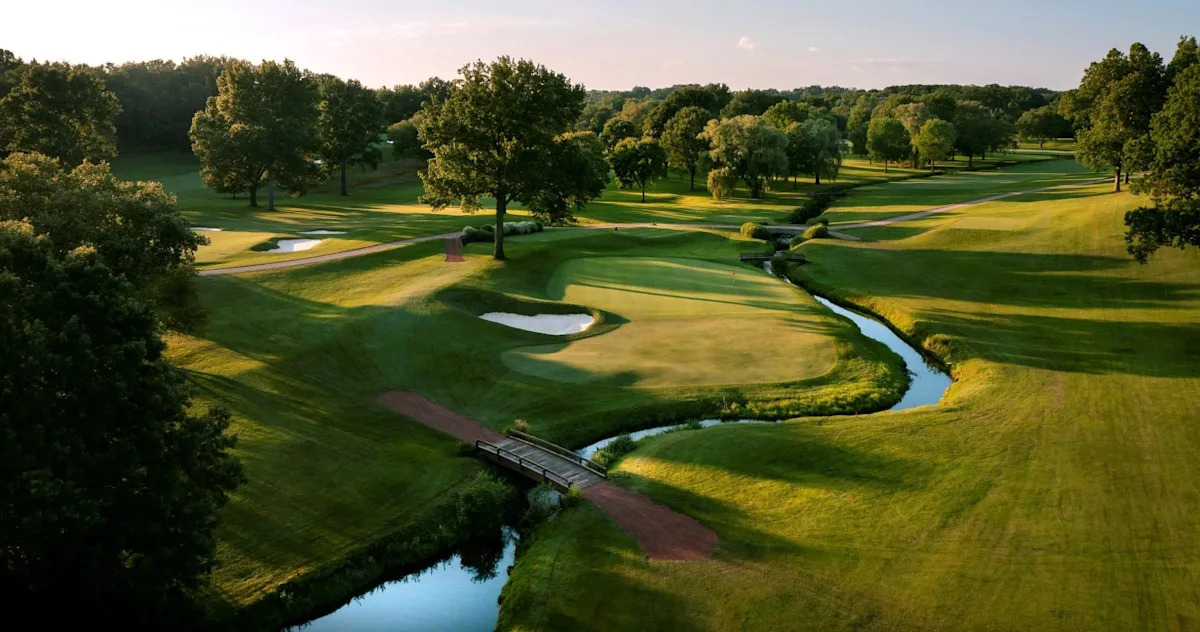
JACKSON TWP., Ohio − You don’t tug on Superman’s cape. You don’t spit into the wind. And for heaven’s sake, you don’t renovate a golf course designed by famed architect Donald Ross.
Just as you wouldn’t splash more red on a Rembrandt.
Advertisement
Or fiddle with a Picasso.
Brookside Country Club’s nine-member board of governors and club members know their iconic century-old golf course is a historic gem.
The private club is situated on 240 acres, between Hills & Dales Road NW and Perry Drive NW, east of Brunnerdale Avenue NW. On land that was once portions of three separate farms.
The property provided a blank canvas of sorts, which Ross transformed into an 18-hole, par-71 layout.
“A really special property,” said Phil Eckinger, Brookside’s immediate past chairman of the board.
Brookside consistently ranks high on many “Best course” lists. And it’s aged well. But there’s room for planned changes and improvements. They’re part of a multimillion-dollar project — the club declined to release specific financial details — to begin in August 2027. The course will close through May 2028 to accommodate the work.
Advertisement
“That’s a huge commitment,” Eckinger said.
When done right — in the eyes of golf historians and design aficionados — such projects on Ross-designed courses are called restorations. Not simply pedestrian renovations.
The goal is to make Brookside more closely resemble its appearance when it opened in 1922, while at the same time adapting to changes in the game and improvements in technology.
Ross is widely regarded as an all-time great in course design. He was Rembrandt and Picasso rolled into one. Not only did he produce masterpieces, such as Pinehurst No. 2 in North Carolina, Ross was quite prolific, with an estimated 400-plus courses to his name.
Advertisement
It’s the first Brookside restoration of any kind since 2005. This one is huge. It’s been in the works since a committee was formed in 2023. A master plan was created the following year.
Most recently, the club hired Tod Pierce as its new general manager to help oversee the restoration. He held the same job for the past 19 years at Longue Vue Club, near Pittsburgh.
Brookside Country Club Board Chairman Ryan Fulmer talks about plans for a full update to the golf course, March 2, 2026, at Brookside Country Club in Perry Township, Ohio.
“He had really deep experience,” said Brookside board President Ryan Fulmer, who explained that Pierce was selected from a group of nine semifinalists who wanted the post.
Earlier in his career, Pierce spent five years in management at Pennsylvania’s Oakmont Country Club, which has hosted 10 U.S. Opens, three PGA Championships and six U.S. Amateurs.
Advertisement
Coming back to Northeast Ohio, where he started at Youngstown Country Club 30 years ago, was enticing for Pierce. The destination in Stark County was certainly the clincher.
“It’s Brookside,” Pierce noted.
Enough said.
Pierce had heard all about the course from Andrew Grove (now the mayor of Alliance), who’d left Youngstown years ago for the general manager position at Brookside.
Keeping up with the times at Brookside
Through the decades, the Brookside course and golf itself have evolved — creating the need for the restoration.
Trees added post-Ross have grown. Twenty years ago, about 1,200 were removed, but more are on the chopping block. Rain and time eroded some original features. Sand-filled bunkers gradually shrunk. Greens constricted. Sometimes, Mother Nature did the damage. Other times, course managers probably made conscious decisions to save money on maintenance.
Advertisement
“You lose a lot of the edges … definition,” explained Superintendent J.R. Lynn.
Sprawling tree branches have encroached on corridors that Ross had laid out for players to get from tee to green.


Brookside Country Club Director of Golf Cory Kumpf, from left, board Chairman Ryan Fulmer, immediate past board Chairman Phil Eckinger, General Manager Tod Pierce and course Superintendent J.R. Lynn discuss a planned restoration at the Jackson Township club.
“There should be no aerial hazards,” said Cory Kumpf, the 36-year-old director of golf at Brookside, who began as a 12-year-old caddie at the club, then climbed up the ranks.
Golf today is much different, too.
In the 1920s, players swung clubs made with hickory wood shafts and forged iron clubfaces. Balls weren’t as lively either. Players couldn’t hit the ball as far as they can today with modern equipment.
Advertisement
Brookside’s already lengthy 6,900 yards from the back tees will grow by a couple hundred yards.
Even casual golfers generally know about the Stimpmeter. The device is used universally to measure the speed of greens. The higher the number, the faster the green. What some golfers may not realize, though, is that grass on putting greens wasn’t, and couldn’t be, cut as short as it is now.
When Ross laid out Brookside, longer grass on the greens likely would have recorded a Stimpmeter reading of about five. Ross created severe slopes on greens with no fear a well-struck putt could inexplicably roll off the green, for example, if it missed the hole.
But today’s PGA Tour courses check in around 12 on the Stimpmeter; private clubs often want to get close to that.

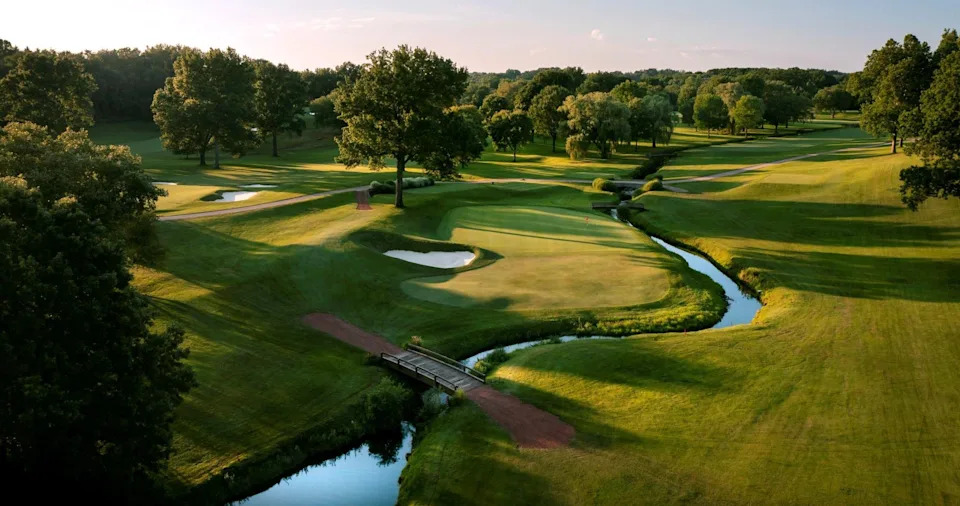
Brookside Country Club’s golf course has gradually changed since it opened in 1922. A planned restoration will make it more closely resemble the course Donald Ross designed.
The effect of all that on Brookside: The pin must be placed in almost the same location throughout the season on four of the harshest sloped greens. That’s not good for the health of the grass on them, or for players who expect varied pin placements.
Advertisement
“We’re going to soften those greens,” said Lynn, in explaining how the slopes will be modified.
Seventy-four-year-old Joseph Halter knows a thing or two about Brookside’s history. Not only are he and his son, Matt, longtime members, his grandfather owned one of the original farms upon which the course was built.
“That land has been in my family since the 1850s,” Joseph Halter said.
The course doesn’t look like the one he played as a younger man.
“It’s changed dramatically,” he said.
Halter called the restoration project bold, adding that he hopes it helps the club prosper for years to come.
Advertisement
A salute to the past, with an eye on the future
Vaughn Halyard, president of the Donald Ross Society, said members of that group will visit and play Brookside on May 13.
“We like seeing the course before, then coming back a few years later for the after,” he said.
The Society boasts about 500 members from the U.S. and abroad. The nonprofit group was formed in 1989. Halyard said they used to be viewed as a band of almost militant rebels, because their mission was to save Ross courses from being bastardized or even worse, sold and developed.
“Many courses didn’t understand the value of classic golf architecture,” Halyard said.

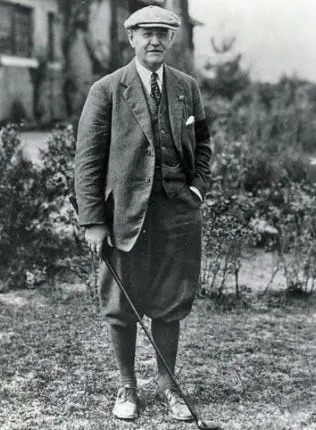
Golf Course architect Donald Ross, in this undated photo, is regarded as one of the all-time greats in course design. Stark County’s Brookside Country Club is among the more than 400 courses he designed.
He compared a Ross course to a Frank Lloyd Wright house — both worthy of being kept intact.
Advertisement
These days, the Society’s broadened mission includes public golf course advocacy and education. Its members also get an opportunity to play many public and private Ross courses each year in a variety of scheduled outings.
Typically, they play a round, eat dinner and meet with the owner or operator to talk course history.
“We’re really kind of a nerdy group,” Halyard said.
Their three-day visit this year to Stark County is part of an event dubbed “Hall of Fame Fairways.” Prior to Brookside, they’ll play Clearview, the first course in the country built and owned by a Black man (the late William Powell), and Congress Lake Club.
Advertisement
Halyard said Brookside landed a superb architect when it hired Tyler Rae to devise the restoration blueprint. Rae’s work includes the renovation of Lookout Mountain Club in Georgia — not a Ross course — which earned Golf Digest’s 2023 Renovation of the Year.
He said Rae sharpened his craft under the tutelage of some of the best, including the likes of Coore & Crenshaw and Tom Doak. Rae also worked under Ron Prichard for many years.
“And Ron Prichard is the father of restoration …. Prichard defined the process,” Halyard said.
In preparing a master plan for the work at Brookside, Rae examined old photos, along with original Ross sketches and drawings, including a 1920 layout of the 18 holes.
Advertisement
“The process is like dissecting a layer cake,” Halyard said.

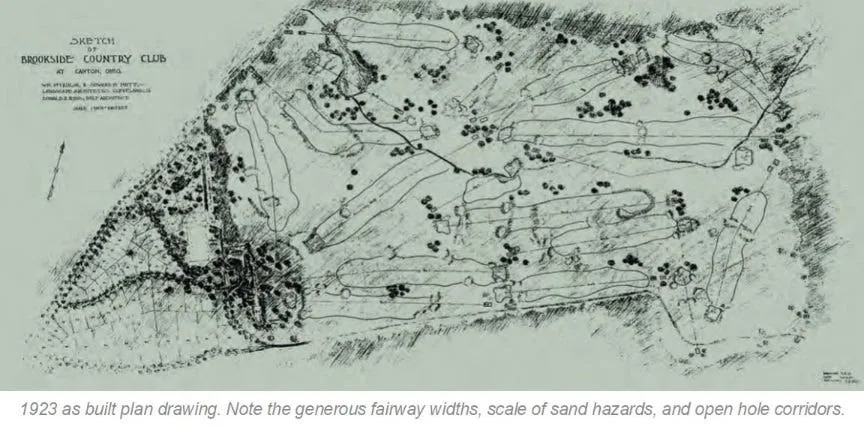
A 1923 “as built” drawing of Brookside Country Club. Restoration architect Tyler Rae examined many old photos and drawings in creating a master plan.
Ross’ work on Brookside was during a period that golf historians consider to be his prime years.
“This was the period when Ross moved past the geometric, functionality-driven hazards of his early work and began introducing the bold internal green contouring, diagonal bunkering, and naturalistic hazard shapes that defined his greatest designs,” the master plan states. “Brookside’s heavily contoured green complexes and muscular bunkering place it firmly in this lineage, alongside Pinehurst No. 2, Seminole, and Oakland Hills.”

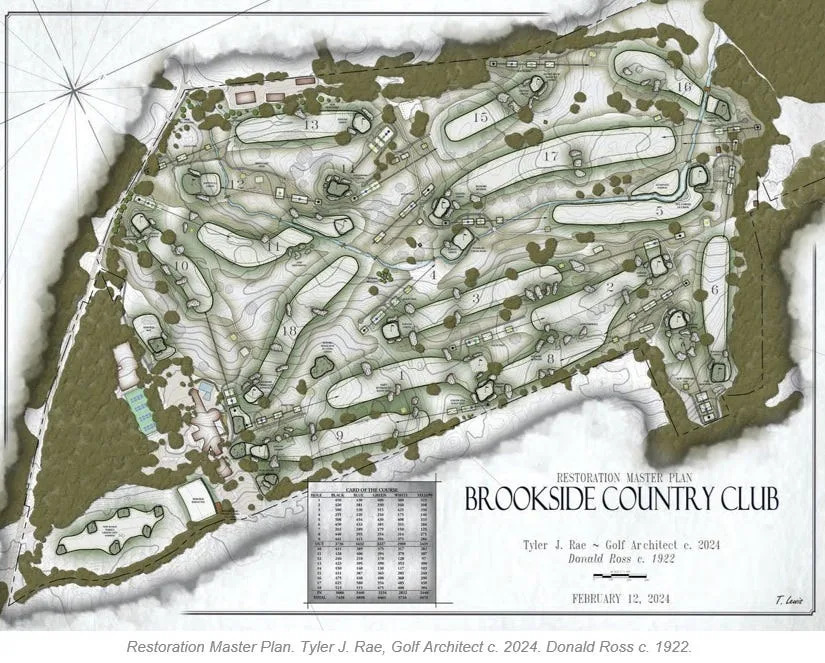
A course drawing from Tyler Rae’s recently created restoration plan for Brookside Country Club. Work is to begin next year and be complete by June 2028.
The plan notes how Ross chose the Brookside property for “its rolling terrain and tumbling brook that winds through the property.”
Advertisement
“This was a course built to reward the strategic golfer who could read the ground and work the ball,” the plan states.
NMP Golf Construction of Massachusetts was awarded the bid for the work at Brookside.
Key elements of the restoration include enlarging greens and many of the 99 sand bunkers, while recovering others, widening of some fairways and replacing all fairway and green grass with a newer hardy, tolerant Bentgrass variety, which will require less maintenance in the future.
From Lakeside to Brookside, golf and more
Brookside wasn’t always Brookside. The club was formerly known as Lakeside Country Club. In 1903, its members bought a casino on Meyers Lake and built a nine-hole course.
Advertisement
In 1917, a who’s who of Stark County business and civic leaders, including T.K. Harris and members of the Timken, Belden, Herbruck and McLain families, led a charge to buy more land for the club.
The three farms were perfect.

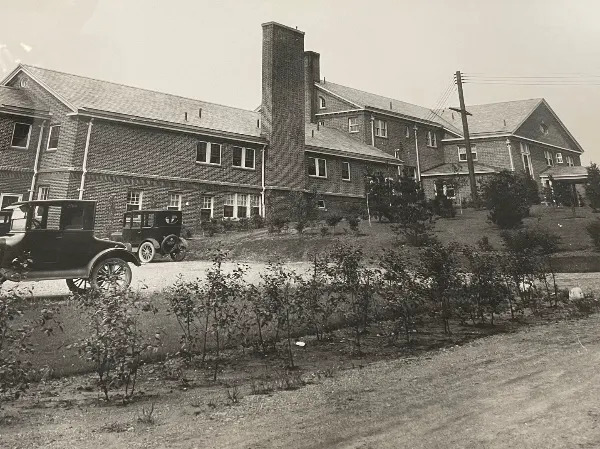
An undated photo from the early years of Brookside Country Club. The club can trace its roots to the former Lakeside Country Club on Meyers Lake.
The Halters, whose family owned one of them, also has McLain blood on the other side of their family tree.
“A little Brookside in the DNA,” said Matt Halter.
In the past, Brookside has been included in the country’s Top 100 golf courses by Golf Magazine. And this year, it was rated the ninth best course in Ohio by Golf Digest.
Fulmer, the board chair, said Brookside is a “family-oriented” member-owned club with a top-notch chef in Ken Bucholtz, premier swimming pool, four indoor and four outdoor tennis courts and a host of other amenities.
Advertisement
“It’s not just about golf,” he said, noting other recent upgrades to areas inside the facility.


A look inside Brookside Country Club in Jackson Township.
The course hosts 17,000 rounds of golf each year. The club has about 400 members, whose average age is 55 years old.
“Most of our members are philanthropic,” said Eckinger, the former board chair.
Fulmer said some of the club’s 200 employees, and their families, benefit from an ongoing scholarship fund. In the past five years, they’ve been awarded a combined $250,000.
Along with the restoration project and addition of Pierce, Brookside will introduce a national membership program this year.
Reach Tim at 330-580-8333 or tim.botos@cantonrep.com.On X: @tbotosREP
This article originally appeared on The Repository: Ohio club to restore Donald Ross golf course
Read the full article here


