








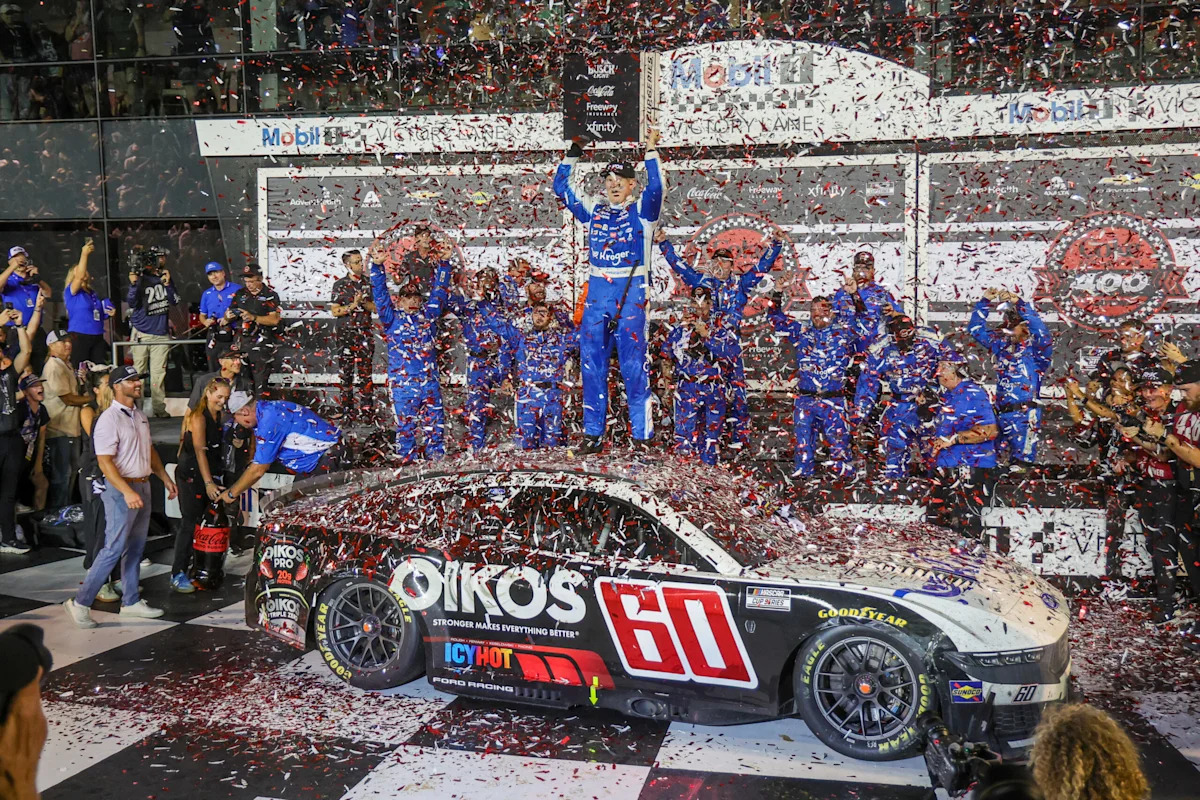
NASCAR’s championship format changed for 2026, so before the final 10 races begin, let’s make The Chase make sense.
Following the 26-race regular season, the top 16 drivers in the Cup Series standings advance to The Chase. Unlike the previous playoff format, winning a race does not automatically secure a spot. Drivers must earn their way into the championship battle through points.
Advertisement
Once the field is set, the standings reset based on each driver’s regular-season position. The regular-season champion begins The Chase with 2,100 points, followed by the second seed at 2,075 and the third at 2,065. From there, the total decreases by five points per position until the 16th seed starts at 2,000.
That creates a 100-point gap between first and 16th before the postseason even begins, rewarding drivers for an entire season of consistency rather than treating every qualifier equally.
Then, it becomes a 10-race sprint to the championship.
There are no elimination rounds, cutoff races or Championship 4. All 16 contenders remain eligible throughout The Chase, and the driver with the most points following the finale at Homestead-Miami Speedway becomes the 2026 NASCAR Cup Series champion.
Advertisement
Winning still matters, though. Race winners now receive 55 points, 15 more than under the previous system, while a perfect race featuring two stage wins and the overall victory is worth 75 points. That means one dominant afternoon can create a significant swing in the standings, but a single win alone cannot advance or eliminate anyone.
The Chase name originally debuted in 2004, but NASCAR’s 2026 version combines that familiar 10-race championship run with a renewed emphasis on season-long performance. The simplest way to follow it? No brackets and no automatic advancement, just 16 drivers accumulating points across 10 races, with every position carrying championship consequences.
Read the full article here


