





Never make the same mistake twice.
In 2018, when the WCG crew did our first all-time Bears draft, I made a whole draft plan based on the notion that I would surely not get the #1 pick and therefore would not get to pick Walter Payton. So of course I got the #1 pick. And I stuck to my plan. And I did not pick Walter Payton.
Advertisement
This was a classic case of philosophical over-thinking. I wanted to go defense first, so even though I landed the #1 pick, I decided to stay defense first, running through our three first-ballot Hall of Fame middle linebackers and kicking off my draft with Brian Urlacher. I published a detailed explanation of the move, which probably didn’t sway anyone, least of all myself.
How perfect it was when we kicked off this year’s all-time Bears draft — our second ever, after 2018 — and I once again got the #1 pick.
Sweetness, thank you for your patience.
Like in 2018, I had plans for my approach. The instructions from Jacob was to make 25 picks. The offense is QB, RB, WR, WR, TE, O-LINE and one “offensive utility” pick. The defense is basically a 4-3, but the required positions are the 4 plus two linebackers plus two safeties and two corners, and then one “defensive utility” pick. Most of us picked a third linebacker. But you could go nickel or even 5-2.
Advertisement
We then drafted a kicker, a punter and an undefined special teamer.
I will get to an explanation of my 25 picks. But first, my lineup, and what I love about my team.
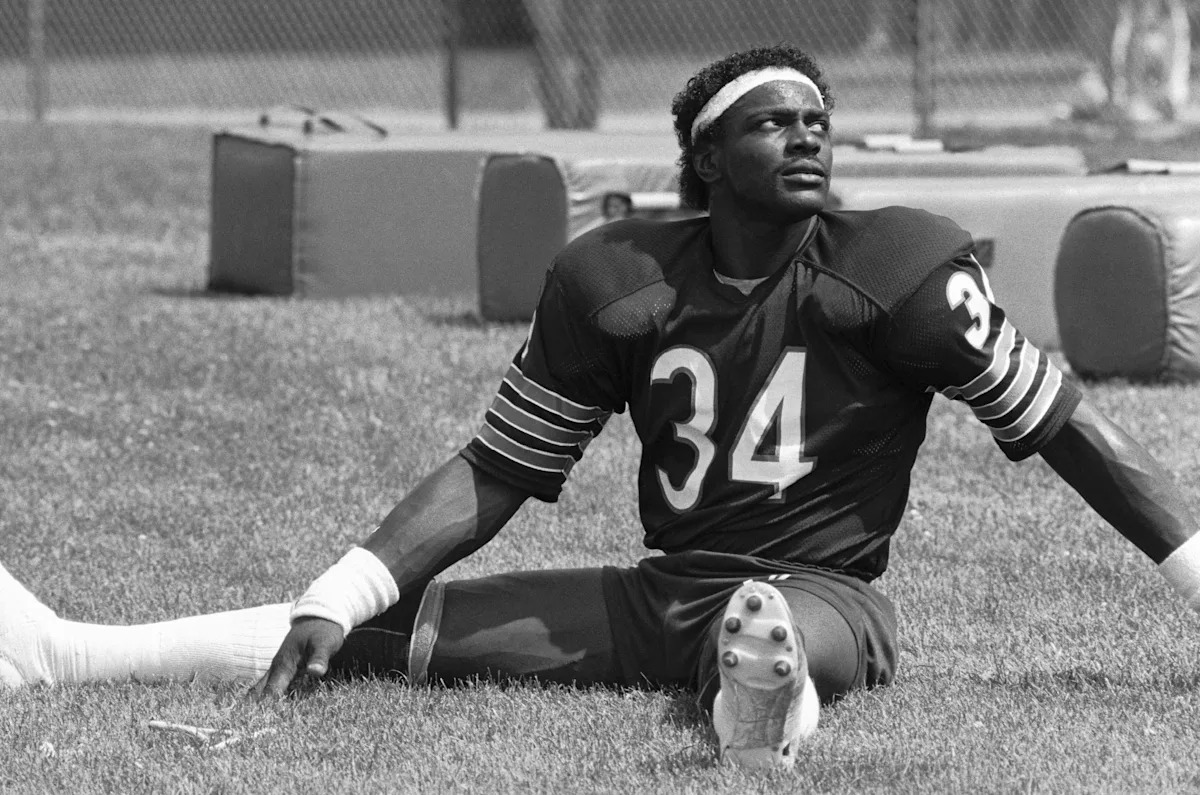
The GOAT: Walter Payton
-
In my opinion, Walter Payton is the greatest football player in NFL history.
PASSING GAME: Eddie #1 Brown, Dick Gordon, Dennis McKinnon, George Halas
-
Since the start of the two-way era in 1950, the only seasons that the Bears finished #1 in either points or yards were with Ed Brown at quarterback, finishing 1st in yards in 1955 and 1st in both yards and points in 1956. Only two modern Bears wide receivers have been named first team All Pro: Brandon Marshall and my guy here Dick Gordon. Dennis McKinnon is a machine converting 3rd downs, while my tight end, George Halas, was a fearless, big-play creator.
RUSHING GAME: Walter Payton, Matt Suhey, George Halas
-
I grabbed Suhey as my lead blocker for Payton, with Halas contributing from his tight end spot. How tough was Halas the player? In the 4th game of the 1920 season, he fractured his cheekbone, and the immediate diagnosis was that he would “probably” miss the whole season. Total games missed in 1920: zero.
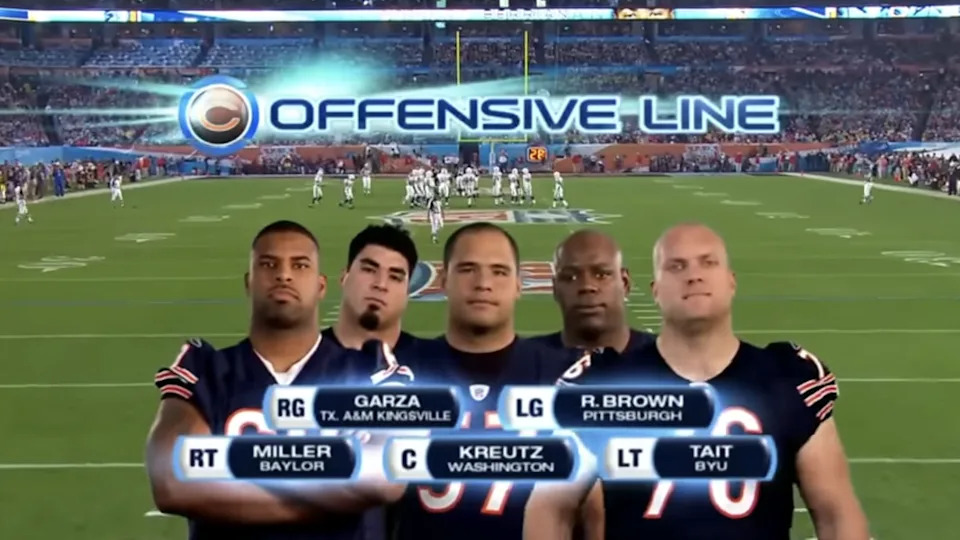
OFFENSIVE LINE: John Tait, Ruben Brown, Olin Kreutz, Roberto Garza, Fred Miller
DEFENSIVE LINE: Doug Atkins, Jim Osborne, Ted Washington, Mike Hartenstine
-
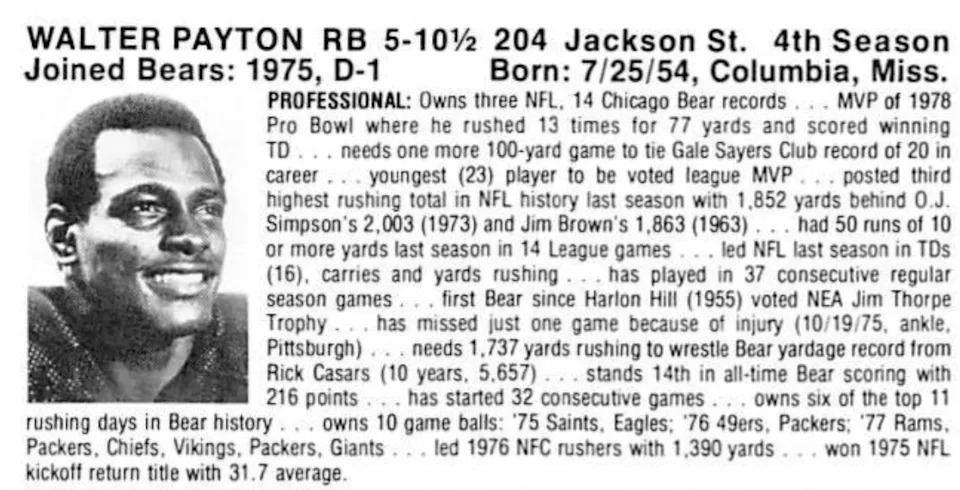
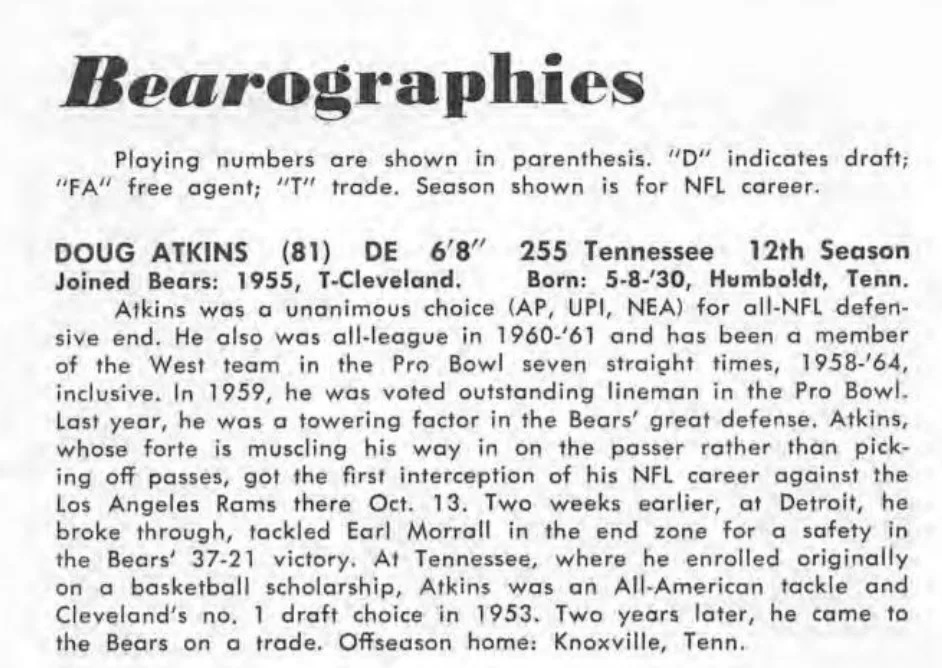
Atkins in ‘58 and Washington in ‘01 are among the greatest seasons in NFL history for a defensive end and a nose tackle, respectively. Osborne had three double-digit sack seasons from the middle, while Hartenstine had one, too.
LINEBACKERS: Khalil Mack, Dante Jones, Rosevelt Colvin
-
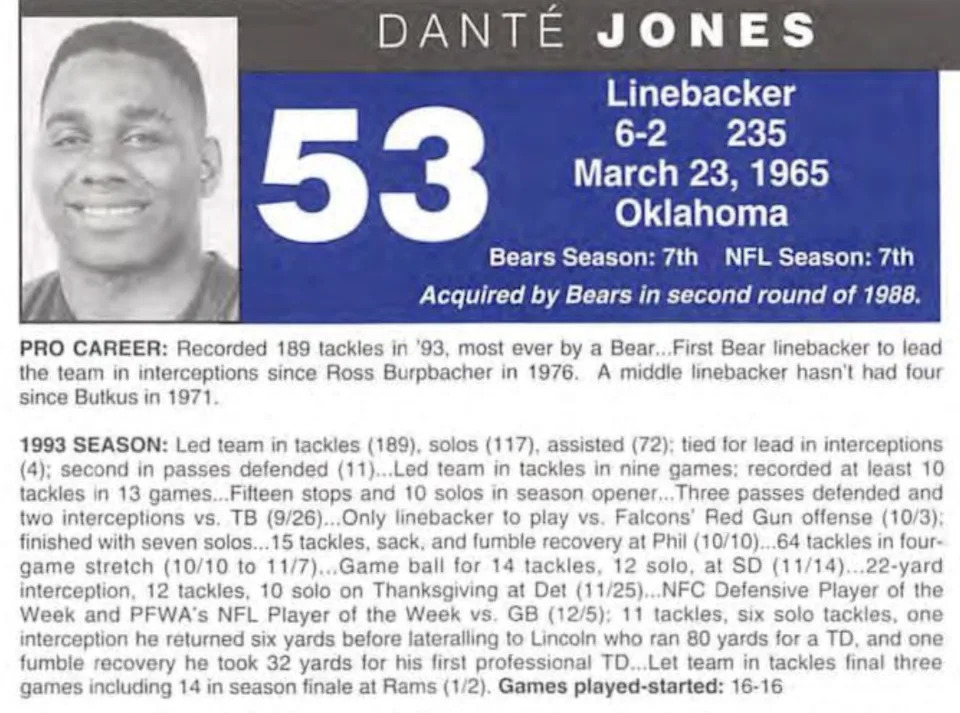
More pass rushing with Mack and Colvin, with Mack able to play the pass. And on a franchise with four HOF middle linebackers and tackle machines in Lance Briggs, Roquan Smith and many others, the franchise record holder for tackles in a season is Dante Jones, with 189 in 1993. He also tied for the NFL lead that year for interceptions by a linebacker.
SECONDARY: Kyle Fuller, Mike Brown, Roosevelt Taylor, Mike Richardson
-
Both Fuller and Taylor led the NFL in interceptions. Fuller, Brown and Taylor were all first team All Pro. Richardson had to hold down one corner spot with little help for the 46 defense to work.
SPECIAL TEAMS: George Blanda, Bobby Joe Green, Glyn Milburn
-
This one’s simple. Blanda had an NFL record 156 straight made PATs, and retired as the NFL’s leader in points, field goals and extra points. Right or wrong, Green is the only Bears punter to make the Pro Bowl. And from 1998 to 1999, Milburn led the NFL in total return yards (3,613) and return touchdowns (tied with 3).
Advertisement
Now, an explanation of my picks. Welcome to Team Sweetness.
Round 1, 1 overall: Walter Payton, running back
In 1945, just after the ‘44 season, Grantland Rice recorded a gridiron debate amongst “well-known football coaches,” led by Steve Owen of the Giants, in which they would pick the greatest player ever by asking this question: Which player with 10 replicas of himself would be the best against any other player in the same scenario? Meaning, in the era of two-way football, where teams had their “starting 11,” which player could you place at every position to beat every other player? Did you want 11 Cal Hubbards? Eleven Don Hutsons? Eleven Fritz Pollards or Paddy Driscolls? Eleven Mel Heins or Bulldog Turners?
The group’s consensus was a top two, both from the Bears: 11 Bill Hewitts finishing second to 11 Bronko Nagurskis. Said Owen: “Nagurski was a great tackle in college, a fine end and a great back both with Minnesota and the Bears. You can imagine what it would mean to face a line of Nagurskis and also what it would mean to stop four Nagurskis in the backfield.”
Advertisement
Added Rice two years later: “The 11 Nagurskis would be a mop-up. It would be something close to murder and massacre.”
This is how I feel about Walter Payton. Maybe not in murder/massacre terms, but I do think that 22 Walter Paytons beats 22 of anyone else: 22 Jerry Rices, 22 Jim Browns, 22 Lawrence Taylors. Or even against players who played some college QB: 22 Anquan Boldins, 22 Julian Edelmans, etc.
I didn’t take much time gaming out who else to draft. The only real reason not to pick him first is if you pick a quarterback, whether Luckman on the what-he-did-in-his-era scale or Caleb on the individual ability scale. Those are both fine picks. I feel fine about mine.
Picks between my picks, in this order:
1st round: Caleb, Butkus, Luckman, Urlacher, Sayers, Cutler, Dent
Advertisement
2nd round: Forte, Singletary, Peanut, McMahon, Bulldog Turner, B. Marshall, Peppers
Round 2, 16 overall: Doug Atkins, defensive end
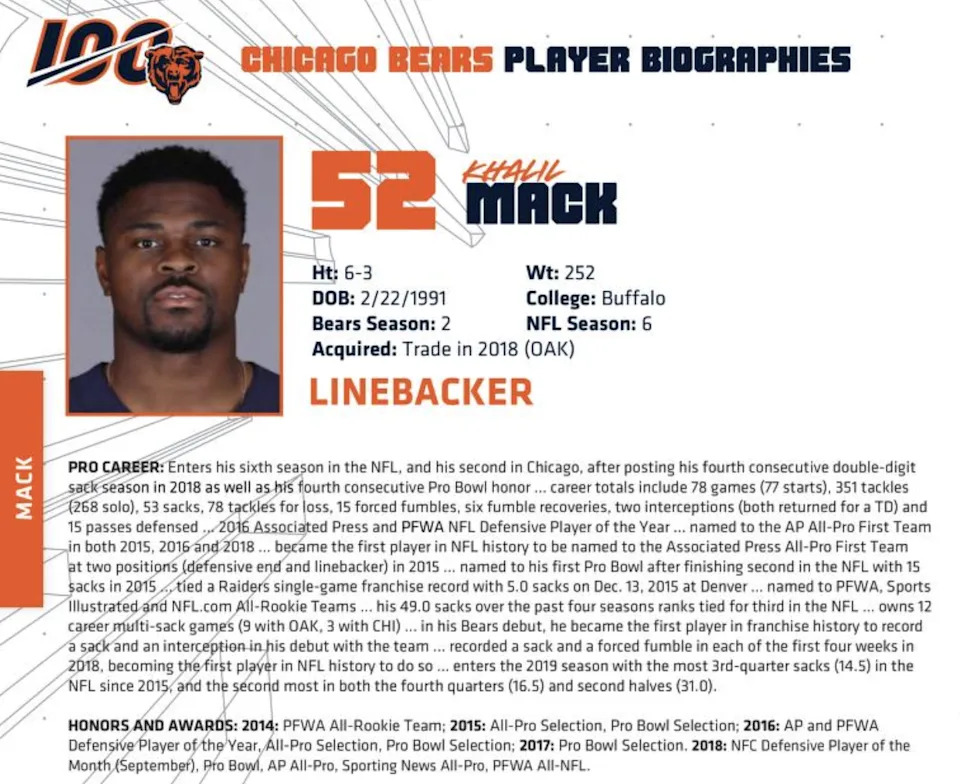
Round 3, 17 overall: Khalil Mack, EDGE (DE or LB)
Since I had the first pick in a snake draft, I always had the double pick, and I treated them often as a duo. In this case, as we got into the 2nd round, I wanted to go double pass-rusher, doing so with size, power and, in one case, versatility: Doug Atkins and Julius Peppers. Both were physical freaks and relentless performers. Atkins is still the tallest Bear ever at 6’8 — tied but never passed. One of the biggest reasons the Bears won the title in 1963 was George Allen replacing Clark Shaughnessy as defensive coordinator, with Allen realizing Atkins was an unblockable monster whose primary job was to get the quarterback.
Advertisement
I loved the notion of Atkins on the outside and Peppers either on the other end or shifting inside as a crazed defensive tackle. But Peppers came off the board one spot before my pick, so I was then weighing these three rushers: Khalil Mack, Steve McMichael or Dan Hampton. Hampton could play tackle or end, while Mongo is one of the greatest sack masters at his position’s history. Looking at the way it reverberated in my draft, you can make a great case that I would have been better off here with McMichael.
And sure enough, the next two picks were McMichael and Hampton.
Still, I went with Mack, as the images in my mind of him in 2018 are overwhelming. He was actually my pick for MVP, and his other three seasons here were strong too. Pairing him with a fellow football alien in Atkins felt too cool to pass up. That’s part of what I like about this exercise: simply imagining certain players dominating together.
Picks between my picks, in this order:
3rd round: McMichael, Hampton, Nagurski, Tommie Harris, Bill George, Alshon, Hester
Advertisement
4th round: Briggs, Covert, Hewitt, Ditka, Fortmann, Stydahar, Darnell Wright
Round 4, 32 overall: Mike Brown, safety
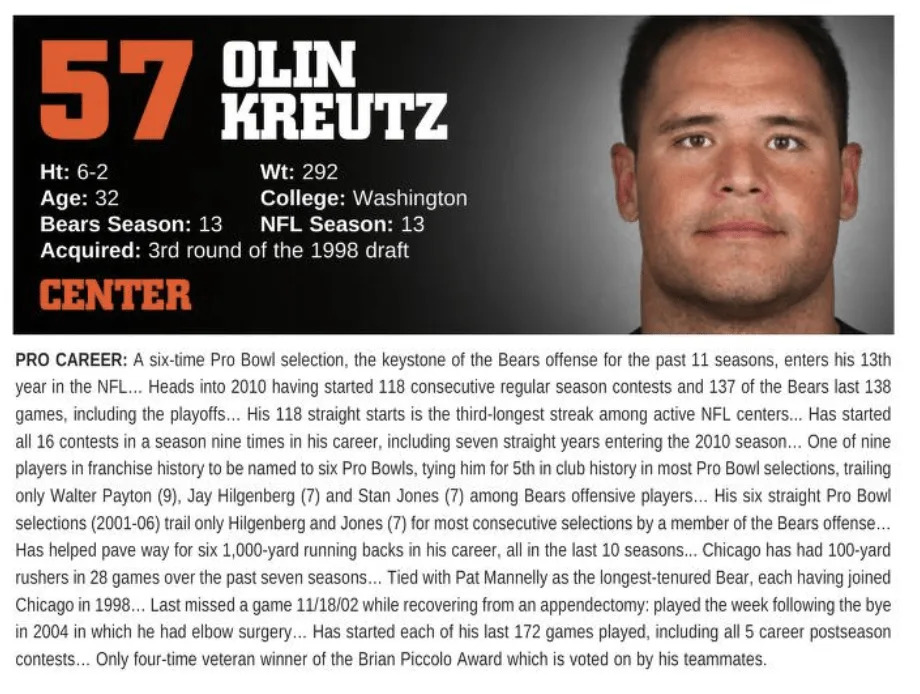
Round 5, 33 overall: Olin Kreutz, center
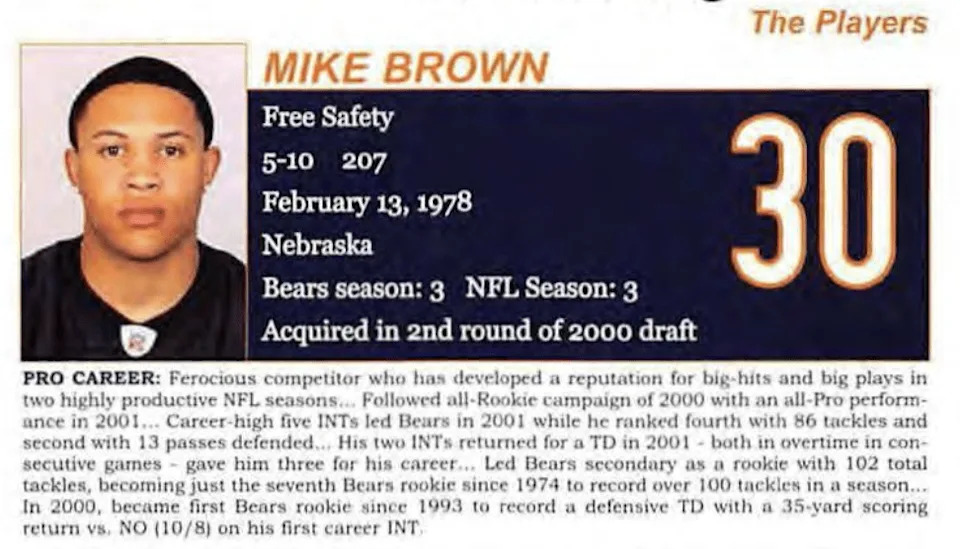
I decided to add to my defense with strength up the middle. Since I just went d-line and all four HOF MLBs were gone, I looked to safety, and one of the best to ever do it here, #30, Mike Brown. Everyone knows how Bears fans feel about Mike Brown: but for his injuries, we win Super Bowl XLI and he’s in the mix for Canton.
Staying up the middle, it was time to tap into our haul of elite centers. That’s a positional legacy not mentioned nearly enough: Bulldog Turner and George Trafton are the HOFers, Jay Hilgenberg and Olin Kreutz should have joined them, Mike Pyle is a Pro Bowl and champion. I decided that I wanted to try to draft an entire offensive line, with these options: ‘85, ‘01, or ‘06.
Advertisement
That ‘01 line was incredible, with all five players starting all 16 games plus the playoff game. With Jimbo Covert picked earlier this round, I grabbed Olin, knowing I then had the flexibility to build either 2001 or 2006.
Picks between my picks, in this order:
5th round: Sweat, Hilgenberg, Stan Jones, Neal Anderson, Sprinkle, Casares, Harlon Hill
6th round: Roquan, Johnny Morris, George Connor, Thuney, Healey, Hicks, Loveland
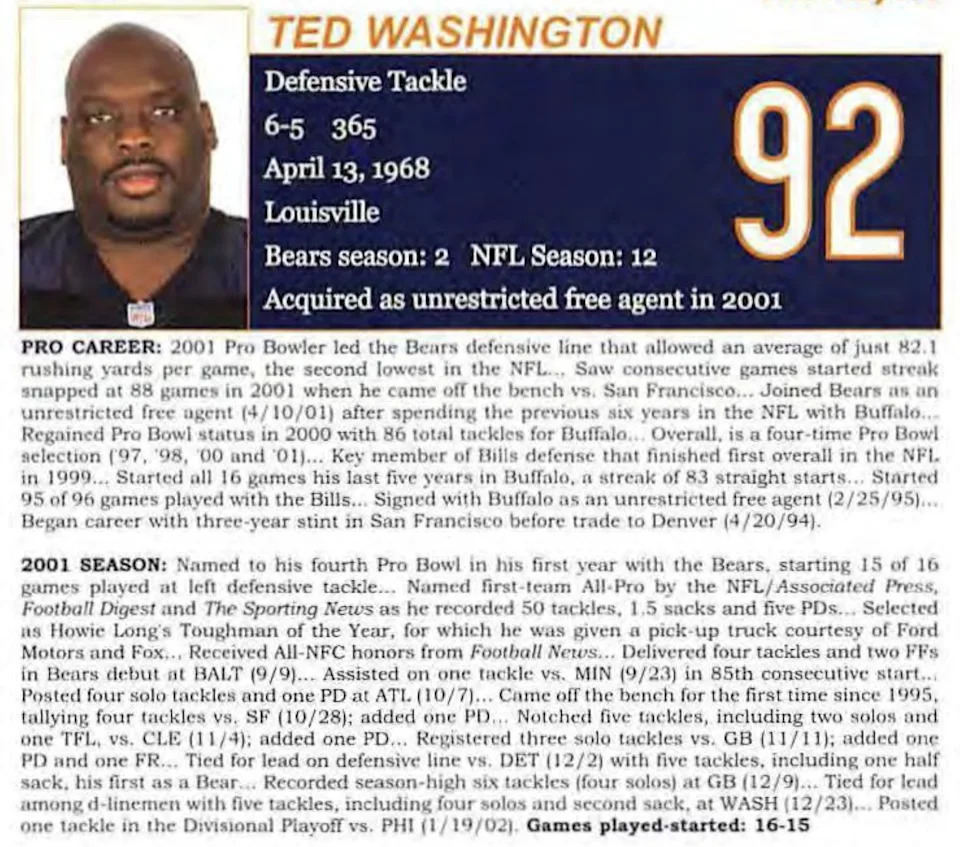
Round 6, 48 overall: Ted Washington, defensive tackle
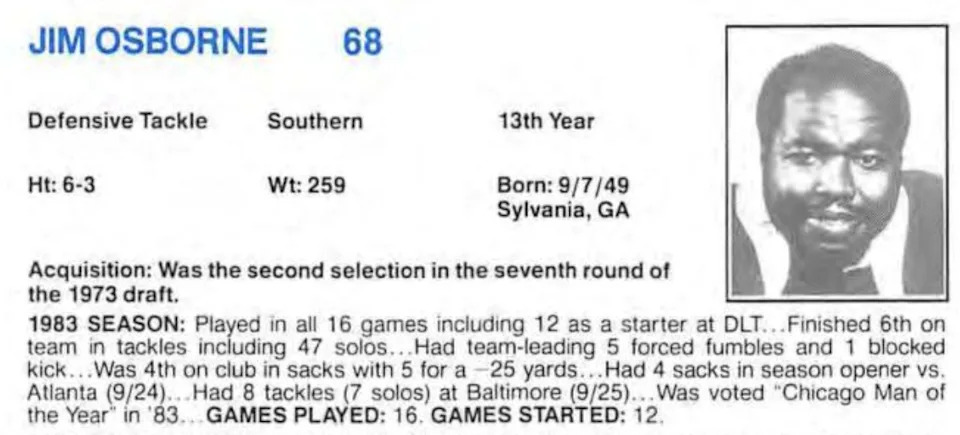
Round 7, 49 overall: Jim Osborne, defensive tackle
I was intrigued by the idea of taking Ted Washington and Keith Traylor. That was special then and would have been special here. But by the time I got to this pick, I really did need an interior pass rusher. So, along with Washington, the great Jim Osborne was the man.
Advertisement
In 2021, when two great NFL researchers (s/o to my guy John Turney!) led a process of getting sack data pushed back from 1982 all the way to 1960, the biggest beneficiary for the Bears was Osborne, whose career total boomed from 10.5 to 81, good for fourth in franchise history. Included in his sack totals were three double-digit seasons, including his 15 sacks in 1976, the first of only four instances of a Bears player having 15+ sacks in a season.
Picks between my picks, in this order:
7th round: Thomas Jones, Grange, McAfee, Long, Musso, Van Horne, Kmet
8th round: Allen Robinson, Olsen, Link Lyman, Wilber Marshall, Kavanaugh, Jaylon Johnson, Fencik
Advertisement
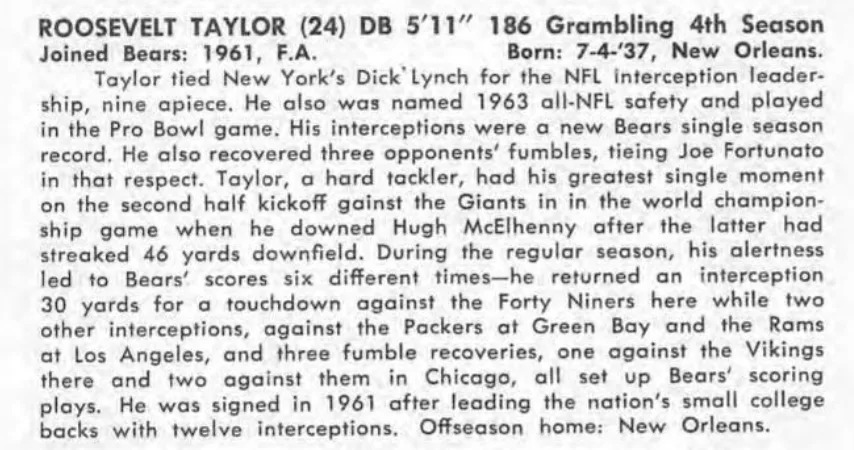
Round 8, 64 overall: Roosevelt Taylor, defensive back
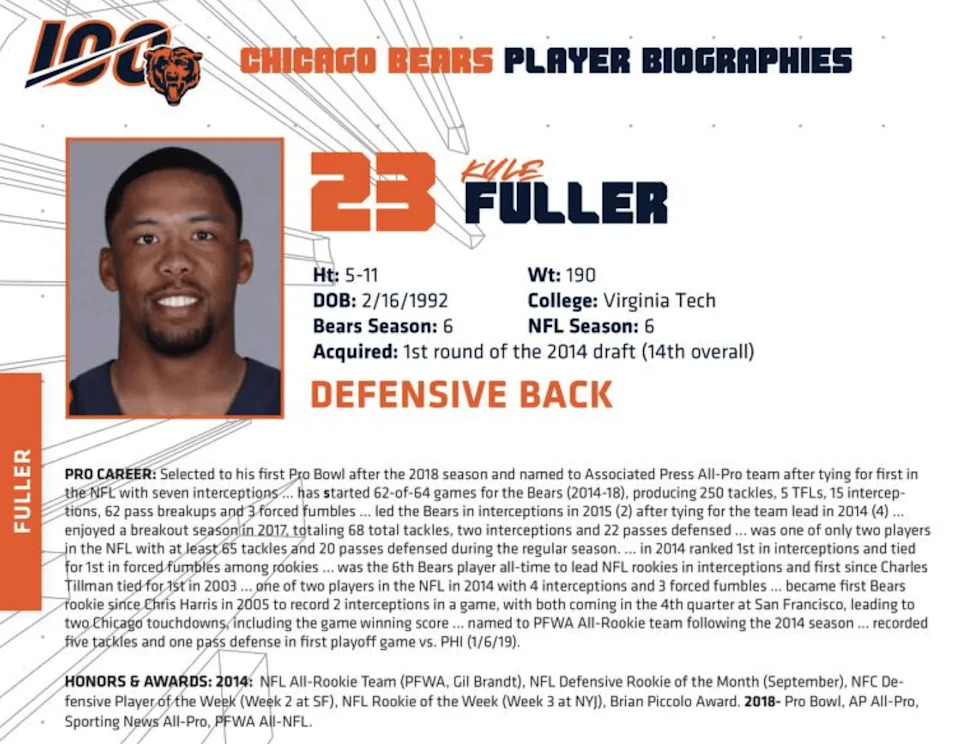
Round 9, 65 overall: Kyle Fuller, cornerback
Now we’re in range of the question: when to pick your quarterback? With Caleb, Luckman and Cutler gone in the first round and McMahon soon joining them, I was now one of four drafters in need of a QB, with every remaining QB flawed in some way. The pass catchers off the board were Brandon Marshall, Alshon Jeffery, Bill Hewitt, Mike Ditka, Ed Sprinkle, Harlon Hill, Johnny Morris, Cole Kmet, Allen Robinson, Greg Olsen and Ken Kavanaugh. Also Hester, if you want to include him.
I had thought about breaking my ‘01 or ‘06 OL plan because HOFers George Musso and Link Lyman were still there, as were two of the guards I would pair with Musso: Ray Bray and Dick Barwegen. But then Musso and Lyman got picked, so I stayed on defense, going to the secondary.
Advertisement
First up, the All Pro, INT champ and NFL champion Roosevelt Taylor, who played mostly safety but could play corner.
I did need at least one corner here, and I looked at the remaining top modern guys, considering Tim Jennings, Nathan Vasher and Donnell Woolford, and then some of our older greats, namely Bennie McRae, J.C. Caroline and Davey Whitsell. Ultimately, I went with Fuller over Jennings. Kyle was insanely physical, a great tackler, and developed himself into an elite ballhawk. With Mike Brown laying wood, Taylor all over the field and Fuller locking things down as CB1, my secondary was elite and needed just one more piece.
Picks between my picks, in this order:
9th round: Otis, Eddie Jackson, Trafton, Woolford, Petitbon, Bortz, Ogunleye
Advertisement
10th round: Frazier, Bray, Barwegen, Conway, Fortunato, D.J. Moore (WR), Buffone
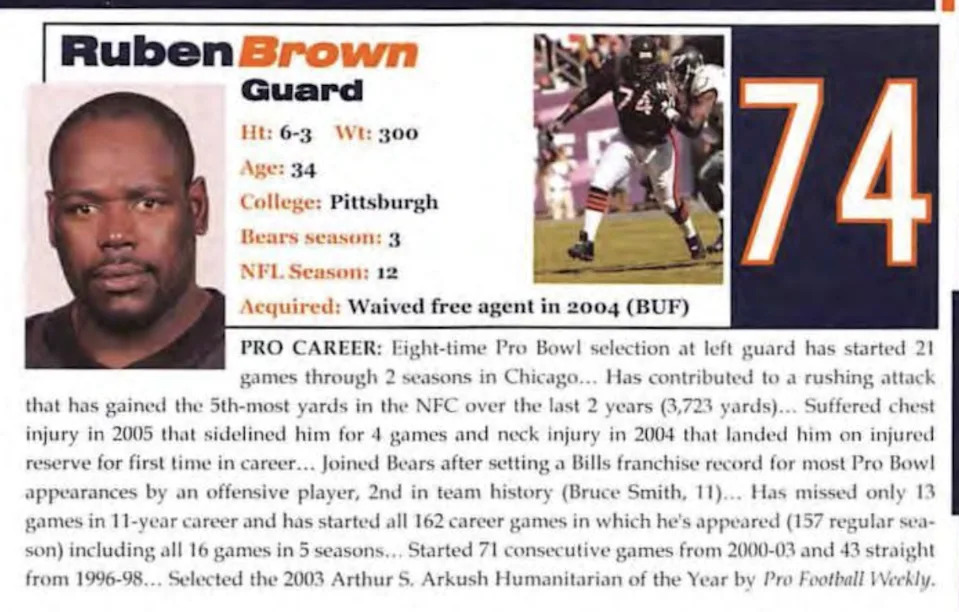
Round 10, 80 overall: Ruben Brown, guard
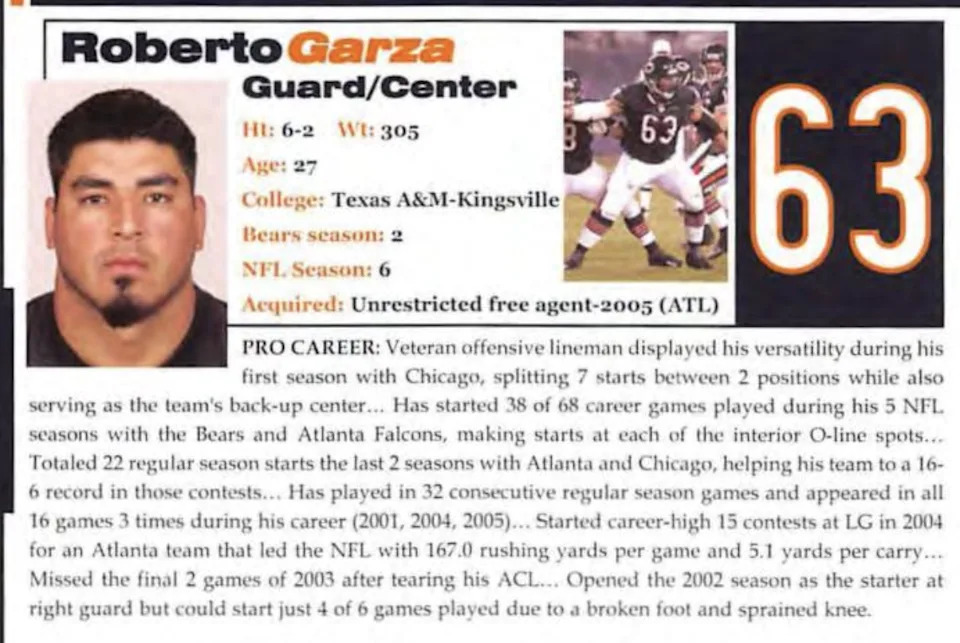
Round 11, 81 overall: Roberto Garza, guard
It was time to lock in my o-line.
I started with guards, for two reasons. One, I decided to go with ‘06 instead of ‘01, and that made Ruben Brown the most valuable commodity. I liked the idea of going with pairs, so Ruben and Garza was the move.
Second, over the ninth and 10th rounds, three great offensive guards came off the board: Mark Bortz, Ray Bray and Dick Barwegen. I could still go for Joe Kopcha, but ultimately, I liked the idea of picking the unit. The 2006 line was the plan and guards were next.
Advertisement
(Lowkey bummer here: Jacob picked D.J. Moore, ruining my plan to pick both D.J. Moores.)
Picks between my picks, in this order:
11th round: Jennings, Chambers, Fred Williams, Big Cat, Kolman, Dan Neal, Whitehair
12th round: Carrier, O’Bradovich, Larry Strickland, Alex Brown, Duerson, Vasher, Dalman
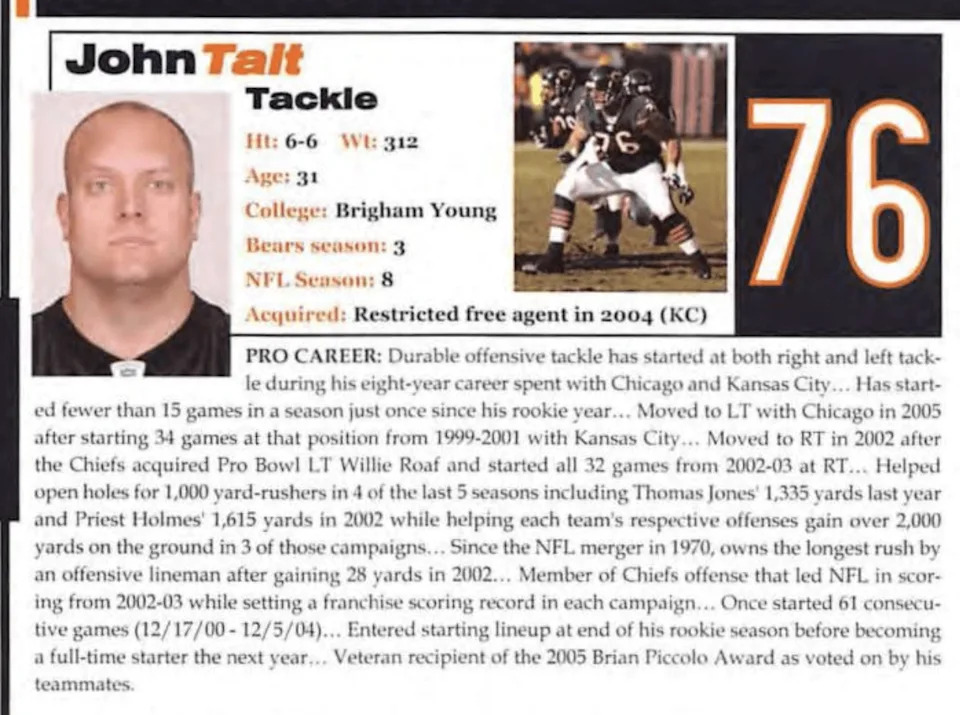
Round 12, 96 overall: John Tait, offensive tackle
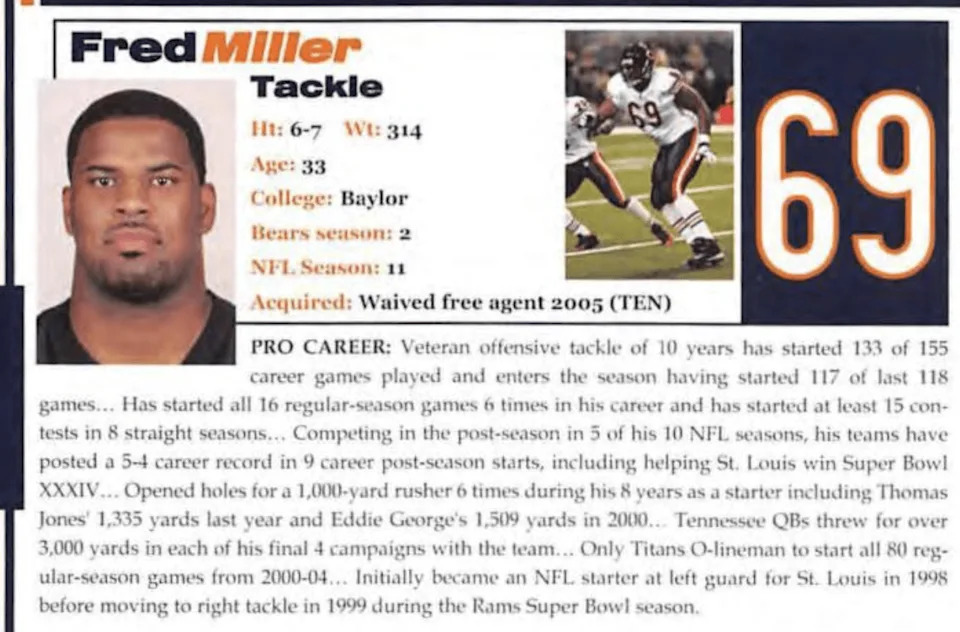
Round 13, 97 overall: Fred Miller, offensive tackle
No explanation needed here. Salute to our last Super Bowl offensive line.
Picks between my picks, in this order:
13th round: Wightkin, Sitton, Galimore, Plank, Artoe, McRae, Fridge
14th round: Leno, Gayle, Lujack, Whitsell, Martellus, Thayer, Waddle
Advertisement
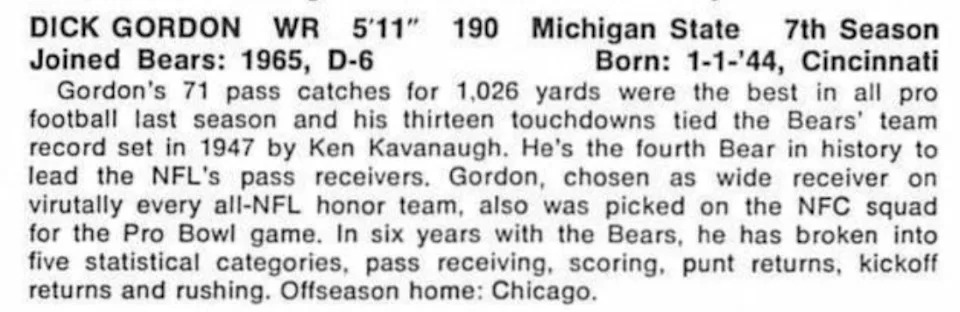
Round 14, 112 overall: Dick Gordon, wide receiver
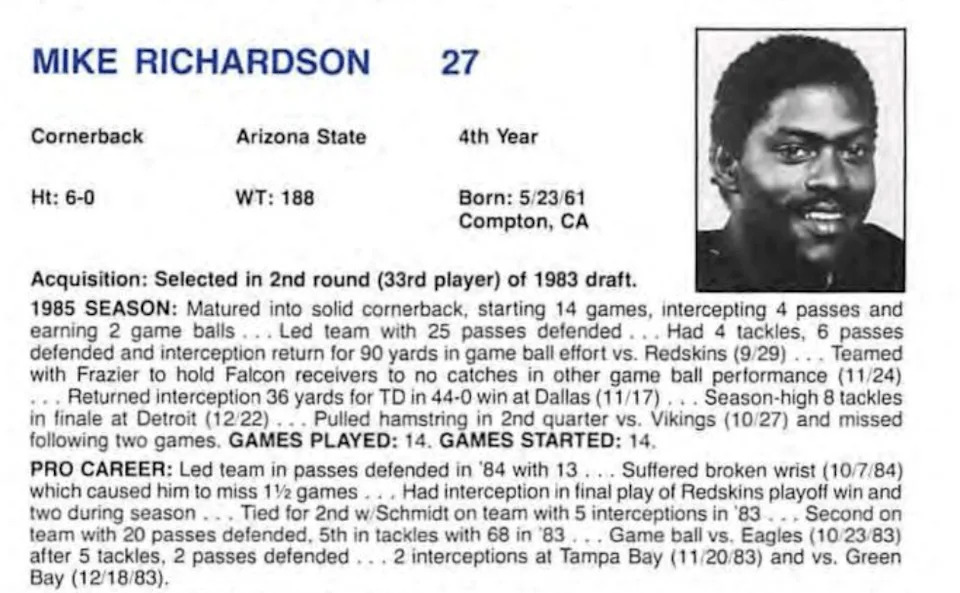
Round 15, 113 overall: Mike Richardson, cornerback
Entering round 14, my team, with no special teamers, looked like this:
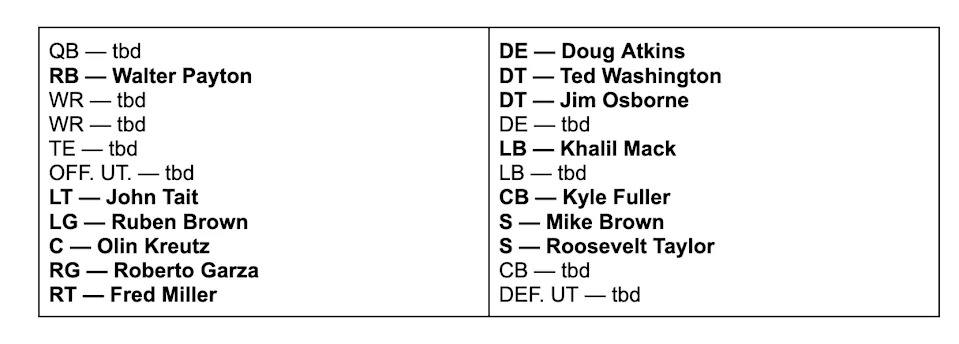
I had considered Johnny Lujack at quarterback, but Josh grabbed him in the 14th, meaning I was now one of three drafters without a quarterback. I had plenty of options remaining there, so it was time for a game-breaker on offense.
My choice: Dick Gordon.
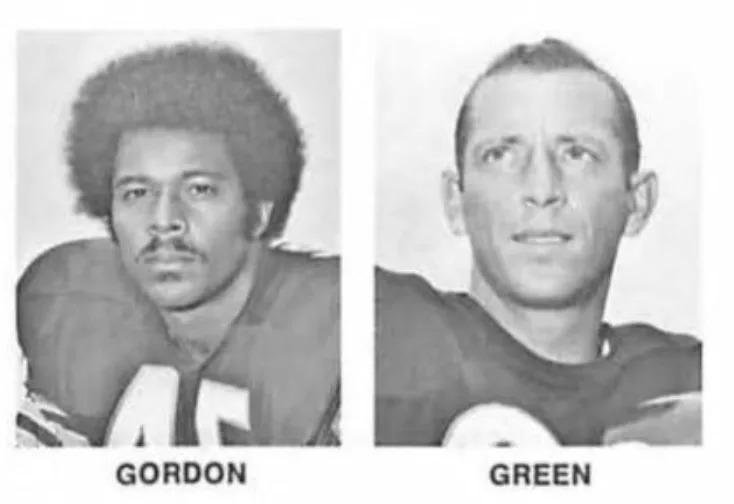
For years, the 1965 7th rounder was overshadowed by his ethereal draftmates, Butkus and Sayers. His breakout came in 1970, as he joined Butkus among the ranks of the 1st team All Pro. Gordon led the NFL in receptions and receiving touchdowns and finished third in receiving yards. His 13 receiving touchdowns tied Ken Kavanaugh for the franchise record, a mark the two men hold today.
Advertisement
For my other pick, I thought about picking another WR and going for the pair, whether Dennis McKinnon, Marcus Robinson (my guy!), Johnny Knox or someone else. But I decided to complete my secondary, taking L.A. Mike Richardson. Good luck passing on these guys!
Picks between my picks, in this order:
15th round: Fields, Byard, Caroline, Gault, Gould, Page, Idonije
16th round: Amos, D. Manning, Burden, Armstrong, Cohen, Booker, K. Gordon
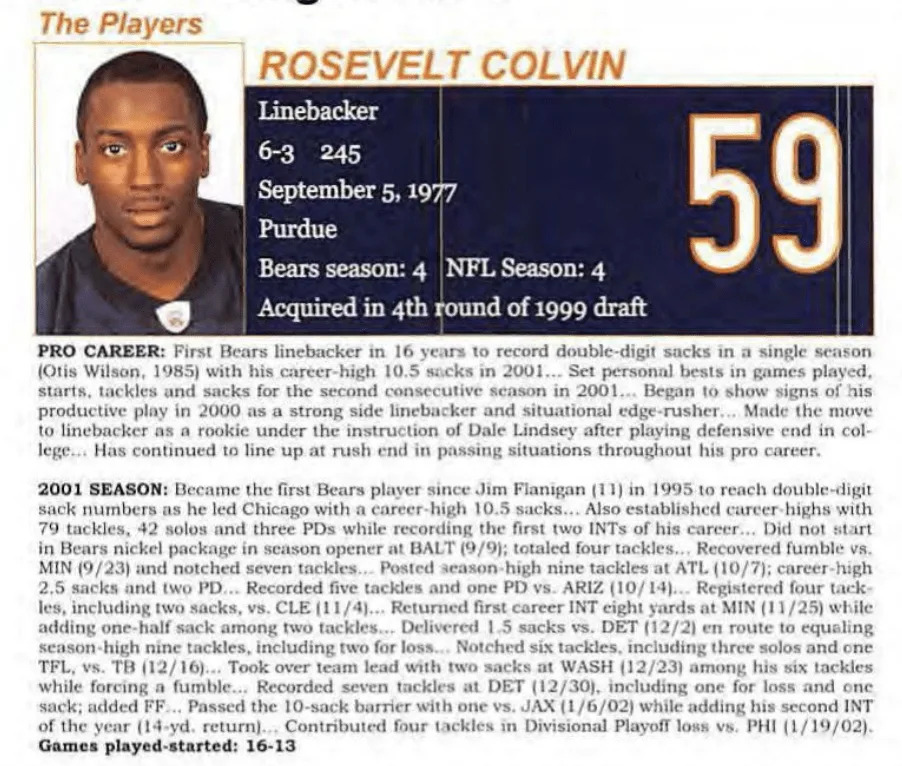
Round 16, 128 overall: Rosevelt Colvin, linebacker/rush
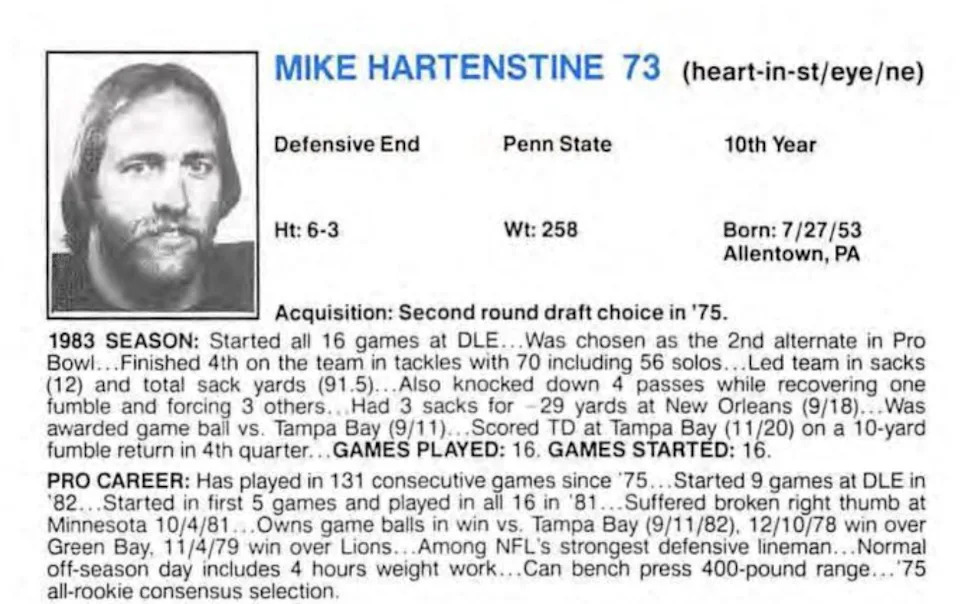
Round 17, 129 overall: Mike Hartenstine, defensive end
Did I mention “more to come”?
When I originally drafted Khalil Mack, I was picturing him as a possible defensive end, depending on how the draft broke. By this point, I needed him more at linebacker, and I continued to want pass rushers and game-changers. So I grabbed Rosy Colvin and Mike Hartenstine, officially finishing my DL and my two LBs.
Advertisement
My utility defender would have to be a middle linebacker, ideally one with ball skills who could play the pass and even defend the flat if needed. I wasn’t in an ideal position, but I had a few ideas I could tap into. For now, give me the pass rushers: Atkins, Mack, Osborne, Colvin, Hartenstine.
Picks between my picks, in this order:
17th round: Cordarrelle, Wetoska, Larry Morris, Herman Lee, Kindt, Flanigan, D. Montgomery
18th round: K. Butler, J. Howard, McManis, Keith Traylor, Quinn, Dez Clark, Kopcha
Round 18, 144 overall: Dante Jones, linebacker (def. ut.)
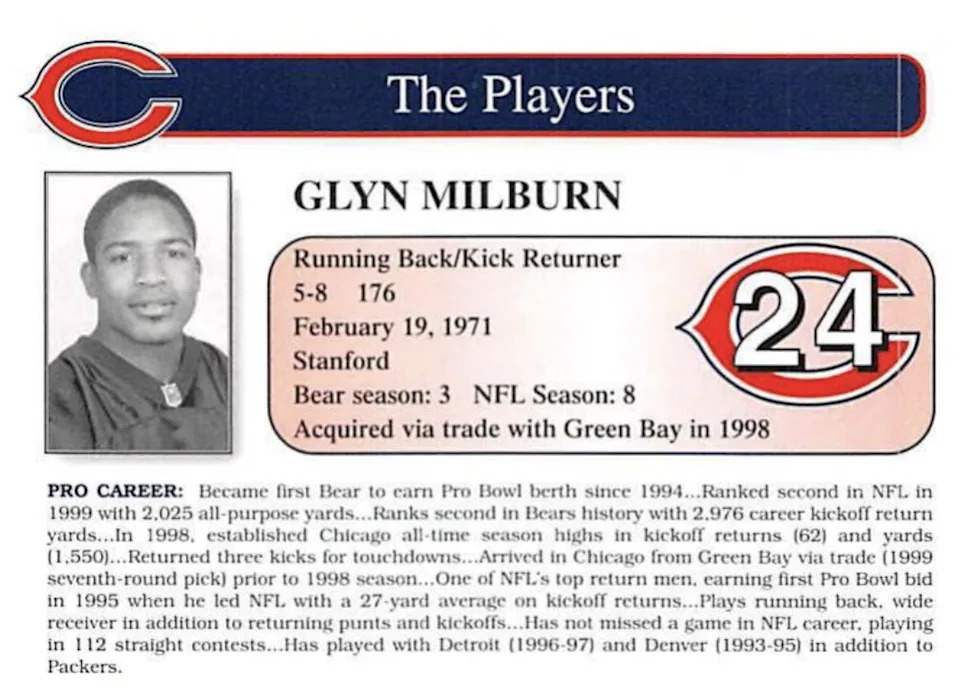
Round 19, 145 overall: Glyn Milburn, returner (ST.)
When Lester grabbed Larry Morris, my defensive utility choice — specifically a third linebacker — was settled: I would take the franchise’s single-season leader in tackles, with 189.
Advertisement
It’s not Urlacher. Not Singletary. Not Butkus. Not Roquan. Not anyone else you’re thinking of, unless you’re thinking of:
Dante Jones.
Drafted by the Bears in the 2nd round in 1988, Jones spent his first five seasons as a little-used backup. After Singletary retired, Jones stepped in as the starter in ‘93 and put up a season for the ages: a team record 189 tackles (second in the NFL) with 117 solo and a team high four interceptions, tied for first among NFL linebackers. He scored once and contributed to another defensive touchdown with a timely lateral.
Since 1987 (per Stathead), the Bears have only six instances of a player recording 100 tackles and four interceptions: Mark Carrier in 1990, Jones in ‘93, Urlacher in 2007, Ryan Mundy in 2014 and Tremaine Edmunds in both ‘23 and last year. Jones’s three recovered fumbles were the most of the bunch, his one forced fumble was tied among the linebackers, and his 84 defensive return yards were second to Urlacher in ‘07 (who, of course, had an 85-yard pick six that year).
Now I shifted my attention to special teams, specifically the undefined “special teams” slot, which could go to anyone who wasn’t a kicker or punter. I would have taken Devin Hester in my Atkins/Mack slot, but he was gone. I was also considering Cordarrelle Patterson, who holds one of the most unique distinctions in the history of the AP All Pro team. Since the AP added the “special teams” designation in 2016, only one player across his entire career has been AP All Pro as both a returner and a special teamer: Patterson, who is not just the only one to achieve it in a career, but he did it in a single season, 2019, when he was 1st team KR and 2nd team ST.
Advertisement
(Two years later, PFF named him 2nd team “offensive flex,” meaning Patterson has been All Pro at three positions across major voting bodies. Salute!)
Patterson was gone by the time I picked, and ultimately, I wanted a returner who could excel on both kickoffs and punts. Not every great returner is great in both phases; Patterson, the all-time leader in kick return touchdowns, has only one career punt return, for nine yards, while the three players who finished with eight career punt return touchdowns, good for fourth all-time, had zero career kick return touchdowns: Jack Christiansen, Rick Upchurch, and Desmond Howard (whose most famous play, the KR TD in Super Bowl XXXI, was the only KR TD of his career).
Devin Hester, Gale Sayers and George McAfee are among the NFL’s all-time best combo returners. Another great one? Glyn Milburn, who dominated both slots in his three full years on the Bears. From 1998 to 1999, Milburn led the NFL in total return yards (3,613) and return touchdowns (tied with 3). He led the NFL in KR, KR yards and KR TDs in 1998 and was 1st team All Pro in 1999.
Picks between my picks, in this order:
19th round: Jonah Jackson, Willie Young, Parrish, Callahan, Melton, Santos, Trubisky
Advertisement
20th round: Maynard, Trevathan, Hamp Pool, Todd Bell, Johnny Knox, Edinger, Odunze
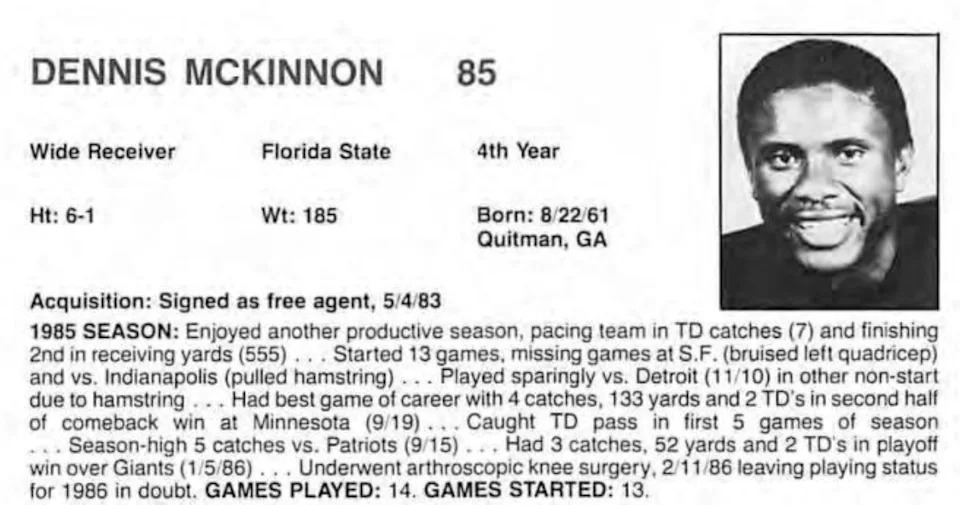
Round 20, 160 overall: Dennis McKinnon, wide receiver
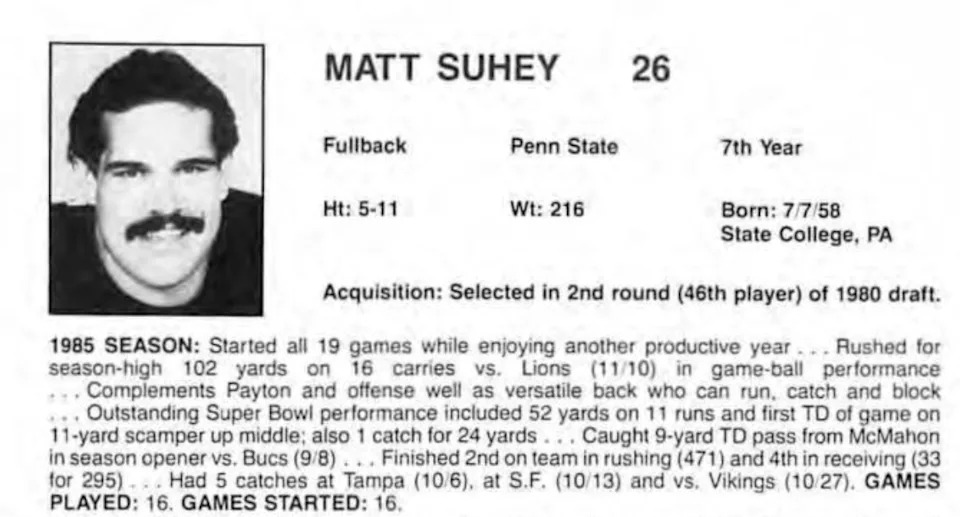
Round 21, 161 overall: Matt Suhey, fullback (off. ut.)
Now I needed more offense, and I leaned into ‘85, taking Dennis McKinnon at receiver and Matt Suhey in my offensive utility slot to be Walter’s lead blocker. There were a lot of ways I could have gone here. At receiver, I thought about one of my favorite Bears ever in Marcus Robinson, along with Jeff Graham. At offensive utility, I could have gone with another receiver, and used my tight end spot for more of an H-back, possibly from the two-way era, whether the massive Hall of Fame end Guy Chamberlin (who at 6’2, 196 pounds, did plenty of blocking), or the outstanding blocking end George Wilson.
Advertisement
I also thought about other options at fullback, namely Jason McKie and the one-and-done Daimon Shelton. Or I could have picked the massive 1940s fullback Gary Famiglietti (6’0, 225 pounds), who led the NFL in 1942 with eight rushing touchdowns and finished third in both rushing yards and yards per attempt. The jack-of-all-trades Ray Nolting would have been a fitting offensive utility player.
But man, you just can’t beat Walter’s football brother Suhey. And getting another champ in McKinnon feels right, too.
Picks between my picks, in this order:
21st round: Chris Harris, Driscoll, Floyd, Mooney, Osmanski, T. Schmidt, Azumah
22nd round: TJ Edwards, Gary Campbell, Wootton, Bob Thomas, Allan Ellis, Goldman, Sauerbrun
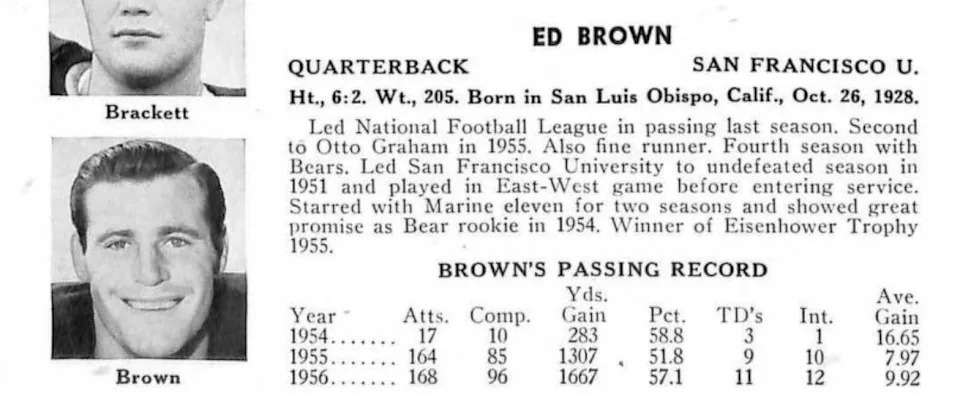
Round 22, 176 overall: Eddie “#1” Brown, quarterback
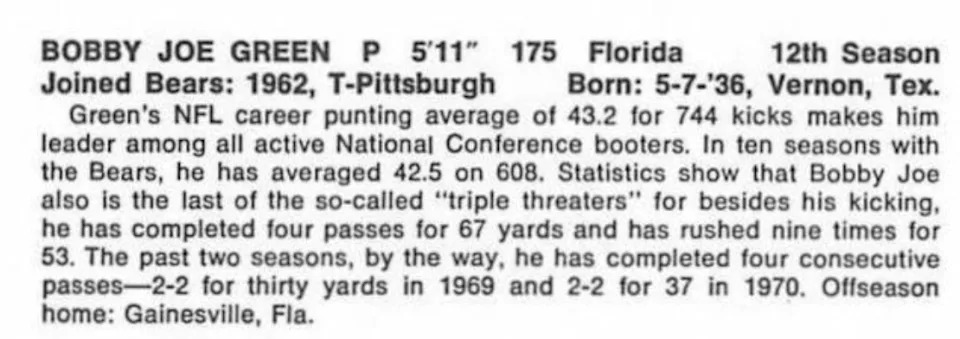
Round 23, 177 overall: Bobby Joe Green, punter
It was time for a quarterback.
With four picks to go, I was the only person without a quarterback. But as Bryan Orenchuk showed when he picked Justin Fields as his offensive utility player, people could end up drafting a second QB in a different spot, namely George Blanda as a placekicker or perhaps Ed Brown as a punter.
Along with Brown and Blanda, I considered Bobby Layne here, obviously based on what he could have done on the Bears, not what he did. Because WCG readers are voting, I did consider going the fan-favorite route, whether that’s Orton, Kramer, Rex, the ultimate “door #2” man in Brian Griese or a wild card in Bobby Douglass. I left a champ on the board in Billy Wade. I didn’t even consider two of only five Bears QBs to start every game in the 16- or 17-game era: Vince Evans and Jim Harbaugh.
My choice: Ed Brown, who I’ve dubbed here “#1,” because I want to remind Bears fans of Brown’s accomplishments, including quarterbacking the last Bears team to finish #1 in either points or yards, doing both in 1956 and yards in 1955. Those are the only times the Bears have finished #1 in either points or yards in the two-way era, which started in 1950.
That was also the beginning of the modern Pro Bowl era, when the Pro Bowl was picked purely as an all-star game instead of its early form of the defending champs vs. all-stars. Since 1950, Ed Brown is the only Bears quarterback to make the Pro Bowl more than once.
Brown had a great deep ball; the idea of him launching bombs to Dick Gordon is something I would love to see.
NOW…
At this point, I was planning on using Brown at both quarterback and punter and essentially getting to draft a “bonus” offensive player. This was not explicitly restricted by our rules. But I brought the question to Jacob, who brought it to the group, and the vote was that you could only officially use each player in one slot.
So I went after the only Pro Bowl punter in Bears history: 1963 champion Bobby Joe Green. I would have picked Brad Maynard if he was available, and I consider Maynard and Green the two best pure punters in Bears history. Green made the Pro Bowl in 1970, his 12th season, at which point his 43.2 yards per punt ranked 7th in NFL history among anyone with 300+ career punts, and 1st in NFL history among anyone with 700+ career punts.
The great NFL historian John Turney named Green the 4th best punter in the NFL since World War II.
Picks between my picks, in this order:
23rd round: Nahshon Wright, Tory Taylor, Manders, Parsons, Austin Booker, Holdman, Cadile
24th round: Teven Jenkins, Ayanbadejo, Major Wright, Blackwell, Gulyanics, Edmunds, Moody
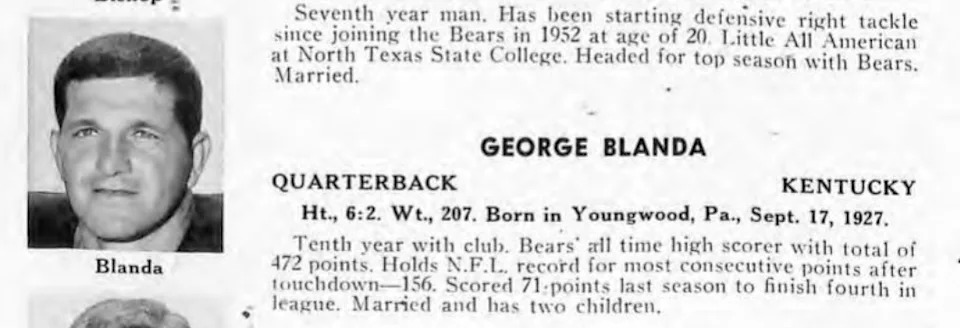
Round 24, 192 overall: George Blanda, placekicker
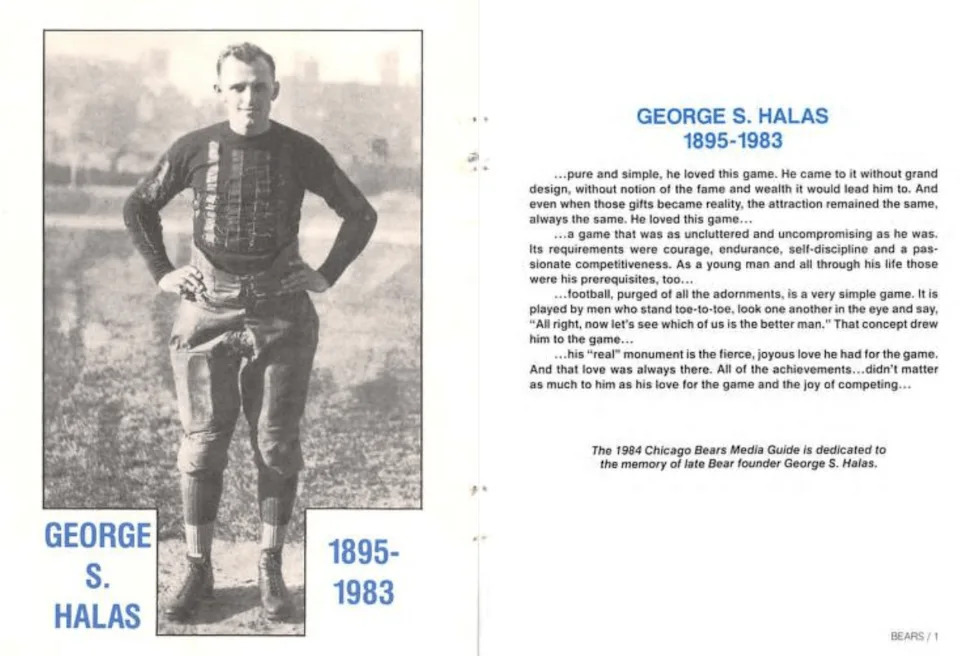
Round 25, 193 overall: George Halas, end (tight end)
As Jimmy McNulty once said during a brothel raid: “Decisions, decisions.”
Down to my final two picks, I needed a tight end and a kicker. For kicker, I had one super fun, weird choice, a footnote in Bears and NFL history that I’ll save for a column one day. But the no-brainer here was Blanda, who in 1956 capped off a then-NFL record of 156 straight successful extra points, blowing past the previous mark of 109 by Lou “The Toe” Groza, who for a while was considered the greatest kicker in NFL history. When Blanda finally retired after 1975 at age 48, he was the NFL’s all-time leading scorer and all-time leader in made field goals and extra points. With 943, Blanda still holds the NFL’s record for made extra points, 69 PATs ahead of Adam Vinatieri in second place.
Alright, back to tight end.
We did have some great tight ends available, namely Emery Moorehead, Zach Miller and 1977 hero Greg Latta. I also liked the idea of taking a pre-1950 player whose game essentially translated to tight end. Hall of Famer Guy Chamberlin was a top option. I also thought about George Wilson, who threw the annihilation block on Bill Osmanski’s famous touchdown run in the 73-0 game.
And then another name came to mind: George Stanley Halas.
Translating two-way ends into wide receiver or tight end is tricky, and the further back you go in NFL history, the harder it is. Of the 32 slots available in our draft for wide receiver, tight end, and offensive utility, these are the players from the two-way era:
-
Ken Kavanaugh, WR for Lester
-
Hampton Pool, TE for Josh
-
George Halas, TE for Jack
That’s it. Kavanaugh makes sense at WR — he was a downfield player. But Hewitt, who played all but one season in the 1930s, and Pool, who played in the 40s, are tossups for this exercise, simply because the end position was still evolving. I would argue that Pool makes more sense at WR and Hewitt at TE, and I can understand the argument for having them as Josh does. It’s just not a clean one-to-one comparison.
This was even tougher to evaluate going back to the 1920s, and you could argue that Halas makes sense at WR, as he was best known as a big-play man, both on offense (his three receiving touchdowns of 25 or more yards was second most for the Bears/Staleys in the 1920s) and on defense (his 98-yard fumble return touchdown in 1923 was the NFL’s longest fumble return until 1972).
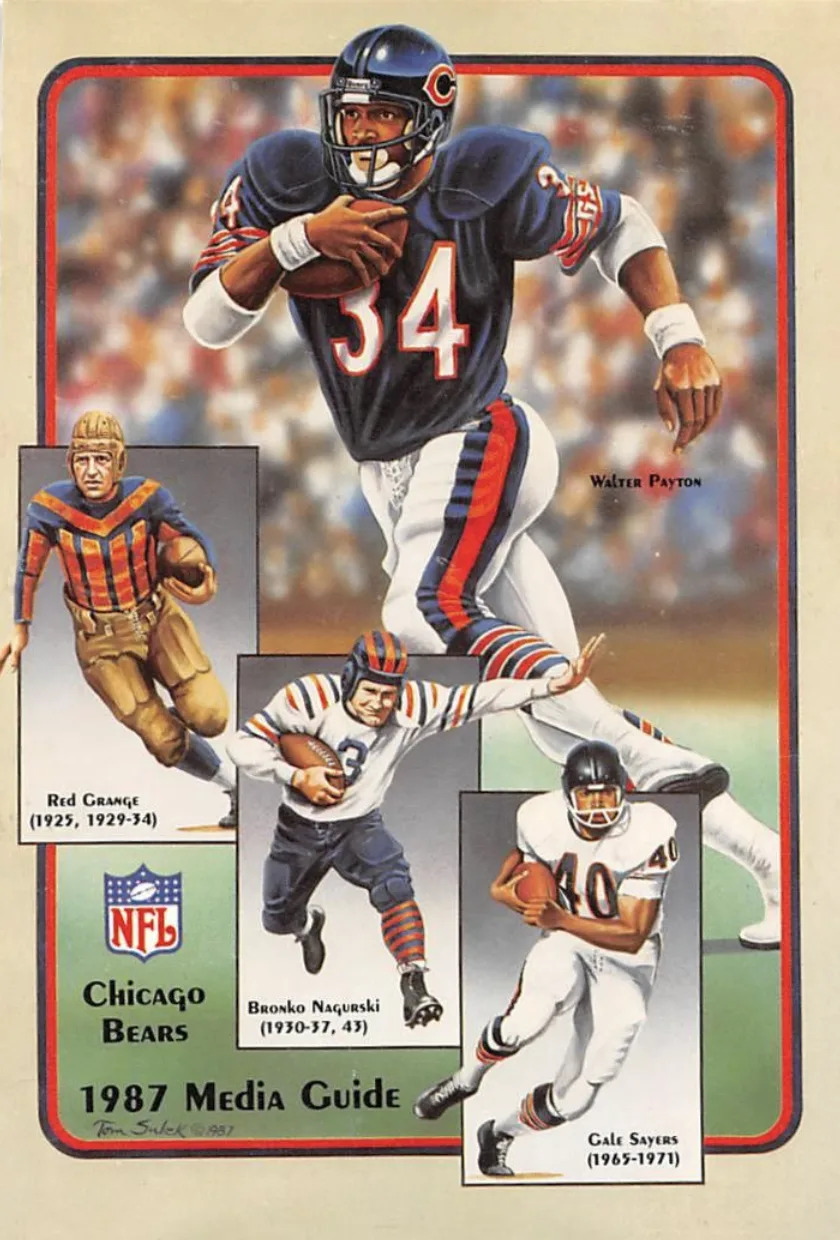
But Halas, undersized, was imbued with a legendary fearlessness, a man willing to take on players much bigger. So a tight end slot makes a certain amount of sense. And really, there is no better way to wrap up this team than having both of our statues play together on offense: Sweetness and Papa Bear.
You can check out our full draft here.
With all eight teams announced, we’ll hold a tournament starting soon and ask you, the WCG readers, to pick the winner!
Read the full article here