




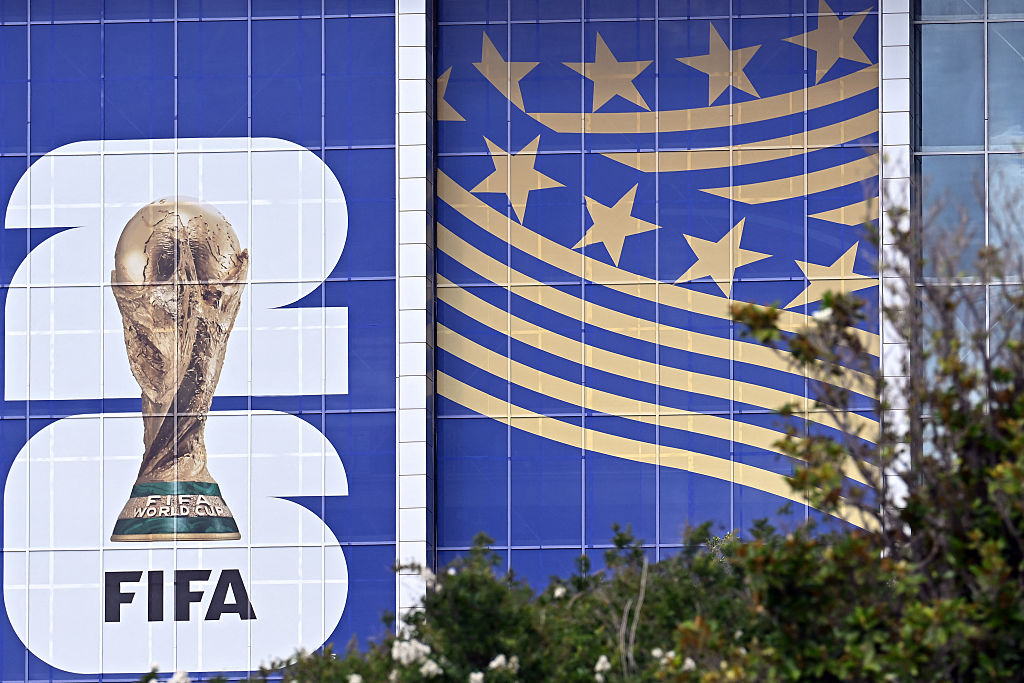
The moment we’ve been waiting for is finally at our doorstep.
The FIFA World Cup will kick off this Thursday (10), with the opening match between Mexico and South Africa at the Azteca Stadium.
Besides renewing our hopes for a sixth title, the tournament also promises to deliver great stories on the pitch.
Advertisement
To help you get even more into the World Cup mood, OneFootball brings you the main information and latest updates on the tournament below.
Check it all out here:
Groups
Group A
🇲🇽 Mexico, 🇰🇷 South Korea, 🇿🇦 South Africa, 🇨🇿 Czech Republic
Group B
🇨🇦 Canada, 🇨🇭 Switzerland, 🇶🇦 Qatar, 🇧🇦 Bosnia and Herzegovina
Click here to see the detailed preview of Groups A and B
Group C
🇧🇷 Brazil, 🇲🇦 Morocco, 🏴 Scotland, 🇭🇹 Haiti
Group D
🇺🇸 United States, 🇦🇺 Australia, 🇵🇾 Paraguay, 🇹🇷 Turkey
Click here to see the detailed preview of Groups C and D
Advertisement
Group E
🇩🇪 Germany, 🇪🇨 Ecuador, 🇨🇮 Ivory Coast, 🇨🇼 Curaçao
Group F
🇳🇱 Netherlands, 🇯🇵 Japan, 🇹🇳 Tunisia, 🇸🇪 Sweden
Click here to see the detailed preview of Groups E and F
Group G
🇧🇪 Belgium, 🇮🇷 Iran, 🇪🇬 Egypt, 🇳🇿 New Zealand
Group H
🇪🇸 Spain, 🇺🇾 Uruguay, 🇸🇦 Saudi Arabia, 🇨🇻 Cape Verde
Click here to see the detailed preview of Groups G and H
Group I
🇫🇷 France, 🇸🇳 Senegal, 🇳🇴 Norway, 🇮🇶 Iraq
Group J
🇦🇷 Argentina, 🇦🇹 Austria, 🇩🇿 Algeria, 🇯🇴 Jordan
Click here to see the detailed preview of Groups I and J
Advertisement
Group K
🇵🇹 Portugal, 🇨🇴 Colombia, 🇺🇿 Uzbekistan, 🇨🇩 DR Congo
Group L
🏴 England, 🇭🇷 Croatia, 🇵🇦 Panama, 🇬🇭 Ghana
Click here to see the detailed preview of Groups K and L
Match and goal records
Important milestones could be broken or extended at this World Cup, with major stars taking center stage.
Lionel Messi is already the player with the most appearances in the tournament’s history and could widen the gap over second place.
But Cristiano Ronaldo has the chance to climb the list and perhaps join the Argentine in the top two spots.
See the current ranking below:
Advertisement
Lionel Messi: Argentina, 26 matches
Lothar Matthäus: Germany, 25
Miroslav Klose: Germany, 24
Paolo Maldini: Italy, 23
Cristiano Ronaldo: Portugal, 22
Diego Maradona: Argentina, 21
Uwe Seeler: Germany, 21
Wladislaw Zmuda: Poland, 21
When it comes to goals, Messi is battling with Kylian Mbappé.
Both have a chance to catch Germany’s Miroslav Klose, the all-time top scorer in World Cup history.
Miroslav Klose (Germany): 16 goals in 24 matches
Ronaldo (Brazil): 15 goals in 19 matches
Gerd Müller (Germany): 14 goals in 13 matches
Lionel Messi (Argentina): 13 goals in 26 matches
Just Fontaine (France): 13 goals in 6 matches
Advertisement
Kylian Mbappé (France): 12 goals in 14 matches
Pelé (Brazil): 12 goals in 14 matches
Brazil on top
Brazil have not won a World Cup since 2002, when they claimed their fifth title.
The 24-year title drought is the longest in the country’s history since our first World Cup win in 1958.
The last time Brazil went this long without winning the World Cup, we ended the drought in an edition held in the United States, in 1994.
And even with that drought, Brazil still holds hugely significant records in the tournament’s history.
No other country has more matches played, more wins, more goals scored, or, of course, more titles.
The supercomputer’s favorite
You may or may not like Opta’s supercomputer (hey there, Casimiro Miguel!), but it has already become a benchmark for probability forecasts across different football competitions around the world.
Advertisement
For the World Cup, it points to Spain as the favorite to lift the trophy, with an 18% chance of becoming champions.
Brazil appear sixth on the list, with 6.6% (this sentence has so many sixes that I’ll take it as a sign of a sixth title).
Check out the full ranking below:
Format
This year’s World Cup will be the first with 48 participating national teams. They have been divided into 12 groups of four countries each.
The top two teams in each group advance to the knockout stage, along with the eight best third-placed teams.
That means 32 teams will qualify, giving the tournament an extra round.
Instead of the round of 16, the first knockout stage will be the round of 32.
Advertisement
From there on, it will be as we already know well: single-elimination matches all the way to the final that will decide the champion.
Throughout the entire knockout stage, if a match is level after 90 minutes, the qualified team will be decided in extra time. If the score remains tied, it will go to a penalty shootout.
Tiebreakers
Until 2022, goal difference was the first tiebreaker if two teams finished level on points in the group stage.
For 2026, FIFA introduced changes, giving greater importance to head-to-head results between teams on the same number of points.
If two or more teams in the same group are tied on points after the end of the group stage, the following criteria, in the order below, will be applied to determine the standings:
Advertisement
Step one
– Highest number of points obtained in group matches between the teams concerned;
– Superior goal difference resulting from the group matches between the teams concerned;
– Highest number of goals scored in all group matches between the teams concerned.
If no decision can be reached through this procedure, the criteria below will be applied as follows to the two or more teams that remain tied on points:
Step two
– Superior goal difference in all group matches;
– Highest number of goals scored in all group matches;
– Highest team conduct score (players and coaching staff) based on the number of yellow and red cards received.
Advertisement
If no decision can be reached through the procedures in steps one and two above, the standings will be determined by the most recent edition of the FIFA Ranking published.
New rules
The World Cup will also mark the debut of new football rules in major tournaments. Check out the main changes below:
– A player seen covering his mouth during an argument may receive a red card
– If a player leaves the field in protest at a refereeing decision, he may receive a red card
– If a goalkeeper takes too long to restart play with a goal kick, the referee will begin a five-second countdown. If the ball is not back in play within that time, the opposing team will be awarded a corner kick
Advertisement
– If a player takes too long to take a throw-in, the referee will begin a five-second countdown. If the ball is not back in play within that time, the throw-in will be awarded to the opposing team
– Players may not take more than ten seconds to leave the field when substituted. If they fail to comply, they will still have to leave the field, but the substitute will have to wait one minute (or until the next stoppage in play) before entering, leaving the team one player short during that period
– If a player needs medical treatment on the field, he will have to leave the field and wait one minute (or until the next stoppage in play) before returning to the match
– VAR will be able to intervene in new situations:
Advertisement
-
Correct an incorrectly shown second yellow card
-
Correct a corner kick awarded incorrectly, as long as the review can be carried out quickly
-
Infractions by the attacking team in set-piece situations committed before the ball is put into play
This article was translated into English by Artificial Intelligence. You can read the original version in 🇧🇷 here.
Read the full article here


