




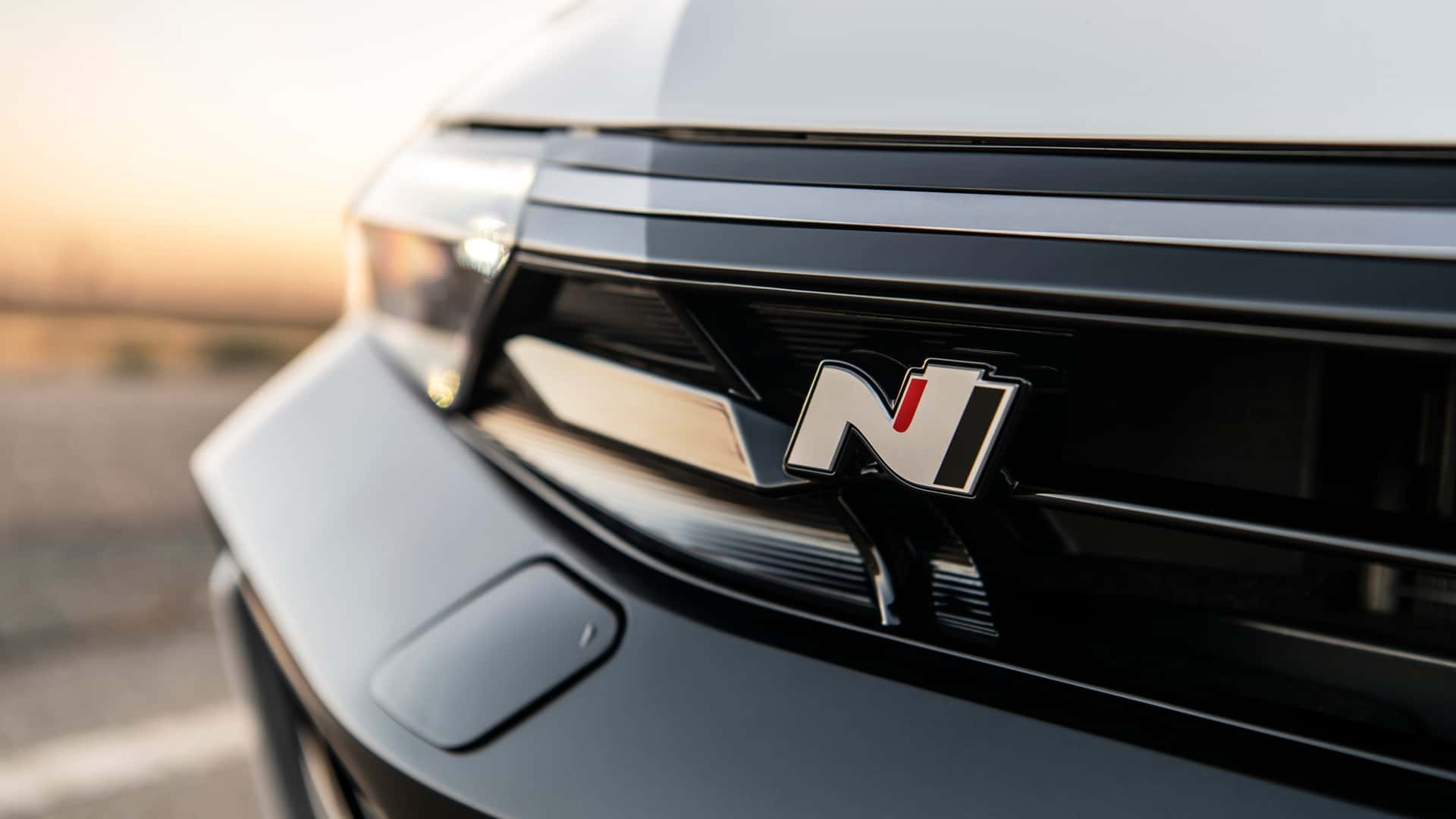
- The new series of more affordable performance cars kicks off in 2030.
- These higher-volume models will slot between the full-fat N cars and the entry-level N Line models.
- Some of the hardware will be borrowed from the true N models.
Performance vehicles from mainstream brands are somewhat rare these days, as only a handful of non-luxury brands still cater to enthusiasts with fun cars. Hyundai is one of the exceptions with its N-badged models, and to our surprise, more affordable models are on the way. These will slot somewhere between the true N cars and the entry-level N Line models.
The announcement made today during Hyundai’s CEO Investor Day calls for a new “high-volume performance” lineup. Perhaps the most interesting part is that these models will borrow powertrains and other hardware from the full-fat N cars. Although the Korean brand only mentions “powertrains,” without specifying whether it’s talking about combustion engines and/or electric motors, there’s a good chance this new series of performance models will have both ICE and EV models.
The new family will get its own brand name, which Hyundai isn’t revealing just yet. Logic suggests a new suffix will follow the “N” to distinguish the models clearly. It appears the company is looking to replicate the strategy used by German luxury brands: Audi with S, BMW with M Performance, and Mercedes with the lower-tier AMGs.
Photo by: Hyundai
As the slide below shows, Hyundai currently sells five true N cars: i20 N, i30 N, Elantra N, Ioniq 5 N, and Ioniq 6 N. Together, they accounted for 20,000 units in 2025. We already know that the recently revealed 2027 Elantra will get the N treatment and is likely to have a bigger engine. Ideally, at least one of the hot hatches will live to see another generation with ICE power.
There are also a dozen N Line models, covering multiple body styles across many market segments. These are basically all show without any extra go, and had cumulative sales of 161,000 last year. Think of these cars as Hyundai’s equivalent of Audi’s S Line, BMW’s M Sport Package, or Mercedes’ AMG Line by skipping meaningful performance upgrades.
The newly announced middle ground for performance cars will get underway in 2030, when the first model goes on sale. Expect them to be substantially cheaper than the N cars while borrowing some of their tricks but with a more on-road focus.


Hyundai performance model lineup
Photo by: Hyundai
Motor1’s Take: Hyundai deserves credit for recognizing that there’s room between the sporty-looking N Line models and the track-focused N cars. Not everyone wants an Ioniq 5 N or Elantra N, but there’s clearly an audience for something with more performance than an N Line without the added cost and compromises of a full-fat N model.
The 2030 launch is still a long way off, so there’s plenty of time for Hyundai to flesh out this new performance family. If the company can successfully transfer some of the hardware and character from its N models into more affordable, higher-volume cars, this could become one of the more interesting enthusiast-focused strategies in the mainstream market. Hopefully, gasoline engines will still play a role by the end of the decade.
Read the full article here


