







TaylorMade’s decision to sign Charlie Woods to an NIL deal looked significant when it was announced earlier this month. Now, with federal lawmakers moving closer to reshaping the entire college sports landscape, the agreement may look even more consequential.
The Protect College Sports Act cleared a major hurdle this week after passing the Senate and advancing to the House of Representatives, bringing college athletics a step closer to the most sweeping federal overhaul in years. Supporters say the legislation would bring stability to a system upended by unrestricted player movement, conference realignment and a rapidly evolving name, image and likeness marketplace.
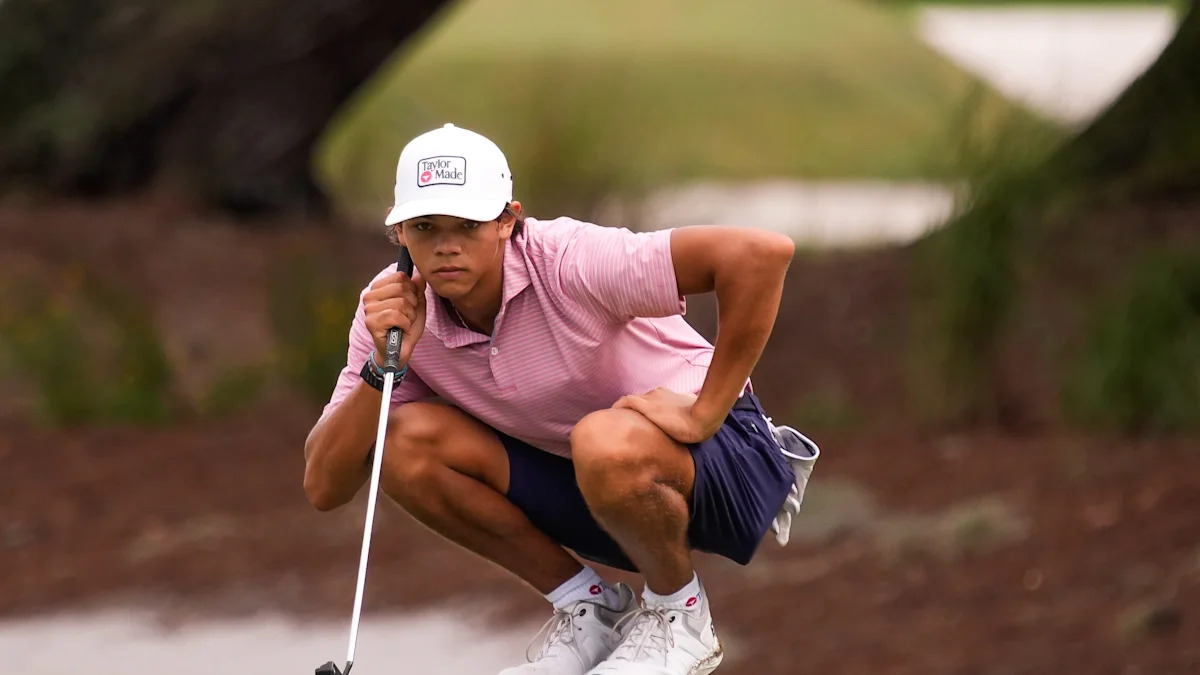
Charlie Woods lines up his putt on the 14th hole during the first round of the 2026 Junior Players Championship.
In a 77-22 vote on Capitol Hill on Monday, Sept. 28, the years-long legislative proposal formally cleared its first major hurdle, with eight co-sponsors, headlined by the early work of Maria Cantwell (D-Wash.), Ted Cruz (R-Texas) and Eric Schmitt (R-Mo.).
Advertisement
“The most important part of the bill is bringing order to chaos,” Cruz told USA TODAY Sports. “College sports is the Wild West. There are essentially no rules. Litigation has struck down virtually all the rules, and as a result, you have athletes going into the transfer portal two, three, four times. You have athletes competing for seven or eight years. You have 27, 28-year-olds competing against 17-year-olds. You have pro players coming back and playing college sports, and every school is in a spending spiral where virtually every athletic department is losing millions of dollars. Many of them are losing tens of millions of dollars. It’s unsustainable, and as a consequence, every week we see a different problem.
“Programs being canceled, we see women’s sports being canceled. We see Olympic sports being canceled, and if Congress doesn’t act within a few years, we will see hundreds of thousands of roster slots and scholarship positions going away, and that would be a tragedy. It would be a tragedy because every year right now we have roughly 500,000 college athletes in America.”
For golf, the bill could have far-reaching implications.
When TaylorMade signed Woods, the son of 15-time major champion Tiger Woods, the move underscored how NIL opportunities have expanded beyond traditional revenue sports. Woods, who is committed to Florida State and entering his senior year of high school, became one of the most visible examples of a golfer leveraging his personal brand before arriving on a college campus.
Advertisement
At the time, the agreement signaled more than an equipment partnership. It reflected the growing value of elite amateur golfers as marketing assets. While top junior players have long received free clubs, balls and apparel from manufacturers, paid NIL agreements remain relatively rare in college golf. One Division I men’s coach recently estimated that only a few dozen players currently have manufacturer deals that include compensation.
The Protect College Sports Act would not eliminate NIL opportunities such as Woods’ partnership with TaylorMade. Athletes would still be free to pursue outside endorsement agreements and marketing relationships. Instead, the legislation seeks to establish a national framework for college athletics while providing additional revenue-sharing opportunities through schools, a move supporters believe would reduce uncertainty for athletes and athletic departments alike.
The bill also includes provisions aimed at protecting Olympic and non-revenue sports, a category that includes golf. Backers argue that without federal intervention, schools facing mounting financial pressure could be forced to reduce scholarships, cut roster spots or eliminate sports. The legislation would allow schools to direct additional revenue-sharing funds toward women’s and Olympic sports, a measure supporters say could help preserve opportunities for future golfers.
That matters for players like Woods and the next generation of elite juniors. As NIL has transformed recruiting and athlete compensation, concerns have grown about whether smaller sports could lose ground while schools direct resources toward football and men’s basketball. Supporters of the legislation contend that a more structured system could help maintain funding and scholarship opportunities across all sports.
Advertisement
The proposal still faces a vote in the House before it can reach President Donald Trump’s desk, but its progress is another sign that the NIL era is entering a new phase.
This article originally appeared on Golfweek: How the Protect College Sports Act could affect Charlie Woods and college golf
Read the full article here


