




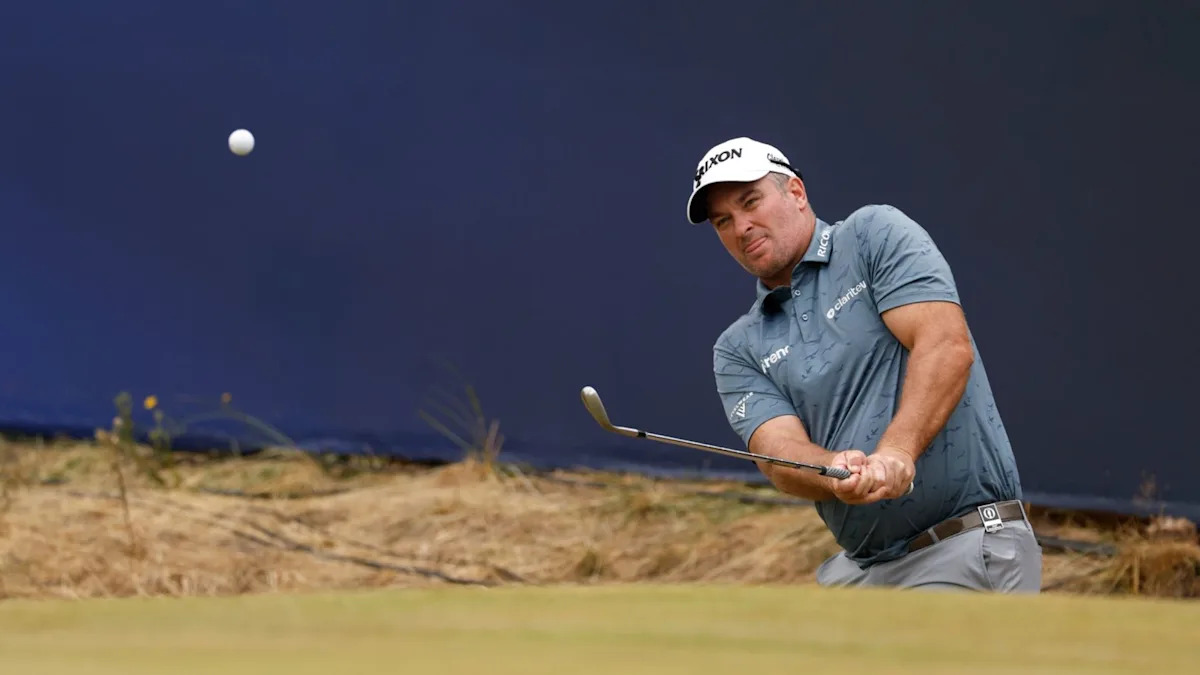
When championship conditions turn baked-out and firm, the knee-jerk reaction among amateur players is to instantly strip bounce off every wedge in the bag. And YES, it did happen a bit last week at Royal Birkdale with players getting low bounce wedge grinds built up “just in case”.
The logic seems sound on paper: tighter lies demand a lower leading edge to prevent the sole from skidding into the middle of the golf ball. On Tour, however, the response from the trucks is far more personal. While firm fairways and tight turf do trigger an influx of low-bounce wedge options across the field, a player’s delivery geometry, swing path, and wrist release play a far larger role in grind selection than ground hardness alone.
Advertisement
A wedge grind never functions in isolation. Static bounce stamped on the sole only represents how the club rests on a flat surface; dynamic bounce is determined by how the player introduces the clubhead to the turf at impact. A steep attack angle with forward shaft lean converts a high-bounce wedge into a digging instrument, whereas a shallow delivery with shaft handle elevation can make even a mid-bounce sole prone to skipping if not fitted to the player’s specific lie angle requirements. Examining the wedge setups of Ryan Fox, Shane Lowry, and Nico Echavarria demonstrates how three distinctly different physical deliveries dictate three entirely different equipment solutions when playing on firm Tour conditions.
Theres a TON to learn here.
Ryan Fox: High bounce retention for steep turf engagement
Ryan Fox relied on a full bag of Srixon/Cleveland to capture his first major championship. Getty Images

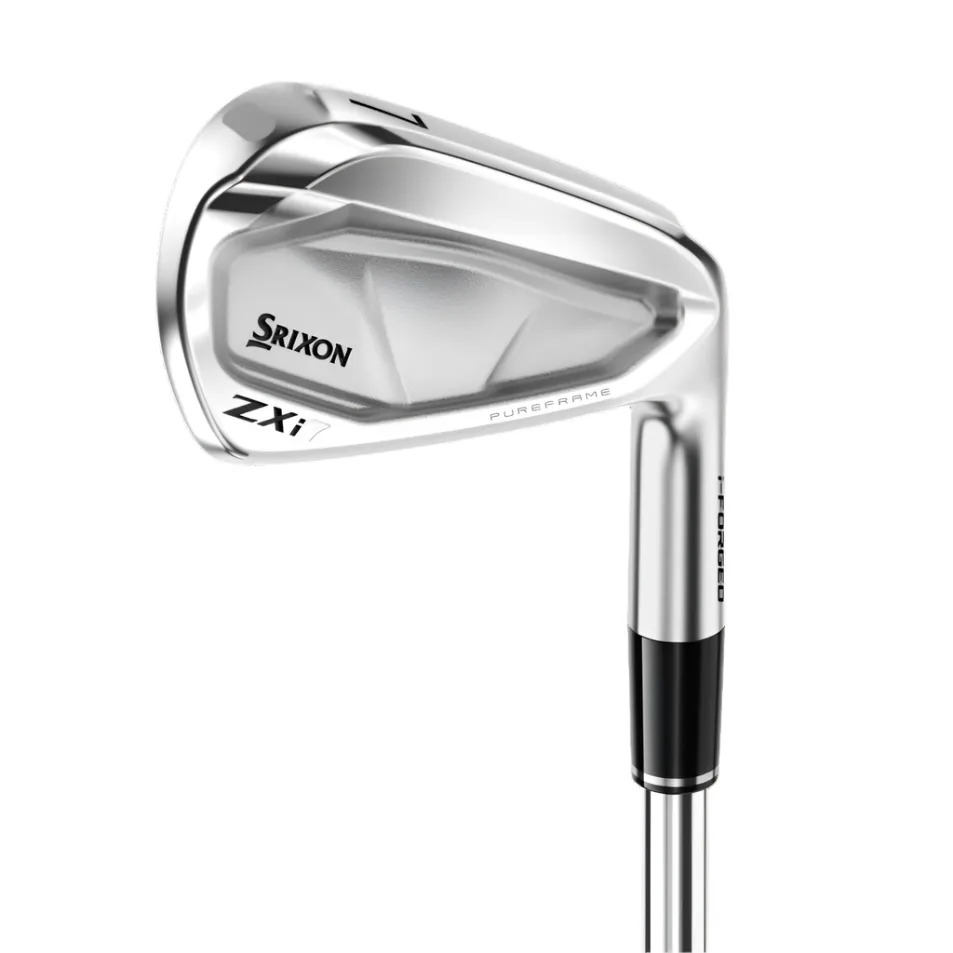
Srixon ZXi7 Custom Irons
Srixon ZXi7 Custom Irons
Advertisement
$199.99 from Fairway Jockey
View Product
Ryan Fox wedge specs:
-
50° MID Grind: True Temper Dynamic Gold X100, 63° Lie Angle, Standard Length
-
56° MID Grind: True Temper Dynamic Gold S400, 63.5° Lie Angle, Standard Length
-
60° MID Grind: True Temper Dynamic Gold S400, 63.5° Lie Angle, Standard Length
Ryan Fox represents a category of ball-striker that defies standard conventional wisdom on baked-out courses. Fox is a heavy-striking player who drives the clubhead down hard into the turf through impact. Rather than sweeping the ball clean, he compresses it with substantial forward shaft lean and a steep angle of attack, taking distinct divots regardless of how firm the sub-base happens to be.
For a player with Fox’s delivery profile, dropping to low-bounce grinds under hard conditions creates a catastrophic scenario. When a steep attack angle is paired with a sharp leading edge and minimal sole geometry, the clubhead drives directly into the soil without resistance, leading to heavy contact and inconsistent distance control. By staying in Mid-Bounce profiles across his entire 50°, 56°, and 60° wedge setup, Fox maintains necessary ground clearance. The sole bounce acts as a safety valve, allowing the clubhead to pass down through the ball, compress it against the tight turf, and exit cleanly on the target line without stalling in the ground.
Advertisement
Furthermore, Fox frequently uses his lob wedge to play low, flighted shots off his back foot. Moving the ball back in the stance increases dynamic shaft lean, which effectively subtracts bounce from the club head at impact. Because Fox manipulates his delivery to deloft and drive the ball flat, the static Mid-Bounce is required simply to keep the leading edge elevated enough to prevent digging. His shaft build also reflects this mechanical split: a stiffer Dynamic Gold X100 in the 50° to match his iron transition and tight distance dispersion, followed by Dynamic Gold S400 shafts in the 56° and 60° to provide slightly softer tip feel and controlled spin on partial greenside shots.
Shane Lowry: Upright angles, dynamic touch, and sole transition
Shane Lowry wedge specs:
-
50° MID Grind (bent to 51°): KBS Tour X, +.25″ Length, 2.5° Upright
-
56° MID Grind (bent to 57°): KBS Tour X, +.25″ Length, 2.5° Upright
-
60° LOW Grind (bent to 61°): KBS Tour X, +.25″ Length, 2.5° Upright
Shane Lowry possesses one of the most distinctive wedge setups on Tour, defined by upright lie angles and precise loft tweaks. Standing at a relatively standard height, Lowry’s lie angle configuration of 2.5 degrees upright across all three wedges is noticeably upright compared to tour averages. This spec stems from both a visual preference at address and a structural delivery mechanics issue where Lowry stands the shaft up during his backswing and delivers the clubhead with a toe-down, upright orientation.
Advertisement
Lowry’s lofts are each adjusted 1-degree weak (50° to 51°, 56° to 57°, and 60° to 61°). Bending a wedge weak increases static bounce by 1 degree while adding subtle offset and altering the leading-edge appearance. On his gap and sand wedges, this modification maintains controlled full-swing gapping and enhances spin rates out of rough and fairway lies alike.

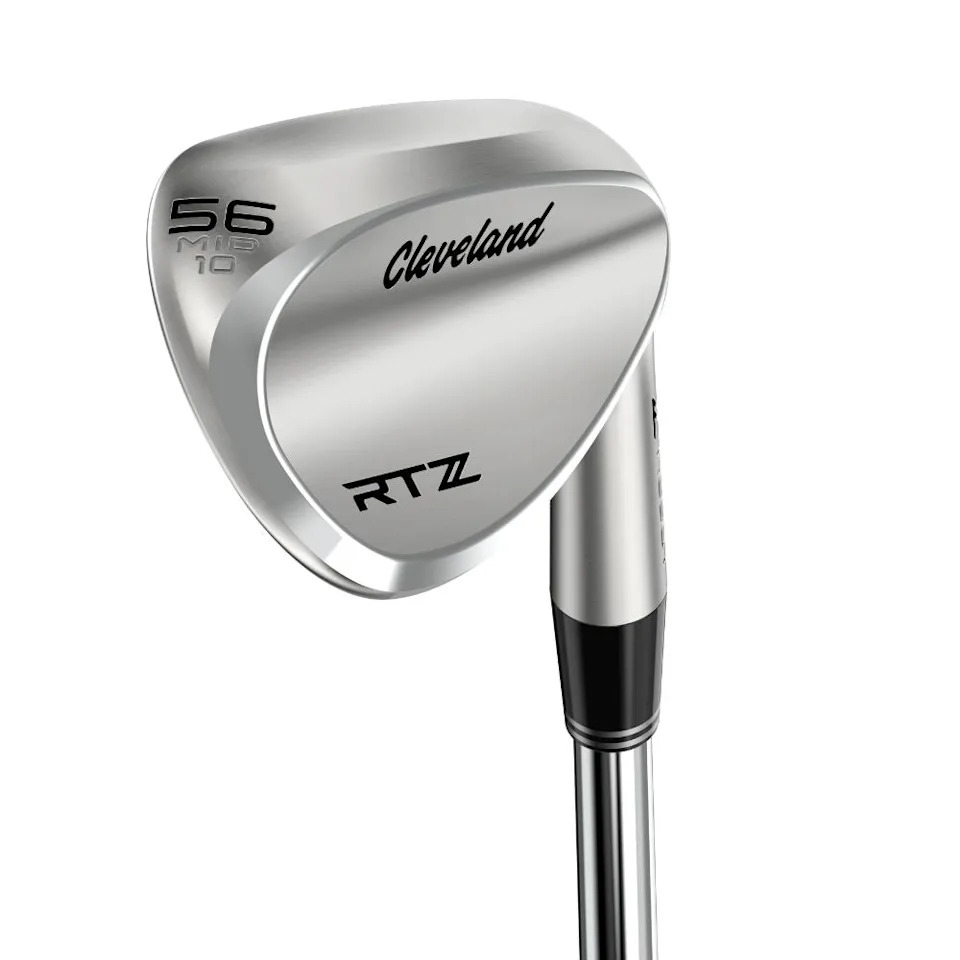
Cleveland RTZ Custom Wedge
Cleveland RTZ Custom Wedge
All-new RTZ Wedges are made with Z-Alloy, a completely new steel formula that enables a zero-compromise design approach for incredible feel, better durability, and more consistency for our best performing tour Wedges yet. Plus, there’s an all-new ADAPT grind featuring full-face grooves, to give RTZ Wedges more versatility than ever before. Z-Alloy Z-Alloy is a brand-new steel with better feel. It’s softer, lighter, and remarkably durable. It gives RTZ Wedges superior feel, better forgiveness, and more consistency. On RTZ Tour Rack Wedges, Z-Alloy’s rust-resistant properties ensure longer-lasting, like-new performance. HydraZip HydraZip is a unique system of face blasts and laser-milled lines formulated to maximize spin performance under wet conditions. This technology is dynamically configured by loft groupings, which helps balance spin across lofts, while maximizing spin in adverse conditions. ZipCore This low-density core technology replaces heavier material in the heel and hosel area with a lightweight, low-density, vibration-dampening material. This proprietary core allows us to shift the Center of Gravity closer to where you strike the ball, while simultaneously adding MOI. UltiZip UltiZip’s sharper grooves cut through grass and debris at contact, while deeper grooves help make space for grass, sand, dirt, or water to clear the impact zone, giving RTZ Wedges stronger, more consistent spin from the fairway, rough, or bunker.
Advertisement
$199.99 from Fairway Jockey
View Product
Earlier in the season, Lowry transitioned away from a Full Face lob wedge profile into a 60° Low Bounce grind (bent to 61°). Lowry is an elite short-game artist who relies heavily on wrist manipulation, face opening, and shallow turf skimming around the greens. Because Lowry naturally adds dynamic bounce through impact by releasing his hands and laying the face open, a wedge with wide sole geometry or high static bounce becomes a liability on hard surfaces. Excessive bounce causes the trailing edge to strike the hard ground first, causing the leading edge to skip upward into the middle of the ball. The Low Bounce grind allows the leading edge to stay close to the dirt when the face is opened, trusting his hands to supply the necessary bounce dynamically at strike.
Nico Echavarria: Flat alignment and open-face geometry
Nico Echavarria wedge specs:
-
50° MID Grind: True Temper Dynamic Gold S400, Standard Length, 1° Flat
-
54° MID Grind: True Temper Dynamic Gold S400, Standard Length, 1° Flat
-
58° LOW Grind: True Temper Dynamic Gold S400, Standard Length, 1° Flat
Advertisement
Nico Echavarria utilizes a classic wedge gapping setup (50°, 54°, and 58°) with uniform True Temper Dynamic Gold S400 shafts at standard length, adjusted 1 degree flat throughout. A 1-degree flat lie angle aligns with a shallow, inside-to-square swing delivery, keeping the heel from catching early on tight turf and keeping start-line directions true on full wedge shots.
Echavarria’s grind selection highlights a traditional Tour setup philosophy. He maintains Mid-Bounce options on his 50° gap wedge and 54° sand wedge to preserve versatility, turf interaction consistency, and full-shot stability from fairways and bunkers. However, on his primary greenside scoring club — the 58° lob wedge — he chooses a Low Bounce grind.
The logic behind Echavarria’s low-bounce lob wedge centers on face orientation. Echavarria frequently plays very open face angles on short game shots around the greens. Opening the clubface rotates the trailing edge down, which artificially increases the effective bounce of the club. If a player starts with a high static bounce on a lob wedge and then opens the face on firm turf, the effective bounce becomes unplayable, pushing the leading edge too high off the ground. By opting for a low-bounce base grind, Echavarria can open the blade as aggressively as needed on hard ground, adding just enough dynamic bounce to glide under the ball without risk of skimming or blading the shot.
Tour Truck takeaways: Technical principles of firm-turf wedge fitting
-
Attack Angle and Ball Position: Steep diggers who de-loft the club require higher static bounce to prevent digging, even on baked-out turf.
-
Hand Release and Open Faces: Players who open the face or release the clubhead early add dynamic bounce at strike, making low static bounce essential to keep the leading edge low to the turf.
-
Lie Angle Precision: Upright deliveries require matching upright lie specs to protect start-line control, while flat deliveries prevent heel-snagging on tight lies.
-
Shaft Progression: Flex and weight transitions (such as Fox dropping from X100 to S400 in lower lofts) allow players to fine-tune spin rates and feel between full approach shots and touch greenside shots.
Advertisement
The post How Ryan Fox, Shane Lowry, and Nico Echavarria choose their wedge set-ups appeared first on Golf.
Read the full article here


