




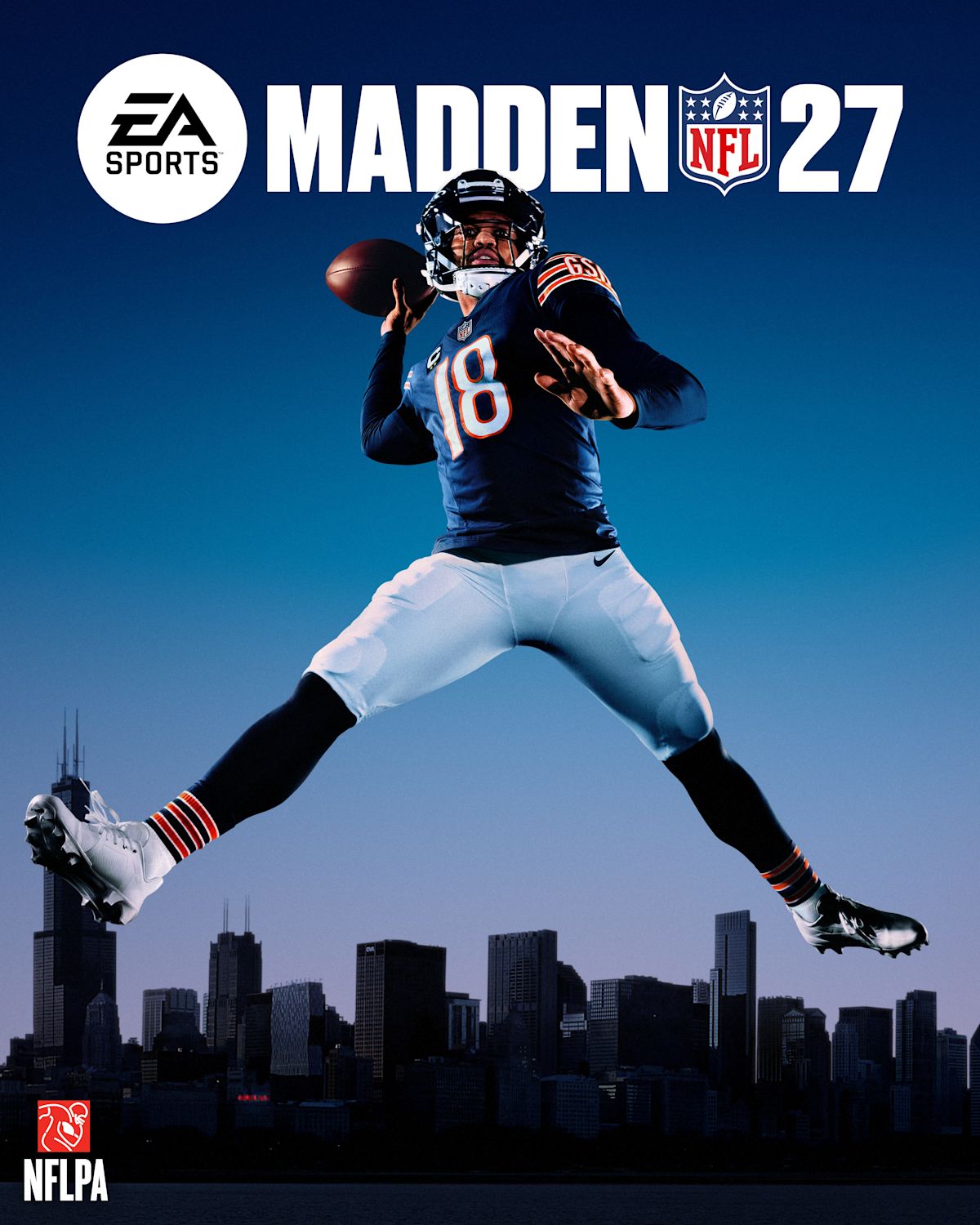
EA SPORTS has long said, “It’s in the game.” But what goes into getting “it” into the game in the first place?
By now, everyone interested in the latest editions of the Madden NFL and College Football video games has gotten an extended look at the games. “College Football 27” has been out for more than a month, and some players have participated in a closed beta for “Madden NFL 27.”
They know who the cover stars are for each game, what new features have been implemented, and – generally – what to expect from a game that has released a new iteration annually since 1990.
Advertisement
Advertisement
Less familiar are the intricacies of developing a game like Madden. What are the challenges of making an annual release? How has game development changed for EA SPORTS as technology has developed? More generally, what does the making of Madden look like from the developer chair?
USA TODAY Sports spoke with two EA SPORTS executives – Evan Dexter, vice president of brand strategy and marketing, and Scott O’Gallagher, senior creative director for Madden and College Football – in one-on-one interviews about how they got this year’s releases ready for store shelves. Here’s what they said ahead of the Aug. 13 release of “Madden NFL 27”:
MADDEN NFL 27: Caleb Williams cover ‘different’ for Madden masterminds. Here’s why
Madden’s biggest development challenge? Time
For most video game studios, a development calendar is not strict. Sure, developers would like to hit the release date they set out for an announced game, and there are timelines to follow and objectives to hit to meet that release window. But most video game studios have the option to delay the release of their games by months, a year or even several years if necessary.
Advertisement
Advertisement
Such is not the case with EA SPORTS and its sports franchises, including Madden NFL.
“Time is always the biggest challenge, for sure,” Dexter said. “Trying to get in all of the innovation that we want, trying to get in all the innovation that our community wants in a condensed time frame is always the biggest challenge.”
But, Dexter said, recent technological advancements have helped speed up the development process. Specifically, automation has been a boon for EA SPORTS’ developers when it comes to preparing assets for both Madden and College Football.
In the past, visual artists would have to craft assets for each unique player and stadium across college football and the pros. In 2026, that process can be automated, cutting down on the man-hours necessary to create each individual model.
Advertisement
Advertisement
“As we get towards automation of assets and face scans and player renders, the pace that we can go is accelerating,” Dexter said. “We wouldn’t have been able to make ‘College Football 25’ without automation. You think about 11,000 eligible athletes were in ‘College Football 25’ – getting all of that in a single year with 134 stadiums and schools, it wouldn’t have been possible.
“You think about technical artists – the amount of time it would take just to make a face look good, make a body type look good and accurate. If you play our games, you know our communities demand absolute authenticity. … Being able to speed up those processes and have technical artists come in and touch them up as opposed to having to create the entire thing, end-to-end workflow, that’s probably the biggest benefit.”
MADEN 99 CLUB: Who’s in the exclusive group of stars this year? A Cardinal joins the elite
Madden launch day is only the beginning
In addition to being annual releases, Madden and College Football are live-service video games. That means each game gets new content added to it even after they ship. “Finishing” development on the product and selling it to consumers is only the first step.
Advertisement
Advertisement
After that, there’s an expectation that EA SPORTS will continue to work the game, adding relevant new content as the season goes on so that the game still mirrors the NFL and college football in real time.
“You’re just trying to stay up to date,” O’Gallagher said. “You’re literally watching college around the clock on Saturday, no kidding. Then you roll in (new plays). We added over 1,500 plays this year just in both games.”
Part of the challenge is keeping up with all of the ways that NFL coaches change their playbooks during a season. O’Gallagher specifically mentioned the unique plays that Bears head coach Ben Johnson would implement, or the personnel changes Rams head coach Sean McVay would deploy.
“Then you’ve got stuff like the Tush Push,” O’Gallagher said, referring to the Eagles’ infamous quarterback sneak play.
Advertisement
Advertisement
And once the EA SPORTS team got the Tush Push into the game, they had to monitor whether the NFL would ban it and force developers to also remove the play from Madden.
“If it’s in the game (NFL football), it’s in the game (Madden),” O’Gallagher said. “We’ve got to go and put this in and deliver that, so that’s what we’re trying to do.”
MADDEN 27 SOUNDTRACK: Bad Bunny continues NFL run with Ozzy, Good Charlotte
How player feedback comes into play
While the development team juggles the constant shifts and changes within the NFL, it also has to take into consideration the feedback that fans have for the video games.
O’Gallagher said release day is among the biggest days of the year for the development team to monitor how the game is perceived and how it’s performing in the hands of players. Once the general public has the game, they tend to find programming issues that can lead to glitches or bugs after release.
Advertisement
Advertisement
“Then you’re trying to say, ‘Hey, what did you say? Did we fix it? Did you find something?’ These games are so massive, you cannot cover everything. I’ll be honest, we try. But they are just massive,” O’Gallagher said.
“Now with YouTube and everything else – (social media website) X – dude, you get hammered if you’re not delivering what you’re supposed to, and I respect it. So, that bar has only risen.”
After about one month of rooting out problems with bugs after release, the development team has to make tweaks to the game’s competitive balance.
Last year, fans gave feedback that the AI defense in Madden wasn’t good enough, leading to high-scoring games between players as offenses dominated. So developers had to go in, make more changes, send out a patch via the internet to change some of the game’s code, then monitor if the tweaks they made were successful.
Advertisement
Advertisement
“We want fun, but fun should come in the sake of balance,” O’Gallagher said.
MADDEN 27 RATINGS: Jahmyr Gibbs, Christian McCaffrey top running back rankings
How players get their Madden ratings
Among the players most vocal about necessary changes are those featured in the games: the football players themselves.
“Every guy wants to be a friggin’ 95, man. It’s like no one wants to be honest anymore. I joke about that all the time,” O’Gallagher said.
He explained that EA SPORTS takes its rating system seriously for College Football and Madden. The developers have a dedicated scouting team and ratings adjusters who monitor player performance and use tools from the NFL’s Next Gen Stats data to assign players their relative grades. The team also has a “great relationship” with Pro Football Focus (PFF) which helps them stay up to date on performances on a player-by-player basis.
Advertisement
Advertisement
Since Madden and College Football are live-service games, the games’ developers are expected to keep player ratings updated as the season goes on and stars (or busts) emerge.
After each week of the regular season, the EA SPORTS team will monitor performances and make the relevant changes to player ratings. A great week from one player might earn him an in-game stats bump for the following week. Conversely, poor performance can also lead to worse ratings.
If players are disappointed in their initial rating, O’Gallagher said, “Go ball out! We will increase it.”
Eventually, the dust will settle and the impressions of this year’s iteration of Madden will become more concrete.
Advertisement
Advertisement
With the help of player feedback and impressions, “Madden NFL 27” will evolve as the 2026 NFL season does. And both will reach their final form around the time of the Super Bowl next February.
Just in time to do it all again next year.
This article originally appeared on USA TODAY: The Making of Madden: How Madden NFL 27 came together and what’s next
Read the full article here


