





Dusty May was a first-year assistant at Louisiana Tech, still a decade away from hitting it big, when Gordon Hayward’s half-court shot came within a breath of delivering Butler the national championship in 2010.
When it hit the front of the iron and bounced away, triggering a rain of confetti on Duke, May could have been like any young coach.
Advertisement
For all the admiration over what Brad Stevens had done to get a mid-major Cinderella to the brink of winning it all, Mike Krzyzewski was the standard for what a great college basketball career should look like. From the longevity at one school, to the power he amassed in the sport to the Olympic gold medals and the respect he had gained even in the NBA, they all wanted to grow up to be Coach K.
But as we fast-forward 16 years, the younger Gen X and elder Millennial-age coaches taking over the sport have seen a shift in what they once perceived the peak of their profession to be. In an era where it’s no longer possible to be the next Coach K, being the next Brad Stevens seems both more fulfilling and attainable.
May’s departure from Michigan on Monday to become the Dallas Mavericks’ head coach has echoes of the announcement that came out of the blue on July 3, 2013, when Stevens left Butler to become head coach of the Boston Celtics.
On the surface, it seemed like a huge gamble. Stevens was 36, never spent a day working in the NBA and had never even coached anywhere but Butler.
Advertisement
But it also made perfect sense. Not only had Stevens done the impossible by taking Butler to consecutive national title games, he had displayed levels of intelligence in the way he coached, talked about the game and related to people that suggested a depth and curiosity that had a real chance to resonate at the next level.
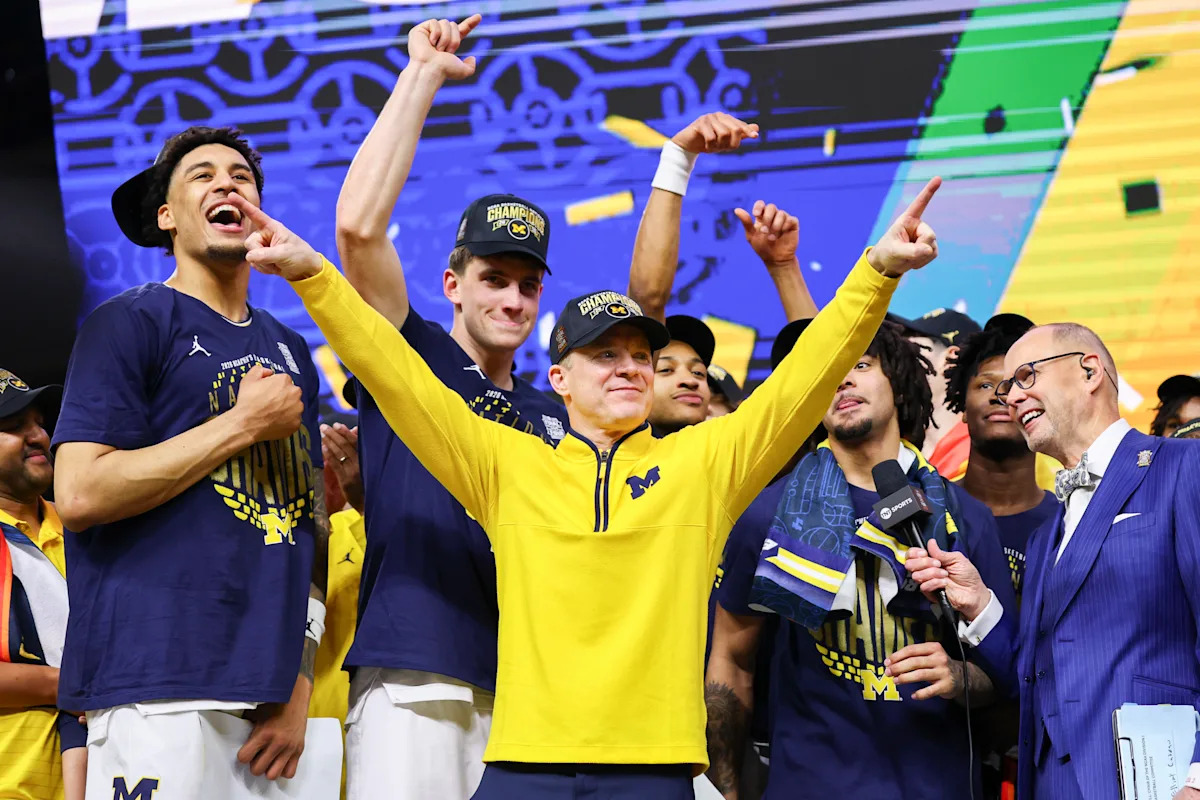
Michigan coach Dusty May cuts the net down following his team’s title win over UConn on April 6. (Erick W. Rasco/Getty)
(Erick W. Rasco via Getty Images)
When May first emerged at Florida Atlantic in 2023, taking a true nowhere program to the Final Four, the Stevens-like vibes were unmistakeable. It wasn’t just that they were both Indiana natives taking mid-major programs to places they’d never been before. As the nation got to know May during that run, the cerebral, understated and adaptable approach he brought to the sideline kindled a lot of memories from 2011.
May didn’t just become the hottest coach in college basketball, he looked like a guy who was ultimately going to catch the attention of NBA front offices.
Advertisement
May also emulated Stevens in another way: He didn’t rush to cash in on his sudden success. Though he did leave Florida Atlantic for Michigan, he stayed one more year after the Final Four and was very careful about where his next stop was going to be.
So it’s no surprise we ended up here, with new Dallas front office led by Masai Ujiri and Mike Schmitz looking at May’s body of work and seeing a guy with the potential to thrive in a league where coaching is just very different than in college.
That’s why Krzyzewski never left Duke for the NBA despite multiple opportunities to make the leap. In college, in his era, the power and the Coach K mystique he accumulated mattered. In the NBA, he was just going to be one of 30 whose success would be at the mercy of a bad run of draft picks or a superstar player souring on his style.
But May understands, like all of his contemporaries, that dynasties aren’t going to exist in college basketball the same way they used to.
Advertisement
Yes, May just won a national championship and is good enough to win more. But in this era of college basketball, gaining that status as a coach doesn’t mean what it used to.
Every year it’s a new team, a new fight to outbid your rivals for talent, a new gamble on whether you’ve spent your money on the right people.
Winning national titles doesn’t buy you much credibility anymore with prospects or agents who approach recruiting as business deals. There won’t be any more Coach Ks landing five-stars by flashing rings or getting Grant Hill to make a phone call.
That’s not necessarily why May left. If anyone has proven that they could adapt and thrive under the ever-changing conditions of college sports these days, it’s the guy who made it work at Florida Atlantic and then did it even bigger and better when he had power conference resources.
Advertisement
This is more a case of a coach climbing the mountaintop slowly and then very quickly. And after he checked off the biggest box in college basketball, he was intrigued by another challenge — one that Stevens conquered both as coach and then as a Celtics’ president of basketball operations who put together an NBA champion.
Though everyone knew Stevens was destined for big things that heartbreaking night in 2010, nobody could have envisioned the exact path his basketball career would take.
But in so many ways he’s now model for the best and brightest the college game has to offer.
After May’s success at FAU and Michigan, he could have chosen practically any destiny for the next decade of his basketball life. And even though he’d have been as likely as anyone to be the face of college basketball in this era, it’s unsurprising given his personality, curiosity and adaptability that he’s taking the same route as Stevens.
And it shouldn’t shock anyone if he’s just as big of a success.
Read the full article here