Kyle Busch won a NASCAR Craftsman Truck Series race one week before he died. He was 41 years old, by all appearances healthy … and then he was killed by pneumonia. That is the kind of thing you hear about taking someone’s elderly grandfather, not a professional athlete in the middle of a season.
The two-time NASCAR Cup Series champion died after severe pneumonia progressed into sepsis. He had been sick weeks before, calling for a doctor during the Cup race May 10 at Watkins Glen. Fox Sports reported he was fighting a sinus cold. A week later after winning the Truck Series race at Dover Motor Speedway, he mentioned that the cough had been substantial. On May 20, he was coughing up blood, hot to the touch and on the floor in the bathroom when an ambulance was called. He died May 21.
Advertisement
The racing world is still in shock. Outside of it, a lot of people are asking the same thing: How does that happen to someone his age?
USA Today spoke with Dr. Ryan Maves, chief of critical care medicine at Wake Forest University and an infectious disease physician, to find out. He was not involved in Busch’s care. He was careful to say that everything he offered was based on limited public information.
He also didn’t sugarcoat it.
“Whatever he had was weird and rare,” Maves said.
1 / 8
Racing community honors Kyle Busch ahead of Coca-Cola 600
The racing community is paying homage to two-time NASCAR Cup Series champion Kyle Busch after his sudden and shocking death at age 41.
See the legendary driver remembered, starting here at Charlotte Motor Speedways on May 23, 2026, in Concord, North Carolina.
(Jim Dedmon, Imagn Images)
1 / 8
Racing community honors Kyle Busch ahead of Coca-Cola 600
The racing community is paying homage to two-time NASCAR Cup Series champion Kyle Busch after his sudden and shocking death at age 41.
See the legendary driver remembered, starting here at Charlotte Motor Speedways on May 23, 2026, in Concord, North Carolina.
(Jim Dedmon, Imagn Images)
2 / 8
Racing community honors Kyle Busch ahead of Coca-Cola 600
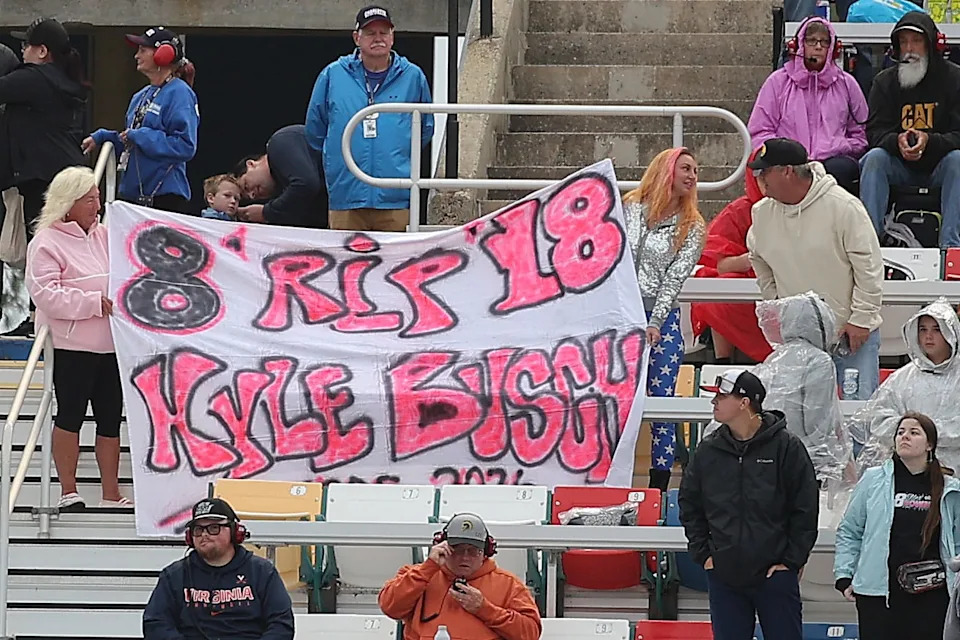
Fans in the grandstands display a sign in tribute to the passing of Kyle Busch prior to the NASCAR Craftsman Truck Series North Carolina Education Lottery 200 at Charlotte Motor Speedway on May 22, 2026 in Concord, North Carolina.
(Jonathan Bachman, Getty Images)
3 / 8
Racing community honors Kyle Busch ahead of Coca-Cola 600
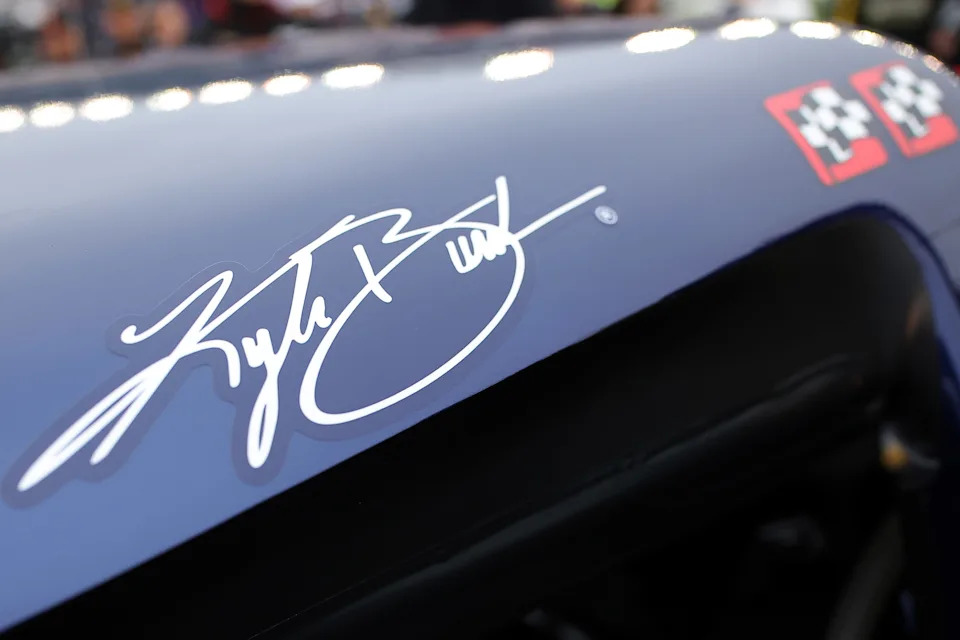
A detail view of Kyle Busch’s signature on the #7 HendrickCars.com Chevrolet, driven by Corey Day prior to the NASCAR Craftsman Truck Series North Carolina Education Lottery 200 at Charlotte Motor Speedway on May 22, 2026 in Concord, North Carolina.
(Jonathan Bachman, Getty Images)
4 / 8
Racing community honors Kyle Busch ahead of Coca-Cola 600
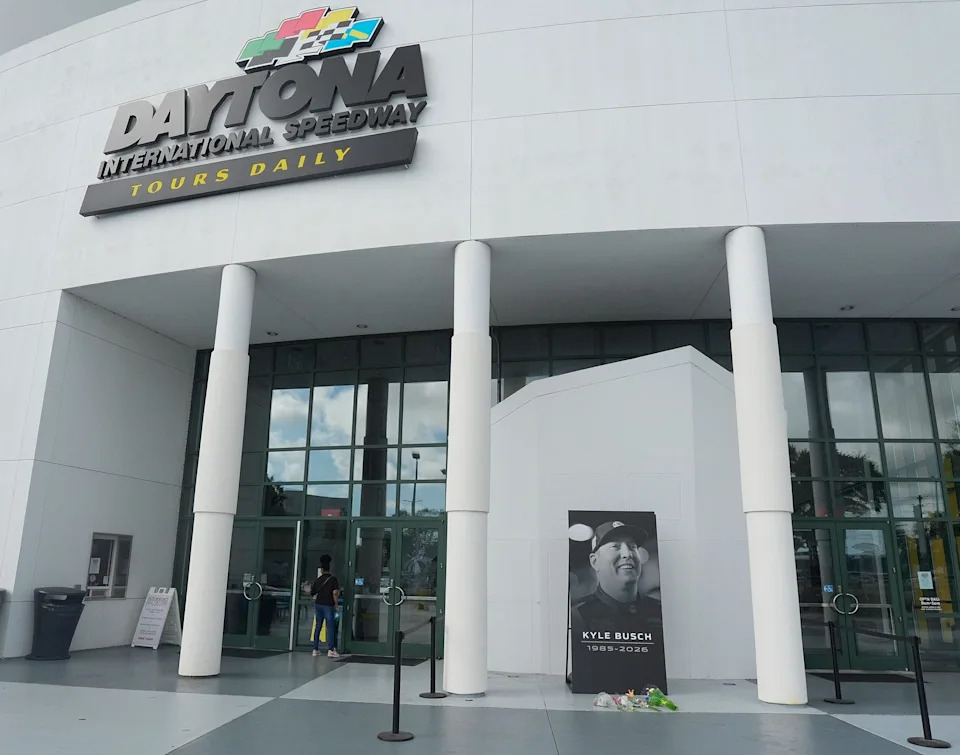
A makeshift memorial was made in front of the Daytona International Speedway tours building for NASCAR driver Kyle Busch, May 22, 2026, who died suddenly May 21, 2026.
(Nadia Zomorodian, News-Journal)
5 / 8
Racing community honors Kyle Busch ahead of Coca-Cola 600
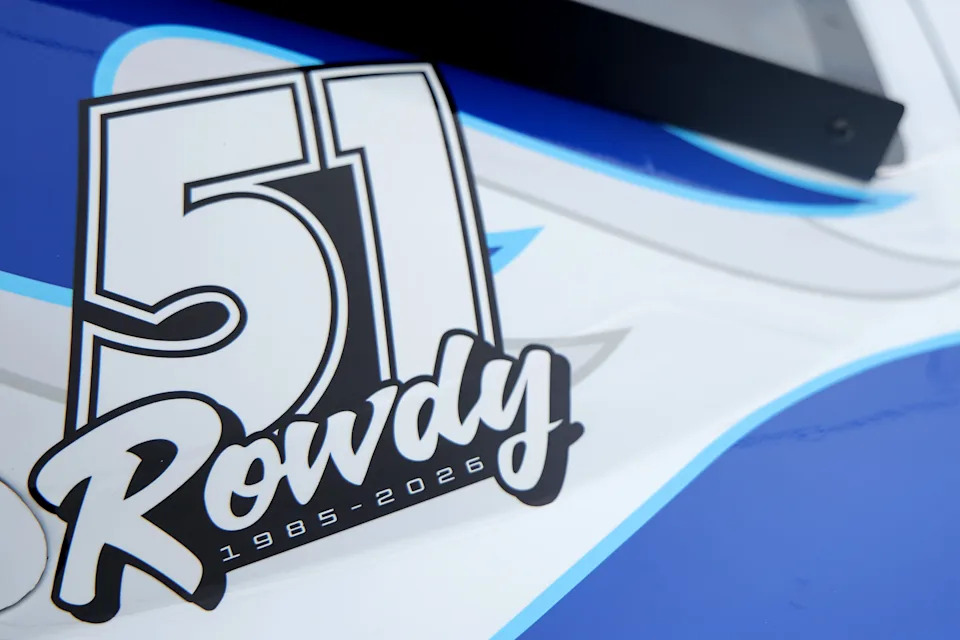
A detail view of the “51 Rowdy 1985 – 2026” sticker in tribute to the passing of Kyle Busch prior to practice for the NASCAR Cup Series Coca-Cola 600 at Charlotte Motor Speedway on May 23, 2026 in Concord, North Carolina.
(Jonathan Bachman, Getty Images)
6 / 8
Racing community honors Kyle Busch ahead of Coca-Cola 600
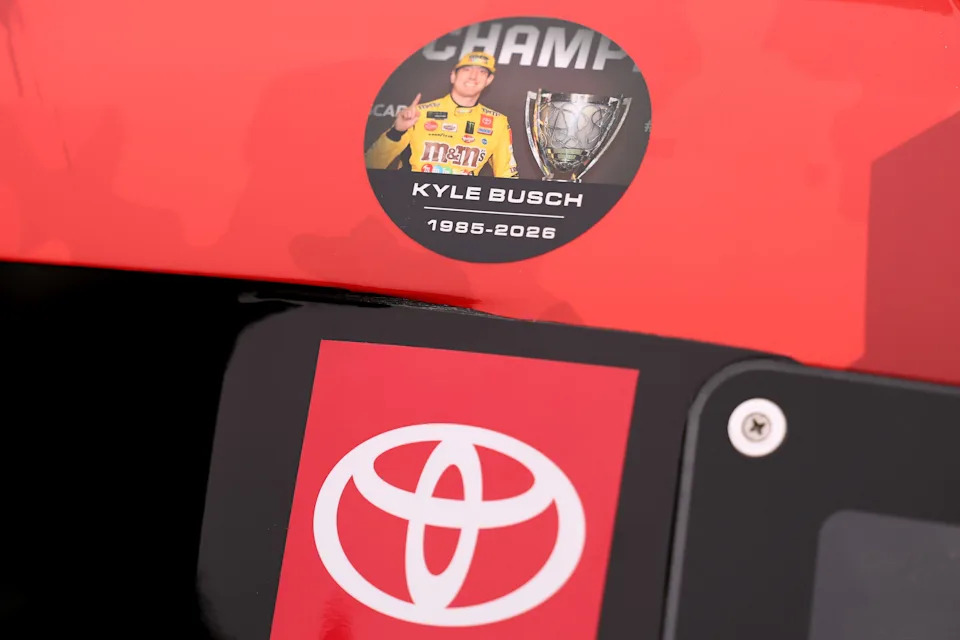
A detail view of the “Kyle Busch 1985-202” sticker in tribute to the passing of Kyle Busch prior to practice for the NASCAR Cup Series Coca-Cola 600 at Charlotte Motor Speedway on May 23, 2026 in Concord, North Carolina.
(David Jensen, Getty Images)
7 / 8
Racing community honors Kyle Busch ahead of Coca-Cola 600
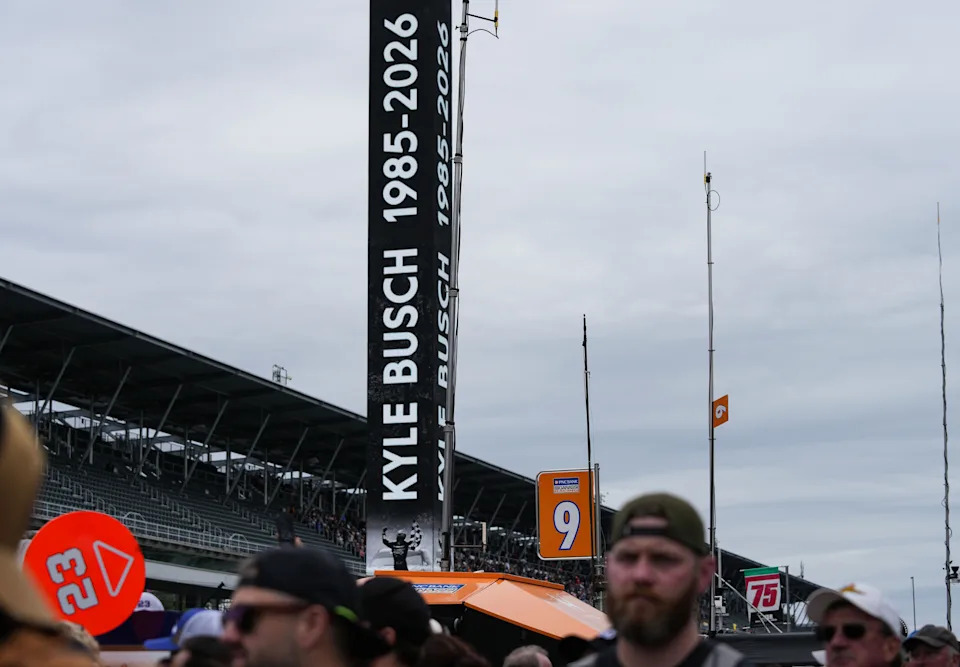
The pylon is lit to honor NASCAR driver Kyle Busch on Friday, May 22, 2026, on Carb Day ahead of the 110th running of the Indianapolis 500 at Indianapolis Motor Speedway.
(Grace Hollars/IndyStar)
8 / 8
Racing community honors Kyle Busch ahead of Coca-Cola 600
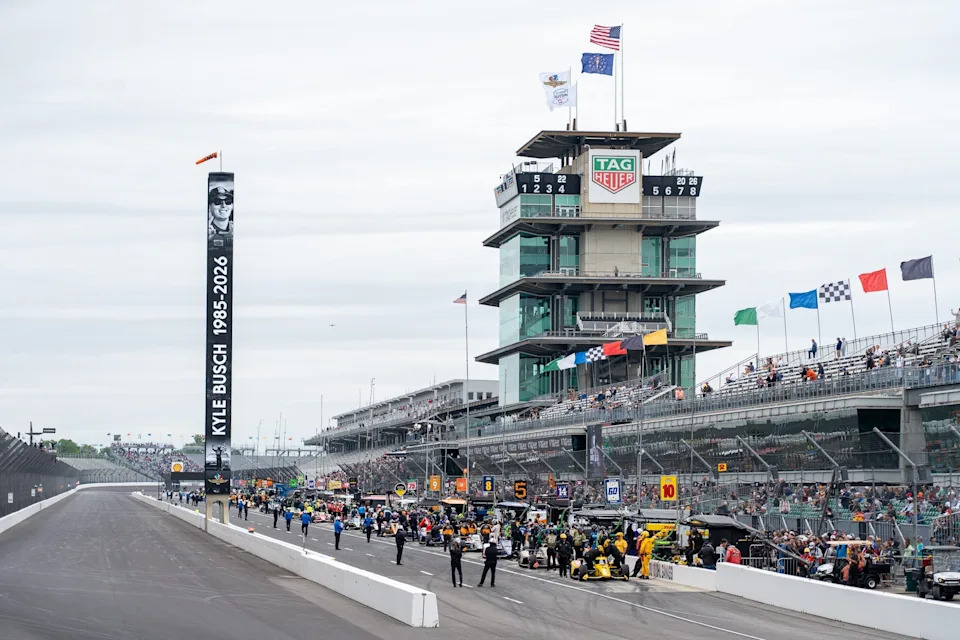
A tribute and moment of silence for NASCAR driver Kyle Busch was held Friday, May 22, 2026, on Carb Day ahead of the 110th running of the Indianapolis 500 at Indianapolis Motor Speedway. Busch died Thursday at the age of 41.
(Mykal McEldowney/IndyStar)
How unusual is it for a 41-year-old to die of pneumonia.
Extremely. For people in their 40s who get sick enough to land in the hospital with pneumonia, roughly 1% die from it,” Maves said. Factor in everyone who gets pneumonia at that age and never needs to be hospitalized at all, and the number drops even lower. Most are treated at a clinic and sent home.
Advertisement
Age changes the math in a hurry. By the 60s, the hospitalized mortality rate climbs to around 4%. For older patients carrying serious underlying conditions, it can reach 25%.
For a man Busch’s age, presumed healthy, with good access to care, Maves did not hedge.
“It is very unusual,” he said. “Very, very unusual.”
What is pneumonia, exactly?
Pneumonia is a broad term. It means inflammation in the lungs, usually from an infection. Most of what people catch going about their daily lives is viral. Common cold viruses that travel from the nose and throat down into the lungs.
Bacterial pneumonia tends to be a different animal entirely.
Advertisement
People die from pneumonia in a few different ways. The lungs fill with fluid and stop pulling in oxygen. The infection sends the body into shock. Blood clots can form during days of lying still, break loose and reach the lungs. There is no single path and they can all overlap, overwhelming the care.
Where sepsis comes in
Sepsis is what happens when the body’s response to an infection stops being helpful and starts destroying the body itself. The infection triggers inflammation everywhere at once, setting off a chain reaction that can take down multiple organ systems. When it tips into septic shock, a severe and sustained drop in blood pressure, the risk of death climbs fast.
Pneumonia is one of the most common ways people develop sepsis. It doesn’t always go that way, but when it does, it can move frighteningly quickly.
1 / 18
See the most heartfelt moments with Kyle Busch and his family.
Kyle Busch’s career left a lasting mark on NASCAR, with achievements and moments that defined his time in the sport.
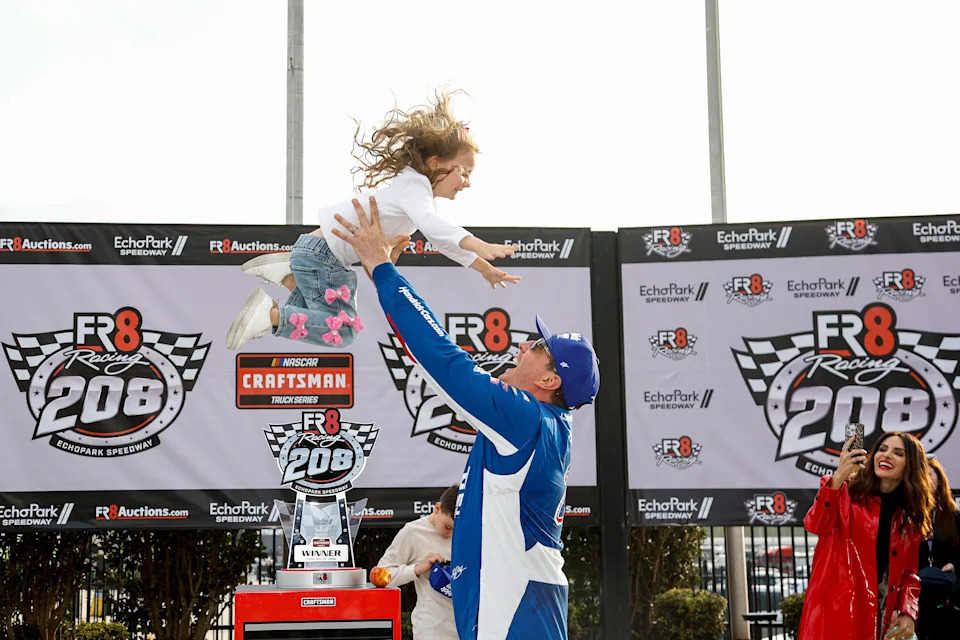
Above, Kyle Busch, driver of the No. 7 HendrickCars.com Chevrolet, celebrates with daughter, Lennix Busch son, Brexton Busch and wife, Samantha Busch in victory lane after winning the NASCAR Craftsman Truck Series Fr8 Racing 208 at Echo Park Speedway on Feb. 21, 2026, in Hampton, Georgia.
(Sean Gardner, Getty Images)
1 / 18
See the most heartfelt moments with Kyle Busch and his family.
Kyle Busch’s career left a lasting mark on NASCAR, with achievements and moments that defined his time in the sport.
Above, Kyle Busch, driver of the No. 7 HendrickCars.com Chevrolet, celebrates with daughter, Lennix Busch son, Brexton Busch and wife, Samantha Busch in victory lane after winning the NASCAR Craftsman Truck Series Fr8 Racing 208 at Echo Park Speedway on Feb. 21, 2026, in Hampton, Georgia.
(Sean Gardner, Getty Images)
2 / 18
Remembering Kyle Busch’s life and NASCAR career in photos
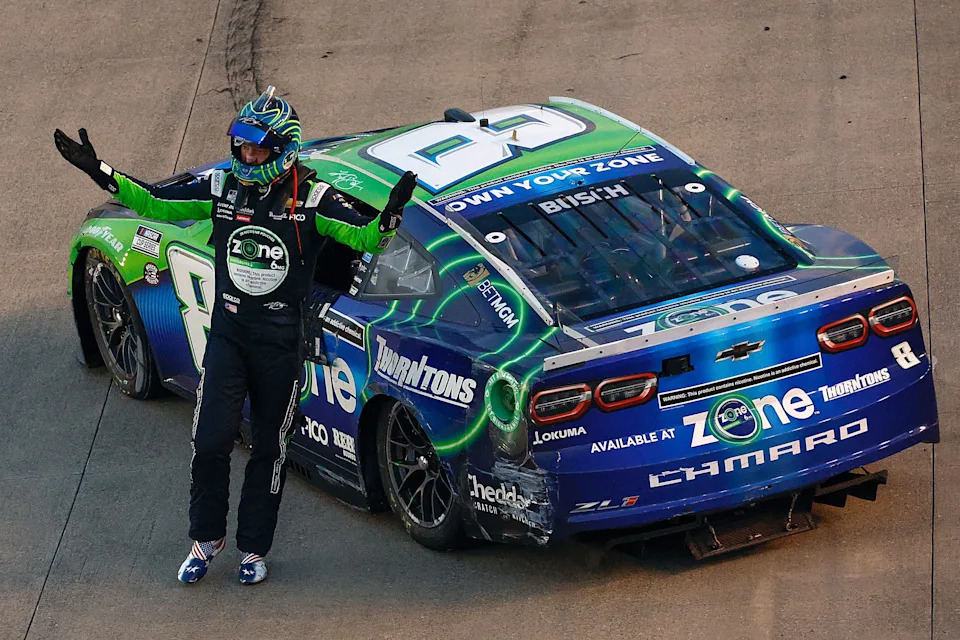
Kyle Busch, driver of the No. 8 zone/Thorntons Chevrolet, exits his car and reacts after an on-track incident during the NASCAR Cup Series Ally 400 at Nashville Superspeedway on June 30, 2024, in Lebanon, Tennessee.
(Sean Gardner, Getty Images)
3 / 18
Remembering Kyle Busch’s life and NASCAR career in photos
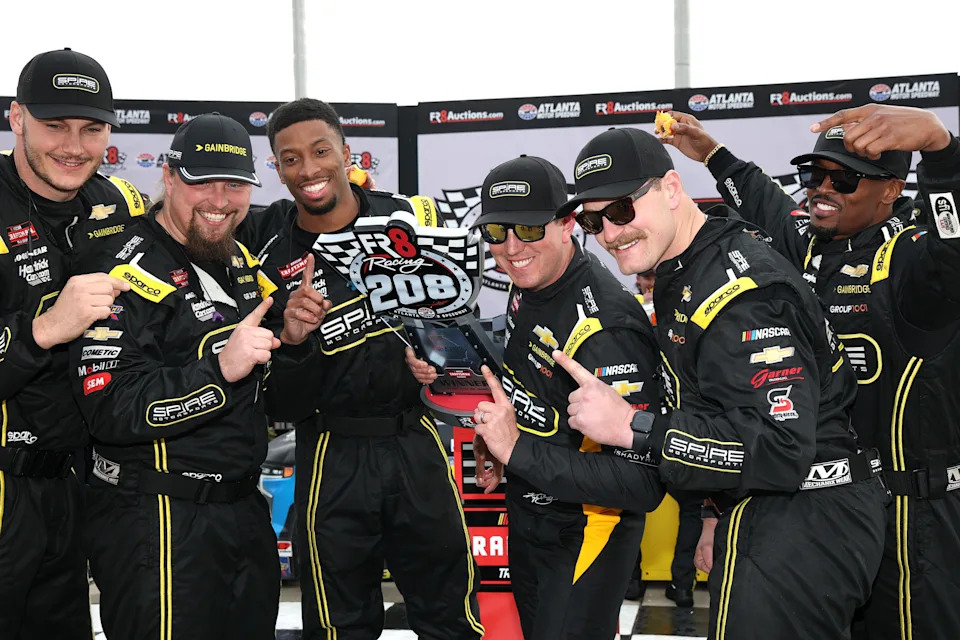
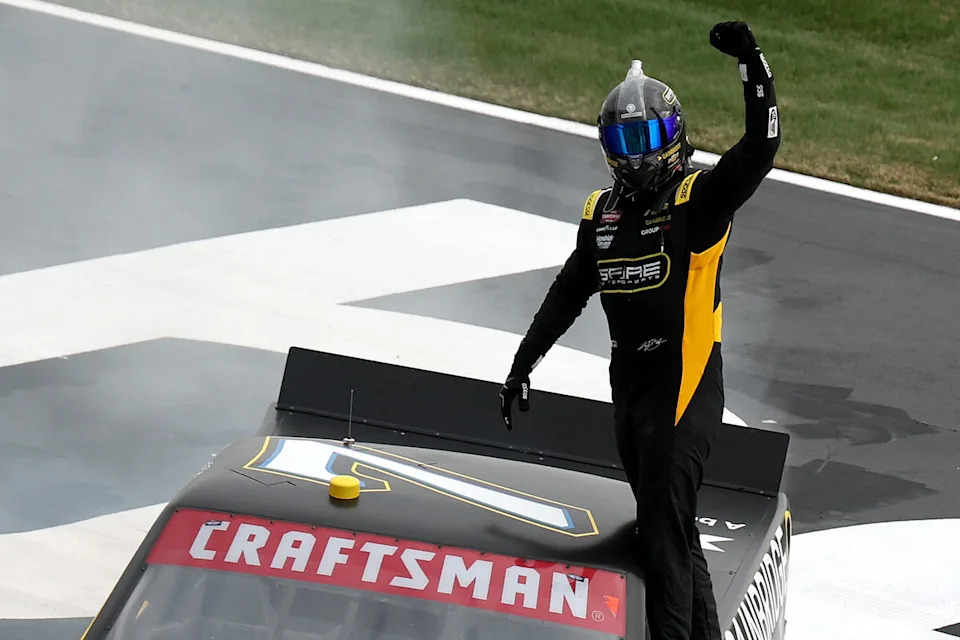
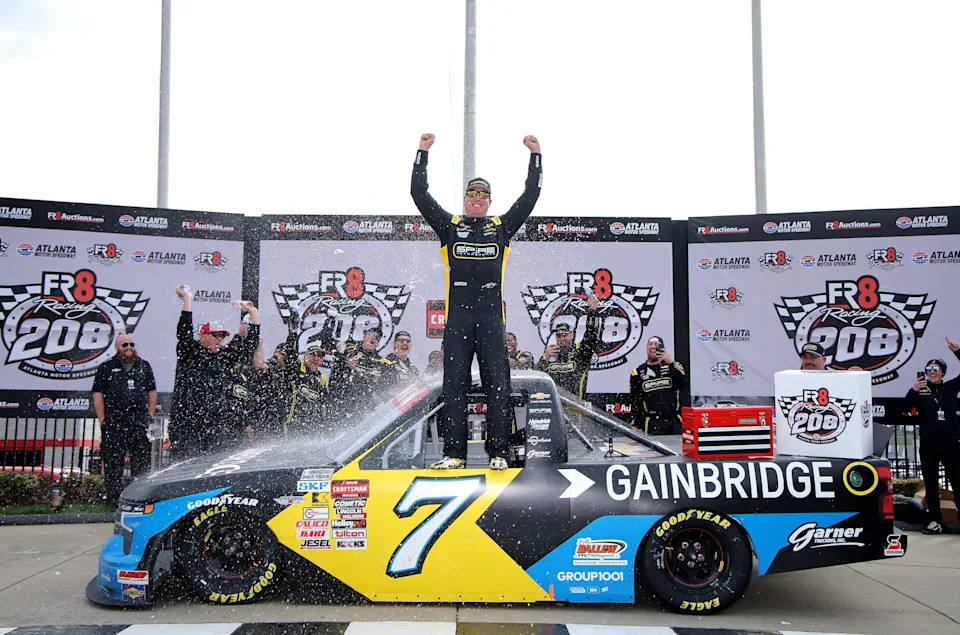
Kyle Busch, driver of the No. 7 Gainbridge Chevrolet, celebrates in victory lane after winning the NASCAR Craftsman Truck Series Fr8 208 at Atlanta Motor Speedway on Feb. 22, 2025, in Hampton, Georgia.
(Jonathan Bachman, Getty Images)
4 / 18
Remembering Kyle Busch’s life and NASCAR career in photos
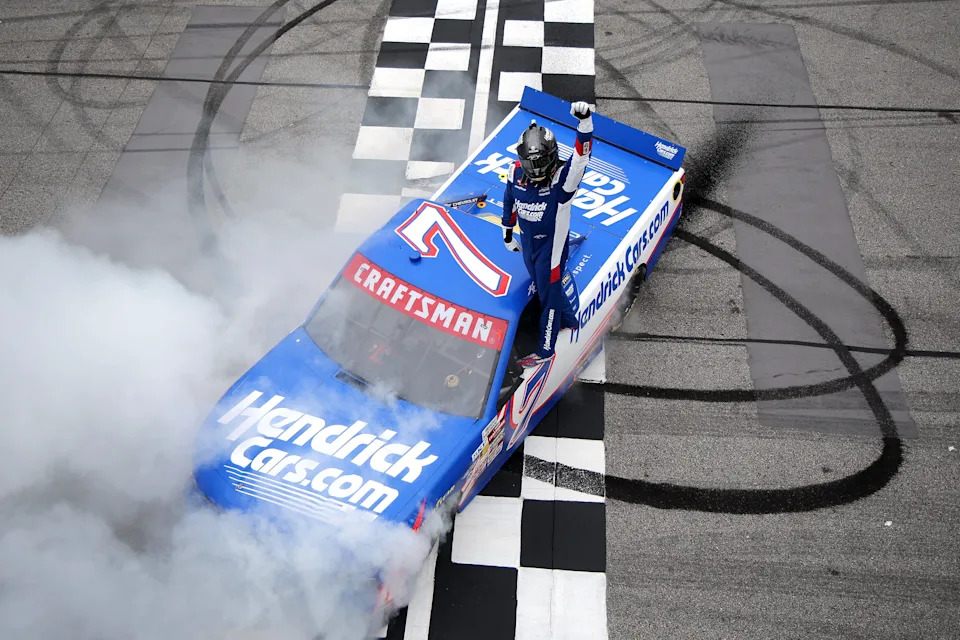
Kyle Busch, driver of the No. 7 HendrickCars.com Chevrolet, celebrates after winning the NASCAR Craftsman Truck Series Fr8 Racing 208 at Echo Park Speedway on Feb. 21, 2026, in Hampton, Georgia.
(Jonathan Bachman, Getty Images)
5 / 18
Remembering Kyle Busch’s life and NASCAR career in photos
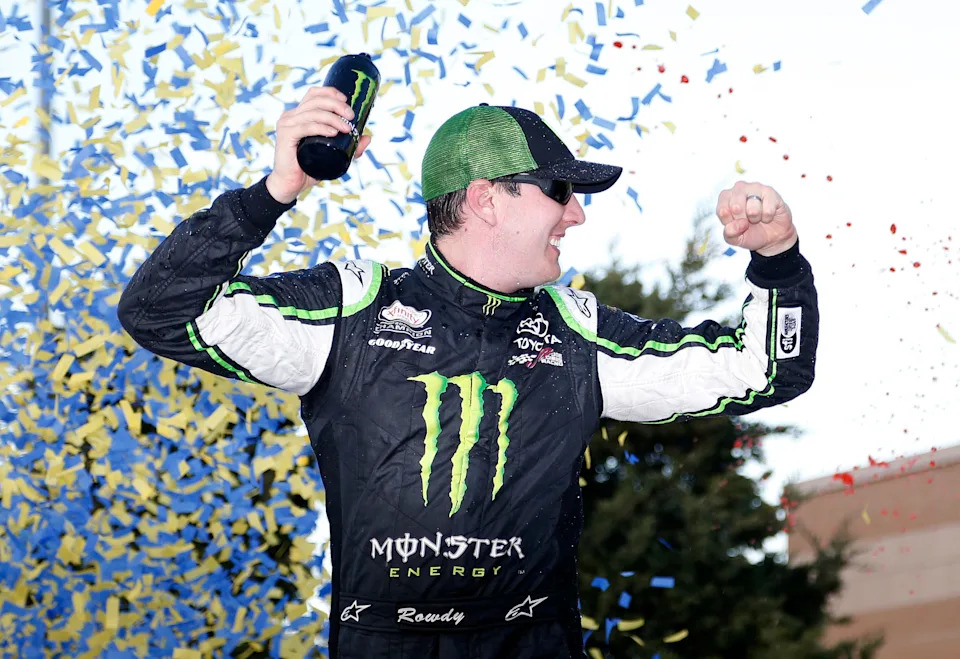
Kyle Busch, driver of the No. 54 Monster Energy Toyota, celebrates in Victory Lane after winning the NASCAR XFINITY Series Kansas Lottery 300 at Kansas Speedway on Oct. 17, 2015, in Kansas City, Kansas.
(Matt Sullivan, Getty Images)
6 / 18
Remembering Kyle Busch’s life and NASCAR career in photos
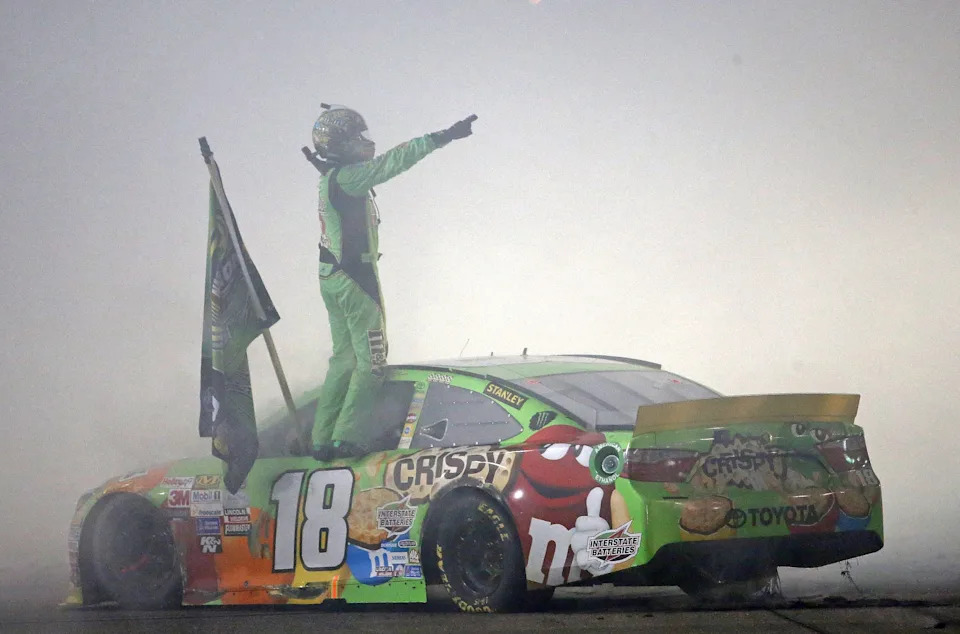
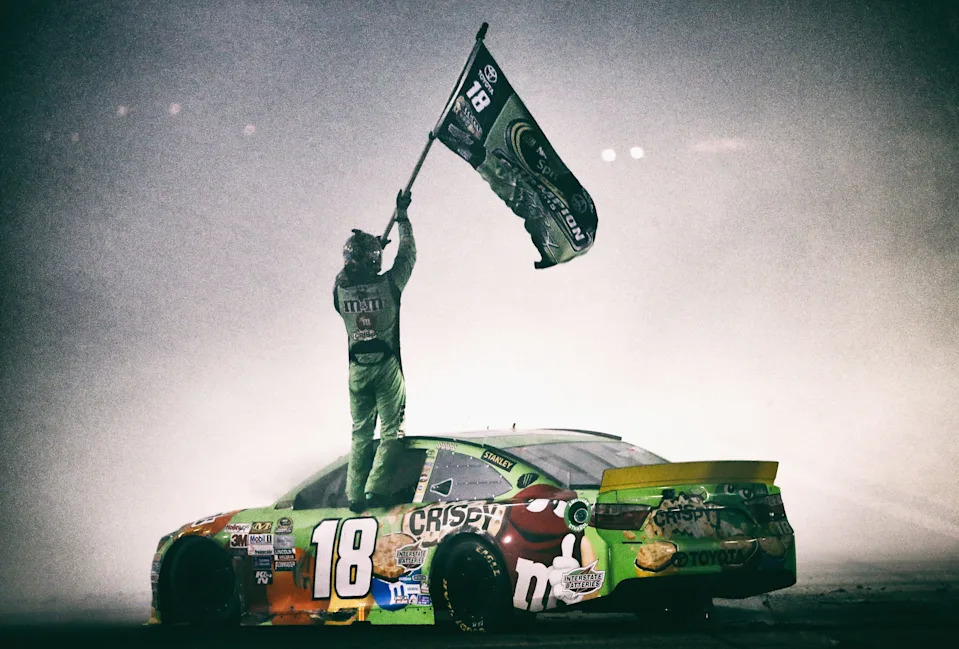
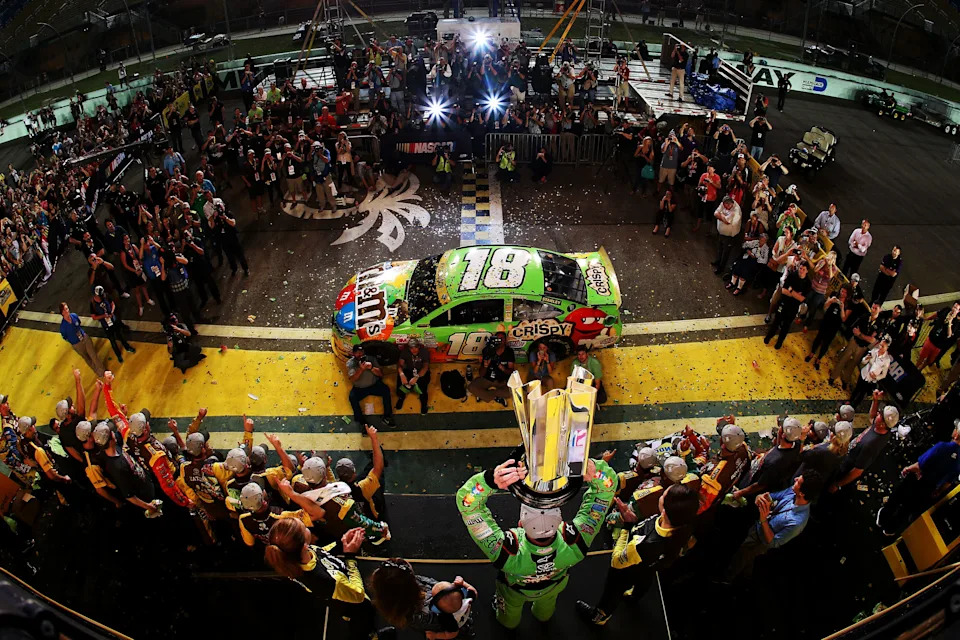
Kyle Busch, driver of the No. 18 M&M’s Crispy Toyota, celebrates winning the series championship and the NASCAR Sprint Cup Series Ford EcoBoost 400 at Homestead-Miami Speedway on Nov. 22, 2015, in Homestead, Florida.
(Mike Ehrmann, Getty Images)
7 / 18
Remembering Kyle Busch’s life and NASCAR career in photos
Kyle Busch, driver of the No. 18 M&M’s Crispy Toyota, celebrates winning the series championship and the NASCAR Sprint Cup Series Ford EcoBoost 400 at Homestead-Miami Speedway on Nov. 22, 2015, in Homestead, Florida.
(Mike Ehrmann, Getty Images)
8 / 18
Remembering Kyle Busch’s life and NASCAR career in photos
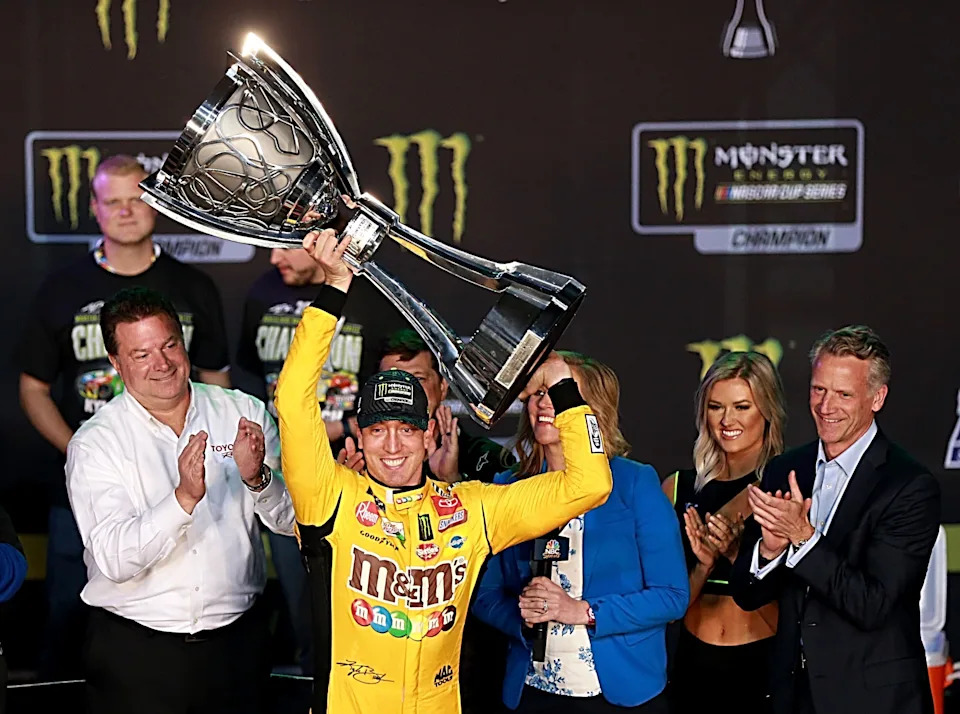
Kyle Busch, driver of the No. 18 M&M’s Toyota, celebrates in victory lane after winning the Monster Energy NASCAR Cup Series Championship and the Monster Energy NASCAR Cup Series Ford EcoBoost 400 at Homestead Speedway on Nov. 17, 2019, in Homestead, Florida.
(Sean Gardner, Getty Images)
9 / 18
Remembering Kyle Busch’s life and NASCAR career in photos
Kyle Busch, driver of the No. 7 Gainbridge Chevrolet, and crew celebrate in victory lane after winning the NASCAR Craftsman Truck Series Fr8 208 at Atlanta Motor Speedway on Feb. 22, 2025, in Hampton, Georgia.
(Chris Graythen, Getty Images)
10 / 18
See the most heartfelt moments with Kyle Busch and his family.
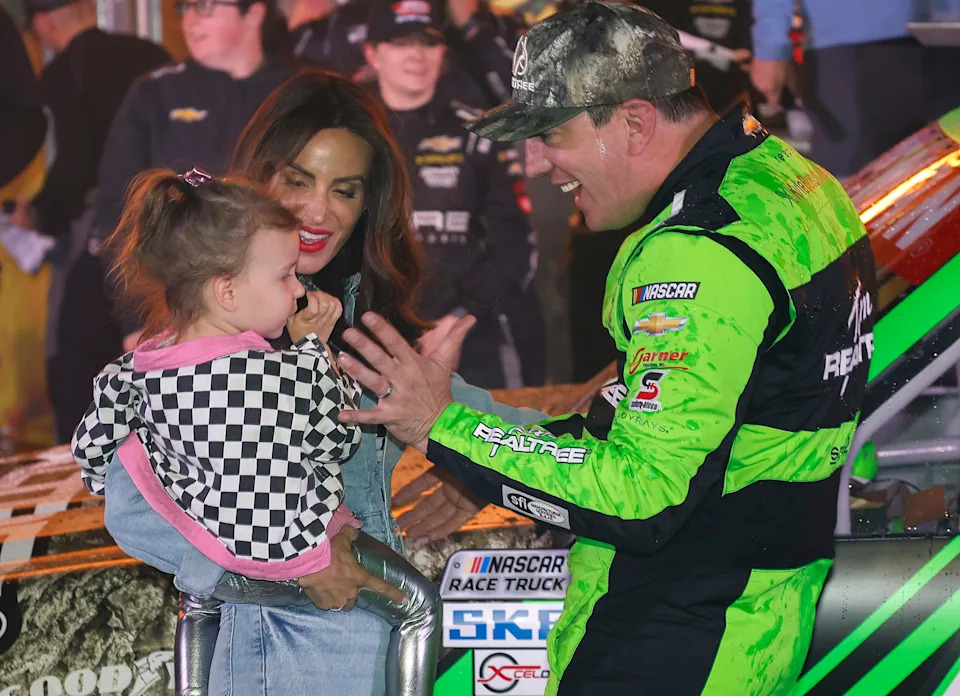
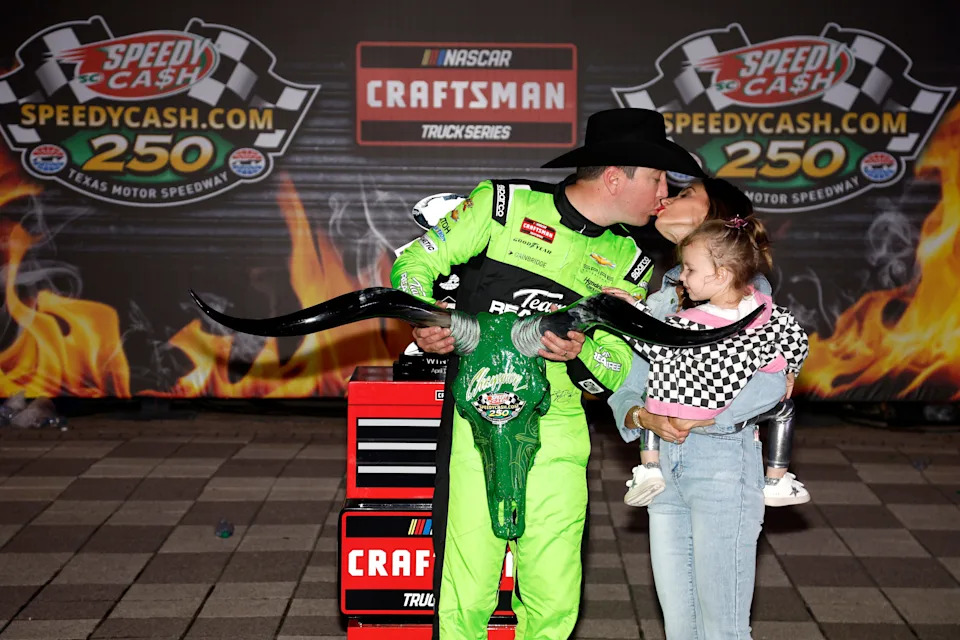
Kyle Busch, driver of the No. 7 Realtree Chevrolet, celebrates with his wife, Samantha Busch, and daughter, Lennix Busch victory lane after winning the NASCAR Craftsman Truck Series SpeedyCash.com 250 at Texas Motor Speedway on April 12, 2024, in Fort Worth, Texas.
(Chris Graythen, Getty Images)
11 / 18
Remembering Kyle Busch’s life and NASCAR career in photos
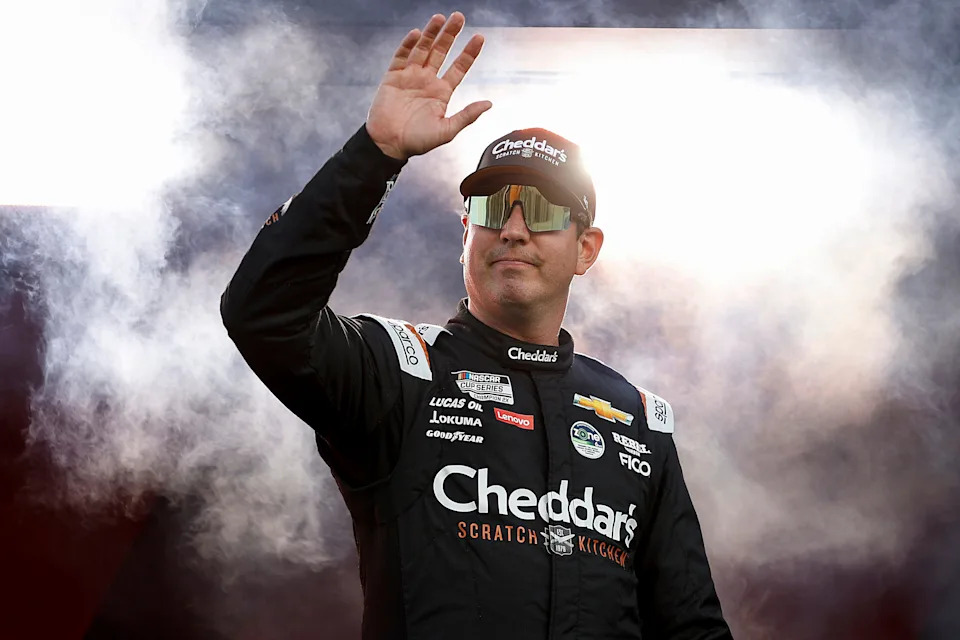
Kyle Busch, driver of the No. 8 Cheddar’s Scratch Kitchen Chevrolet, waves to fans as he walks onstage during driver intros prior to the NASCAR Cup Series Coke Zero Sugar 400 at Daytona International Speedway on Aug. 24, 2024, in Daytona Beach, Florida.
(Sean Gardner, Getty Images)
12 / 18
See the most heartfelt moments with Kyle Busch and his family.
Kyle Busch, driver of the No. 7 HendrickCars.com Chevrolet, celebrates with his daughter, Lennix Busch in victory lane after winning the NASCAR Craftsman Truck Series Fr8 Racing 208 at Echo Park Speedway on Feb. 21, 2026, in Hampton, Georgia.
(Sean Gardner, Getty Images)
13 / 18
Remembering Kyle Busch’s life and NASCAR career in photos
Kyle Busch, driver of the No. 18 M&M’s Crispy Toyota, celebrates with his son Brexton and wife Samantha in Victory Lane after winning the series championship and the NASCAR Sprint Cup Series Ford EcoBoost 400 at Homestead-Miami Speedway on Nov. 22, 2015, in Homestead, Florida.
(Chris Graythen, Getty Images)
14 / 18
Remembering Kyle Busch’s life and NASCAR career in photos
Kyle Busch, driver of the No. 7 Gainbridge Chevrolet, celebrates after winning the NASCAR Craftsman Truck Series Fr8 208 at Atlanta Motor Speedway on Feb. 22, 2025, in Hampton, Georgia.
(Chris Graythen, Getty Images)
15 / 18
See the most heartfelt moments with Kyle Busch and his family.
Kyle Busch, driver of the No. 7 Realtree Chevrolet, celebrates with his wife, Samantha Busch, and daughter, Lennix Busch victory lane after winning the NASCAR Craftsman Truck Series SpeedyCash.com 250 at Texas Motor Speedway on April 12, 2024, in Fort Worth, Texas.
(Sean Gardner, Getty Images)
16 / 18
Remembering Kyle Busch’s life and NASCAR career in photos
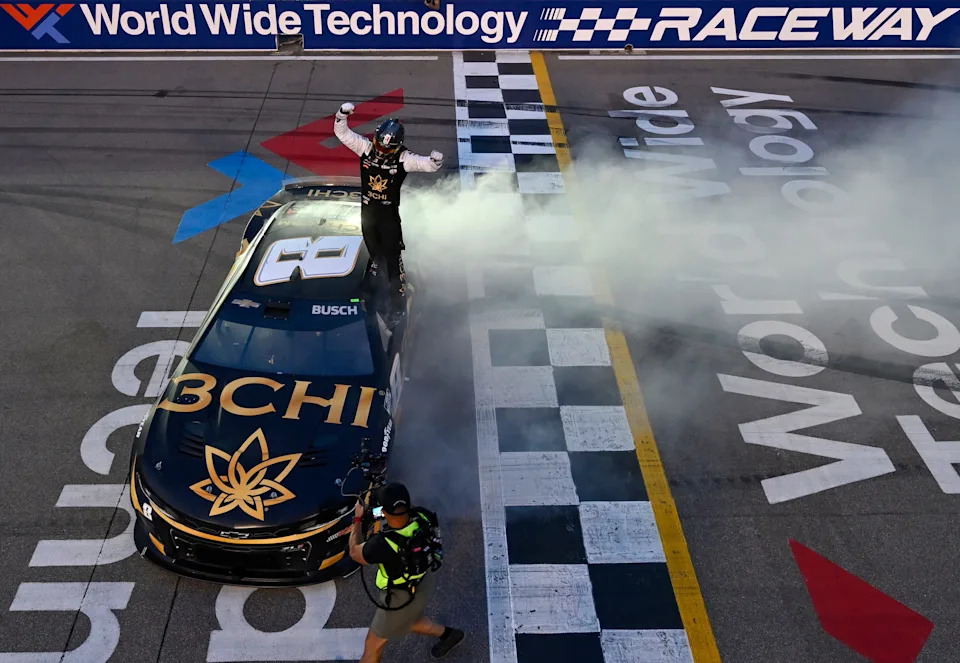
Kyle Busch, driver of the No. 8 3CHI Chevrolet, celebrates after winning the NASCAR Cup Series Enjoy Illinois 300 at WWT Raceway on June 4, 2023, in Madison, Illinois.
(Jeff Curry, Getty Images)
17 / 18
Remembering Kyle Busch’s life and NASCAR career in photos
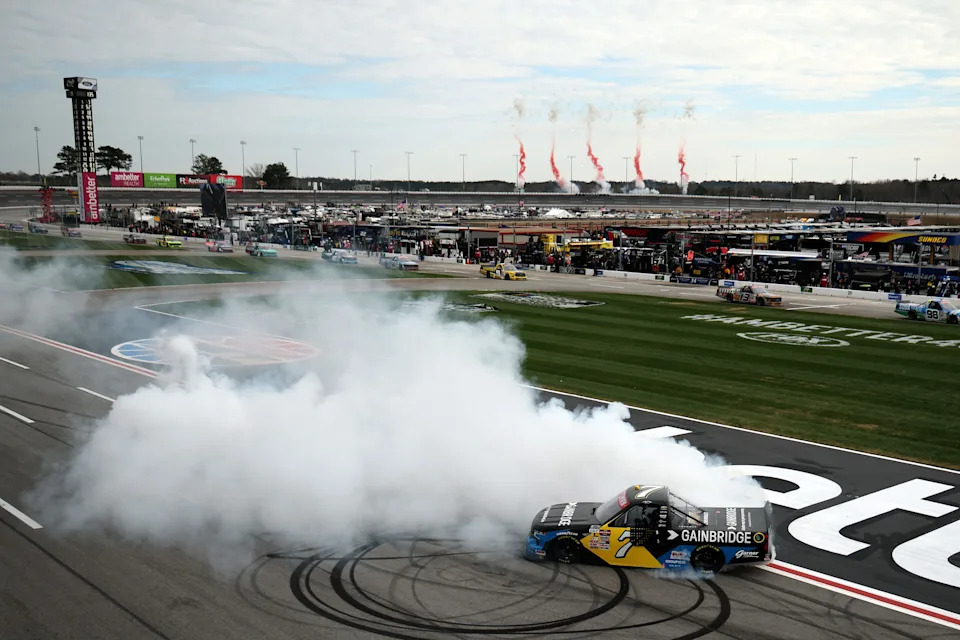
Kyle Busch, driver of the No. 7 Gainbridge Chevrolet, celebrates with a burnout after winning the NASCAR Craftsman Truck Series Fr8 208 at Atlanta Motor Speedway on Feb. 22, 2025, in Hampton, Georgia.
(Chris Graythen, Getty Images)
18 / 18
Remembering Kyle Busch’s life and NASCAR career in photos
Kyle Busch, driver of the No. 7 Gainbridge Chevrolet, celebrates in victory lane after winning the NASCAR Craftsman Truck Series Fr8 208 at Atlanta Motor Speedway on Feb. 22, 2025, in Hampton, Georgia.
(Jonathan Bachman, Getty Images)
The clues
Maves was careful to say he has no access to Busch’s medical records and no special knowledge of what happened in the Charlotte hospital. What he offered was the thinking of an experienced critical care physician.
Advertisement
Two things stood out to him. Busch had been sick for weeks before his condition turned critical. And he was coughing up blood when 911 was called.
What can happen in certain post-viral pneumonias, Maves said, is that the lungs are damaged just enough to let a secondary bacterial infection take hold. Doctors call it a bacterial superinfection.
“People start with a viral pneumonia and then you get a bacterial superinfection on top of that,” he said. “Classically influenza, but some other viruses can do this as well.”
He noted that the bacteria that can exploit this are serious. Certain staphylococcal and streptococcal pneumonias move fast and leave little time for treatment.
Advertisement
“These can be very severe, and they can progress very quickly,” Maves said. “When I think of a young man dying of pneumonia after a preceding period of illness, that is the thing I think about a lot.”
What people should learn from this
Maves does not want people to panic. A healthy 41-year-old dying of pneumonia is rare. He does want people to think about who around them might not be so fortunate if they get sick.
“The best way to deal with pneumonia is to prevent it,” Maves said. He recommended vaccines for anyone 50 or over and for younger people with asthma, heart disease, kidney disease or diabetes. Plus annual flu shots and other vaccines as recommended by doctors.
Advertisement
“Your risk of death from pneumonia at 41 is very, very, very low,” Maves said. “But I bet you have a grandparent. Part of the prevention is not just for ourselves but for the vulnerable people around us.”
This article originally appeared on USA TODAY: Medical expert explains how severe pneumonia, sepsis killed Kyle Busch