



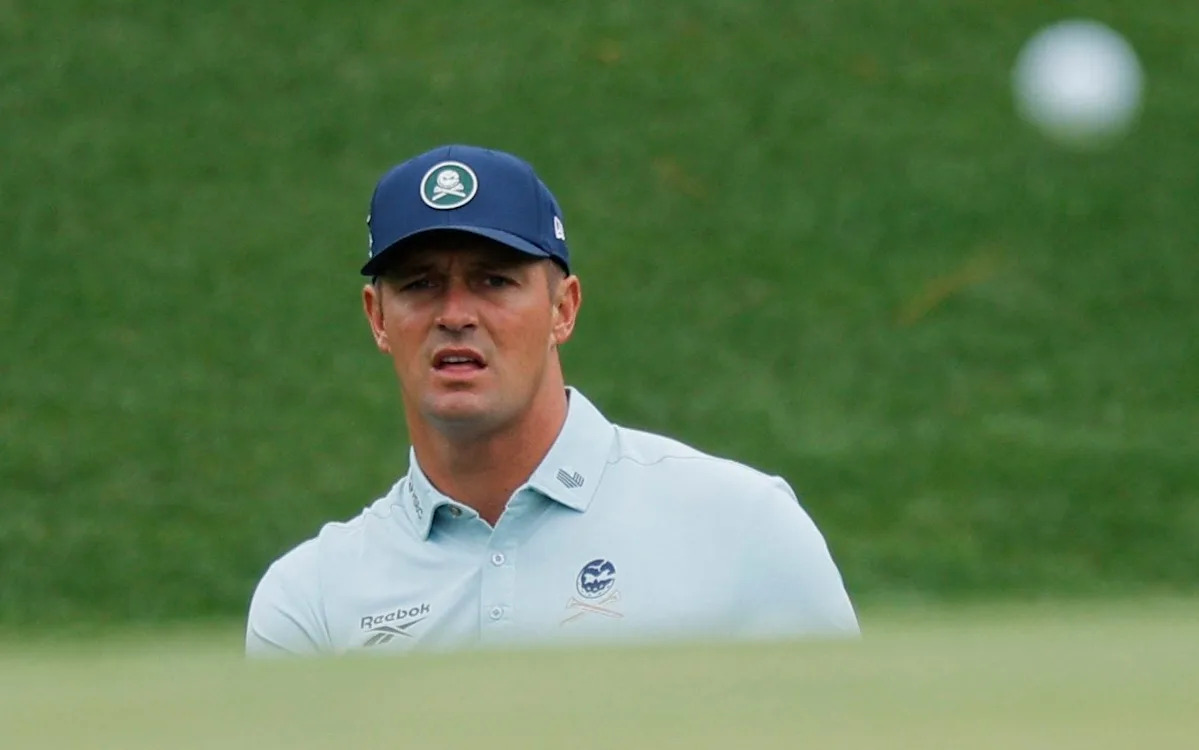
When a golfer who has previously declared that the Masters course is, in fact, a par 67 and then proceeded, two days later, to miss the cut and be comprehensively beaten by a 63-year-old Bernhard Langer, it is perhaps wise to take his statements with a handful of bunker sand.
Yet, after a sixth and a fifth-place finish in his past two escapades around Augusta, there is plenty to suggest that Bryson DeChambeau has, indeed, found the humility to navigate Dr Alister McKenzie’s malevolent layout.
Advertisement
His words, as the hours ticked down to the 90th Masters, strengthen the conviction that the 32-year-old has learnt his lesson and is now ready to pass one of the great tests in his profession.
“It’s about having more patience and not being as aggressive all the time,” DeChambeau said here on Tuesday. “It’s about knowing where to be gung-ho and when not to be. That is the thing – make better decisions. And it’s about having a caddie that reins me in sometimes and you can say: ‘Bryson, you don’t need to do that – there’s just no need.’”
Good luck to Greg Bodine, known in the caddieshack as “Gee-Bo”, because DeChambeau is headstrong. He believes in his own brainpower and genius – and then some – and is prepared to fail because of his own belief. He referenced his frankly daft “67” comment from 2020 and explained to Telegraph Sport why he does not regret it. Not for himself, anyway.
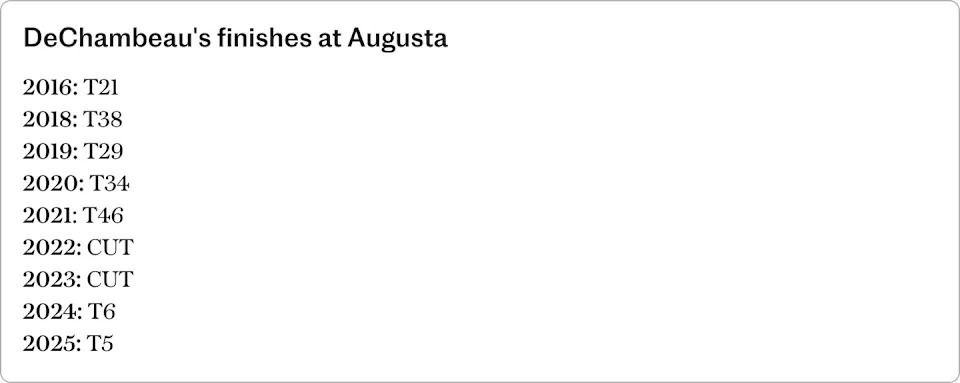
In the four Masters following his ‘par 67’ boast, DeChambeau finished T34, T46 before missing two cuts – Chris Carlson/AP
“I can see that it was disrespectful to some and I’m sorry for that,” the American said. “Boy, it was a humbling experience. But for me it was simply from a statistical viewpoint and yardages and looking at, if I’m playing well, I could or should be hitting the greens in two or whatever. It was motivation for myself and not intended as anything otherwise. I’ve never disrespected Augusta internally. But, for me, I don’t regret saying that 67 thing, because I learnt from that experience.”
Advertisement
What he gathered in the years of Masters mediocrity was, as he said, to load the bullets only when necessary. Easy to say, hard to employ, because what is necessary? That is the problem with holding back in golf. When do you let go again? Power is a curse as well as a blessing at a track such as Augusta National.

Take 12 months ago. DeChambeau was in the final group and his playing partner and would-be nemesis, Rory McIlroy, admitted he was shocked that his rival elected to lay up on the 350-yard par four.
DeChambeau had started that round two back but after two holes was one ahead, courtesy of a McIlroy double bogey at the first and his own birdie on the second. The next was driveable and if DeChambeau had pulled out the chief bludgeon from the bag, McIlroy was there for the whacking. Watching on TV, Padraig Harrington, the three-time major champion, was gobsmacked at what happened next.
Advertisement
“Bryson had it won and then he hit an iron off the tee,” Harrington said. “He could have hit driver onto the green, and Rory would have been a broken man. But Bryson tried to be the cleverest golfer in the field and instead of stamping down his authority, left himself one of the toughest second shots in golf. Rory would have been praising the heavens.”
Indeed, McIlroy went for it and made birdie, while DeChambeau walked off with a bogey. He never regained the advantage. The momentum was lost because the American had decided to suppress his major advantage. In some cases a little local knowledge is a dangerous thing.

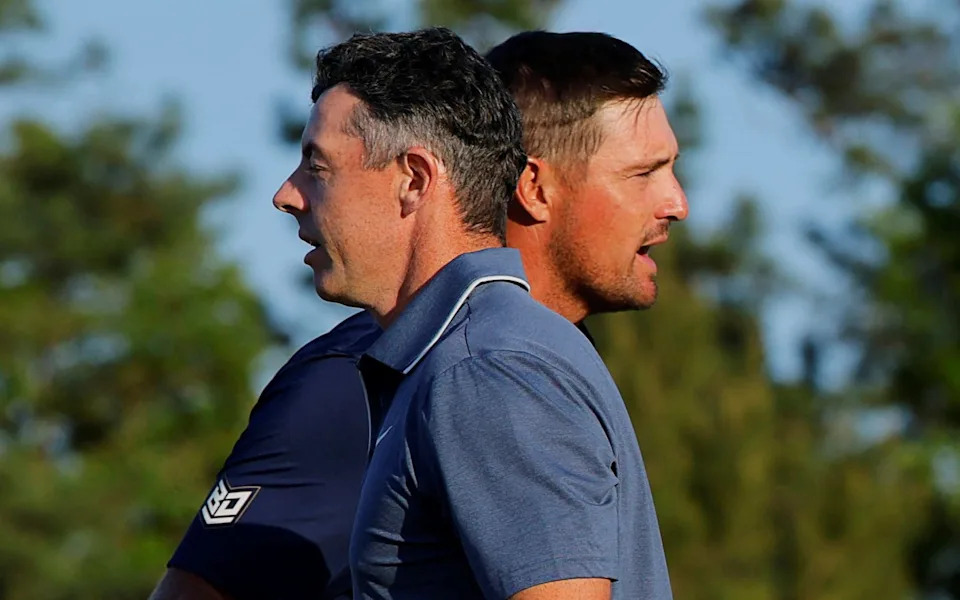
DeChambeau led after two holes of the final round last year, but was cautious on the third and never regained the lead over eventual winner Rory McIlroy – Brian Snyder/Reuters
DeChambeau was reticent when quizzed about this on Tuesday, although acknowledged that the third – an underrated par four – is one of his quandary holes. “The third is great,” he said. “It depends on the wind and whatnot, but I might lay up short of the bunkers like I did last year and try to hit it to that left flag and give myself a 30-footer rather than get it up there and try to hit it on the green from 50 yards away with really no landing area.
Advertisement
“And the second shot into seven is one that I’ve messed up in the past, and I want to understand that and make sure I just hit the green. That’s all I care about. If I hit it close and make birdie, great.
“The ninth has been a tough one in the past as well. And 18, the second shot… Those holes I’m really trying to understand more of, and that’s mainly from just past experience of not being successful there, whether it’s wind conditions or how the golf club is going through the grass, trying to get maybe a little bit more bounce on the clubs to help it move through the turf a little better.
“There’s numerous things I’m working on always, and next year it will probably be different as well. For me it’s a continual learning process. For me it’s from a nerding-out perspective it’s about the winds this time.”
Little wind is forecasted, so that should be in favour. Or maybe not. DeChambeau is forever curious and does not wish it to be straightforward. The Mad Scientist – as he was once called before countless other iterations – is fiddling with his equipment, putting lead tape on the faces of some of his clubs to compensate for hitting it off the toe.
DeChambeau is a good workman who often blames his tools, but he recognises that his technique is key. As are the emotions. He cried like a baby after winning his second LIV event in succession a few weeks ago and, on Tuesday, he still would not reveal why. The truth is that he wants to be seen almost as a cyborg with only progress and winning on his mission list. DeChambeau is anything but. And his reaction to a Green Jacket would only confirm as much.
Advertisement
Try full access to The Telegraph free today. Unlock their award-winning website and essential news app, plus useful tools and expert guides for your money, health and holidays.
Read the full article here