




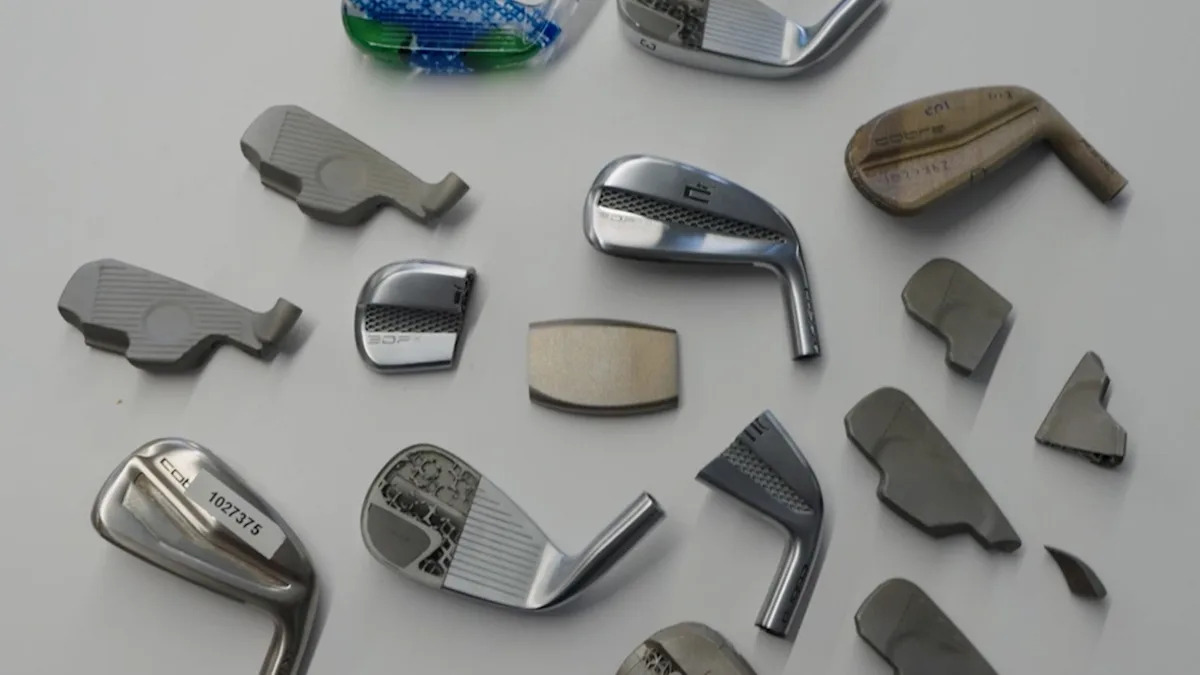
For several years now, the No. 1 golf equipment story I have been obsessed with is Cobra’s 3D printing. Dig deep and you’ll find their process is the culmination of a decade’s-worth of work by a team who was challenged to think outside the box. Not only did this year find something new, they charged down a path of innovation that could be the greatest stride in golf equipment I will ever cover in my career.
The Fully Equipped team dove in on this story and spent two days with the Cobra team to discuss how they’ve gotten the project to where it currently sits, the trials they went through, the problem-solving they needed, special programs they use, and a glimpse into the future of what 3D printing means for the consumer customer. Here are my 3 biggest takeaways from our feature piece.
Advertisement
It almost didn’t happen… at several stages
Irons
Max Homa with his 3DP printed Cobra King MB irons.
The very first question I asked when we sat down to begin discussing the project was, “Who will raise their hand and take credit for being in a board room years ago and proposing such a wild idea?” Turns out that, as Director of R&D Doug Roberts pointed out, that man was Ryan Roach. Roach leads the Innovation Team at Cobra Golf and his job, in a nutshell, is to dream. There’s some pressure attached to those dreams, of course; in actuality it’s Roach’s job to justify his dreams. And that’s exactly what Roach saw in 3D printing: A dream.


The man who raised his hand: Cobra Innovation Team Lead – Ryan Roach. John Sodaro / GOLF
In theory, the idea was simple. Create the ability to make a 1-of-1 golf club for anybody who wants to order. Even 10 years ago, this was possible; it just cost a significant amount of money. You’d have to build the tooling for a set of irons, test those irons, make changes, invest in more tooling, create a new set, and repeat until you had the clubs you wanted. A single set made for a tour pro for example could cost tens of thousands of dollars. That may be worth it when you’re playing for millions on the PGA Tour, but not when you’re trying to win $5 off your buddies on the weekends. So the dream added an asterisk. Create the ability to make a 1 of 1 golf club for anybody who wants to order *and* at an accessible price point.
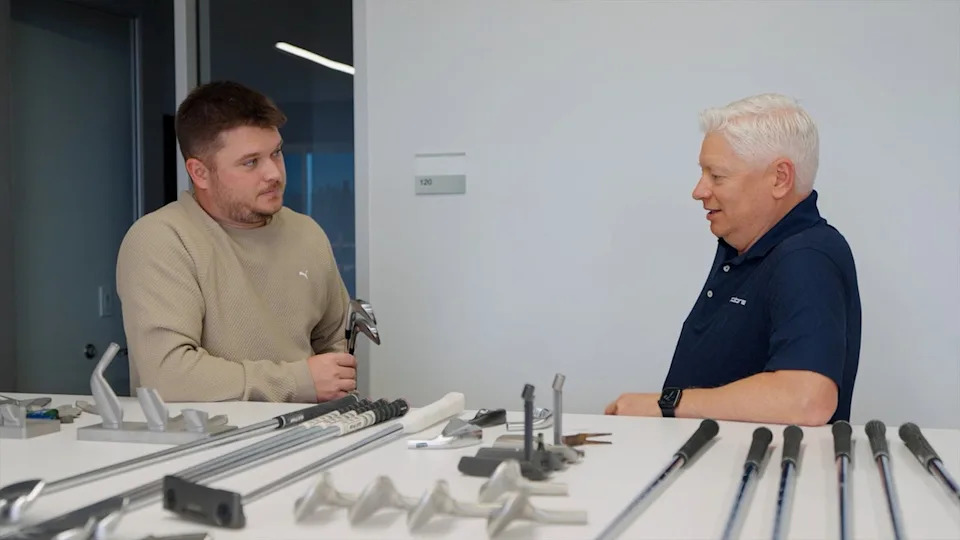
Chatting with Ryan Roach with a table full of prototypes, projects, and problems in front of us. John Sodaro / GOLF
Their first hurdle? Nobody knew how to do it and nobody knew where to start — until Roach brought the idea of 3D printing forward. It had been used in other industries, and the technology was rapidly improving, but the idea of bringing the technology to golf was unheard of. From what we’ve been told, those discussions alone were almost enough to stop the project from happening. Become an industry leader would take resources, people, and most terrifying of all: time.
Advertisement
The second hurdle? Tour adoption. This concept wasn’t going to work if it didn’t work in the hands of the best players. This mean that the made-from-powdered-metal, stainless steel, lattice filled irons would have to perform, feel, and sound just like the forged options that players have been using for years. Any sacrifice in any category would halt the project.
Gear

Rickie Fowler golf bag.
Thankfully Rickie Fowler, Max Homa, Matti Schmid, Lexi Thompson, and others have all settled in very nicely to their new 3DP irons, all of which are personal builds.
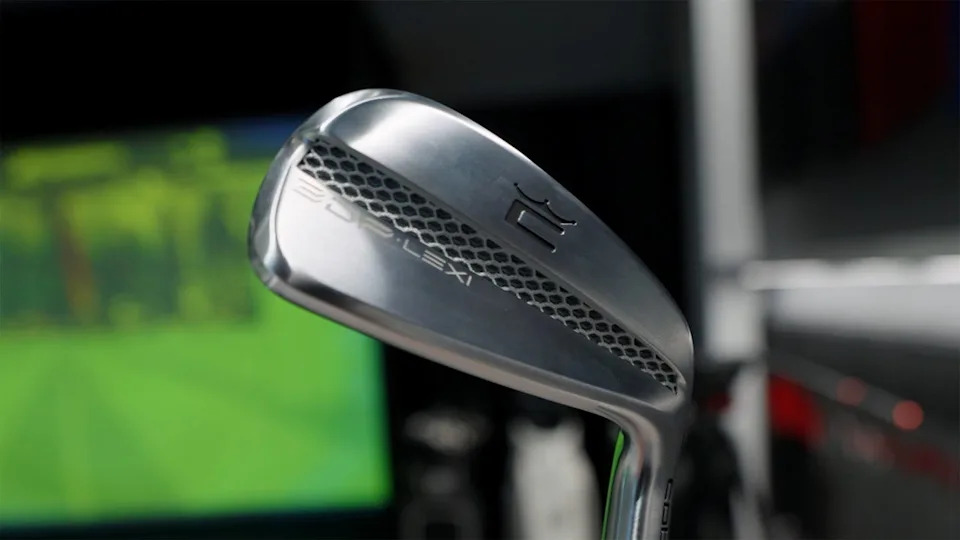
Lexi Thompson’s custom 3DP irons based off of her faithful S2 Forged irons John Sodaro / GOLF
Finding the digital speed to keep up with the analog speed
One of the most interesting things that came up during our interviews for the feature was their use of nTop. nTop is a computational design software that is a significant reason for the entire project’s success. Why it’s so interesting is because, in a weird turn of chance for the year 2026, the analog side of the 3D printing process was outrunning the digital side. Once a design was sent to the printer, it could be done in days, depending on the urgency. The issue was that the experimentation to actually design the clubs, particularly the internal lattice, was tedious and time consuming.
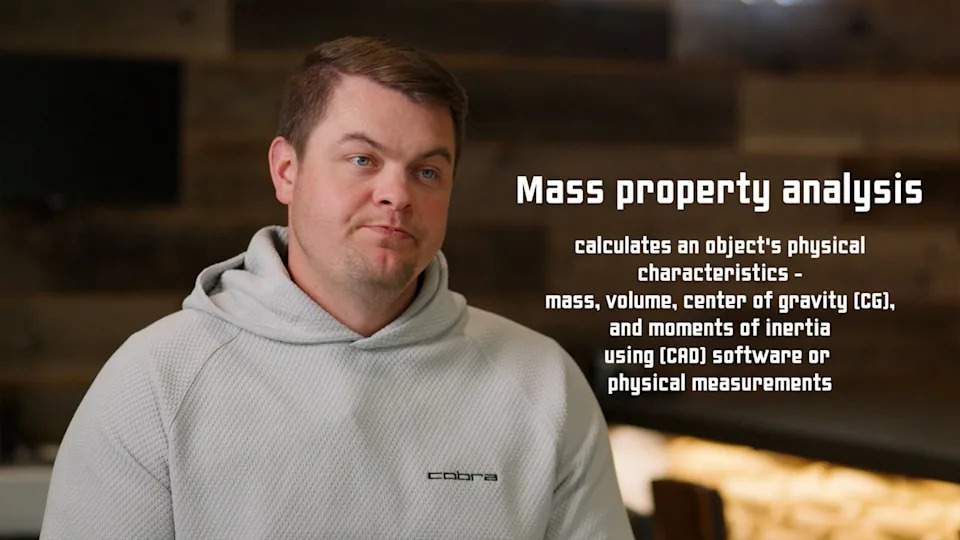
Bryce Hobbs talks about mass property research in our Cobra 3DP feature John Sodaro / GOLF
Cobra’s Bryce Hobbs, R&D Team Leader, speaks in the feature about their research into mass properties. Mass properties are essentially the determination of how the weight in the head is going to be distributed depending on the performance outcome they are trying to achieve. If we take a look at the retail line of 3DP.MB, 3DP Tour, and 3DP.x you can see mass properties shift. The MB has its weight more central in the blade for better control and a higher overall center of gravity. The 3DP Tour uses over 100 grams of tungsten that’s set out towards the perimeter of the blade with a wider sole for increased forgiveness, and a lower, deeper CG placement. The 3DP.x takes that even further to spread the mass out towards the perimeter and create Cobra’s most forgiving 3DP platform design. And that’s all decided by how the internal lattice is constructed.
Advertisement
I’m not incredibly versed in computational design programs, but from what I got out of it was that nTop allowed them to speed up their digital design process by 10x; specifically in the way they design the internal lattice structures. The reason the internal lattice structure is so crucial to the irons is that it controls the performance characteristics of that design. Depending on the characteristics desired by the designer and the eventual player, tungsten weight needs to be moved around inside the head. With nTop, they’re able to prototype, design, and test different internal structures, shapes, and even materials with no delay in their overall manufacturing process. The digital design process can support the timelines of the analog manufacturing times, helping to speed up the overall process but also taking steps to learn faster. This is where the genius of the club design and the 3D printing engine really starts to hit home, and gives us a glimpse into what the future may actually look like in pursuit of the *accessible* 1-of-1 dream.
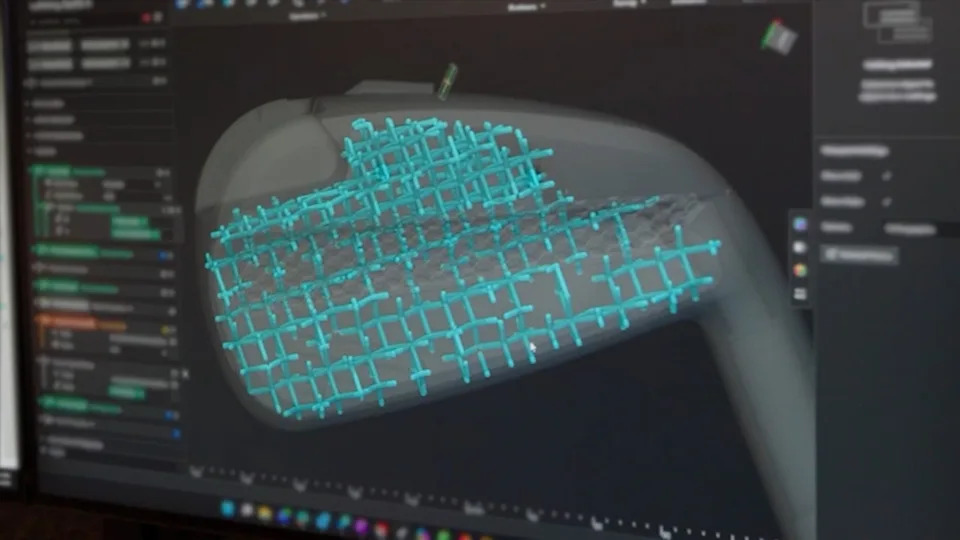
A look at Ben’s computer with the nTop software active John Sodaro / GOLF
What ACTUALLY comes next?
It’s hard to know exactly what comes next, but we’ve now been given plenty of hints as to what is possible. It’s just a matter of what the Cobra team decides to do in the space, and how quickly they want to do it. Let’s recap what we know, and what we can infer for the future based off the available facts.
Advertisement
1. Tour pros are getting custom 1-of-1 irons.
For Cobra’s Tour staff and select others, there is nothing off limits. They can choose every aspect of their iron build that they want down to the head weight. CG placement, top-line thickness, sole shape, offset, speed, even the material the iron is made out? Everything is in play for those at the highest level of the game. They even converted longtime Cobra S2 Forged player Lexi Thompson into a new set of 3DP irons. How’d they do it? They printed her a set that visually retains the crazy offset those irons had and the interesting blade shape and sole, with an internal structure that gave her more speed and more forgiveness on off-center strikes. Mind you, Cobra’s S2 Forged came out 15 years ago. This is a pretty big deal.
So you’d have to imagine that in pursuit of an *accessible* 1-of-1 irons program, that would all be up for grabs with the consumer in some way. I have no idea, they were very careful about not leaking that info. But I’m just telling you what we know is currently possible.
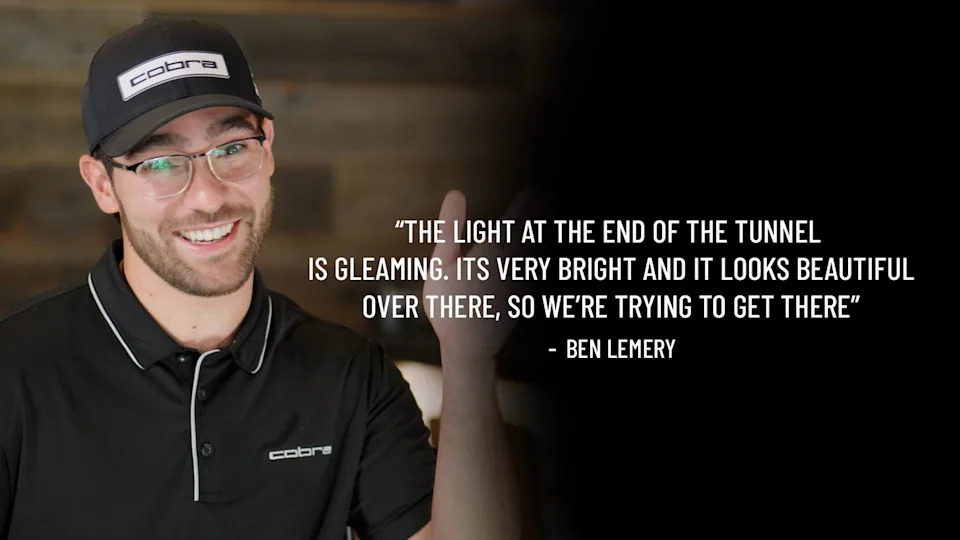
Ben Lemery talks about the team at Cobra being just on the cusp of getting to that light at the end of the tunnel John Sodaro / GOLF
2.) The lattice is the key.
I would encourage you to watch the nTop portion of the feature over again and really pay attention to what Ben says. The lattice is the key to this entire thing. By being able to structurally achieved different mass properties, they can give players options that nobody else can. You love your MBs but you want that CG pushed a little bit lower? No problem. Massive performance change, zero visual change. Do you love the 3DP Tour but wish it had a bit less offset and spun a bit more? No sweat. Massive performance change, zero visual change. All by adapting the way the lattice is built and the weight inside the head is manipulated. And it’s all at the finger tips of Ben and his co-workers. It’s hard to even fully wrap a thought process around understanding the potential that that unlocks.
Advertisement
3.) Cobra WANTS us to be the beneficiaries of their dream
You hear it at the end from Caitlin Farley. Doug Roberts mentions the excitement they had for 3DP Tour to hit retail for the first time. Ryan Roach mentions his confidence in the project several times. Bryce Hobbs and Ben Lemery are both focused on the “light” at the end of the tunnel. That’s their dream. 1 of 1 sets for consumers. Cobra wants this. This project isn’t meant to stay a Tour-only thing. It’s meant to give every single player an accessible chance at creating whatever set of irons they need to shoot the best scores. The levels of this are hard to comprehend. If they can scan and print Lexi’s S2 Forged irons with 2026 performance inside, what’s to stop them from scanning any other iron?
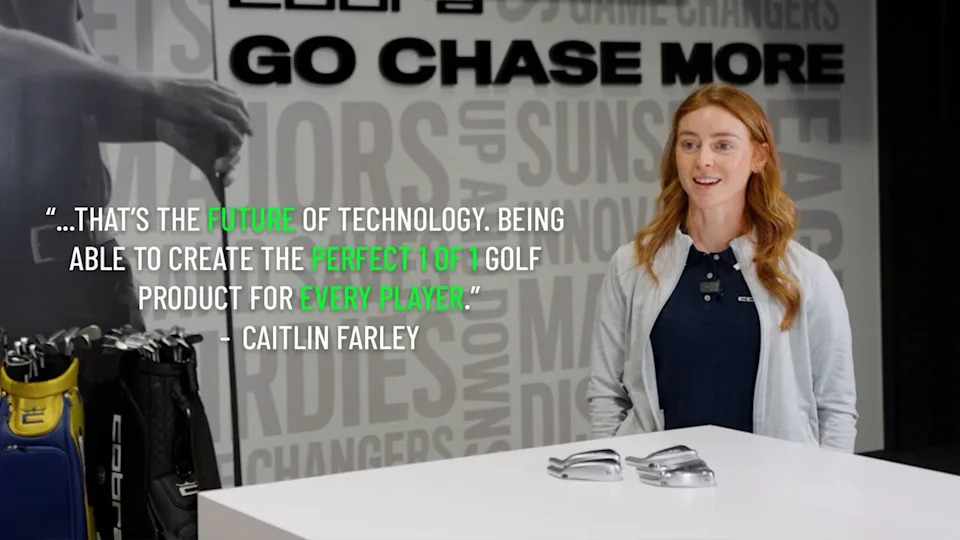
Let’s all embrace this philosophy and maybe we’ll get our own customs sooner than we think. John Sodaro / GOLF
Everything is on the table. We don’t know when. We still don’t quite know exactly how. And we don’t even know if they’ll stop at irons. What we do know is that this continues to be the coolest story in golf equipment innovation, and I couldn’t be more grateful to have a front-row seat to follow along and see the eventual impact it’s going to leave on our industry. Everything we know right now is truly the lead up, the Part 1 of this entire story. Part 2 has seemingly just started, and the introduction is already astonishing.
Advertisement
It’s like watching a sequel for a great movie and the first 60 seconds of the sequel have already made you forget the original. We’re watching that sequel in real time.
The post Cobra’s R&D was asked to think outside the box. Now they’re 3D printing golf clubs. appeared first on Golf.
Read the full article here


