




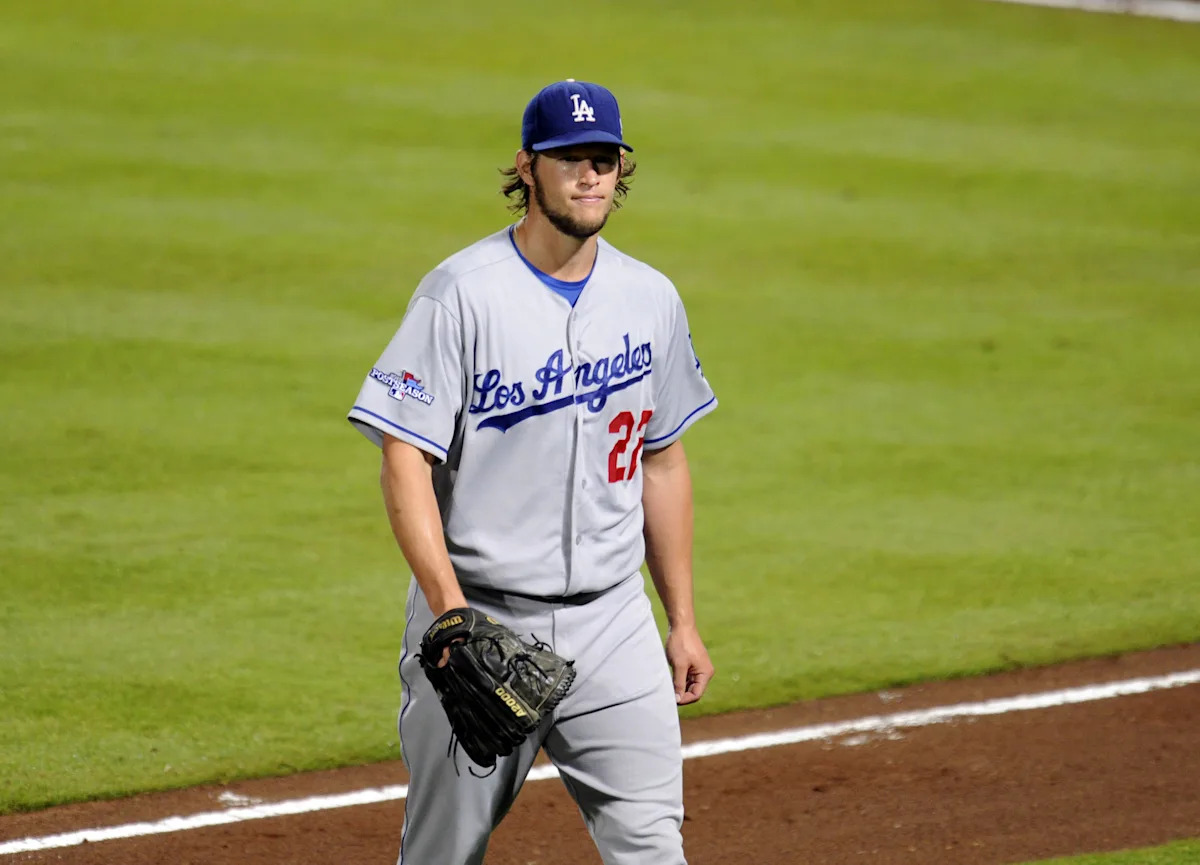
Repetition is the root of commonality, but there was actually a time when the Dodgers weren’t seen as the prohibitive favorites heading into every playoff series. The stage was quite different back in 2013. Largely propelled by first-year impactful performances from Yasiel Puig and Zack Greinke, a Dodgers squad without the depth we’ve grown accustomed to returned to the postseason for the first time in four years to play a 96-win Braves team. After a playoff hiatus towards the end of the Brian Cox tenure, Atlanta was making the postseason for the third time in the last four years and was the more experienced team.
One big advantage the Dodgers had over the Braves in that particular series was in the form of high-end starting pitching. While Atlanta had a very successful campaign with the likes of Julio Teheran, Mike Minor, and Kris Medlen — the latter faced Clayton Kershaw in Game 1. Los Angeles had two established aces and a number three in Hyun Jin-Ryu that rivaled any team in that period. Now, the depth after those three was very shaky, which led Kershaw to start Game 4 on short rest even though Los Angeles had the lead in the series, but that’s getting ahead of ourselves.
Back then, when pitchers still hit, the Braves only trailed the Rockies in slugging percentage among National League teams, finishing the year at .402. Those numbers were a bit worse against southpaws, which made sense given how lefty-heavy that Braves team was at the top, with the likes of Freddie Freeman, Jason Heyward, and Brian McCann.
Advertisement
On the road, against a tough opponent, and at the height of his powers, coming off what would be crowned his second Cy Young win in the last three years, Kershaw dominated in a manner that we don’t even see from the aces these days, pushed well beyond the currently acceptable levels, finishing his outing with a whopping 124 pitches.
Setting the tone early, Kershaw finished the opening frame with bookend strikeouts against Jason Heyward and Freddie Freeman, utilizing that patented down-and-away slider to lefties to punch out Heyward and then blowing a heater by Freeman. Back then, the Kershaw had an easy 95-mph heater he could turn to, something he had to adapt to being without for the second half of his career.
Scoring in every inning between the second and fourth, the Dodgers took a commanding 5-0 lead that felt insurmountable with Kershaw on the mound, particularly with a couple of shutdown frames in the second and third. Trailing 5-1, the Braves had an opportunity to get back into things with Andrelton Simmons up, two on and two out, but once again, that slider bailed him out. Kershaw threw a down-and-in breaking ball to the Braves’ shortstop, who couldn’t help but swing on top of it, thus ending the threat.
View Link
Advertisement
Kershaw would leave that game with 12 punchouts, which would remain his career high in the postseason for many years until a marvelous eight-inning performance against the Brewers in 2020, in which he recorded 13 Ks, eventually helping the Dodgers win their first championship that year.
Starting a trend that would remain for the better part of Kershaw’s prime, the Dodgers’ ace was called upon to pitch on three days rest in Game 4 of this series, as the Dodgers hoped to avoid having to go back to Atlanta for a Game 5. Holding his own as he would routinely do in such instances, Kershaw tossed six strong with two unearned runs in a game ultimately decided in the late innings by a Juan Uribe go-ahead homer.
That Dodgers team faltered in the NLCS, but for where it was in its contention window, it had a decent run, and if it even got as far as the NLCS, it owed a lot of it to Kershaw, who played a humongous role in this series against an equally strong Braves team.
Read the full article here


