




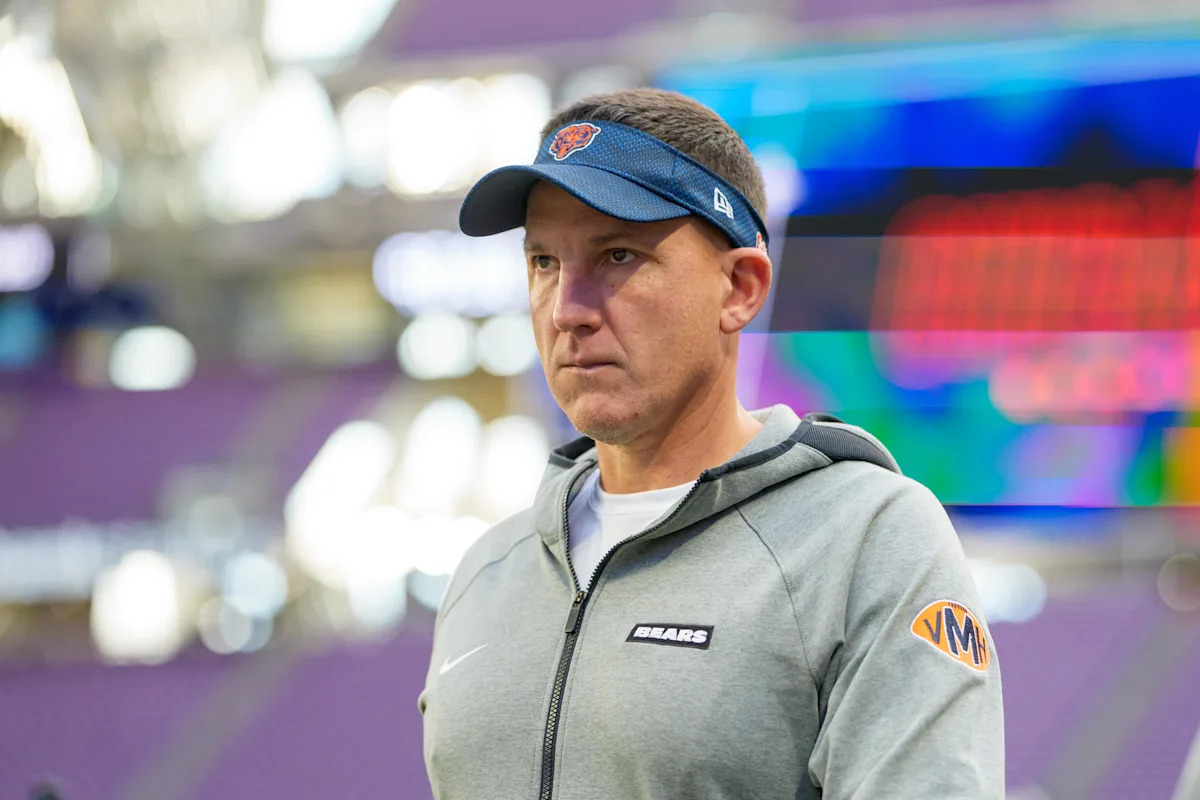
All offseason, the focus has been on what is missing on the Chicago Bears’ defensive line. How we lack impact. How we lack depth. How championship teams are built with elite DLs. So on and so on.
I get it — I also have thought for the last several months that the Bears should and would improve their DL. Yet, here we are in May, and the biggest additions to the DL this offseason have been Neville Gallimore, Jordan van den Berg, and 20 lbs of muscle on Austin Booker.
Advertisement
However, yesterday, over my lunch break, I decided to watch a condensed version of the Bears-Rams playoff game — the first time I have watched it since the broadcast. Something really stuck out to me with how Dennis Allen stymied the high-powered Rams offense; he was bringing pressure from all over the place.
In fact, look at the trends of Dennis Allen blitzing in 2025:
-
In weeks 1-8, Dennis Allen brought blitzes on 15.8% of snaps.
-
In weeks 9-17, Dennis Allen brought blitzes on 20.1% of snaps.
-
In losses, Dennis Allen brought blitzes on 13.9% of snaps.
-
In wins, Dennis Allen brought blitzes on 20.5% of snaps.
In other words, Allen learned as the season progressed that this defense is built for blitzing, and he was successful when doing it.
Now, there could be an argument for the fact that it’s easier to blitz bad quarterbacks (ask Shadeur Sanders), but I think the trend is suggesting that Dennis Allen is getting a little blitzier.
Advertisement
Let’s look at the two playoff games last season, against two quarterbacks who are no slouches in Jordan Love and Matthew Stafford.
Against the Packers, Dennis Allen brought 28 blitzes on 71 snaps, a rate of 39%.
Against the Rams, Allen brought 29 blitzes on 78 snaps for a similarly high rate of 37%.
In each of these instances, the Bears held two strong offenses in check. This tells me that Allen’s scheme might be evolving.
Many of us may interpret the increase in blitzing as a result of an underperforming DL, but the Bears’ 2026 offseason tells me otherwise. It would appear that Allen is doing the defensive equivalent of what Ben Johnson is doing on the offensive side of the ball — find athletes that can line up anywhere and do anything.
Advertisement
The advent of the 12 and 13 personnel sets is an evolution in having flexible athletes on the field. Players can block, pass, catch, and get down the field. The addition of another athlete in Sam Roush only emboldens this vision — proof that Ben Johnson wants players that are strong, fast, and athletic.
Meanwhile, we see hybrid-type players starting to become trendy. Players like Kyle Hamilton, Nick Emmanwori, and even Fred Warner are all unconventional in their size and skillsets – chess pieces that can be lined up in coverage, on the edge, or at the line against the run.
Which brings me back to the playoff game against the Rams. Jaquan Brisker had a day against Los Angeles with 14 tackles, 2 PDs, and a sack. He was all over the field — and seemingly finally unlocked in Dennis Allen’s evolution. The Bears have added at least three new faces to the back seven that can play similar hybrid roles in Coby Bryant, Dillon Thieneman, and Devin Bush. Each guy is physical, fast, and versatile.

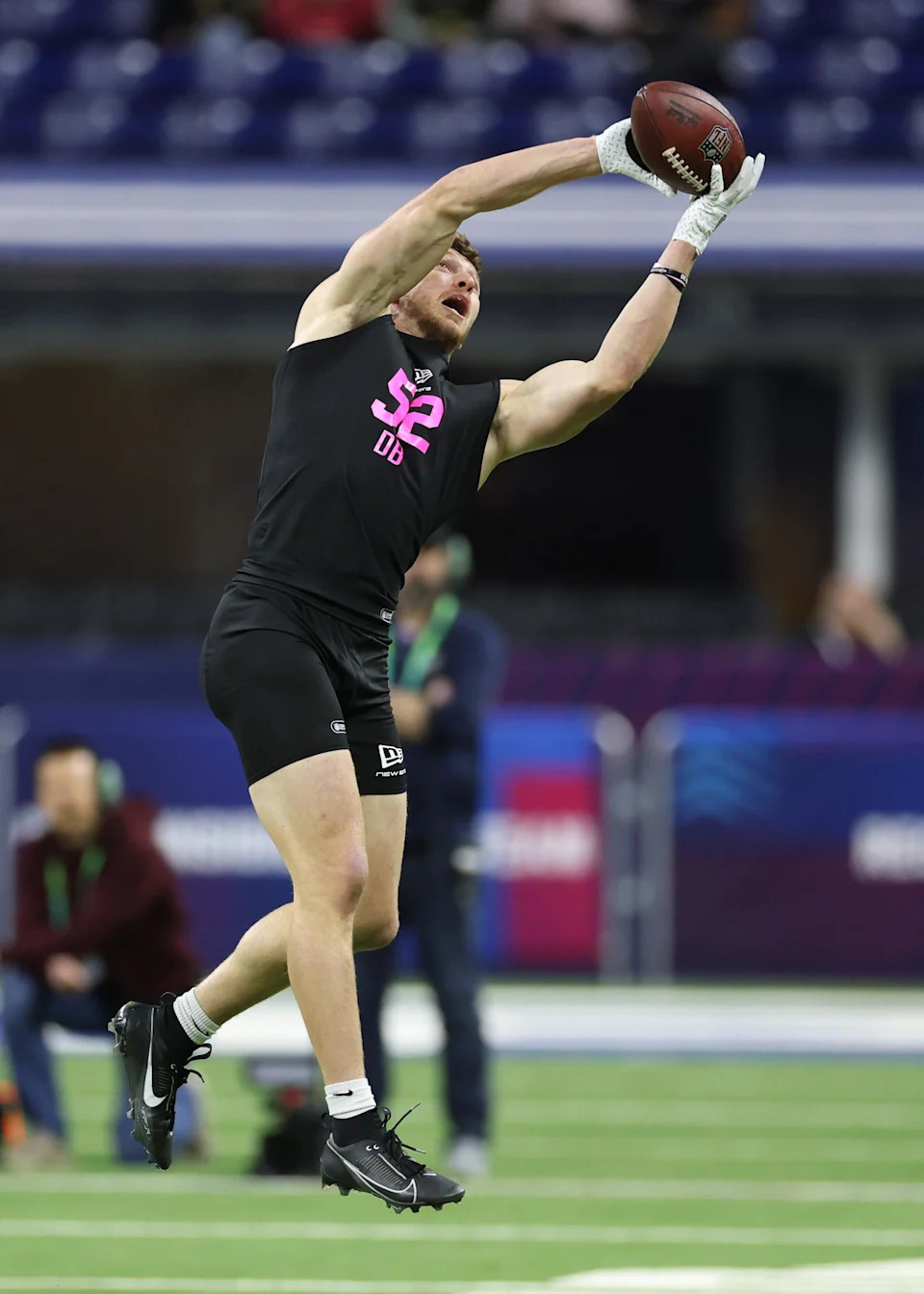
Add them to a roster that already has a player like Kyler Gordon, and Allen’s defense suddenly has immense versatility in how he can deploy these players. I expect him to create a lot of confusion at the line of scrimmage that will lead to a lot of sacks and turnovers.
Advertisement
Sure, the DL still doesn’t feel like a complete unit — I agree. But I think we have been looking at this wrong all offseason. Dennis Allen wants speed. He wants athletes. He wants confusion, and the more I think about it, the more I think that this defense is going to take a big step in 2026.
Read the full article here


