





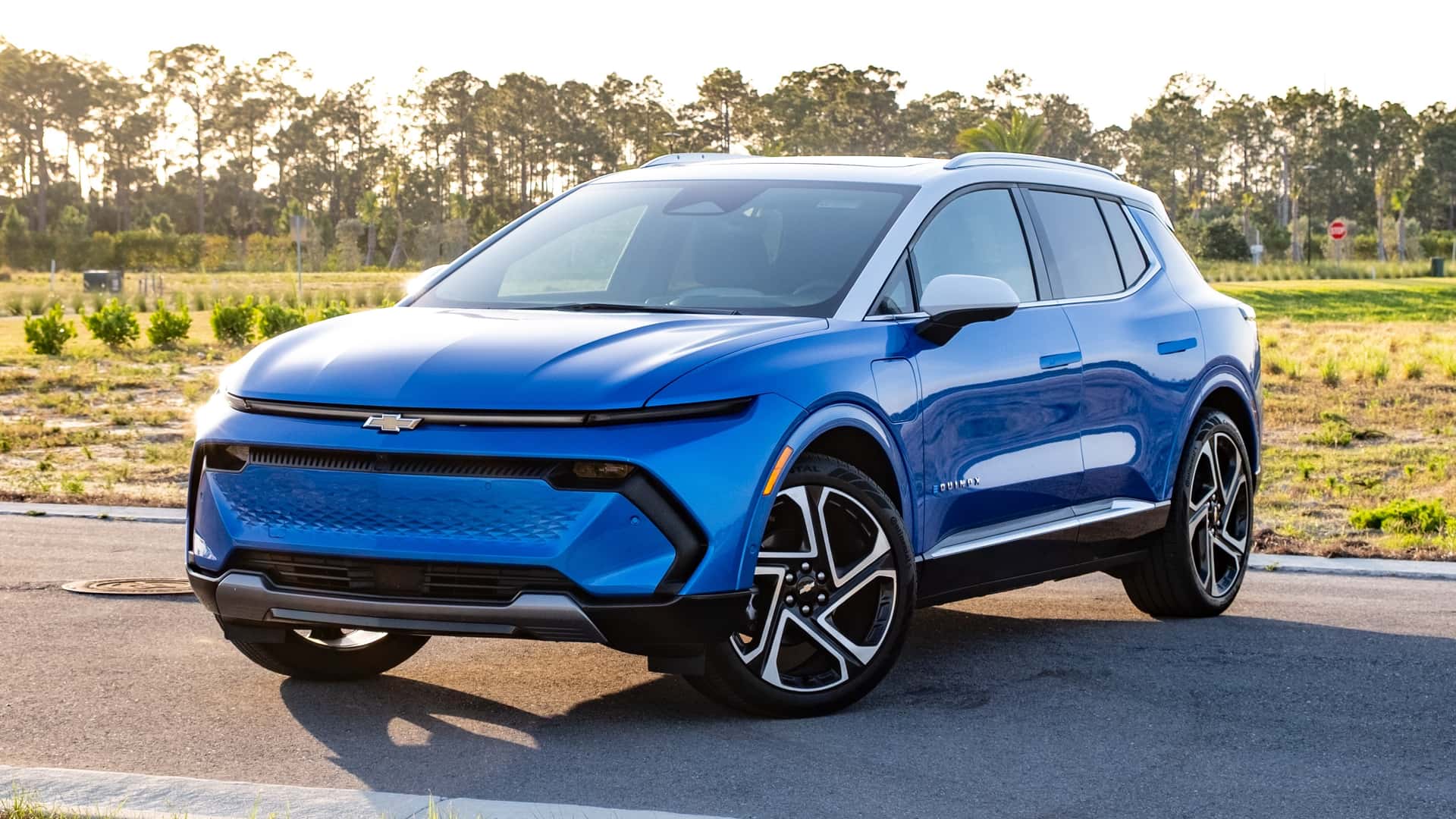
- GM is developing a second-generation Chevrolet Equinox EV that could arrive by late 2028 or early 2029.
- The new model is expected to use GM’s lower-cost BEV-N platform instead of the current BEV3 architecture.
- GM plans to keep investing in the Equinox EV despite a recent drop in sales.
The Chevrolet Equinox EV has barely settled into showrooms, and yet General Motors is already lining up a full redesign. A second-generation Equinox EV is reportedly being developed on an all-new dedicated electric architecture.
The new compact crossover is expected to be revealed in late 2028 or early 2029, and launch as a 2029 model. That plan would give the first-generation Equinox EV a notably short life for a mainstream family model—just two years.
Internal planning points to the next Equinox EV moving off GM’s current BEV3 platform onto a new, dedicated BEV-N architecture. GM appears ready to use the switch to rethink how its affordable EVs are engineered and built, aiming to cut costs and improve packaging. The decision comes in a turbulent sales year for Chevrolet’s electric lineup, with the smaller Bolt EV rebounding while Equinox EV demand has cooled after a fast start.
2025 Chevrolet Equinox EV
Photo by: Jeff Perez / Motor1
From BEV3 To New BEV-N Platform
Chevrolet product schedules call for a redesigned Equinox EV to arrive near the end of the decade. Current expectations have the compact electric crossover breaking cover in late 2028 or early 2029 and going on sale as a 2029 model. That effectively accelerates the product cadence for a vehicle that only recently entered the market.
This faster cycle means the first-generation Equinox EV is tracking toward a relatively brief production run by industry standards. The plan aligns with General Motors’ wider effort to overhaul its lower-cost EV range, an area where the brand has already signaled more changes across its affordable electric portfolio.
The biggest shift for the second-generation model is under the skin. General Motors intends to migrate the Equinox EV from its present BEV3 platform to a new, dedicated BEV-N architecture. The existing BEV3 structure is shared with several other GM electric vehicles, including the Chevrolet Blazer EV and multiple Cadillac EVs, giving the current Equinox EV a common engineering backbone with larger and more expensive models.
Moving the compact crossover to BEV-N is described inside GM as a way to refine manufacturing and tailor the layout to entry-level electric products. The new setup is being developed to lower production costs and free up interior and cargo space better suited to smaller, more affordable EVs.

Photo by: Jeff Perez / Motor1
Short Run For First-Generation Equinox EV
Because the current Equinox EV only recently launched, a move to a 2029 redesign would leave its first generation relatively short-lived. That is unusual in the compact crossover class, where many mainstream gasoline models stay on sale in one generation for six to eight years before a major overhaul. In this case, GM appears ready to compress that window so the Equinox EV can join its next round of electric platforms sooner.
The present Equinox EV’s use of the BEV3 platform ties it closely to larger and more premium models in GM’s EV stable. Replacing that structure with BEV-N gives the company more room to distinguish its affordable compact EV from higher-end vehicles. GM presents the move as one piece of a broader effort to reshape its electric portfolio, including a stronger push for low-cost EVs over upcoming product cycles.
The decision to invest in an early successor comes during a mixed sales year for Chevrolet’s electric lineup. The subcompact Chevy Bolt EV has returned to the market with what the company describes as a strong response. At the same time, the larger Equinox EV has seen a marked change in momentum after an aggressive production ramp-up that initially delivered standout numbers.
Following that ramp-up, Chevrolet moved 57,945 units of the Equinox EV, enough to make it the bestselling non-Tesla electric vehicle in the domestic market at that point. More recently, demand has cooled. Through the first half of the current year, GM reports that Chevrolet delivered just 16,249 units of the electric crossover, dropping it to fifth place on the EV sales chart. This swing from rapid growth to slower movement helps explain why GM is advancing work on a re-engineered model instead of simply riding out the existing generation.
GM Bets On Architecture Upgrades For Affordable EVs
Despite the softer recent numbers for the Equinox EV, General Motors continues to press ahead with its electrification roadmap. Fast-tracking a second-generation model on the upcoming BEV-N architecture is framed internally as a strategic step to strengthen its position in the competitive, affordable compact EV segment.
Corporate planners are effectively betting that the new architecture will help secure GM’s footing by cutting build costs and improving packaging. That emphasis comes as the company adjusts other parts of its electric portfolio and looks for better balance between volume, pricing, and profitability, following several shifts in its EV strategy that have included both expanded plans for entry-level models and, in other areas, program cancellations such as GM’s now-scrapped dedicated electric pickup initiative covered in the analysis of the canceled GM electric trucks program.
21
Source: Jeff Perez / Motor1
Motor1’s Take: GM’s decision to fast-track a second-generation Equinox EV shows it’s thinking beyond today’s sales slump. If the new BEV-N platform delivers meaningful cost savings, Chevy could make one of the segment’s best-value EVs even more competitive.
The bigger question is whether buyers will return. With more affordable EVs entering the market and the Bolt back in the lineup, GM will need more than a new platform to keep the Equinox EV at the front of the pack.
Read the full article here