




Laura Davies received two candlestick holders and 9,000 pounds when she won the 1986 Women’s British Open. Only the Ladies Golf Union, back then, didn’t offer a replica trophy, so Davies’ mother and stepfather had one made for her birthday.
“Within touching distance as we speak,” said 62-year-old Davies by phone of the prized silver candle holder she kindly polished up for a picture.
Advertisement
British golf writer Lewine Mair recalled a 22-year-old Davies walking into a crammed clubhouse at Birkdale after her four-stroke victory in search of a phone.
“She got into her car and dashed down the road to one of those red call boxes and rang her mother,” said Mair, “before the prize-giving, if I recall.”
England’s Laura Davies takes part in the Ricoh Women’s British Open Golf Championships at St Andrews in Scotland, 03 August 2007.
The Women’s British Open was 10 years old at that point and had already been on the verge of collapse after failing to find a sponsor in 1983.
Davies’ victory marked a turning point for the once vulnerable event. This year at Royal Lytham & St Annes the championship celebrates its 50th anniversary. While the Women’s British has carried the prestige of a major since 2001, the feel of the event – from staging to prize funds to venue – has reached unprecedented heights since the R&A took control in 2017 and brought AIG on as title sponsor two years later.
Advertisement
When England’s Georgia Hall won at Royal Lytham in 2018, the purse was $3.25 million. It has since more than tripled to $10 million.
That is, of course, light years from the first edition in 1976, when two pros – Vivian Saunders and Gwen Brandom – put up part of the prize fund of 500 pounds to help turn the British Ladies Stroke Play into an event for professionals.
“It was very much like most of the amateur events that I’d played in,” said England’s Jenny Lee-Smith, who won the inaugural event while still an amateur. “I think there was only a half dozen pros playing … no leaderboards, no scorers. The [Fulford] ladies club members pulled our trollies.”
An official program from the event notes there were five pros in that first edition, and England’s Saunders, who got her money back, won the second edition in 1977.
Advertisement
The British panty hose maker, Pretty Polly, was the event’s first title sponsor from 1979 to 1982. After the tournament was canceled in 1983, Hitachi came to the rescue and the Tokyo conglomerate was rewarded with an 11-stroke victory by Japanese star Ayako Okomoto, who would eventually be inducted into the World Golf Hall of Fame. Another eventual Hall of Famer, Betsy King, won the 1985 edition and then, after Davies delighted the home crowd, Weetabix came on board, marking the beginning of a long and stable run.

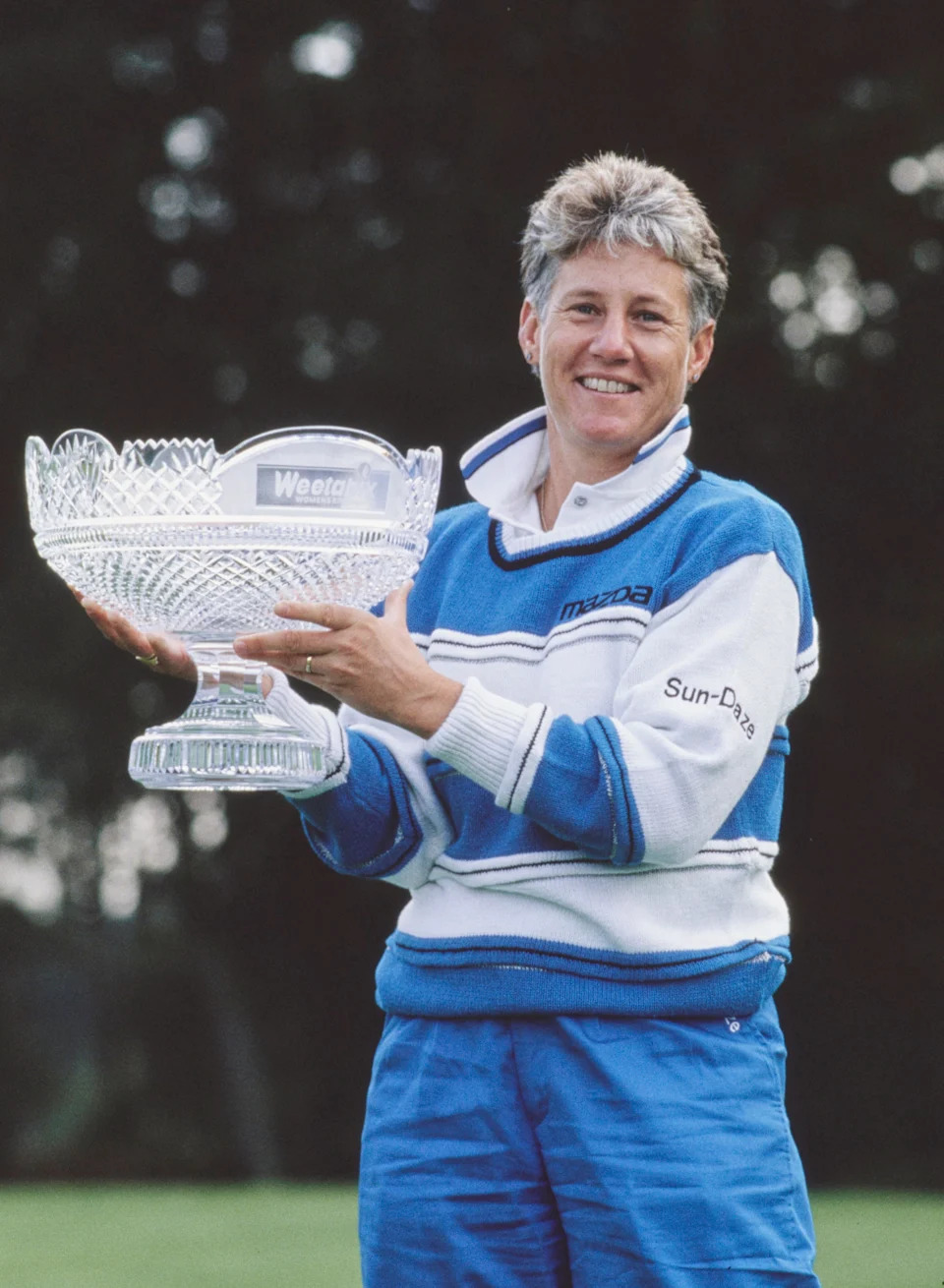
Patty Sheehan of the United States holds the champion golfer trophy after winning the Weetabix Women’s British Open golf tournament on 15th August 1992 at the Woburn Golf and Country Club Duke’s Course in Little Brickhill, near Milton Keynes, England.
Patty Sheehan isn’t sure how the idea of her playing in the British Open came about in 1992, but after winning the U.S. Women’s Open, she was about sixth on the alternate list to play at Woburn. She got into the field the week prior to the event and arrived in England with no clubs and no suitcase. She bought replacements for everything and borrowed the assistant pro’s clubs, which were four swing weights heavier, for the practice rounds.
Sheehan’s clubs and clothes arrived in time for the first round, and she went on win by three strokes.
Advertisement
“It was the first and only time that a person has won the U.S. [Women’s] Open and British Open in the same year,” said Sheehan. “I think that’s the only record I hold.”
In 1994, the event became part of the LPGA schedule, and Karrie Webb won the first of three British Open titles in 1995 by six strokes.
The only other player to win three British Open titles is Wisconsin’s Sherri Steinhauer, who went back-to-back in 1998 and 1999 before winning it in 2006 at Lytham, for a second time, as a major.
The first time at Lytham, Steinhauer walked the golf course backward so that she could get a better view of all the bunkers, a tactic she’d read about somewhere. Steinhauer, for the record, didn’t go in a single fairway bunker in 1998. The weather was so horrendous that week that she won it despite an opening 9-over 81.
Advertisement
“I was staying at a hotel that was right on the water, and there was a little executive course across the way, and I would look out to see what they were doing out there,” she recalled. “They were walking sideways into the rain. The flags were almost hitting the round. I thought gosh, this is going to be crazy.”
Steinhauer’s run at the British was so charmed, in fact, that after she won her first title, her hotel bill was mysteriously paid for the next four years.

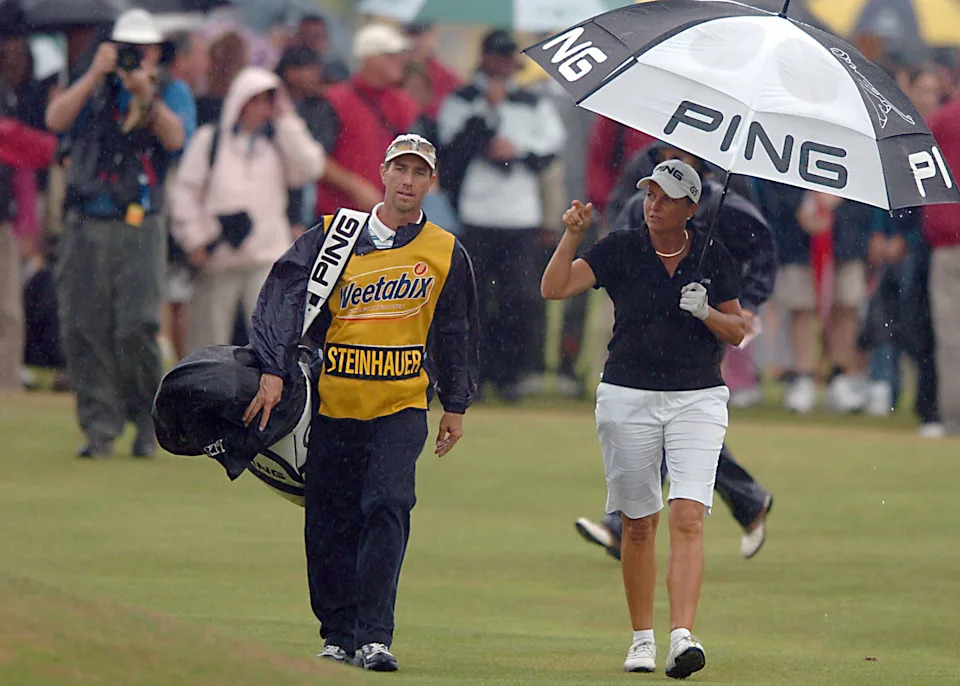
Sherri Steihauer walks the 18th fairway as she wins the Women’s British Open at Royal Lytham St Annes in Lancashire, in north-west England, 06 August 2006.
In 2001, Se Ri Pak won the first British Open that was designated a major championship. The move came after the du Maurier Classic lost its title sponsor when changes were made to tobacco regulations. In 2002, the event was held outside England for the first time, with Webb winning her third title at Turnberry.
Advertisement
For Karen Stupples, the British Open was the pinnacle of championship golf, the only big event she ever followed as a kid growing up in the coastal town of Deal. When Stupples started the final round at Sunningdale in 2004 with an eagle followed by an albatross, the closing 64 won her the title that changed her life.
“I always think that sometimes things are just meant to happen,” said Stupples. “I come from a family that’s always worked really hard and always struggled to have nice things. This was the universe’s way of giving my family and me a little something back, and what it did was, it turned my life around. I was able to do things for my family that I would’ve never done before, finically, and it’s given me a life after golf. I’m not sure that I would be talking about golf on TV had I not won that – a major championship.”

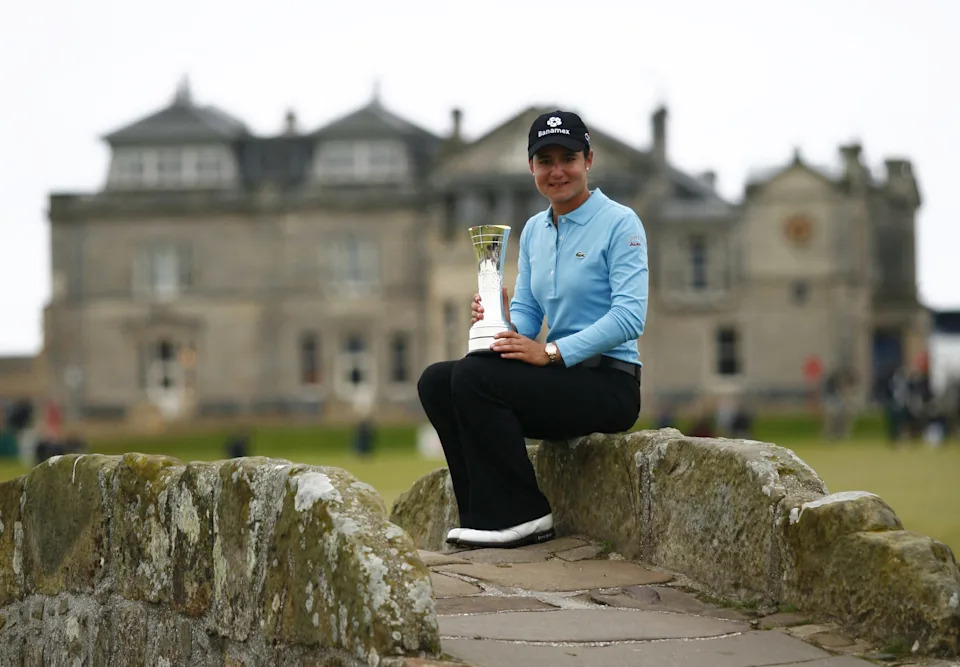
Lorena Ochoa from Mexico poses with the winner’s cup at St Andrew’s Scotland 05 August 2007 after clinching her first major title in comfortable with a four-shot victory at the Women’s British Open. She finished on five under par and won the 160,000-pound first prize by four shots from Sweden’s Maria Hjorth and South Korea’s Lee Jee-Young.
In 2007, world No. 1 Lorena Ochoa won the first women’s professional event ever staged over the Old Course at St. Andrews. Ochoa opened with a bogey-free, bunker-free, course-record 6-under 67 and never relented, winning by four.
Advertisement
A current or former No. 1 player has won all three editions of the Women’s British Open at St. Andrews, with Stacy Lewis (2013) and Lydia Ko (2024) following suit.
The 2007 edition also marked the start of Ricoh’s important run as title sponsor, which lasted until 2018.
Scotland’s Catriona Matthew famously became the first Scot to win the British in 2009, 11 weeks after giving birth to her second daughter, Sophie.
“I feel as though I’m playing as well as I’ve ever played,” said a then 39-year-old Matthew.

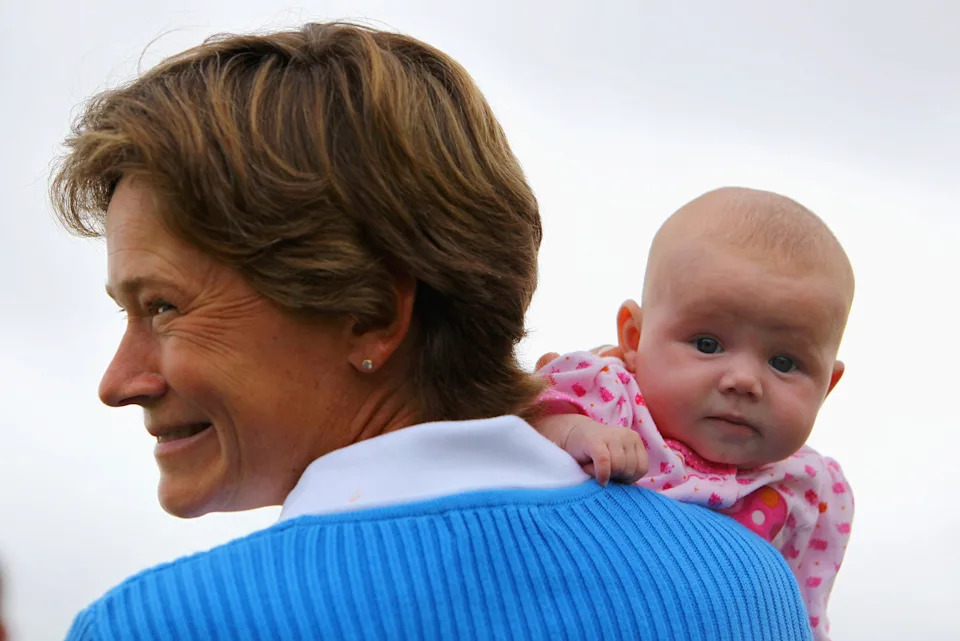
Woman’s British Open winner Catriona Matthew is photographed with her 11 week old daughter Sophie at Archerfield Links golf club on August 4, 2009 in Dirleton, Scotland. The 39 year old mother won the open at Lytham St Annes on Sunday.
Over the next 15 years the championship was held at four traditional men’s Open venues for the first time: Carnoustie (2011), Royal Liverpool (2012), Royal Troon (2020) and Muirfield (2022).
Advertisement
In 2027, the championship will make its debut at another – Royal St. George’s.
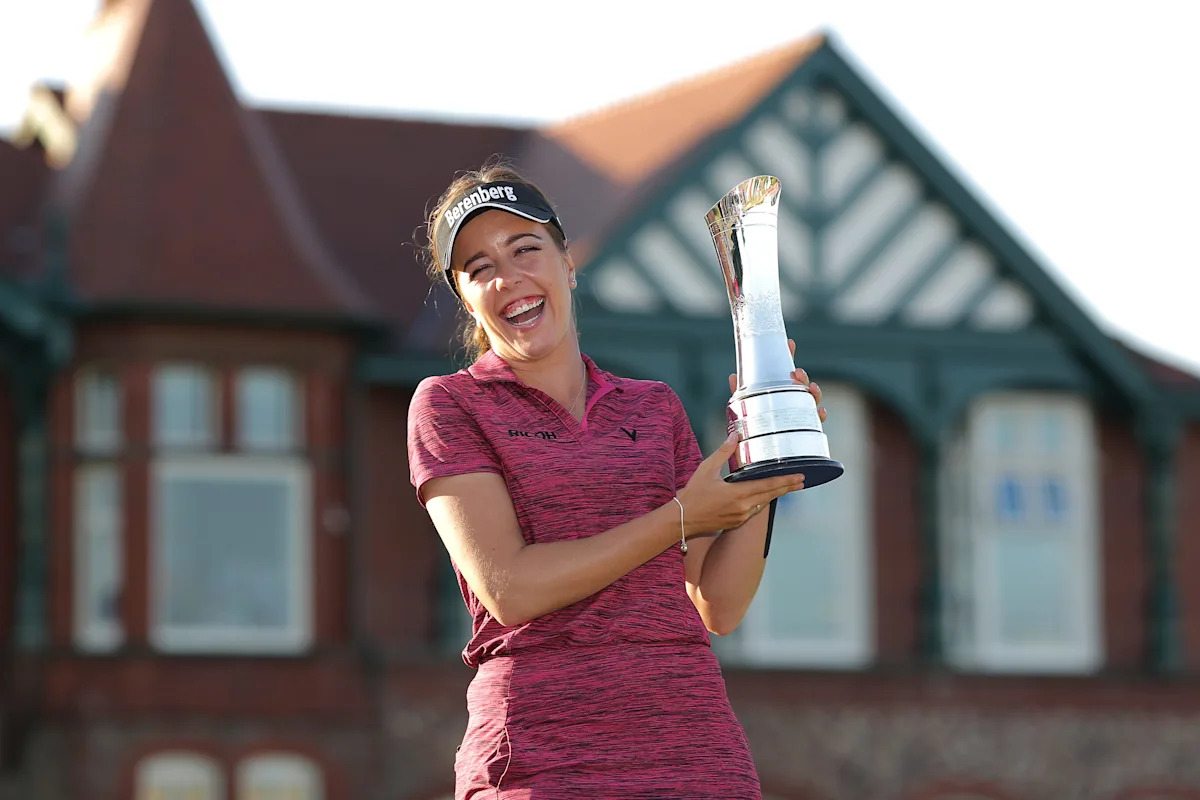
The most recent British player to win the British Open was Hall at Royal Lytham & St. Annes in 2018. The first Brit to win the British Girls, British Ladies Amateur and Women’s British Open, a 22-year-old Hall drew impressive crowds on a flawless day in the north of England.
“We’ve been dreaming this since she was 7 years old,” her father Wayne said at the time, “practicing, pretending to knock in putts to win the British Open, and it’s actually happened.”
Wayne, a plasterer who caddied for Georgia at Lytham, once sold his own golf clubs to fund his daughter’s travel. A 30-year-old Hall returns this week after giving birth to son Connor back in February, hoping to channel some of Matthew’s magic.
Advertisement
It’s never been harder, however, to win at home. From 2016 to 2024, players from nine different countries hoisted the British Open trophy.

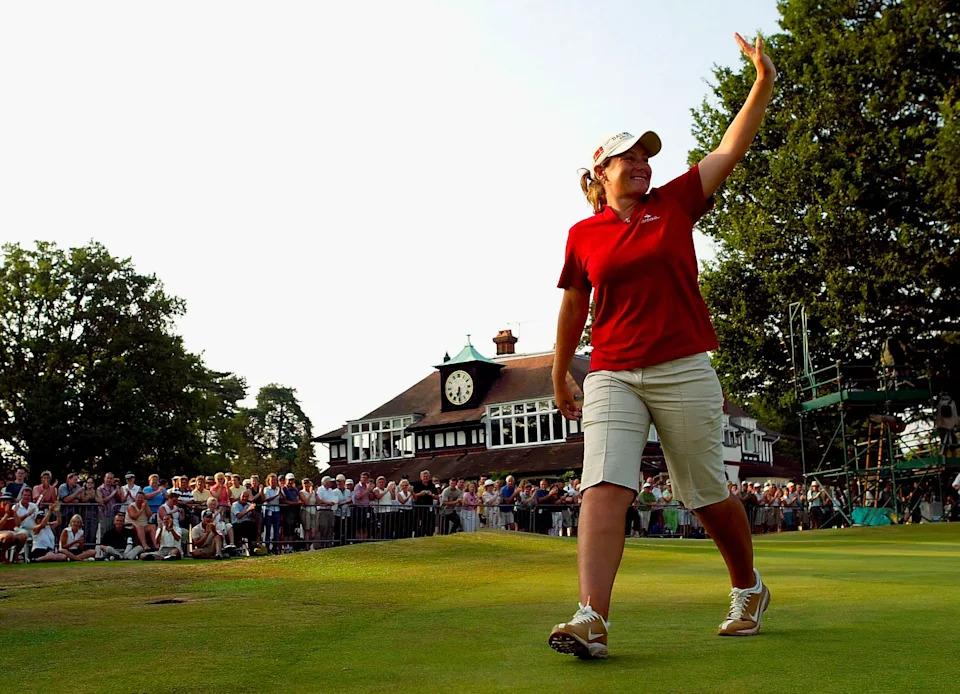
Karen Stupples of England acknowledges the crowd after winning the Weetabix Womens British Open with a score of 19 under par, at Sunningdale Golf Club on August 1, 2004 in Sunningdale, England.
It’s been 23 years since that Annika Sorenstam completed the career grand slam with a one-shot victory over Se Ri Pak at Royal Lytham and St. Annes. This week, world No. 1 Nelly Korda has a chance to do the same. Korda won the first two majors of the season, claiming her fourth career major title at the U.S. Women’s Open at Riviera. Her best finish at the British is a share of second two years ago at the Old Course.
Since 1979, the Smyth Salver winner for low-amateur honors has been a harbinger of what’s to come, with Anna Nordqvist (2008), Lydia Ko (2012, 2013), Georgia Hall (2013), Jeeno Thitikul (2018, 2019) and Lottie Woad (2024) among the recipients.
Advertisement
When Stupples walked down the 18th at Lytham as an on-course reporter eight years ago, she relived her own British Open victory as she listened to the home crowd call out Hall’s name.
The moment wasn’t just about Hall, of course, it was about the seeds that were planted for young British girls, just as they were for Stupples when she read about Davies’ triumph at Birkdale in The Telegraph 40 years ago.
“The next thing you know, you’ve got a whole crop of new players ready to take on those challenges,” said Stupples. “They all want to be part of her greatness and part of that dream – and that’s why you do it.”
With two British players, Lottie Woad and Charley Hull, in the top 10 in the world, and a strong infrastructure in place for up-and-comers, Stupples believes British golf has never been healthier.
Advertisement
That, of course, includes the health of the home major, a global force that has come a long way since five pros played for 500 pounds 50 years ago.
Beth Ann Nichols is a senior writer for Golfweek covering the LPGA and all things women’s golf.
This article originally appeared on Golfweek: Celebrating 50 years of the British Open, which began with 500 pounds
Read the full article here


