





After carving out Mt. Rushmores for the floor generals and bucket-getters, it is time to move into the paint. The point guards gave the Knicks flash, tempo, and leadership. At the same time, the shooting guards and small forwards provided sheer scoring. However, if you truly want to understand New York Basketball’s DNA, you must look down low. It all starts with the power forward.
To put it simply, the small forwards gave New York the baskets, but the power forwards dished out the bruises.
Advertisement
As Knicks fans, we have grown accustomed to our bigs playing like bouncers at the MSG doors. If your blood isn’t blue and orange and you’re unwilling to dive headfirst into the hardwood or take a few borderline-flagrant fouls for the franchise, you do not belong. The 4-spot in Knicks history is a blend of legendary enforcers, championship glue guys, and offensive engines that pulled the organization out of the mud.
Leaving a few beloved fan favorites off the rock was tough. However, if we are talking about sustained greatness, hardware, and impact, these four names stand all on their own.
Harry “The Horse” Gallatin
To truly understand Knicks history, we have to respect those who poured the foundation. Long before Charles Oakley was throwing elbows, there was Harry Gallatin. “The Horse” was New York’s original iron man, playing 610 consecutive games through the grit and grind of 50s basketball.
A certified Hall of Famer, Gallatin was a seven-time All-Star as a Knick and earned an All-NBA First Team selection in 1954. An absolute terror on the glass, he set a franchise record with 33 rebounds in a single game against the Fort Wayne Pistons. Though he now shares the accolade with Willis Reed, the record still holds today.
Advertisement
The original blueprint for a tough, blue-collar big man, Gallatin proved you could dominate the paint with sheer willpower, a relentless motor, and refusing to be outworked by anyone. In building a mountain representing what it means to play power forward in New York, we have to start with the individual who defined the position. Without “The Horse” laying down the law in the 50s, there is no Oakley of the 90s. A true pioneer, Henry Gallatin deserves a place on our Rushmore.
Dave DeBusschere
The story of New York’s two 70s championships cannot be told without discussing Dave DeBusschere. When Red Holzman and the Knicks front office acquired him for Walt Bellamy during the 1968-69 season, they were receiving the missing piece. That single transaction transformed the team from a fun and highly competitive group to a legendary one that would ingrain itself into the NBA’s history book.
The hardware speaks for itself. During his time in New York, DeBusschere was a six-time All-Star and made the All-Defensive First Team for six consecutive years. Oh, and of course there were the two NBA Championships in 1970 and 1973.
Advertisement
The ultimate glue guy, DeBusschere executed his role on a superstar level. Every game, Holzman tasked him with guarding the opposition’s best frontcourt player. Whether it was battling Elvin Hayes or Wilt Chamberlain, he absorbed physical punishment so Willis Reed didn’t have to. He grabbed heavily contested rebounds, sparked fast-break opportunities, and confidently knocked down open jumpers. A rugged player with a high basketball IQ, DeBusschere was an absolute winner and is the anchor of this mountain. If you try to argue against it, you are just flat-out wrong.
Charles Oakley
For a decade, Charles Oakley provided pure terror in the paint. Not only a player for New York in the 90s, but he was also the Knicks’ bodyguard. Under Pat Riley and Jeff Van Gundy, Oakley became the physical embodiment of an era that defined a generation of fans.
Advertisement
Statistics back up the intimidation. Pulling down over 12,000 career rebounds, he earned one All-Star appearance in ’94 and was also named to the All-Defensive First Team. An absolute machine that never took a night off, Oakley demonstrated his durability during that ’94 Finals run, starting in all 82 regular-season games and a record-setting 25 playoff games.
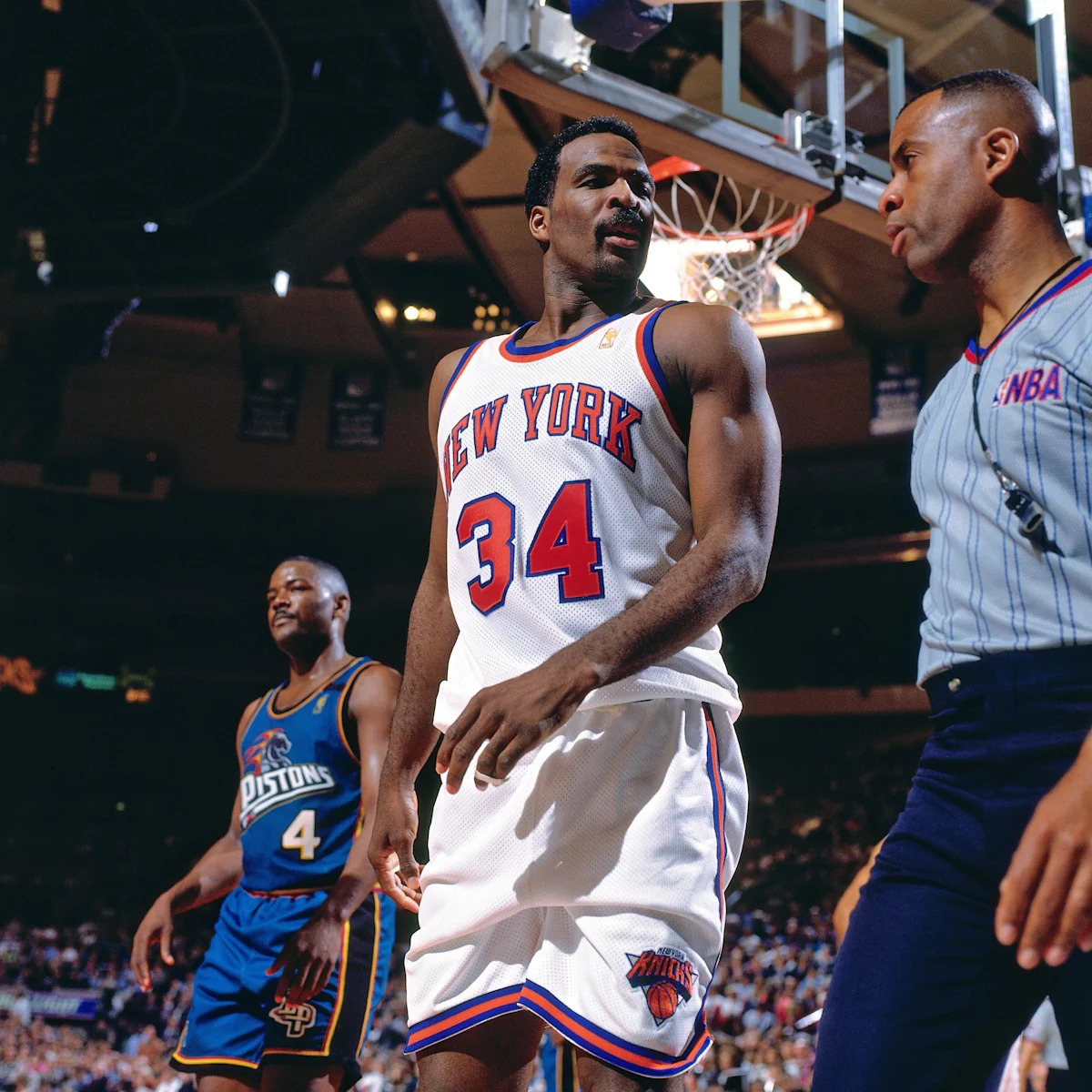
His silky-smooth midrange jumper from the baseline will also have a place in our memories, but Oakley’s real legacy lived in his ability to play enforcer. If you planned on driving the lane, you had to prepare to pay a steep price. He consistently had his teammates’ backs through every brawl, hard foul, and intense series against the Bulls, Heat, and Pacers. When you picture a Knicks power forward, you picture #34 as the team’s beating heart, ripping down rebounds in traffic.
Julius Randle
This is where I start getting yelled at.
Advertisement
Julius Randle is undeniably a polarizing figure in Knicks basketball. But we have to take a step back for a second and recognize what he actually accomplished in New York. Before Jalen Brunson ascended to basketball immortality and provided us with our modern championship window, Randle pulled the franchise out of a two-decade joke.
The resume is quite staggering. Consistently providing 20-point, 10-rebound, 4-assist production, he made multiple All-NBA and All-Star selections while also winning the 2020-21 Most Improved Player award. Think about the dark ages of the 2010’s filled with characters such as Alexey Shved and Lou Amundson. Randle put the entire city on his back and took the Knicks out of that disaster, breaking the 7-year playoff drought and bringing New York back to relevancy.
Yes, the body language was frustrating when things didn’t go his way. Yes, the playoff shooting slumps were infuriating. But you cannot deny Randle’s talent and the heavy lifting he did for this franchise. He arrived in New York when the organization was a complete laughingstock and built a culture of accountability, toughness, and winning. Whether you like it or not, Julius Randle helped get this new championship era in motion and deserves a spot on our Power Forward Mt. Rushmore.
So there it is. The official Knicks Power Forward Mt. Rushmore includes the pioneer in Gallatin, the champion in DeBusschere, the enforcer in Oakley, and the catalyst in Randle. It is a perfectly balanced representation of what it means to play the 4-spot in New York City.
Now it’s your turn. To me, Gallatin, DeBusschere, and Oakley are complete locks. But how off-base was I including Randle on the rock? Let me know who makes your top four in the comments below.
Read the full article here