




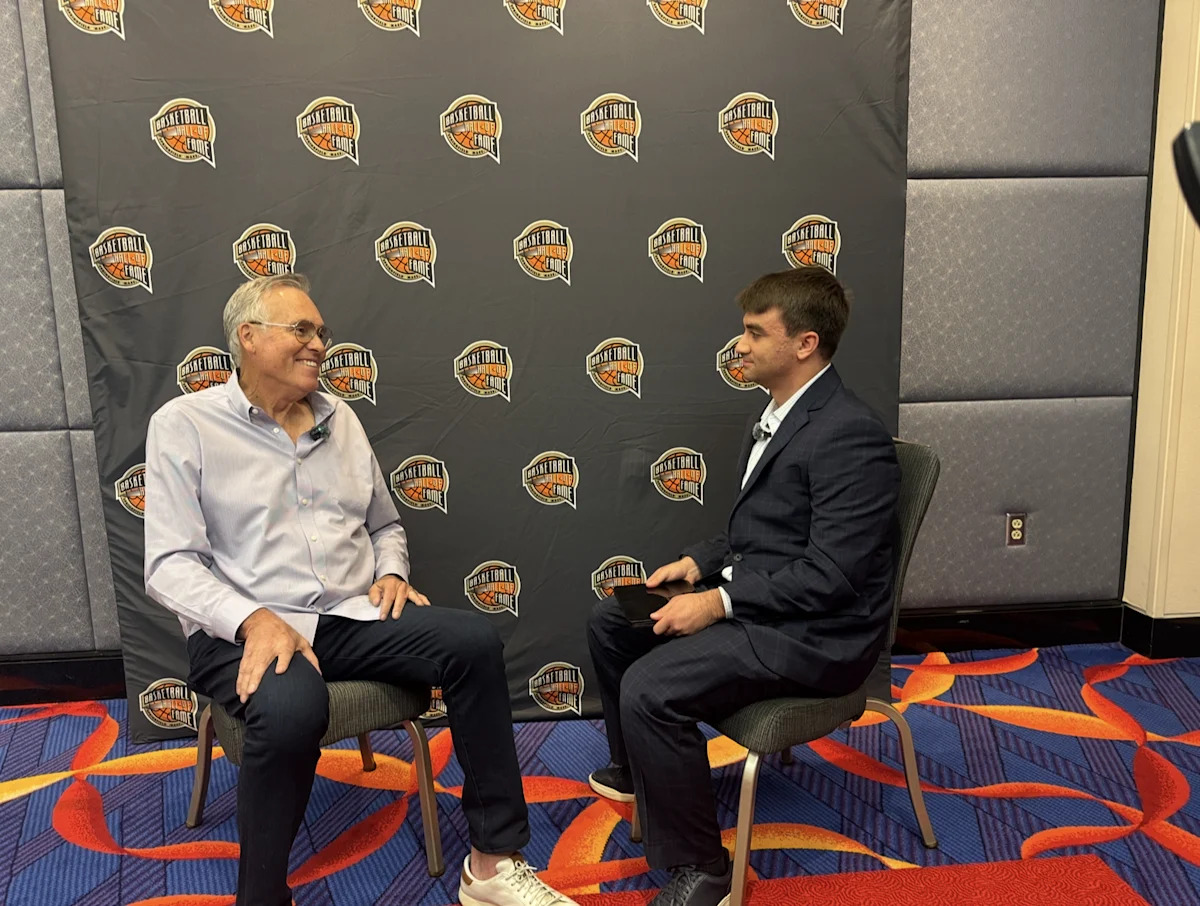
SPRINGFIELD, Mass. — The day before Mike D’Antoni was inducted into the Naismith Basketball Hall of Fame, Bright Side sat down with the former Phoenix Suns head coach about his time with the Suns, building the iconic Seven Seconds or Less offense, and what he’s feeling before his big day.
(The following answers have been lightly edited for brevity and clarity.)
Advertisement
Now that it’s Hall of Fame Weekend, what are you feeling?
Mike D’Antoni: It’s a great honor. I mean, I’m sure if you asked all people getting into the Hall of Fame, they would say: “Oh my gosh, this is the best.” It kind of validates all the stuff that went on all the years, and it’s a great cap off to a good career. I’m happy with the way it went. I got to be doing something I love for a long time, and it’s the best.
Who were some of the influential factors in your life to tell you to be yourself? You were an untraditional coach.
MD: Well, you know, besides being from a family that does that, and my brother who was coaching with me that had a similar philosophy, the main two guys were Jerry Colangelo and Brian Colangelo.
Advertisement
They put the team together, and then we’re talking about how to play and whatever, and I’m saying, you know, my gut says we should do this, but the traditional way is that. And they say, “go with your gut, do what you think’s best”. And so that’s when I decided to move Amar’e Stoudemire to the five and Shawn Marion to the four. It comes from years and years of playing, years and years of coaching, and past experiences from when I was a player, and what would feel good, and then as a coach and how it went with my team at Olympia Milano when I really started that.
How did you find people to buy into your unconventional coaching strategies?
MD: The players adapt easily because most of the time when you spread the floor, and you run and you give them confidence, then their talents come out. I always try to coach where I didn’t put a ceiling on the players. I trusted them; they knew I trusted them. I didn’t second-guess them. At my level, at the NBA level, you can do that because you have great players that, if they’re not selfish, then they will do what’s right for the team. And I was just blessed with having so many players that put the team first. And it’s easy also to put the team first when your stats are strong because everybody wants to earn money, and you got to earn money by having stats in a career year.
You went for volume?
MD: Yeah, we went where everybody can eat. Instead of that guy posting up this guy all the time, or going to a specific spot with the ball every time, we let everybody feed, and boy, they just bought in and went with it.
Advertisement
How did Amar’e Stoudemire adapt to your offense, and how did your relationship early in his career help when Steve Nash came back and the Seven Seconds or Less offense began?
MD: I think it helped. It didn’t hurt. Amar’e was just a raw talent. I could convince the players when I talked to them, and that’s like two hours a day, and we’re going to play a certain way.
But then they go home and they got to listen to their family members, their uncle who knows better than anybody, and the barber who tells them you can’t play that way that it’s going to kill you, or you listen to talk radio or old talking heads, the old players that play a certain way, and so I knew that doubt would creep in, and we just got really lucky that we went 31-4 right off the bat in the 2004-2005 season. Then the players were buying more in, and we’re up 20 at every time at halftime. So they’re buying in, and then it was easy.
When people say that the Seven Seconds or Less offense changed the NBA, what does that mean to Mike D’Antoni, the person?
MD: It’s obviously a little exaggerated. I think we influenced it. Basketball is always evolving, so it was going to happen. Then Steve Kerr and Steph Curry and those guys took it and validated what we tried to do in Phoenix. They’re playing the way that we played because we did it kind of without analytics, and we didn’t have that knowledge yet, and so now they do it with analytics telling them that’s the way to go, and so it’s obviously satisfying.
Advertisement
I’m more of a fan now and guess what? It’s fun to watch, it’s fun to see people’s talents, and so it is very satisfying. I’m very proud of the fact, and happy to have players and management that bought in, and we went with it.
Do you see any budding Mike D’Antoni-style coaches in the NBA?
They’ll do it better. Coaches keep getting better, and I don’t follow that close. I obviously follow guys like Kenny Atkinson, who was with me in New York. But everybody has their style and their demeanor, and it works all kinds of different ways. There’s not one way to play, and you got to do what’s best for your personnel, and that could be all kinds of different venues. And when that happens, you’re a good coach. Whether it’s my style or somebody else’s style, it doesn’t matter.
You can watch the full interview here:

Read the full article here


