





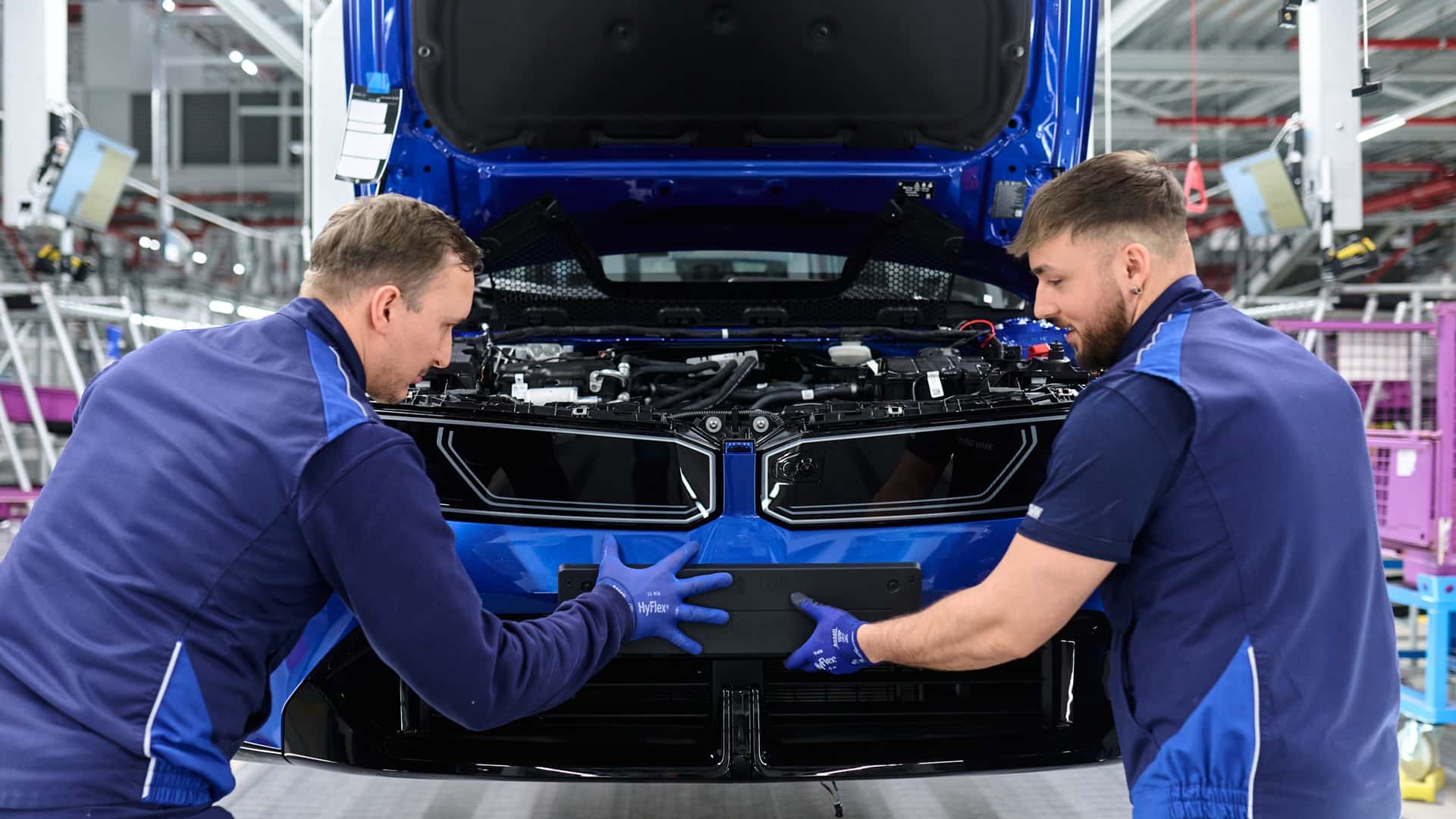
- BMW has started full series production of the new i3 sedan in Munich.
- Plant Munich will build only battery-electric vehicles from 2027.
- BMW says the i3 launch cut Munich’s manufacturing costs by 10 percent.
The new BMW i3 is no longer just a show stand star. Full series production of the electric sedan has started at the brand’s historic Munich plant, turning an early preview into a real car running down a real assembly line. That makes the i3 the first electric 3 Series–sized BMW built in Munich and the second Neue Klasse model to reach mass production there.
BMW says the plant is already ramping up quickly, with a steep increase in i3 output planned in the coming months. For shoppers tracking premium EVs, this is the first hard manufacturing milestone for a sedan that sits right in the middle of BMW’s range, and it also locks in Munich’s shift toward an all-electric future.
8
Source: BMW
BMW i3 Demand Is High
BMW confirms that series production of the i3 sedan has started on the main line at BMW Group Plant Munich, its long-time home base. The company calls the i3 the second Neue Klasse model to go into full production there, a sign that the once-abstract next-generation EV project is now taking physical shape in BMW’s core factory.
Early customer demand is one reason BMW gives for what it describes as a steep ramp-up curve, with extra shifts and capacity now focused on the i3. That appetite for the sedan underpins the decision to move quickly from pilot builds to full series production instead of stretching out a long validation phase.
If you want a sense of how long BMW has been teeing up this moment, you can trace it from the first BMW i3 teaser ahead of its March debut through the reveal of the 2026 BMW i3 First Edition launch series. Those steps framed the car as a concept edging toward reality, and Munich’s series-production start is where it becomes a long-term fixture in the build plan.

BMW i3 production at BMW Plant Munich
Photo by: BMW
Munich’s EV Future And What’s Confirmed
The i3 sits inside BMW’s broader Neue Klasse strategy, a modular EV architecture that will support several future models. BMW states that Plant Munich will build only battery-electric vehicles from 2027 onward, with the i3 and another Neue Klasse model forming the backbone of that transition. That end-of-2027 target for all-EV output is tied directly to the i3 ramp-up.
Launching the i3 has already trimmed manufacturing costs at Munich by 10 percent, according to BMW, thanks to updated production processes for the Neue Klasse platform. That cost cut is one of the clearest signs that BMW is treating the i3 not as a niche product but as a high-volume EV designed to pay off across its factory network.
The company also plans to assemble the standard-wheelbase i3 in San Luis Potosí, Mexico, from 2027, extending Neue Klasse production beyond Germany. For now, though, Munich carries the launch, and every i3 sedan built there helps set the pace for how fast BMW can pivot its legacy plants. Recent previews of the 2027 BMW i3 lineup, speculative looks at a possible BMW i3 Touring wagon variant, and even talk of how it might relate to a rumored BMW i4 convertible due around 2028 all now hang on a simple fact: the i3 is a production reality in Munich.
Motor1’s Take: This shifts Neue Klasse from an idea to day-to-day reality, forcing BMW’s supply chain, dealers, and rivals to react; now we see if Munich can keep quality, software, and dealer support tight enough for the EV pivot to pay off, or if early owner reports and inventory data flag a rougher start than BMW is planning for.
Read the full article here