





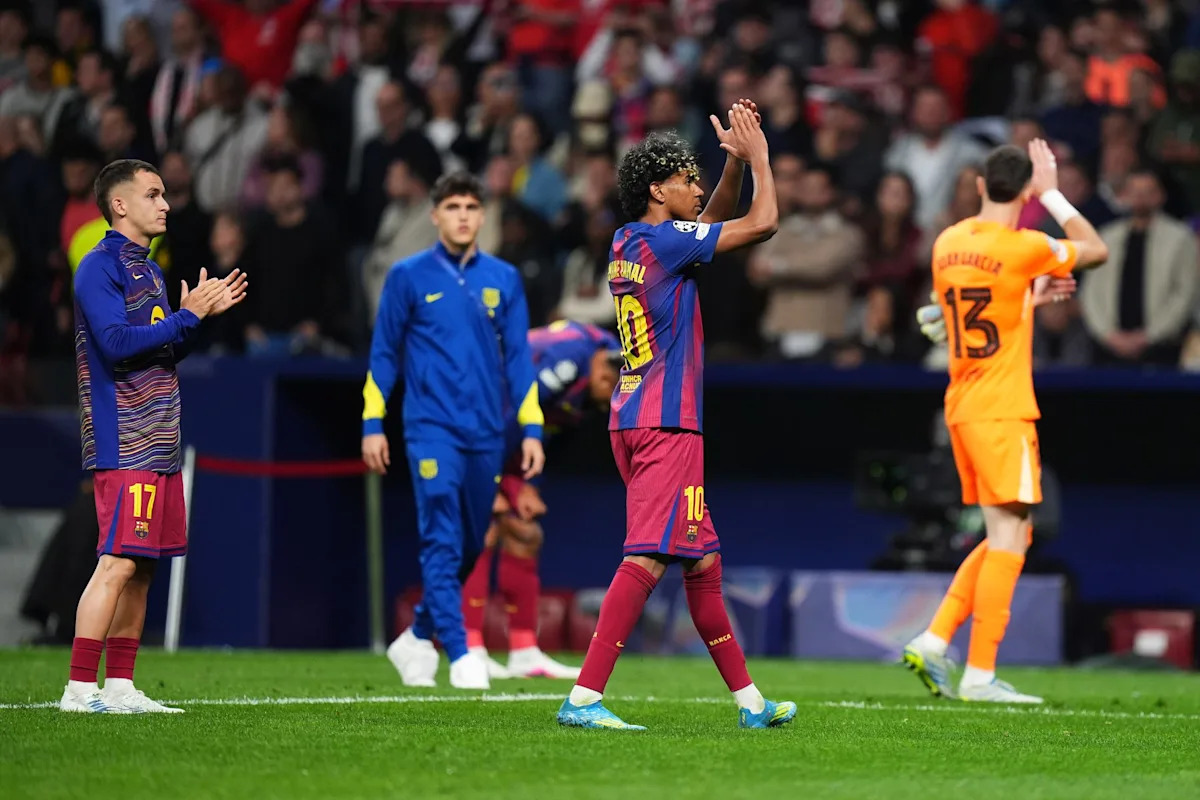
FC Barcelona did not just lose to Atletico Madrid. They relived something that has been plaguing them since 2018.
They relived the familiar feeling of climbing club football’s equivalent of Mt. Everest with purpose, only to discover, once again, that the final stretch demands something that they are still learning how to produce on command.
Advertisement
The 3-2 aggregate defeat to Atletico Madrid in the 2025/26 UEFA Champions League quarter-finals is not an isolated incident. It is a pattern re-emerging in a team that, somewhat paradoxically, feels closer to the finish line than it has felt in years.
And, that is where the story truly begins.
The night that opened the wound, AGAIN!
For thirty minutes in Madrid, everything looked different.
Barcelona came out like a team that decided not to carry their wretched recent history with them. Four minutes in, Lamine Yamal scored after having come close seconds into the game, driving with the ball, purposefully slicing through the Atletico defence.
Advertisement
Twenty minutes later, Ferran Torres made it two. The tie was level. Atletico were wobbling. They almost conceded another, seconds later, but Juan Musso somehow managed to save Fermin Lopez’s header. It felt like the script was being re-written in real time.
Moments later, the reel snapped. One transition, one lapse and Barcelona were immediately reminded of just how unforgiving this competition is.
So near, yet so far for Barcelona. (Photo by Angel Martinez/Getty Images)
Ademola Lookman’s goal did not just tilt the tie again; it knocked the stuffing out of the Catalans’ desire to overcome a first-leg defeat.
Advertisement
Suddenly, Barcelona, who thought they were escaping their past, found themselves pulled right back into it. A disallowed goal and a red card later, the final minutes of the tie dissipated into frustration rather than belief.
Different year, different players, but the same feeling.
This was not just the defeat; it was the pattern
The most uncomfortable truth about the elimination is not the scoreline. It is how familiar it felt.
Barcelona can still dominate matches. They can control possession, dictate rhythm, stretch opponents and create a truckload of chances.
A one-off tie in the Champions League isn’t decided by these virtues, though. It is decided by which team handles the chaos – duels, transitions and second-balls better. And, this is where this Barcelona feels incomplete.
Advertisement
Hansi Flick warned about Atletico’s danger in transitions even ahead of these encounters. He spoke about duels, about discipline and about avoiding exactly the kind of moments that ultimately decided the tie. The warning was spot-on. The execution just wasn’t there, though.
That is what they need to work on now. Not quality, not talent, but finding a way to survive in disorder.
The noise around the fallout
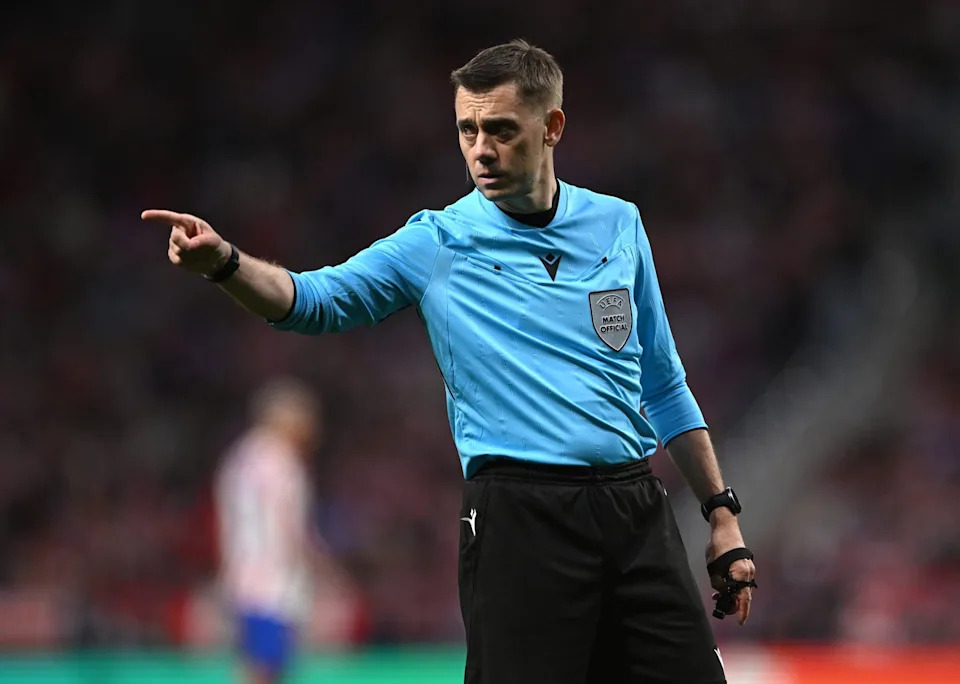
Refereeing was once again the centre of attention. (Photo by Denis Doyle/Getty Images)
Barcelona did not leave this tie quietly. The first leg had already planted the seeds of outrage, a controversial incident in the box, a penalty not given, a foul that wasn’t carded and many more such refereeing outrage.
Advertisement
The club filed a formal complaint to UEFA. Players, including Raphinha, made their anger public after the elimination. Some of that anger is understandable. But it is also dangerous.
While refereeing decisions can shape moments, they rarely decide entire ties. Barcelona did not lose, solely because of the referee. They lost because, over the course of 180 minutes, they left too many moments open to punishment.
The temptation after such nights is to find a single point of injustice, an easy blame like the refereeing and build a narrative around it. However, it’s the Blaugrana’s responsibility to look beyond it.
Why this one hurts differently
Unlike much of the years from 2018 to 2024, this is not a broken Barcelona. This is what makes the fall heavier.
Advertisement
They are leading La Liga. They have beaten Atletico domestically. They have looked, for long stretches this season, like a team with structure, identity and direction. Under Flick, there is continuity and a lot of promise.
This was supposed to be the season where the European narrative was expected to shift. Barcelona were expected to build on their semi-final exit against Inter Milan last season and improve on it.
Instead, they have regressed. Because when the competition reached its most unforgiving phase, Barça still looked like a team that was almost ready, but not quite there yet. In elite football, that is the difference between a quarter-final exit and a trophy-winning season.
The reason the story does not end here
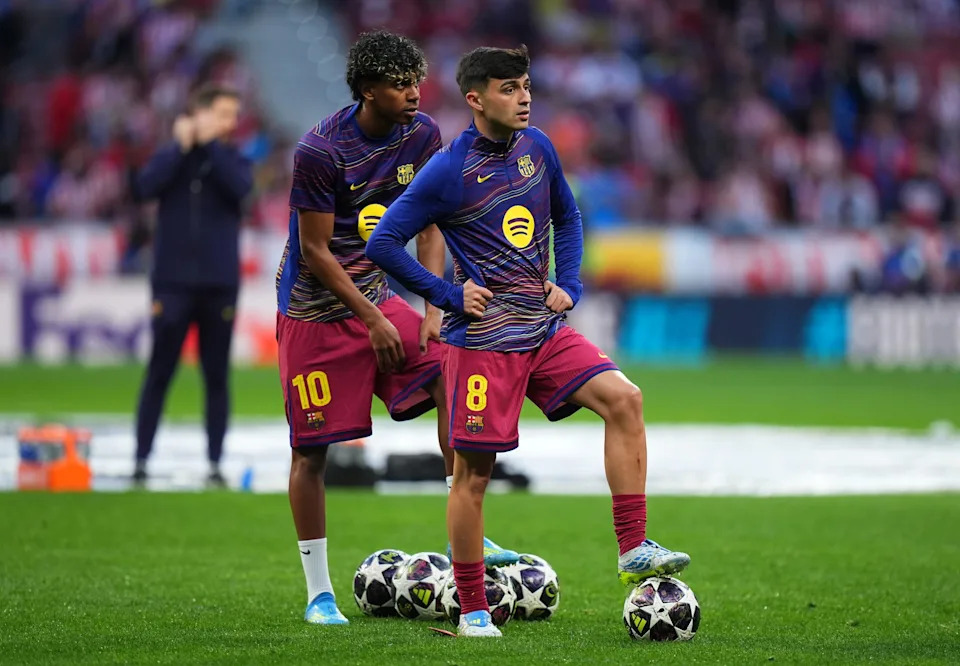
The foundations are there. (Photo by Angel Martinez/Getty Images)
Advertisement
If this were only about the defeat, it would be easy to fall into familiar conclusions. Another collapse. Another European failure. Another red card. Another reminder that Barcelona cannot handle the biggest nights. But this team does not fit into that simple narrative.
Look at the spine. Lamine Yamal is already deciding matches at the highest level, and he is tied to the club long-term. Pedri controls rhythm like few midfielders in Europe. Gavi brings edge and intensity.
Pau Cubarsi plays with a composure that feels borrowed from a different era. Fermin Lopez is having a breakout season in terms of attacking output. Marc Bernal is the next in line.
Most importantly, almost all these players are still in their teenage. or just into their 20s. That matters, more than just the elimination. The only direction for this team in the coming years is upwards.
Advertisement
Flick’s Barcelona: unfinished but on track
There is a difference between a project hitting its ceiling and one encountering a hurdle, but also learning a valuable lesson. This feels like the latter.
Under Flick, Barcelona are not improvising anymore. The team has structure. It has pressing patterns, positional discipline and attacking mechanisms that function across competitions. They are a reinforcement or two away from looking like the finished product.
What the Champions League has exposed is not a broken system, but an incomplete one. A little more control in transition. A little more composure under pressure. A little more cynicism when the game demands it. It is all a part of the evolution.
Advertisement
And evolution, unlike revolution, takes time.
A club finally moving in one direction; and the right one
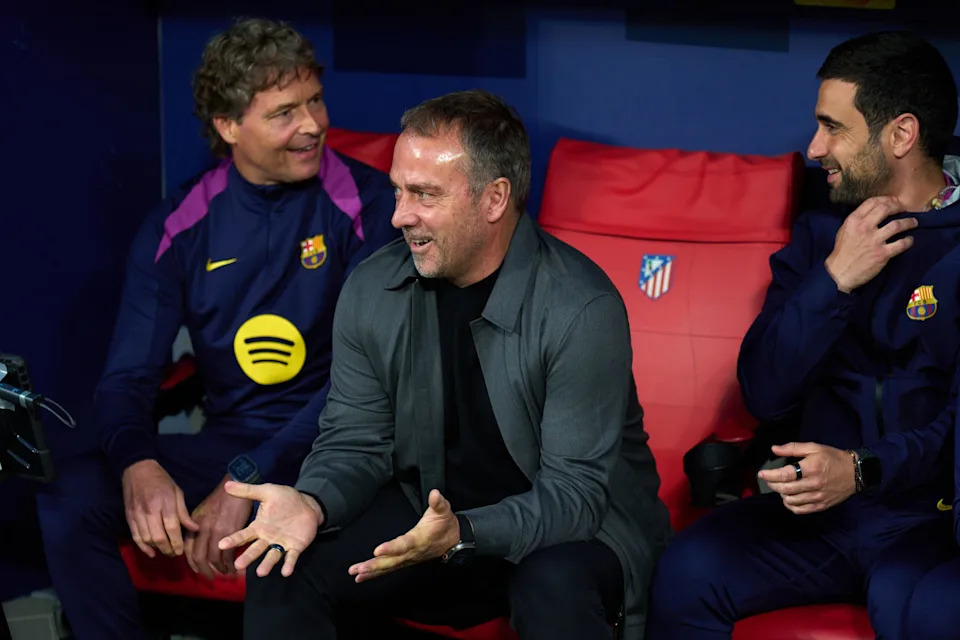
The future looks bright. (Photo by Angel Martinez/Getty Images)
Beyond the pitch, something equally important is happening.
Contracts are being renewed with intention. The young core is being secured for the long run. The Spotify Camp Nou is gradually opening in phases. The club is slowly recovering some much-needed ground on their financial standing.
For years, Barcelona felt like a club caught in between eras, emotionally tied to the past, financially constrained by the present and uncertain about the future.
Advertisement
Now, for the first time in a while, those timelines are beginning to align, from a sporting, commercial, and economic sense.
The final image: a familiar fall, a different horizon
Yes, Barcelona have stumbled at the big hurdle again. The difference, though, is that this time, it does not feel like a dead end.
Because the defining image of the tie is not Atletico defending deep, Lookman scoring the decisive goal, or Cubarsi getting sent off. It is a teenager scoring in the fourth minute at the Metropolitano and making the impossible feel briefly inevitable.
That moment matters. The hurdle is still there. The lesson is still incomplete. However, there is light at the end of the tunnel, and hopefully, next year, it doesn’t turn out to be an oncoming train.
Read the full article here