





The past thirty years of Avalanche hockey have featured incredible highs, and some very, very dismal lows.
As an avid fan of The Simpsons, I’ve witnessed plenty of “best of times” moments, but also been subjected to a smattering of unpleasant “blursts” of times. In this latest edition of an ongoing off-season series, I take a look back through the past thirty years, highlighting one moment that stands among the best, and comparatively, the worst (or blurst, if you will) each season.
Advertisement
Here are the best and blurst moments from another five years of Colorado Avalanche history.
2010-2011
The Best: Foote’s Farewell Finale (April 10, 2011)
Two words: The Shift.
With the Avs fresh off a six game winning streak prior to the start of the holidays, there was little reason to panic. However, after treading water in January, things fell apart rather quickly: the team had a disastrous finish to the season, going 10-34-4 heading into the team’s final game on home ice against the Edmonton Oilers.
Avs captain Adam Foote was also playing in his final game, as he had previously announced he would retire at the end of the season.
Advertisement
With Avs fans having been deprived of giving Joe Sakic and Peter Forsberg (spoilers) a proper farewell on home ice, they wouldn’t let this opportunity slip away with Foote. In return, Foote gave the Pepsi Center crowd a memorable final shift.
With both teams tied at three in overtime and the clock winding down, Foote skated onto the ice and into the Avs zone. With a flip of his wrists moments later, his stick caught and launched the stick of Edmonton defender Ladislav Šmíd high into the air, then proceeded to repeatedly manhandle Edmonton winger Teemu Hartikainen along the end boards (in plain view of the referee) before shoving him down to the ice and finishing him off with a check in the corner.
The fans in attendance roared in appreciation as Foote skated to the bench, his final shift at an end.
Not long after, David Jones would tally the game-winner in overtime, ensuring a 4-3 victory for the Avs. Foote was named first star of the game and received a rousing ovation before skating off the ice for the last time as a player.
Advertisement
A rare bright spot in a largely forgettable season.
The Blurst: St. Valentine’s Day Massacre (February 14, 2011)
Many people have a love/hate relationship with Valentine’s Day.
For Avs fans, this particular Valentine’s Day was filled with both.
It didn’t start out that way. Love was in the air, and the reunion with Peter Forsberg, who had just signed a pro-rated contract for one (likely) final return with the Avs just days earlier, was imminent, or so they thought. Rather than discussing his return with the media who assembled at Pepsi Center, Forsberg made the following statement:
“I played hockey my entire life,” he said, “but I decided I played my final game.”
Advertisement
The Avs were in the middle of a four game road trip when Forsberg made his return to hockey. They lost in Columbus by a score of 3-1 on February 11, and lost in Nashville by a 5-3 score the next night. Instead of a heartfelt reunion on Valentine’s Day, Avs fans were now reeling from heartbreak.
The breakup was official, and there’s no worse time for a breakup than Valentine’s Day.
Both the roster and the fanbase had little time to come to terms with the news, as there was still a game to be played that night against Calgary. If there was anything that could help perk up the brokenhearted, getting their first win of the post-Forsberg era would be a great start.
Not on this night.
Advertisement
Any hopes that the Avs could be competitive vanished almost immediately after puck drop, as Calgary scored eighteen seconds into the contest. By the end of the first period, the Avs trailed 5-0. The Avs would score the only goal of the second period, but Calgary added another four goals in the third to win by a 9-1 margin.
The loss was the eighth in a row for the Avs, and eighteenth in their past twenty-four games. The Avs would muster only five more wins during the regular season.
It’s hard to play with any heart when it was broken by one you love.
Sheryl Crow said it best: the blurst cut is the deepest. Or something like that.
Advertisement
2011-2012
The Best: Milan Hejduk Named Captain (November 14, 2011)
It had been over six months since Adam Foote skated into retirement, and the Avs had yet to announce who would succeed him as captain.
On November 14, the wait came to an end. As reported by Mike Chambers of The Denver Post, Milan Hejduk was named as the third captain in Avalanche history.
“This is obviously a big honor,” Hejduk told The Denver Post. “It is a big accomplishment. I’ve been in the league a long time, and this is pretty cool.”
Head coach Joe Sacco had plenty of praise for his new captain. Citing his tenure and on-ice success, Sacco said of Hejduk, “He’s been an Avalanche now for 13 years. He’s won a Stanley Cup. He’s a product of the system here, and he’s what we want our young players to strive for.”
Advertisement
Hejduk was the first European-born captain in Avalanche history, and the second captain from the former Czechoslovakia in franchise history. His tenure as captain lasted only one season, with Gabe Landeskog succeeding him on September 4, 2012.
A well-deserved honor, and a bright spot in an otherwise vanilla campaign for the Avs.
The Blurst: Yaroslavl Lokomotiv Plane Crash (September 7, 2011)
The worst moment of this season for the Avs didn’t take place during a hockey game.
In fact, it didn’t even take place in the Western Hemisphere.
On September 7, a small aircraft carrying Russia’s Kontinental Hockey League (KHL) hockey team Yaroslavl Lokomotiv crashed shortly after takeoff. Of the forty-five passengers on the aircraft, all but one perished.
Advertisement
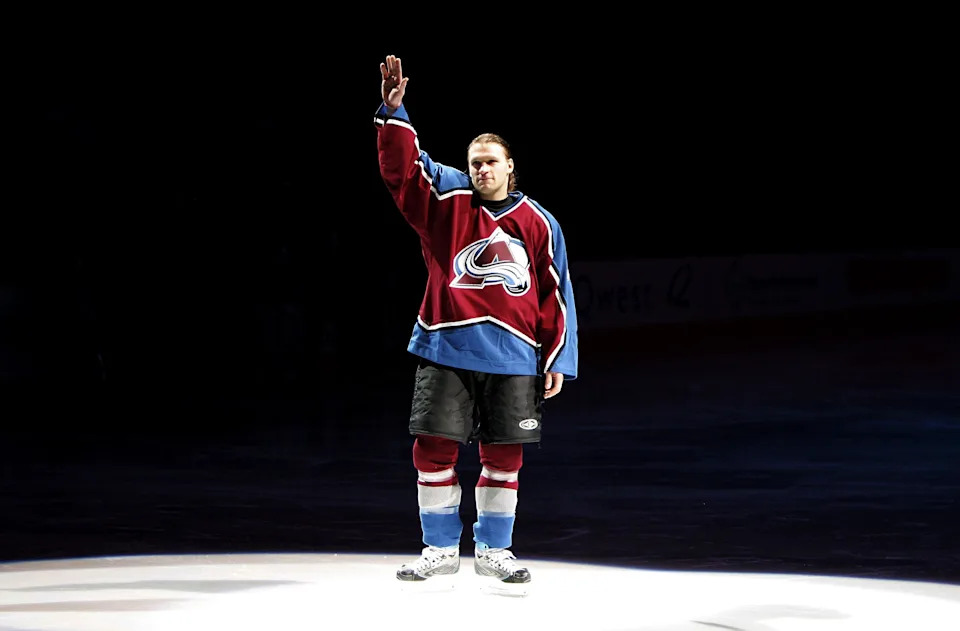
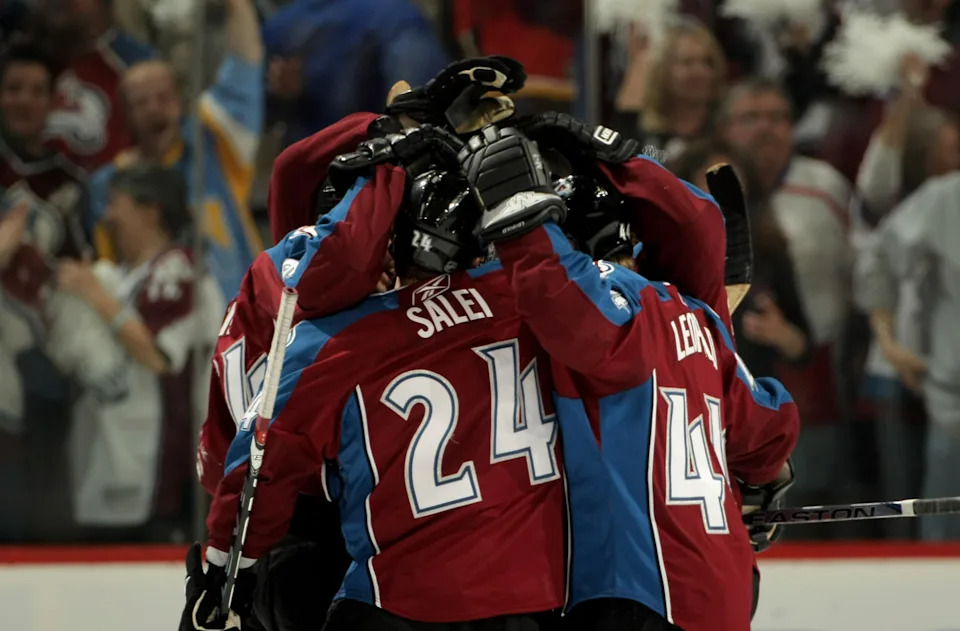
Several former NHL players had been part of the Lokomotiv roster and coaching staff. Two of the victims were former Avs defensemen Kārlis Skrastiņš and Ruslan Salei.
Skrastiņš, who was acquired from Nashville in June 2003, spent four seasons with the Avs. In 275 regular season games, Skrastiņš scored nine goals and collected thirty-three assists for a total of forty-two points. He appeared in 20 playoff games, collecting three assists.
Skrastiņš most notable moment with the Avs took place in February 2007, as he skated in his 487th consecutive game, setting a League record for consecutive games played by a defenseman. He played a grand total of 832 regular season games in the NHL, spending time in Florida and Dallas in addition to his time spent with Nashville and Colorado.
Ironically, both players were traded for each other. In February 2008, Skrastiņš was sent to Florida, along with a 2008 third-round pick, in exchange for Salei. Salei spent parts of three seasons with the Avs, scoring eight goals and collecting twenty-six assists for a total of thirty-four points in 101 regular season games. He scored one goal and added four assists in eleven playoff games.
Advertisement
Throughout his fourteen year career in the NHL, Salei spent the first nine seasons with the Mighty Ducks of Anaheim before joining Florida, and he played his final season with Detroit after leaving the Avs to wrap up his NHL tenure. He played a grand total of 917 regular season games and 62 playoff games.
As reported by Reuters, a September 2012 investigation by Russia’s lead investigative agency determined that the pilots of the aircraft did not receive the necessary training that was required to fly the plane, and that they had been given permission to fly on the basis of “falsified documents”.
Vladimir Markin, spokesperson for the agency, named Vadim Timofeyev, deputy head of the airline operating the flight, responsible for “blatant violations” and charged with violation of air safety rules. He was sentenced to five years in prison, but was amnestied and released.
Everything about this incident goes far beyond hockey, and the negligence involved could have been completely avoided.
Though their time with the Avs was brief, may the memories of them as fathers, family, friends, and hockey players, remain timeless.
Advertisement
2012-2013
The Best: Milan’s Magical Milestone (February 04, 2013)
In a previous edition, I covered Patrick Roy’s historic milestone of 1000 appearances as a goalie. While reaching this milestone as the first goalie to do so is incredible, it’s important to keep in mind that, out of the 1029 games that Roy played, more than half of those games (551) were played as a member of the Montréal Canadiens.
This context doesn’t diminish Roy’s legacy by any means. Nor the legacy of Adam Foote or Joe Sakic, both of whom also eclipsed the 1000 game milestone, but played quite a few games for teams based in other markets.
Advertisement
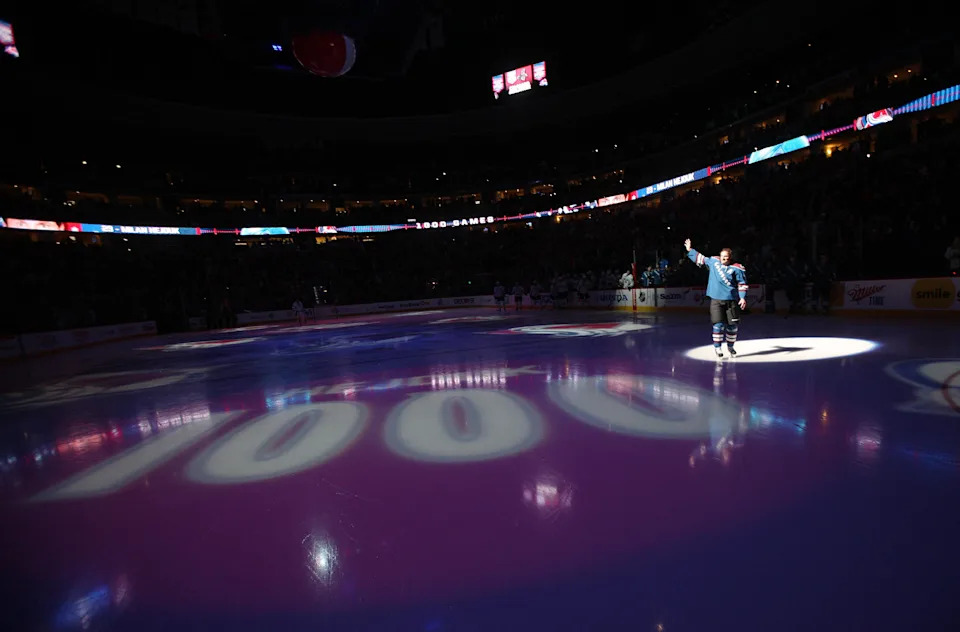
On this night, Milan Hejduk became the first ever player in franchise history to reach the 1000 game milestone, and to do so entirely as a member of the Avalanche. In a pregame ceremony prior to hosting the Dallas Stars (who had future Hall of Famer and fellow Czech Republic teammate, Jaromír Jágr, on their roster at the time), Hejduk received a commemorative gift of crystal, along with a silver stick from Sakic and a standing ovation from the Pepsi Center crowd.
With Dallas leading in 2-0 in the first period, Hejduk gave the crowd something else to cheer about, as he opened the scoring for the Avs. P.A. Parenteau tied the game in the second period, but Dallas captain Jamie Benn responded with the go-ahead (and game-winning) goal shortly after.
Hejduk may not have been the household name like some of the other franchise greats, but there’s something fitting about him being the first (and still, only) player to do so entirely in an Avs sweater. He didn’t have the punishing, physical style of a Peter Forsberg or the swagger of a Roy. Although not as lethal as Sakic’s, his shot and his hands were his greatest assets, allowing him to routinely find the back of the net and stealthily climb up the franchise scoring ranks. He was already well-respected in the locker room and viewed as a leader among his peers, exemplified by succeeding Foote in his brief stint as Avs captain, and again as an assistant for the youngest captain in franchise history (at the time), Gabe Landeskog.
And on this unassuming night in the middle of an unnecessarily truncated season (spoilers), the best moment belonged to the man who quietly, and fittingly, made franchise history on his own terms.
Advertisement
The Blurst: Bettman Locks The Doors…Again (September 15, 2012)
Here we go again.
Labor peace had been the standard in the NHL ever since the lockout that cancelled the 2004-2005 season came to an end. The salary cap structure ushered in an era of parity across the majority of the League, much to the delight of NHL Commissioner Gary Bettman. Surely, neither side would allow the same thing to happen again.
Gulp.
On September 15, with a single day remaining until the expiration of the seven-year long collective bargaining agreement that had been in place since 2005, Bettman announced that the players would be locked out once more. As was the case in announcing the previous lockout, Bettman again cited a failure to come to terms on a new agreement as primary reason for this lockout.
Advertisement
This lockout, however, wasn’t a battle over the institution of the salary cap system. Rather, the central focus was on hockey-related revenue (HRR) and how the entirety of that revenue was divided between the owners and the players. Another area of focus was the duration of player contracts.
Although several proposals were exchanged between both sides, neither could find common ground. By the time that the 2012-2013 season was set to begin, both sides remained far apart. As negotiations continued, portions of the season schedule were cancelled as the months ticked by. By the end of November, the Winter Classic between the Detroit Red Wings and Toronto Maple Leafs, and the NHL All-Star Game at Nationwide Arena in Columbus, had also been cancelled.
The NHL Players Association appealed to the hearts and minds of their fans in a video that featured several of the League’s marquee players (including a very fresh-faced Gabe Landeskog) in support of their cause. In contrast to Bettman’s statements placing blame on the players, they spoke plainly about their love for the game and the concessions they’ve made in order to foster an agreement with the League. (You can check out that video up above.)
The two sides finally reached a tentative deal on January 6, 2013. A new salary floor and ceiling of $44 million dollars and $66 million dollars, respectively, were announced, along with the new contract lengths (seven years for new contract signings, while current contracts could be extended for eight years), a temporary window allowing teams to buy out contracts, and a fixed arbitration award of less than $3.5 million dollars.
Advertisement
The NHL’s Board of Governors ratified the new agreement three days later on January 9, and the NHL Players Association followed suit on January 12. Instead of a fully cancelled season, a shortened regular season totaling 48 games began on January 19.
The Avs opened the shortened season on the same day at the Xcel Energy Center, falling to the Minnesota Wild by a score of 4-2. Notably absent from the roster was center Ryan O’Reilly, who had yet to come to terms on a new contract with the Avs during the work stoppage. He would rejoin the club on February 28, hours after the team matched a two year offer sheet tendered by the Calgary Flames.
Had it not been for a reenactment of the labor stoppage between the NHL and the Players Association, perhaps the fortunes of O’Reilly and the Avs may have turned out differently, or they could have played out exactly as they did.
We’ll never truly know, but what is known is that both—the lockout more than anything—was definitely blurst material.
Advertisement
2013-2014
The Best: Central Division Champions (April 13, 2014)
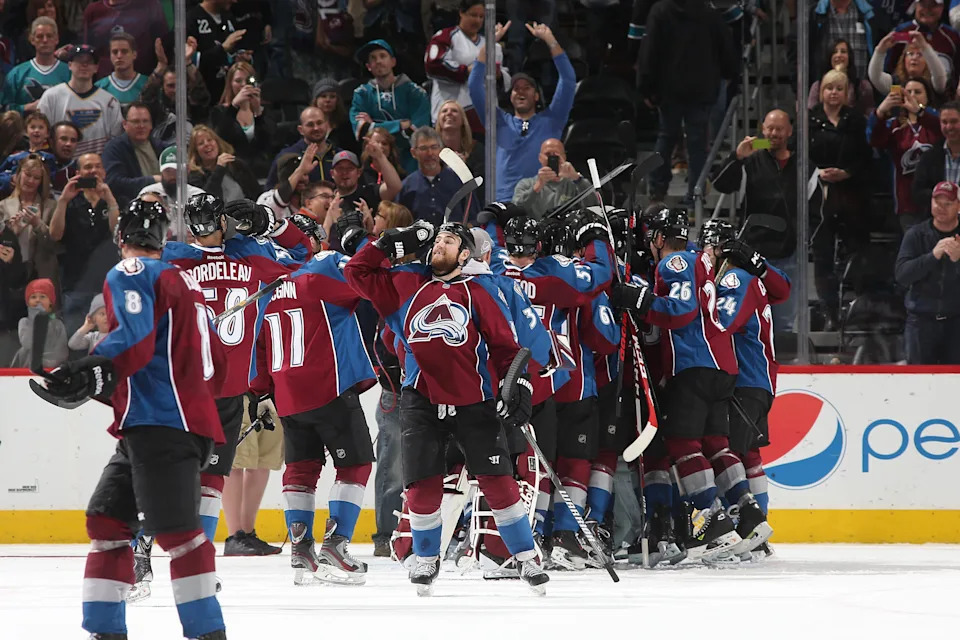
With first-year coach Patrick Roy behind the bench for the 2013-2014 season, many didn’t envision the Avs having much success. In fact, more focus was placed on Roy than the roster from the early going due to his emotional outburst towards Anaheim Ducks head coach Bruce Boudreau on opening night.
The team raced out of the gates, winning fourteen of its first sixteen games. Even on nights—and there were many—when the ice was heavily tilted in goaltender Semyon Varlamov’s direction, the Avs still kept winning. Bucking the early season projections, the Avs clinched their first postseason appearance since 2010 with a 3-2 victory over the visiting San Jose Sharks on March 29.
Advertisement
Not content with merely securing a spot in the playoffs, the Avs set their sights on the top spot in the Central Division. However, the St. Louis Blues also had their eyes on a first place finish. The young Avs sent a message to the more seasoned Blues in a 4-0 victory at Scottrade Center on April 5, but it took until the very last day of the regular season for the playoff standings to settle.
Despite losing their final regular season game in overtime to Anaheim, the Avs narrowly squeezed past St. Louis to claim the Central Division crown. This marked the first time in eleven years that the Avs had won their division.
Against all odds, and with a rallying cry of, “Why Not Us?” as their mantra as the regular season concluded, the playoff-bound Avs were set to host the Minnesota Wild, who had previously defeated the Avs in the postseason eleven years earlier.
Surely, the only thing better than making the playoffs is a strong showing in the playoffs…right?
Advertisement
The Blurst: Another Meltdown Against Minnesota (April 30, 2014)
After winning the first two games against Minnesota on home ice, the Avs headed to St. Paul, where a win at Xcel Energy Center could solidify their grip on their first round series.
Both teams went scoreless throughout regulation, but a flagrant kneeing incident from Minnesota’s Matt Cooke injured defenseman Tyson Barrie, who would be lost for the remainder of Game Three due to the injury from the hit. The NHL suspended Cooke for seven games for his hit, but the damage had been done: the Avs would be without their best defenseman through the rest of the series.
Advertisement
Semyon Varlomov was sensational throughout this game, stopping forty-four shots through regulation. For their part, the Avs didn’t test Minnesota goaltender Devan Dubnyk nearly as much, mustering just twenty shots through three periods. Mikael Granlund scored the game-winner in overtime to secure the victory for Minnesota.
Two nights later, Minnesota would tie the series with a 2-1 victory in Game Four. The Avs responded on home ice in Game Five with a 4-3 victory. Minnesota staved off elimination back in St. Paul with a 5-2 victory in Game Six to set up the second straight Game Seven between both clubs at Pepsi Center.
Both teams traded goals throughout the game, but an open shot from Erik Johnson gave the Avs a 4-3 lead with less than ten minutes to play in the third period. With time winding down in regulation, Minnesota’s Jared Spurgeon fired the puck into the top corner past Varlamov to tie the game.
In the overtime session, Minnesota’s Dany Heatley sent the puck to an open Kyle Brodziak at center ice. Brodziak skated into the Avs zone with Nino Niederreiter. As Johnson had jumped up for an offensive chance in the Minnesota zone moments earlier, defenseman Nikita Zadorov was left to defend the oncoming rush on his own. He timed his play to take the low part of the net away from Niederreiter, but the Minnesota winger flung the puck up high, finding the far corner behind Varlamov for the series-clinching goal.
Advertisement
For the second time, Minnesota eliminated the Avs in a sudden death outcome in a Game Seven.
This blurst does have a silver lining: as Avs fans now know, the next meeting between both clubs turned out much differently.
2014-2015
The Best: Avs to Host Detroit at Coors Field for 2016 NHL Stadium Series (January 24, 2015)
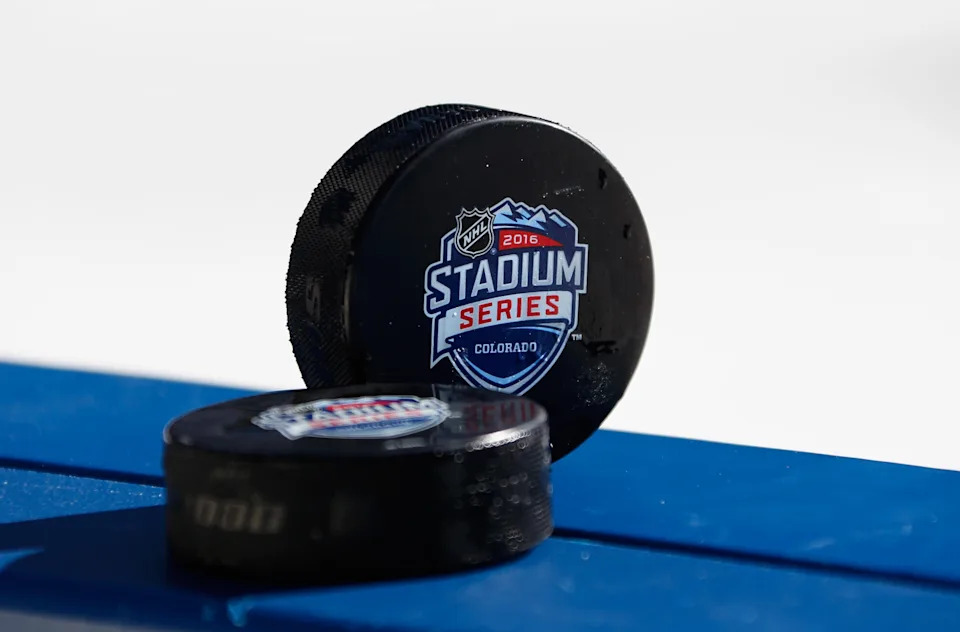
Since the advent of the Winter Classic and the subsequent debut of the NHL Stadium Series, Avs fans began to wonder when they would get their shot at participating in one of the League’s outdoor events.
Once Avs fans began seeing League darlings like Boston, Chicago, and Pittsburgh get repeat invites to partake in the outdoor games, anticipation turned to irritation. While it’s understandable that the League wants to market its stars on the biggest stages possible, playing an outdoor game with the Rocky Mountains in the background has to have some appeal to the NHL, right?
Advertisement
Finally, the wait was over: the Avs would get their opportunity to host an outdoor game as part of the 2016 NHL Stadium Series. The spectacle would take place the following year at Coors Field, with the Detroit Red Wings as their opponent.
Everything about the announcement was perfect. Coors Field would make for the perfect venue to host an outdoor game, with the trademark Colorado sunsets amid the Rockies providing the scenic appeal for those in attendance and for eagle-eyed viewers on television. Longtime fans of both teams would be able to reminisce and revel in the rivalry of old, and pass those legendary tales to a new generation of fans who came after its peak.
The announcement of the future overshadowed the Avs of the present, and was the highlight of that season for good reason.
February 2016 couldn’t come soon enough for Avs fans.
The Blurst: Brad Stuart’s Two-Year Contract Extension (September 29, 2014)
As the free agency period opened on July 1st, Avs general manager Joe Sakic made some splashy moves.
Having just acquired Daniel Brière from Montréal the day before, he signed future Hall of Famer Jarome Iginla to a three year contract. This move was followed up with the signings of center Jesse Winchester (who was forced to retire due to complications after sustaining a concussion in preseason play), and defensemen Zach Redmond and Nick Holden.
Sakic made other moves to shore up the talent for the AHL farm team, the Lake Erie Monsters, but there was one more big name that Sakic reeled in via trade that raised eyebrows: defenseman Brad Stuart was acquired from the San Jose Sharks in exchange for a 2016 second round pick and a 2017 sixth round pick (the Avs would later reacquire both picks to draft left wing Cameron Morrison and defenseman Denis Smirnov in their respective draft years).
While the idea of acquiring a veteran defenseman seems good on paper, giving that player a contract extension without careful evaluation of how that player fits into your system is hardly a recipe for success. Yet, that’s exactly what Sakic did in this case: on September 29, Stuart signed a two-year, $7.2 million dollar extension through the 2016-2017 season with the Avs, well in advance of the start of the regular season.
A veteran of fourteen NHL seasons, Stuart’s best days were clearly behind him as the 2014-2015 season got underway. He played 65 regular season games that year, scoring three goals and ten assists for a total of thirteen points.
Injuries limited Stuart to six games and zero points the following season. He was placed on waivers on June 29, 2016, and his contract was bought out the next day.
The signing may have been one of Sakic’s earliest missteps as a general manager, but we can all agree that the highlight goal of Stuart’s tenure with the Avs was his center ice goal he scored on Chicago Blackhawks goaltender Corey Crawford. Now that is a blurst!
Was there a best (or blurst) from these five years of Avalanche hockey that was overlooked? Share your thoughts in the comments below!
Read the full article here