





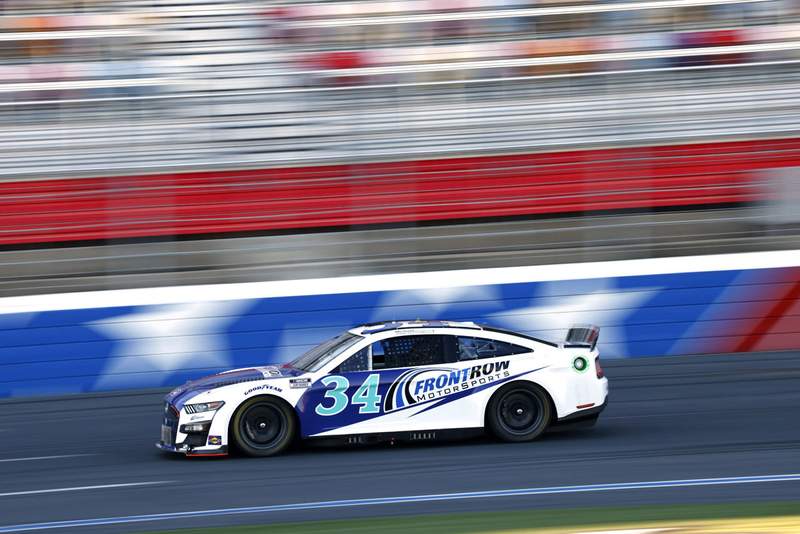
Ford has been a cornerstone of NASCAR since basically day one. We’re talking deep pockets, iconic victories, and legends like Bill Elliott and David Pearson, who literally defined entire eras of racing. But today when you look at them, things look pretty fractured. Teams are walking out, the traditional development programs are ending, and the young talents that Ford spent millions of dollars nurturing end up in Chevrolet and Toyota fire suits. Of course that stings, and now even Ford’s own leadership didn’t really try to soften that reality when asked about it.
“We also had Chase Briscoe come up, and we got him to Cup, but then we lost him. So there are still no guarantees when you have a driver development program,” said Mark Rushbrook, Ford’s Global Director of Performance. He was referring to Chase Briscoe’s 2024 departure during Detroit GP weekend. Why this exit especially pains Ford is honestly understandable, given how much they invested in him.
Advertisement
They backed Briscoe all the way from dirt racing to ARCA, and later through his time with Brad Keselowski Racing and Stewart-Haas Racing in both the Xfinity (now O’Reilly) Series and Cup Series. That is nearly a decade of investment, which then vanished in the blink of an eye.
SHR shut its doors, the Ford seat disappeared, and Joe Gibbs Racing had a Toyota waiting. Of course, Chase took that opportunity, and right from the get-go, he delivered.
In 2025 he managed three wins, seven poles, and 15 top-fives, and he led 884 laps. He ended up coming third in the championship, and if you compare that to his best season at Ford with just one win and a ninth-place points finish, it’s a huge jump. That contrast is exactly why the moment still lands so hard inside Ford’s world.
However, the fact is that when you zoom out, Briscoe starts to look less like an isolated case and more like a pattern. This is because Ford’s NASCAR footprint has been shrinking for years.
Advertisement
They went from six Cup teams to four, compared to Chevrolet’s eight. Stewart-Haas closed, while Haas Factory Team and Rick Ware Racing switched to Chevrolet. AM Racing, the only multi-entry Ford team left in the O’Reilly Series, also shut down after ten years of operations, after a failed ownership sale left the organization unable to continue operations.
The only full-time O’Reilly Series Ford entry now is Hettinger Racing, a single-car operation with five different drivers rotating through it and missing races.
Rushbrook also confirmed that Ford right now has no real presence in the O’Reilly Series and no ARCA program. “Right now, none of our teams are looking at ARCA or are in ARCA right now. So it’s got to make sense for Ford and for our teams in terms of a place to race.
We’re looking at our driver development program more broadly these days. There’s a strong focus on sports cars, but we see that as a potential path to bring drivers through Dark Horse R, Mustang GT4, and Mustang GT3 that can go to NASCAR as well…”
Advertisement
The logic is straightforward. The Cup Series sells Mustangs. The Truck Series sells F-150s, Ford’s most profitable vehicle. The O’Reilly and ARCA series don’t move product off the lot, so Ford isn’t funding them. The replacement plan is sports cars.
“We’ve got a great lineup of drivers today, but we know there are going to be open seats to fill in the future,” he concluded.
The Same Story, Different Names in NASCAR
This isn’t a new problem for Ford. Yes, they’re one of NASCAR’s biggest names, but they’ve lost potential all-time talents to other teams before due to unfortunate circumstances. The problem, however, may be that they failed to notice the pattern.
Advertisement
The late great Kyle Busch drove Ford trucks at Roush early in his career before a minimum-age rule forced him out of the seat. Roush couldn’t keep him, Hendrick picked him up, and he eventually landed at JGR, where he won two championships (2015 and 2019) and more than 50 races.
Martin Truex Jr. also had early ties to Ford before DEI brought him into Chevrolet. His championship came with Furniture Row Racing’s Toyota program in 2017, and he stayed with Toyota after that.
They became something special. None of it happened entirely under Ford. They built the foundation for some and inherited the talent for others, but in most cases, the biggest results came elsewhere.
Briscoe is the freshest example, and perhaps the most painful, because Ford had him all the way to the finish line before the team around him fell apart.
Advertisement
Rushbrook was honest about it. There are no guarantees. That’s true of every development program in every sport. But the teams that win the long game are usually the ones with a system sturdy enough to withstand the unexpected. Ford is still figuring out what that system looks like.
Trending Articles
The post “We Lost Him”- Ford’s Global Director Breaks Silence on Lacking Driver Pipeline Amidst NASCAR Grassroot Snub appeared first on EssentiallySports. Add EssentiallySports as a Preferred Source by clicking here.
Read the full article here