




AUGUSTA, GA. — For the second consecutive Masters I’m writing one of these following a thrilling Rory McIlroy win. And for the second consecutive year, I’m in awe of Justin Rose.
At 45, surrounded once again by a leaderboard of players 10 and 15 years his junior, Rose was firmly in contention late on Sunday once again. It struck me along the way that Rose has the superpower that literally everyone wants.
Advertisement
Longevity.
You can make a good argument that Rose is better now than he was in his younger years, and in an era where the field around him is stronger than ever before.
He is, in many ways, golf’s answer to Nolan Ryan, who averaged more strikeouts per nine innings from ages 40 to 45 than he did from ages 25 to 30 and 30 to 35, with a near-identical ERA, despite the rise of the steroid era.
How is Rose doing this? And what can we learn from it?
Adam Scott is among Rose’s peer group, and he, too, has the longevity superpower. As Rose had seized the lead on Masters Sunday, that’s what I asked him.
His answer was, first, moderation. Don’t veer between extremes or intensely focus on one thing. Zoom out, and focus on all the parts, and how they work together.
Advertisement
“My mum taught me everything in moderation. I don’t know if that’s good for the highest level sport but it is for longevity. Maybe some of that philosophy has kept me going,” Scott says. “I balanced my practice load; my workload; the things I do in the gym; I try to balance everything well.”
Extremes aren’t sustainable. Moderation is.
Second, Scott says you need to understand and plan around your tendencies. It’s about maximizing you amd not trying to copy someone else. That’s what he admires most about Rose.
“He’s incredibly calculated. I think he really knows his own tendencies well and he plays around them all to his advantage,” he says. “He’s been very meticulous about the way he’s built his game. He’s very meticulous about things.”
Advertisement
And finally, consistency. I can’t put it better than Max Homa.
“When I was growing up, my muses were the Tigers and the Phils and those guys, Rory, Rickie, all the guys kind of before me that were top in the world. Not to say they’re not, but I’ve definitely taken more of a liking to watching people like Adam Scott, Billy Horschel and Justin Rose,” Homa said. “Their work ethic is incredible and they have sustained such excellence. Keep working. I think that’s an easy thing to say but a hard thing to do. I think as you get beat down more and more, it’s very easy to say, I just don’t want to do this today.’ I think there’s a big skill in showing up, and I think that’s an important quality that they have. They’re obviously tremendous golfers, but you go watch Adam, Justin and Billy in a gym, and it’s pretty amazing, especially with all these young kids coming in. They’re incredible at showing up.’
Keep showing up, and maybe one day Rose will get the second major he deserves.
1. Just keep swinging
Masters 2026
Adam Glanzman
Advertisement
Rory had a goal this week beyond winning his second green jacket.
“Just keep swinging.”
Avoiding tentative golf swings—”guidey” swings, as Rory calls them.
I think, ultimately, that’s why he won his historic second Masters without his best stuff, and it taught me a lot along the way. Mostly about how much and how quickly golf swings can move around over the course of a tournament, even during a tournament. But also how, real as that problem is, the only way to solve it is by swinging through it. It’s telling that during his worst ball-striking round of the tournament, the one that evaporated his six stroke lead, Rory didn’t get marred in technical drills trying to “neutralize” his ball flight. He was hitting the ball left, so the goal of his Saturday evening sessions was to try to hit more fades, and he’d do this not by slowing anything down, but by speeding up his hips.
Advertisement
Committed swings. It won’t always be pretty—or even work—but it’s the only way to do it.
2. Boring golf is better than birdies
Early in the week, I meandered over to the flash area—an area near the oak tree where players do mini press conferences—and found Brian Campbell being quizzed by a local news reporter. It was a little awkward.
“Did you record an eagle last year?”
The answer was no.
“Is one of your goals to get that eagle?”
I’ve seen pros dunk on journalists asking these kinds of well-meaning questions. Brian was respectful, and came out with something insightful at the end of it:
Advertisement
“I’d rather no bogeys than more eagles.”
Campbell did have some bogeys on the week, but not many: 11 over 72 holes, which was well under field average. He made no eagles, no doubles, fewer birdies than the rest of the field but more pars. It was the kind of good, boring golf that can get you far at Augusta National. For Brian, the shortest hitter on tour, it landed him in the top 25.
3. Plan for what *could* happen
Augusta National’s greens are big and complex and scary—especially when they dry out like they did all week this year.
I asked pros how they putt and chip on these greens in these circumstances, and Brian ‘the quote machine’ Campbell said something else that stuck with me later in that same awkward interview:

Masters 2026
Adam Glanzman
Advertisement
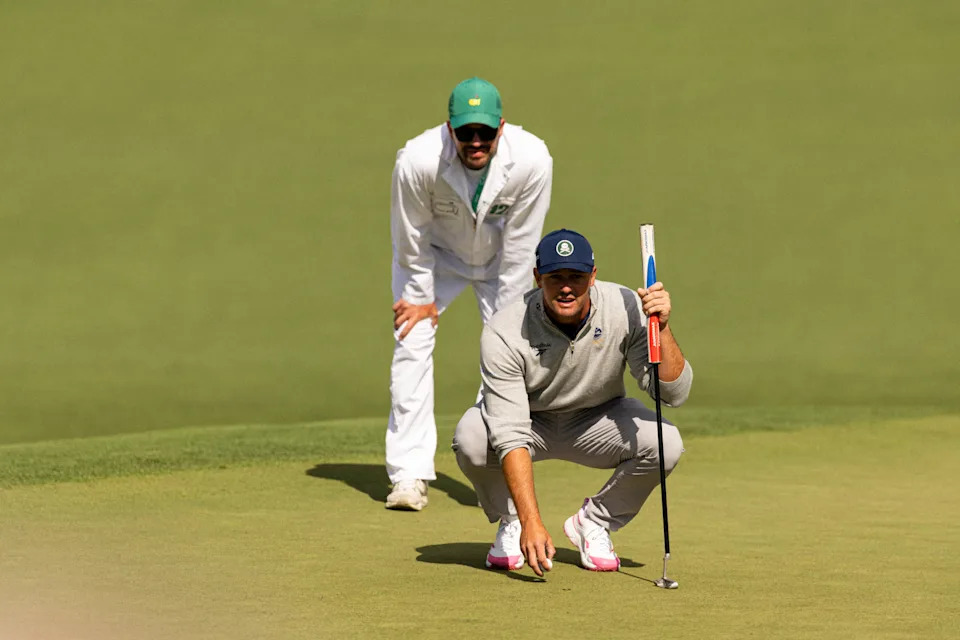
“I did a ton of loose lag putting out there today, understanding where the ball is going to end up,” he said. “It’s not always where you want it to go or where it could end up, because it could end up in some random places with these greens.”
It’s a good mental framework to think about for long putts. Not where and how to get your ball where you want it to go. But where it could end up if it doesn’t.
4. When the ground is dry, chip high
I’m working on a video about chipping, so I spent a chunk of time the early part of the week asking pros about chipping.
Masters 2026
J.D. Cuban
Advertisement
It’s still coming together, but a few nuggets:
Jason Day says he chips mostly with four clubs: his hybrid, 8-iron, and two different wedges, plus his putter. He says the club he chooses depends on how much horsepower he needs to get through whatever is between him and the green.
Jordan Spieth says he hits chips higher the firmer the greens get—unless he’s short-sided, which is when he bumps shots with spin into a slope.
Luke Donald says there is no such thing as chipping strategy if you don’t have good technique.
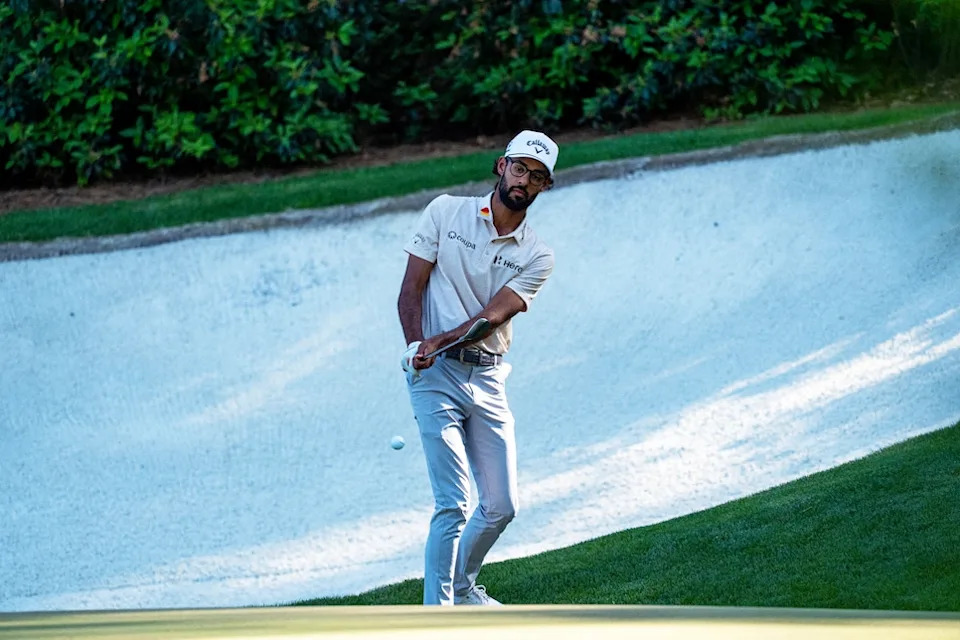
The going-high-when-it’s-firm thing stuck with me. Bump-and-runs make sense in dry conditions if the grass around it is hardpan, but that’s not always the case. Dry, longer grass makes things “sticky,” in Rory’s words. High, up and over is often the play.
Advertisement
5. First, do the opposite
Not to bring things back to my golf game, but …
*clears throat*
…I snuck in an early morning round on Masters Sunday, and things didn’t go well on the front nine. Some of that is to be expected—it was my first round in months—but all my bad golf swing habits were coming out. I was losing my height in my backswing, then standing up on the downswing. Then I thought back to a conversation I had with Ludvig Aberg’s coach, Hans Larsson,
“In order to create the movement pattern you want, you have to create a force in the opposite direction before,” he said.
There’s genius there. To make it a bit simpler: Whatever you want to happen on the downswing, do the opposite on the backswing. So if I want to stop standing up on the downswing, I need to feel like I get taller on the backswing. You have to flip it, which is what happened in my own round: I made three birdies and shot one under on the back.
Advertisement
6. Knowing when to play with what you have
A common theme all week was pushing and pulling against an idea we all know as golfers:
Whether to accept what we have, and slap a Band-Aid on it.
Or whether to course-correct with a small adjustment, and carry on.
I thought Viktor Hovland would be a good person to ask, so I did.
He said, in short, that when it’s a club path issue, that’s generally not a huge deal. If you usually swing to the right, but today you happen to be swinging a little more to the right, don’t stress. Just budget for more curve and sort it out later.
But if the ball is starting left or right of where you want, then it’s a clubface issue. That’s something you need to try to get control over stat.
Advertisement
You can watch the full clip here:
Alright, I’ve gone on too long, some quick hits…
7. The best coaches aren’t cookie cutters
I thought this was a cool quote from Max Homa on his coach, Golf Digest No. 1 teacher Mark Blackburn.
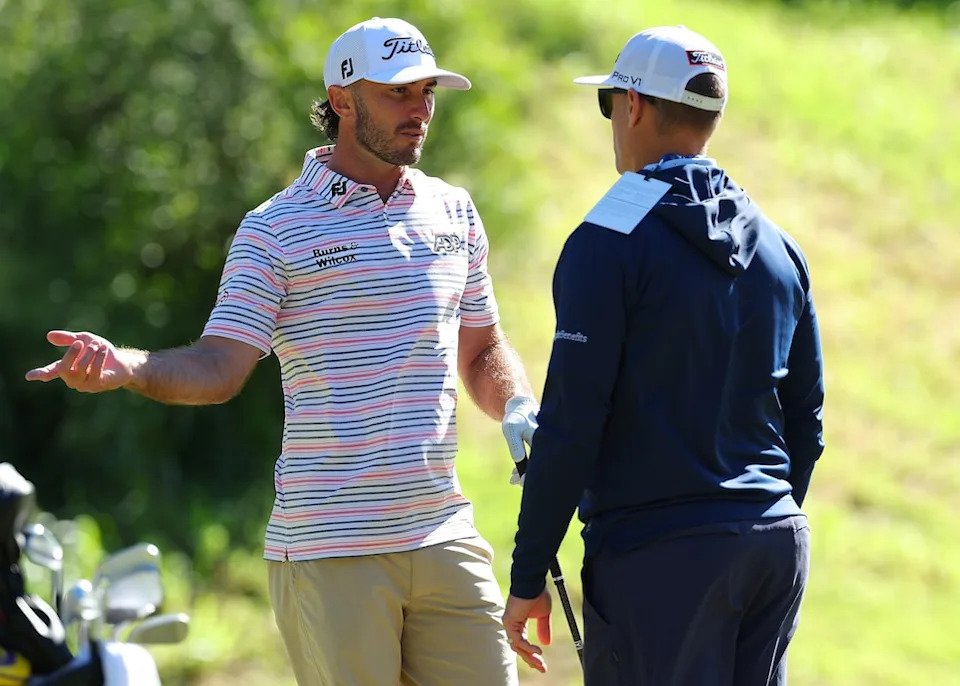
“He is so amazing, one, away from the golf course of going through your DNA and what makes you tick. It’s like whatever the opposite of cookie-cutter is, that’s Mark,” Homa said. “Just this week, we adjusted my grip, which is a very scary thing to do. It did take a little bit of buy-in from me and he’s been trying to get me to do it. He said, some people can play with a weak grip, some people play with a stronger grip. He does a good job of explaining this is why you should do this.”

1903416510
Kevin C. Cox
Advertisement
8. Don’t deliberate over your shot for too long
Will Irwin, our head of social media, was following Rory on 13th and shared an interesting nugget: With Cam off to the side talking with a rules official, Rory hung back and waited for him, some 100 yards behind his ball. Why? Because he didn’t want to get to his ball way before Cam, and start overthinking his shot for ages. A really smart move.
“I thought: instead of me getting up there and waiting at my ball forever, I’d just hang back until Cam came back out,” McIlroy said. “I don’t really like that second shot anyway, so I don’t need to be up there looking at it for too long. So I just tried to hang back, just so I could get to the ball and go through my normal routine and not be waiting up there for what I would feel like is forever.”
9. Denmark is an emerging golf superpower
Just a quick shoutout to the country of Denmark. I spent the morning on Thursday walking around with Andreas Kali, longtime golf coach to Rasmus Neergaard-Petersen. He was explaining all about the Danish system of developing golfers, how the government prioritizes casting a wide net for juniors and keeping them in the game.
Advertisement
“Every person in Denmark will at one point touch a golf club before they turn 18,” Kali explains.
It’s been working. There’s been a huge influx of Danish golfers at the pro level in recent years.
There’ll be a major winner from Denmark within five years. Watch this space.
10. If you go negative, be careful
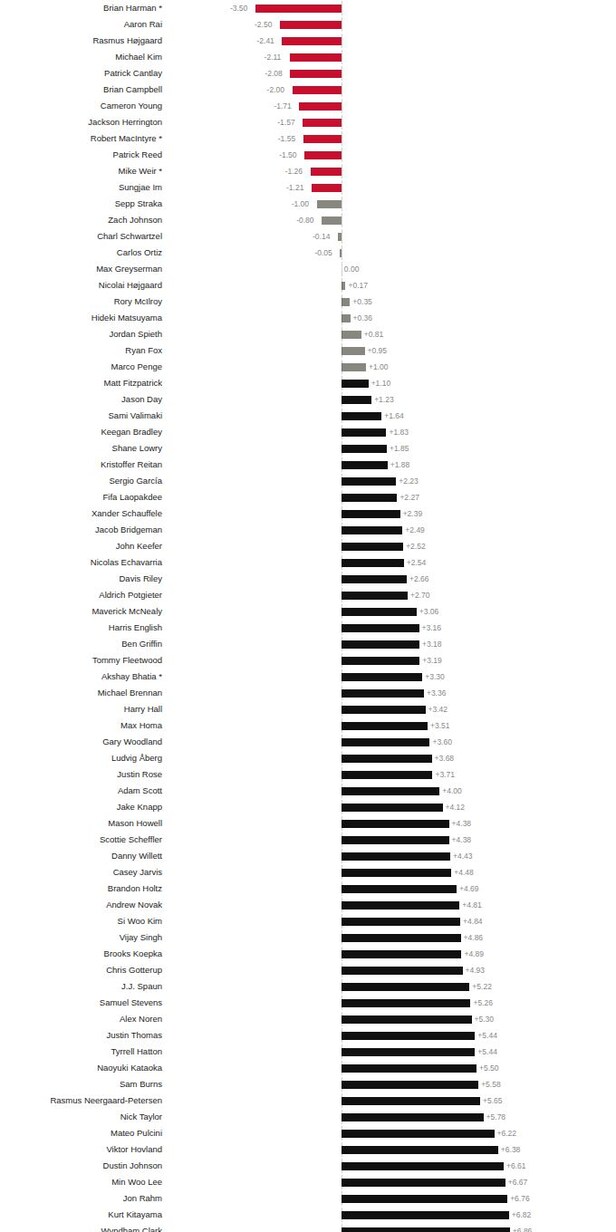
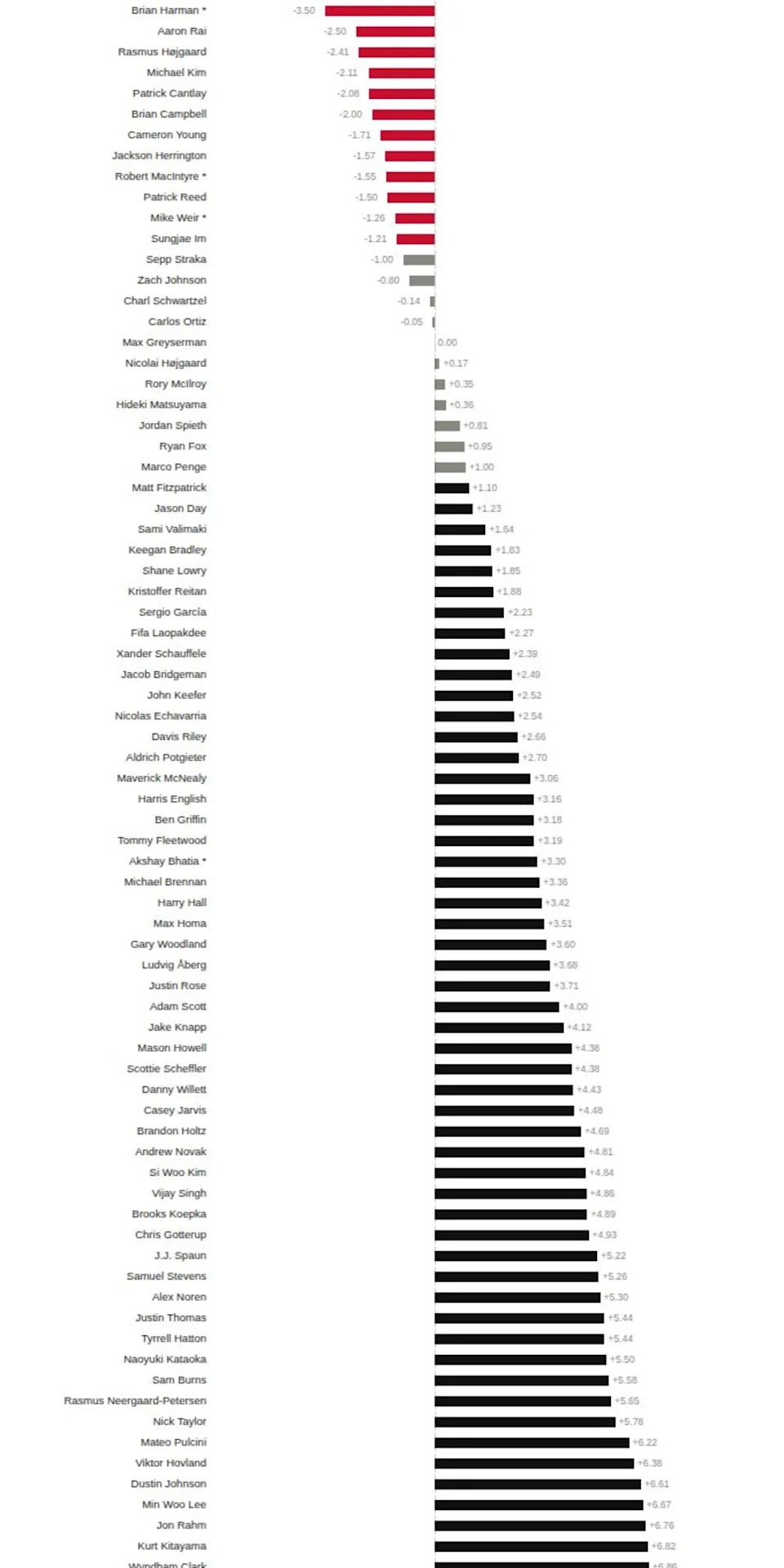
The Masters tracking range data has genuinely become one of my favorite developments in golf in recent years. This year, we could see the crucially important spin axis metric.
Here’s the average for each player on shots over 250 yards from Monday-Wednesday. One thing that stuck out to me: Not just how fade-biased the tour is, but how the draw players who go negative aren’t anywhere near as severe as the faders. There’s a lesson there. Going negative and chasing draws works, but you have to be careful. There’s not much margin for error.
Here’s the full list if you want to dive in further:

/content/dam/images/golfdigest/fullset/2022/masters_field_spin_axis.jpg
Read the full article here


